
Plan Ahead: Uncovering True Dementia Assisted Living Cost Variables
Understanding Dementia Assisted Living Cost Benchmarks in 2026
When calculating long-term budgets, examining national benchmarks gives families a realistic baseline. Comprehensive data from Senior Living Costs in 2026 shows that senior housing expenses reflect significant operational demands, direct-care staffing wages, and specialized safety standards. While standard assisted living hovers around a median of $5,419 to $6,200 per month, dementia-specific care requires dedicated security, therapeutic engagement, and round-the-clock personal assistance.
Memory care costs typically increase by 3% to 8% annually due to rising labor costs, food inflation, and operational overhead. Understanding how rates vary by care intensity helps families plan ahead effectively.
| Care Setting / Level | Monthly National Median | Annual National Median | Typical Inclusions & Care Scope |
|---|---|---|---|
| Independent Living | $3,200 – $3,822 | $38,400 – $45,864 | Room, utilities, community events, light housekeeping (no personal care) |
| Standard Assisted Living | $5,146 – $5,419 | $61,752 – $65,028 | Housing, meals, basic help with 1–2 Activities of Daily Living (ADLs) |
| Memory Care (Dementia AL) | $6,690 – $7,666 | $80,280 – $91,992 | Secured perimeters, specialized dementia staffing, full ADL support, cognitive therapies |
| Nursing Home (Semi-Private) | $8,669 – $9,581 | $104,028 – $114,972 | 24/7 skilled nursing supervision, intensive clinical medical management |
| Nursing Home (Private Room) | $10,798 | $129,575 | Private clinical suite, comprehensive skilled medical and rehabilitative care |
National Medians vs. Standard Assisted Living
Memory care consistently carries a 20% to 35% premium (and up to 49% in select metropolitan markets) over traditional assisted living. This pricing differential stems from fundamental operational requirements. While standard assisted living allows one caregiver to assist 12 to 15 residents with intermittent tasks, dementia care requires tight caregiver-to-resident ratios to manage behavioral changes, exit-seeking behaviors, and communication barriers.
Furthermore, communities structure these costs in two distinct ways:
- All-Inclusive Models: A single monthly fee covers apartment rent, meals, programming, and all levels of personal care assistance regardless of cognitive progression.
- Base Rent Plus Tiered Care: Residents pay a base rate for housing and meals, accompanied by care tier add-ons (often Level 1 through Level 5) that increase as personal support needs rise.
Geographic Variations and State-by-State Spreads
Where a resident lives plays a massive role in overall expenses. According to the comprehensive Cost of Memory Care by State (2026) report, the spread between the highest- and lowest-cost states exceeds 2.3x.
State regulations, local real estate values, and prevailing certified nursing assistant (CNA) wages heavily influence regional pricing:
- Most Expensive States: Vermont ($11,195/month), North Dakota ($10,100/month), Massachusetts ($9,840/month), and Washington, D.C. ($8,722/month).
- Most Affordable States: Missouri ($3,750/month), Utah ($4,806/month), Georgia ($5,000/month), and Mississippi ($2,800–$3,200/month).
- California Benchmarks: In California, memory care medians stand at approximately $6,850 per month (ranging from $4,830 to over $8,500 depending on the metropolitan area), while standard assisted living averages $5,739 monthly.
States that mandate extensive dementia training hours, dedicated awake overnight staff, and specialized architectural barriers naturally exhibit higher baseline rates.
Primary Cost Drivers and Pricing Models in Memory Care
The overall expense of memory care is tied directly to physical plant safety and direct human care hours. Knowing how communities build their pricing schedules enables families to compare options fairly.
Base Rent, Floor Plans, and Care Level Tiers
Base rent covers the living space, utility access, maintenance, and common areas. Square footage and room privacy represent the first major pricing tier:
- Private Studio & 1-Bedroom Suites: Premium private apartments provide solitude and direct space for familiar family furnishings. Exploring varied floor plans helps families weigh comfort against monthly expenses, as larger one- or two-bedroom layouts can add $200 to $1,200 monthly over baseline studio designs.
- Semi-Private / Companion Suites: Sharing a room with a compatible resident significantly lowers monthly rental overhead, often saving $1,000 to $2,000 per month.
- Care Level Assessments: Prior to admission, a wellness director conducts an assessment evaluating activities of daily living (ADLs)—such as bathing, dressing, continence care, mobility transfers, and medication management. Each required layer of assistance adds to the monthly care tier.
How Staff Ratios and Safety Architecture Shape Dementia Assisted Living Cost
Unlike standard senior housing, a specialized memory community must maintain an environment that minimizes confusion and maximizes security. Specialized investments include:
- Low Staff-to-Resident Ratios: Dementia care requires attentive, hands-on guidance for cueing meals, preventing agitation, and providing personalized behavioral redirection.
- Continuous Staff Training: Caregivers undergo specialized training in non-verbal communication, validation therapy, and de-escalation techniques.
- Awake Overnight Supervision: Ensuring staff members remain awake and active throughout the night keeps residents safe during midnight wandering or sundowning episodes.
- Intentional Safety Architecture: Circular hallways to prevent dead-end frustration, keypad-secured perimeters, color-coded wayfinding cues, and enclosed outdoor sensory courtyards allow residents to walk freely and safely. Communities integrate these structured spaces alongside specialized amenities like therapeutic salons, calming dining rooms, and secure outdoor gardens to enrich daily life.
Evaluating Long-Term Memory Care Value and Cost Longevity
Planning for dementia care requires looking beyond initial move-in costs to calculate the full financial horizon. The 2026 Senior Care Cost Report highlights that family caregivers frequently underestimate the point where around-the-clock home support becomes more expensive than residential placement.

Calculating Full-Time Memory Care Costs vs. Incremental Care Needs
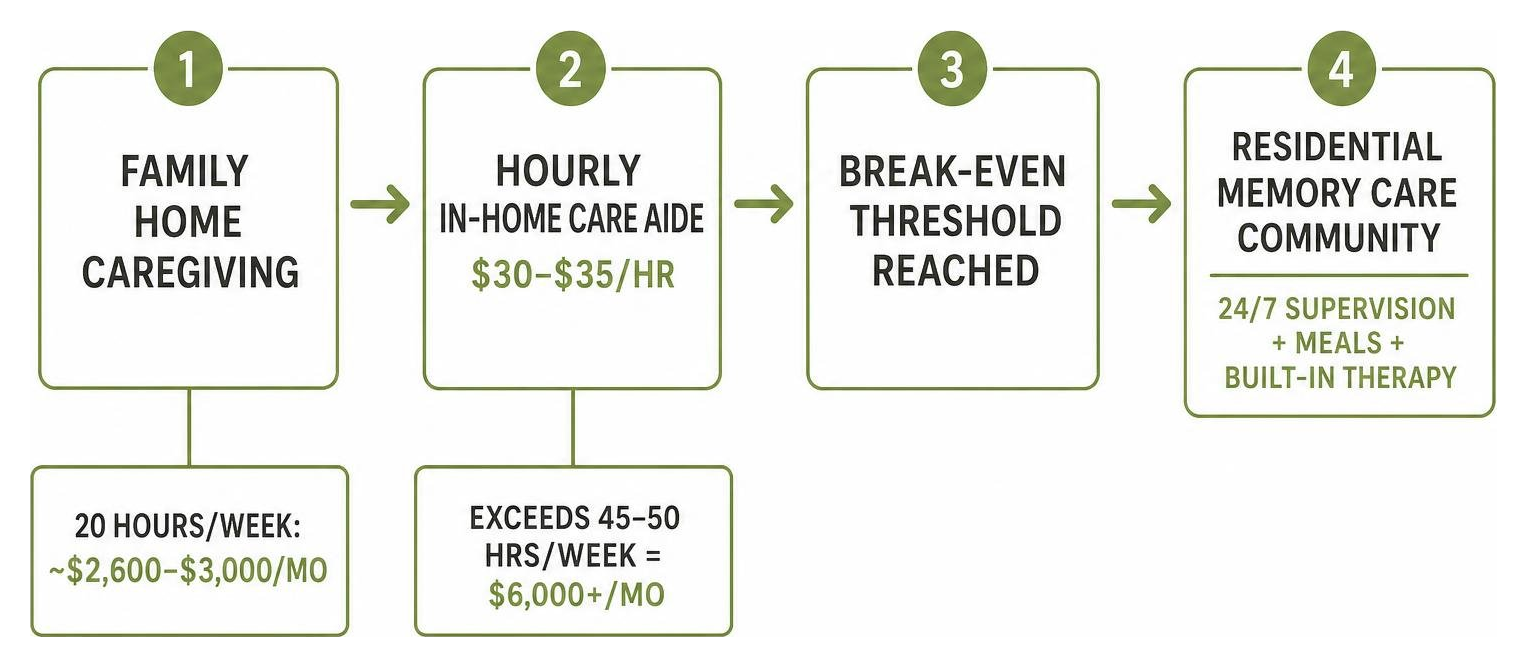
Private non-medical home health aides cost a national median of $30 to $35 per hour ($1,400 per week for 40 hours). While home care offers flexibility in the early stages of cognitive decline:
- 20 Hours/Week: ~$2,600 to $3,000 monthly.
- 44 Hours/Week: ~$5,720 to $6,160 monthly.
- 24/7 Home Care: Can easily exceed $18,000 to $22,000 per month.
The financial break-even point between private in-home care and residential memory care typically occurs between 45 and 50 hours of care per week. Once a loved one requires continuous monitoring to prevent wandering, medication errors, or kitchen accidents, residential memory care becomes both safer and significantly more economical.
Hidden Fees and Inclusions: What Your Monthly Rate Actually Covers
To budget without surprises, ask prospective communities for an itemized breakdown of base fees versus ancillary services:
- Standard Inclusions: 3 chef-prepared meals daily, snacks, utility bills, weekly housekeeping, linen service, structured activities, and 24-hour emergency response.
- One-Time Community Entry Fees: A standard admission fee averaging $3,000 nationally covers administrative processing and room turnover.
- Potential Ancillary Add-Ons: Specialized incontinence supply replenishment, advanced medication administration, on-site beauty salon visits, specialized one-on-one companion escorts, and private medical transportation.
Financial Planning and Funding Options for Families
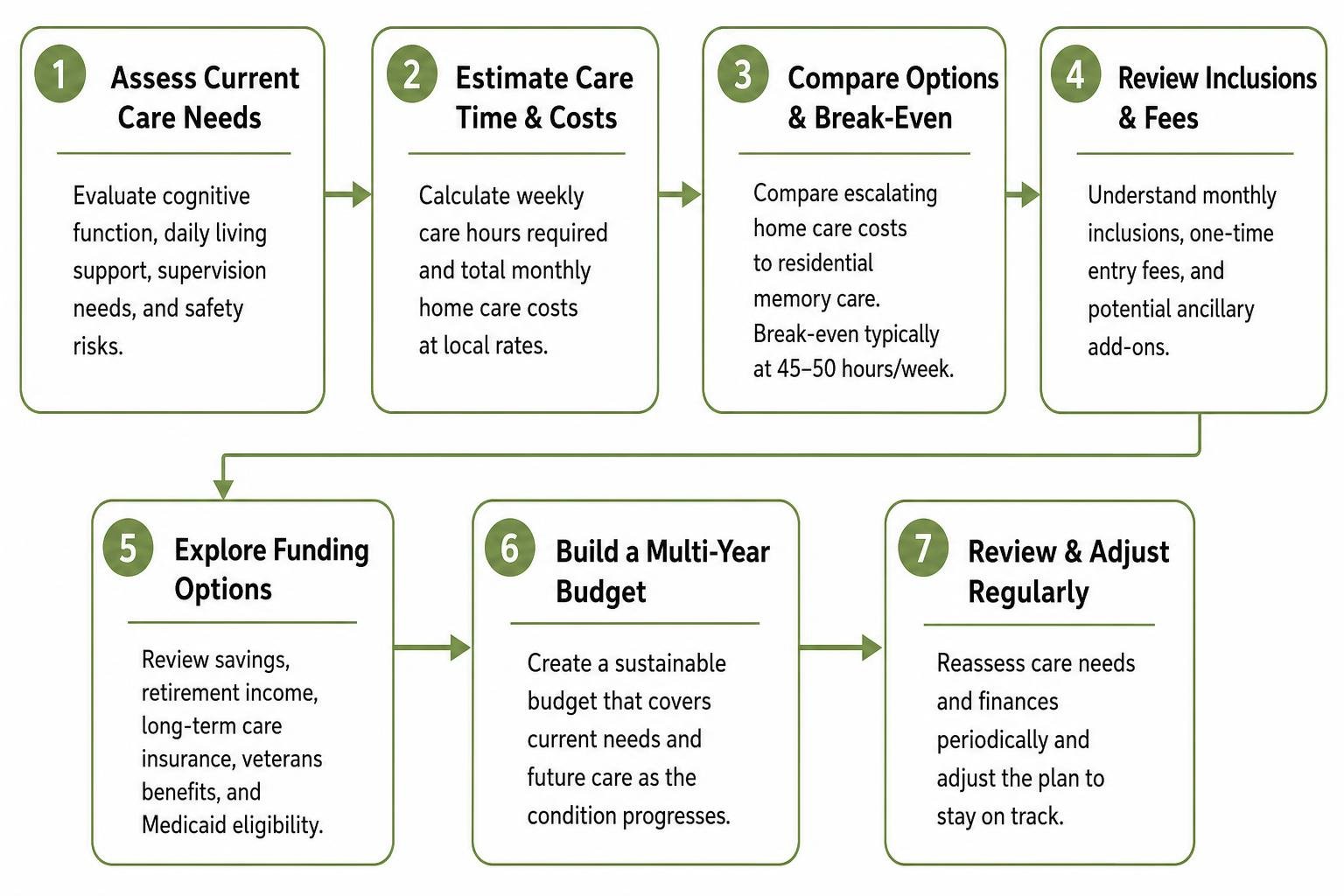
Because Alzheimer's and related dementias are progressive conditions, establishing a multi-year funding roadmap early protects family assets and ensures uninterrupted care.
Practical Strategies to Reduce Dementia Assisted Living Cost
Families can take several proactive steps to optimize care budgets without compromising safety:
- Select a Semi-Private Room: Opting for a shared companion suite reduces base rent significantly while still providing full access to 24/7 care, activities, and dining.
- Time Your Move Strategically: Moving toward the end of a month or quarter often provides opportunities to negotiate waived community fees or promotional rate incentives.
- Request Written Rate-Lock Agreements: Inquire about introductory multi-year rent locks to shield against sharp annual cost increases.
- Conduct Regular Care Reassessments: Periodically audit your loved one's care plan. If physical recovery or improved routine reduces the need for certain high-tier interventions, request a tier adjustment.
Medicare, Medicaid, and Veterans Benefits Limitations
Navigating public assistance programs requires understanding what government programs do and do not cover:
- Medicare: Medicare does not cover room and board or custodial care in assisted living or memory care facilities. However, it continues to cover medically necessary physician visits, cognitive diagnostics, eligible physical therapy, short-term skilled rehab following qualifying hospital stays (up to 100 days), and hospice care.
- Medicaid & HCBS Waivers: Medicaid pays for skilled nursing facility care for qualifying individuals with limited assets (typically under $2,000 in countable assets). In many states, Home and Community-Based Services (HCBS) 1915(c) waivers can subsidize personal care services within assisted living, though room and board must still be paid out-of-pocket by the resident.
- VA Aid and Attendance: Eligible wartime veterans and surviving spouses can qualify for substantial tax-free monthly pensions through the VA Aid and Attendance benefit to offset memory care costs.
- Private Funding & Asset Conversion: Long-term care insurance policies (when purchased prior to diagnosis), life insurance conversions (life settlements), home equity options (reverse mortgages or bridge loans), and dedicated family pooling represent primary private-pay strategies.
Frequently Asked Questions About Memory Care Expenses
Does Medicare cover room and board in dementia assisted living facilities?
No. Medicare does not cover custodial room and board in residential memory care or assisted living communities. Medicare Part A and B only cover medical services, physician appointments, diagnostic evaluations, prescription medications under Part D, and hospice care.
Why is dementia care significantly more expensive than standard assisted living?
Memory care requires specialized staff training, higher caregiver-to-resident ratios, 24/7 awake supervision, and secured architectural layouts equipped with delay-egress doors and enclosed courtyards to keep residents with wandering tendencies safe.
Are adult children financially responsible for their parents' memory care bills?
Generally, adult children are not personally liable for their parents' memory care expenses unless they voluntarily sign a facility admission agreement as a financial guarantor or co-signer, or if there is a violation involving the improper transfer of a parent's assets during Medicaid spend-down proceedings.
Conclusion
Understanding long-term dementia care expenses gives families the clarity needed to make confident, loving decisions. While calculating memory care expenses involves multiple variables—from care levels and floor plans to specialized staffing—planning early ensures your loved one receives supportive, individualized care in a safe environment.
At Vaca Valley Living, we provide compassionate, specialized residential memory care in a warm, home-like setting in Vacaville, CA. Backed by our family-owned tradition and over 50 years of senior care experience, we are here to help you navigate every step of the planning journey. We invite you to request a tour or contact our caring team today to discuss your family's unique needs.