Build a Dementia Care Plan That Protects Safety and Dignity

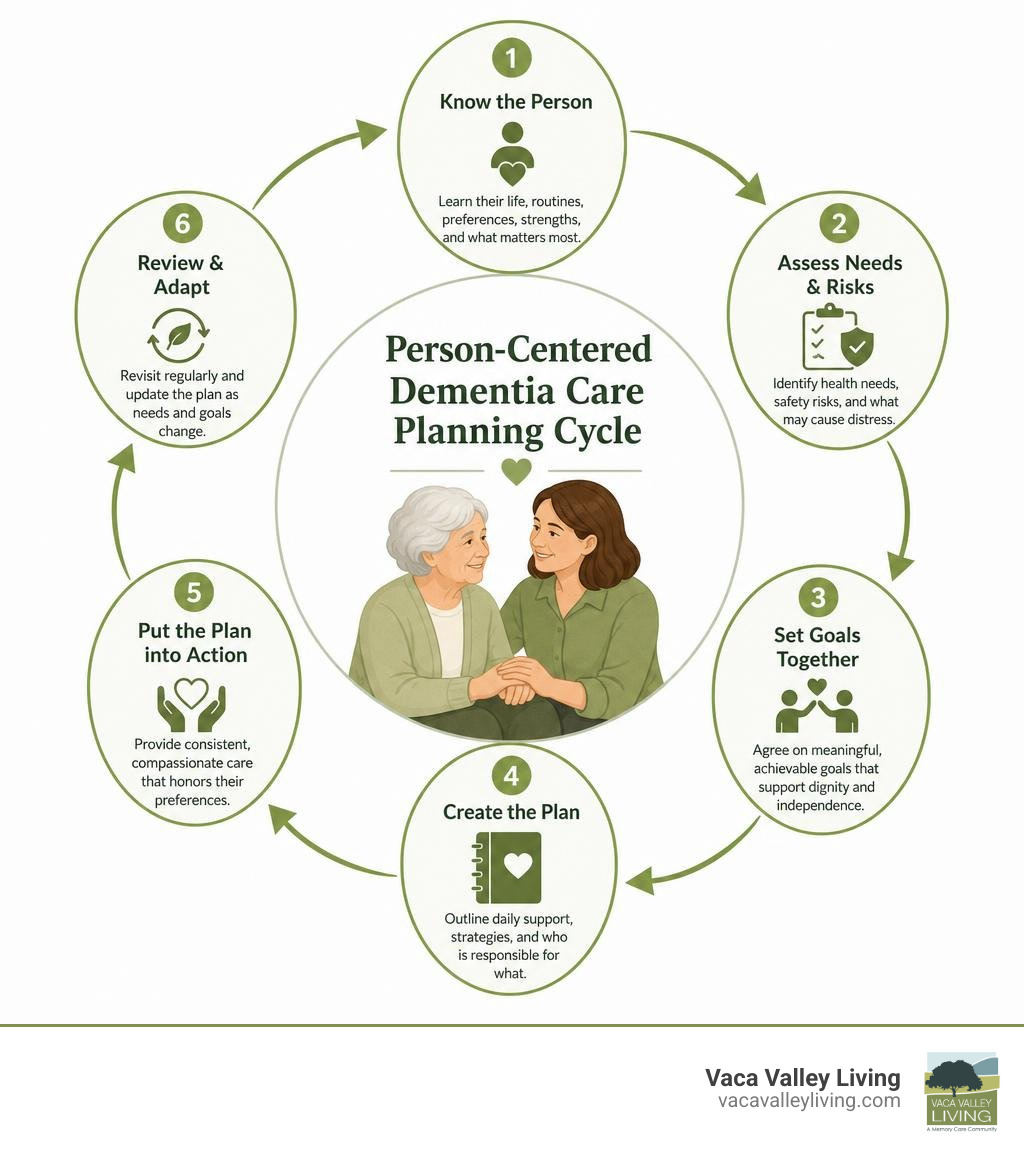
Personalized dementia care plans turn a person's needs, routines, strengths, and preferences into clear daily support. Start by gathering what matters most to your parent: their usual schedule, favorite activities, food preferences, communication style, health needs, safety risks, and what tends to cause distress. Then set a few specific goals, assign responsibilities, and review the plan whenever needs change.
A useful plan should help everyone provide consistent care while preserving as much choice and independence as possible. It is more than a medical checklist. It should reflect the person behind the diagnosis.
For example, a plan may note that Dad feels calmer when he wakes naturally, listens to familiar music after lunch, and takes a short walk before dinner. It should also explain what to do if he becomes confused, misses medication, falls, or shows a sudden change in behavior.
The best plans are created with the person living with dementia whenever possible, alongside family, caregivers, and healthcare professionals. They evolve as dementia progresses, shifting from early support for independence to stronger safety measures, comfort, and dignity in later stages.
Understanding Person-Centered Support: Personalized vs. Standard Care Planning
Standard medical reviews often treat memory loss purely through a clinical lens, focusing narrowly on symptom management, lab results, and brief cognitive scoring. While those details matter, this traditional approach misses the person living with the condition. Standard reviews ask, "What is the deficit?" Personalized planning asks, "Who is this person, and what brings them peace and purpose today?"
A truly personalized approach weaves an individual's unique life history, personality, and values directly into their day-to-day care. Rather than viewing confusion or agitation as random problems to manage, we view these behaviors through evidence-based frameworks like the Need-driven Dementia-compromised Behaviour (NDB) model. This model recognizes that behavioral expressions are usually communications of unmet physical, social, or environmental needs—such as unmanaged physical discomfort, boredom, or sensory overload.
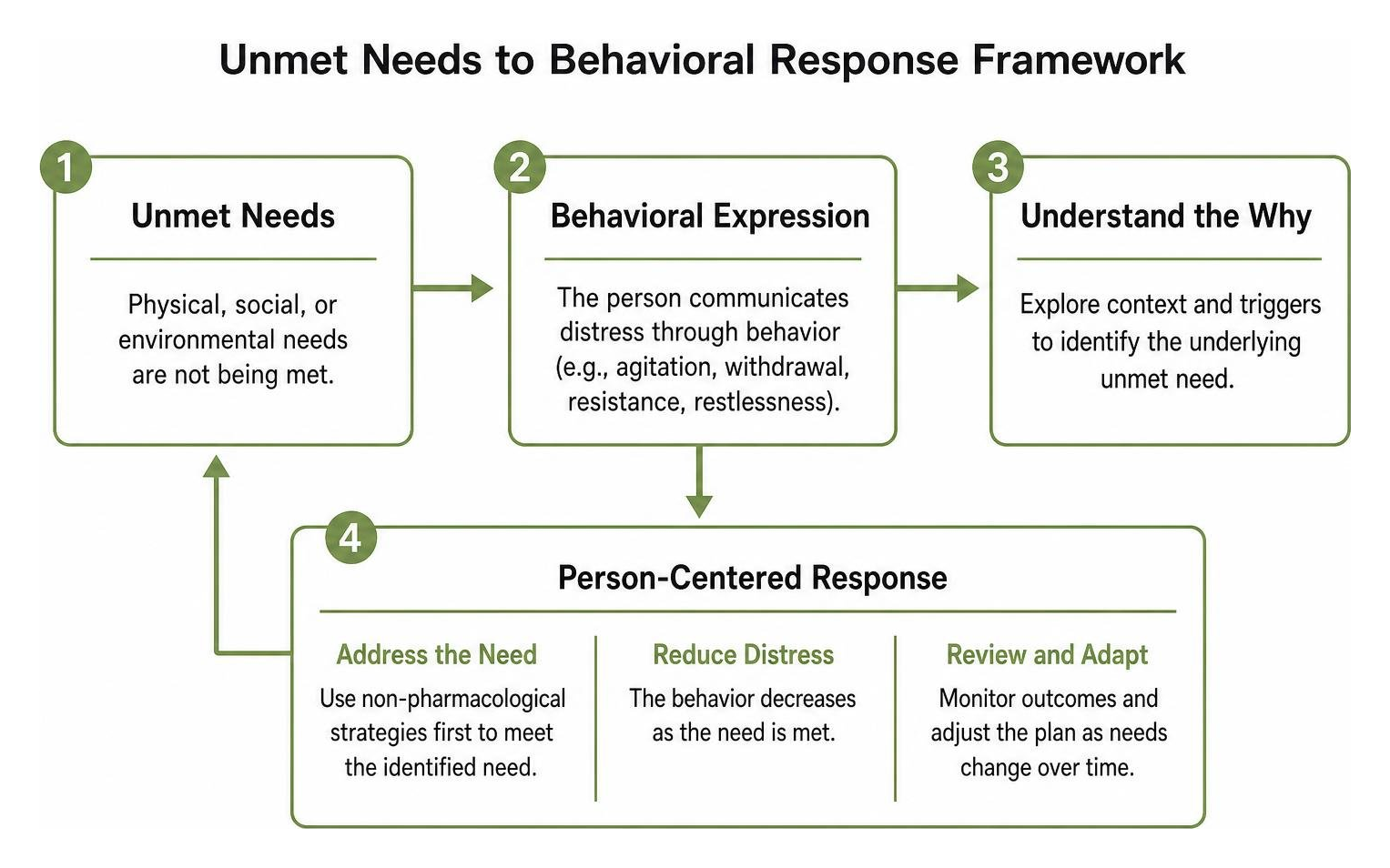
When establishing support, clear guidelines like the clinical guidance on dementia care recommendations emphasize that care planning must involve shared decision-making, non-pharmacological interventions, and thorough assessments of personal history. Non-pharmacological approaches—like structured sensory engagement, reminiscence therapy, and adjusted lighting—should always serve as the primary response to behavioral expressions before considering medications. By shifting from a generic checklist to an individualized roadmap, care teams protect personal agency and dignity.
Systemic Barriers in Primary Care and the Value of Clinical Leadership
Despite the clear benefits of individualized care, primary care settings face systemic hurdles. Time constraints, heavy caseloads, and rigid documentation requirements often turn annual visits into administrative compliance exercises. Frameworks like the Quality and Outcomes Framework (QOF) historically measured whether a care plan was simply completed, rather than evaluating whether it was meaningful, collaborative, or tailored.
Bridging this gap requires dedicated clinical leadership and multidisciplinary coordination. Recent healthcare initiatives, including published PriDem study findings and care planning benchmarks, show what happens when practices adopt a multidisciplinary model led by Clinical Dementia Leads:
- Adoption of Personalized Care Plans: Increased from 37.4% pre-intervention to 64.7% post-intervention.
- Reduction in Missing Plans: Patients without any care plan dropped from 45.8% to 22.3%.
- Agreed Outcomes: Documented goals agreed upon with the individual or family rose from 10.3% to 38.3%.
- Actionable Steps: Plans detailing specific actions to achieve goals grew from 21.7% to 47.3%.
- Addressing Personal Interests: Care plans incorporating personal activities and interests jumped from 6.2% to 40.1%.
- Daily Living Support: Discussion of the home environment and daily activities rose from 29.9% to 61.7%.
When multidisciplinary teams—including physicians, specialist nurses, social care coordinators, and direct care staff—collaborate closely, care plans transform from static digital files into active guides that improve everyday life.
Core Components of Effective Personalized Dementia Care Plans

A comprehensive care plan addresses the whole person across several functional areas. A proven clinical framework for structuring this support is the D.E.M.E.N.T.I.A model:
- D - Diagnosis Review: Understanding the specific dementia subtype, current progression, and individual prognosis.
- E - Effective Support for Carers: Assessing family caregiver strain, education needs, and respite availability.
- M - Medication Review: Regular clinical oversight to simplify regimens and eliminate drugs with high anticholinergic burdens that worsen confusion.
- E - Evaluate Risk: Proactively identifying fall hazards, wandering risks, driving safety, and home vulnerabilities.
- N - New Symptoms Inquiry: Identifying emergent physical or psychological changes early.
- T - Treatments & Therapies: Coordinating non-pharmacological therapies, physical therapy, and cognitive engagement.
- I - Individuality: Documenting personal values, cultural preferences, career achievements, and daily habits.
- A - Advance Care Planning: Recording medical preferences, healthcare proxies, and power of attorney directives early.
In clinical settings, comprehensive assessments and planning sessions are billed under Medicare using specific codes like CPT code 99483. This reimbursement enables clinicians to conduct deep cognitive screenings, assess functional abilities, and evaluate non-verbal pain indicators using validated tools like the PAINAD scale when individuals cannot verbally express discomfort.
| Feature | Standard Clinical Care Checklist | Personalized Dementia Care Plan |
|---|---|---|
| Primary Focus | Managing disease pathology, vitals, and medication compliance | Whole-person wellbeing, dignity, life history, and daily comfort |
| Goal Formulation | Clinician-determined medical targets (e.g., blood pressure markers) | Co-created personal goals agreed upon with the individual and family |
| Daily Routine | Rigid facility or clinic-driven operational schedules | Flexible schedules aligned with natural circadian rhythms and lifelong habits |
| Behavioral Strategy | Symptom suppression, often defaulting to pharmacological options | Identifying underlying unmet needs and applying non-pharmacological solutions |
| Family Role | Passive recipients of medical instructions | Active care partners whose insights and wellbeing are formally supported |
| Review Process | Infrequent, reactive reviews triggered only by acute crises | Dynamic, structured reviews conducted annually or upon functional transitions |
Integrating Daily Routines, Sensory Needs, and Meaningful Engagement
Predictable daily routines provide psychological safety for someone experiencing cognitive decline. When short-term memory fades, muscle memory and familiar rhythmic patterns offer comfort. However, routine should never mean rigidity.
Balancing consistency with flexibility means honoring natural sleep patterns and circadian rhythms rather than forcing arbitrary schedules. If an individual has spent forty years waking up at 8:30 AM, forcing a 7:00 AM breakfast can trigger confusion and distress. Personalizing daily routines also plays a direct role in managing sundowning—a state of increased confusion and anxiety occurring in the late afternoon. Structuring gentle lighting, soothing music, and calming activities before dusk helps ease this transition.
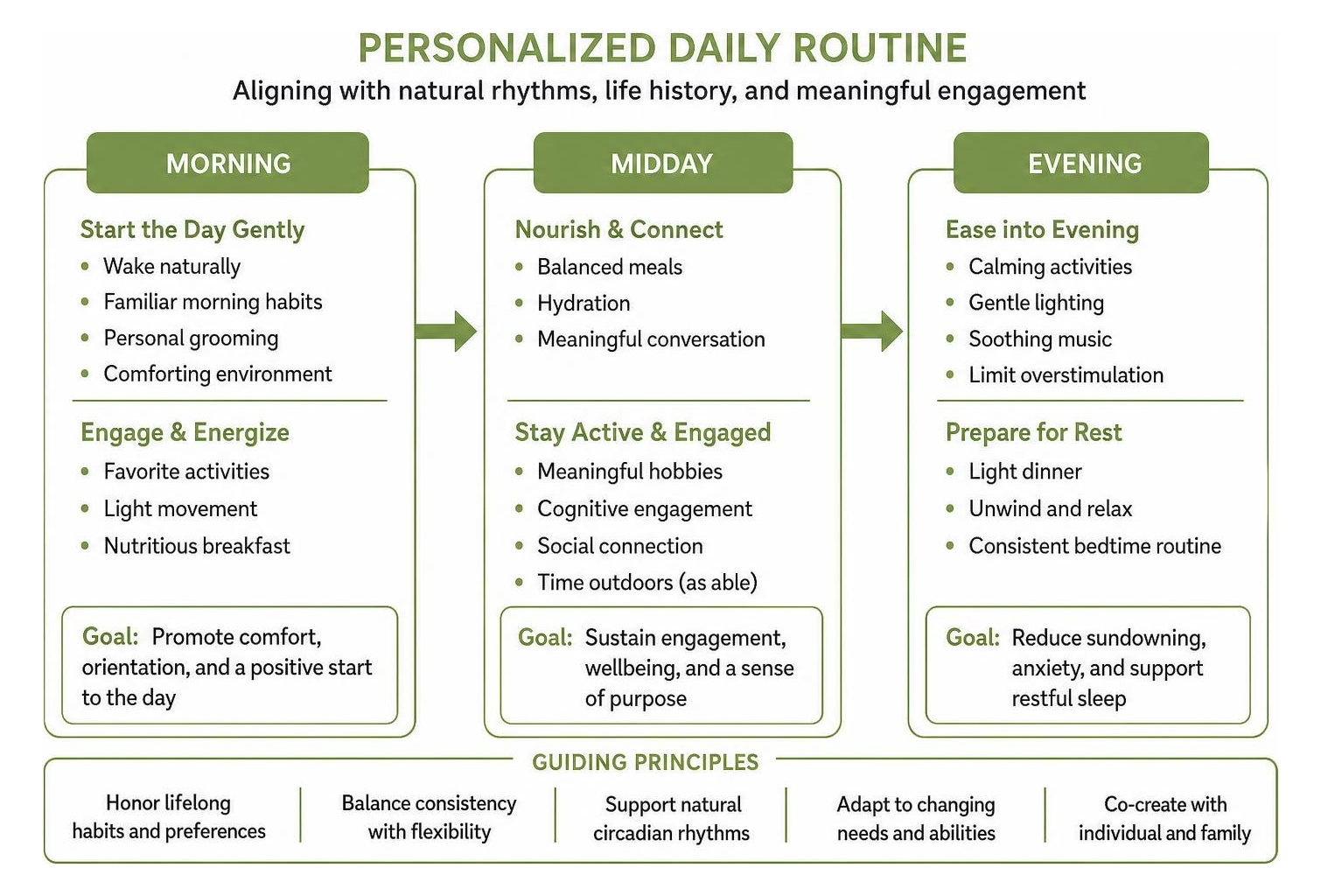
Practical design frameworks, such as the Know-Me dementia care toolkit for personalizing routines, show how identifying an individual’s cognitive, sensory, and motor strengths allows caregivers to adapt activities to their exact abilities. Incorporating favorite hobbies, sensory gardens, or personal grooming sessions at an on-site salon gives seniors a renewed sense of dignity. Access to thoughtfully designed spaces and enriching memory care amenities helps individuals maintain physical mobility, self-expression, and meaningful social connections every day.
Supporting the Family Caregiver and Managing Care Partner Strain
Family members are the cornerstone of dementia support, yet they frequently experience profound emotional and physical fatigue. Studies show that dementia caregivers face significantly higher rates of clinical depression, anxiety, and physical strain than caregivers of individuals with other chronic conditions.
A person-centered plan must assess and support the family caregiver alongside the person with dementia. Tools like the Zarit Burden Interview (ZBI) and formal Caregiver Self-Assessments help clinical teams identify emotional exhaustion before a crisis occurs.
As detailed in the comprehensive dementia care planning guide for professionals, an effective care roadmap incorporates caregiver support directly into its framework:
- Targeted Skills Training: Providing practical education on communication techniques, de-escalation strategies, and how to interpret non-verbal cues.
- Scheduled Respite Care: Integrating regular adult day programs, in-home assistance, or short-term residential stays so family caregivers can rest and recharge.
- Emergency Contingency Protocols: Establishing clear step-by-step plans in case the primary family caregiver becomes ill or unavailable.
- Support Networks: Connecting care partners with local support groups and community-based resources.
How to Build and Execute Custom Care Roadmaps
Creating an effective plan requires a structured, collaborative process that uncovers the small details that make a big difference in daily care.

Step-by-Step Framework for Personalized Dementia Care Plans
- Gather Pre-Consultation Life History: Before holding formal care conferences, invite the family and individual to complete a life story questionnaire. Document past professions, military service, cherished hobbies, daily dietary habits, favorite music genres, family relationships, and specific sensory triggers (such as loud noises or sudden touch).
- Conduct Holistic Capability Assessments: Evaluate remaining cognitive, functional, and sensory abilities rather than solely recording deficits. Focus on what the individual can still comfortably accomplish, whether it is folding laundry, buttering bread, or singing familiar hymns.
- Leverage Structured Toolkits: Utilize resources like the state-level dementia care planning toolkit to ensure all core legal, medical, behavioral, and personal preference domains are covered.
- Designate a Named Care Coordinator: Assign a single primary coordinator or nurse to oversee communication, follow up on action items, and maintain alignment among family members, physicians, and care staff.
- Formulate Actionable, Agreed Goals: Write specific, person-centered goals with concrete steps. For example: "To reduce afternoon restlessness, staff will engage Mr. Miller in 20 minutes of gardening in the courtyard at 2:00 PM, followed by listening to Big Band music."
- Distribute and Implement: Ensure physical and digital copies of the plan are readily accessible to every bedside caregiver, family member, and attending physician.
Adapting Personalized Dementia Care Plans Across Disease Stages
Dementia is progressive, and a static plan will quickly become obsolete. A personalized roadmap must evolve across the stages of the condition:
- Early-Stage Dementia (Focus on Autonomy and Purpose): Care plans prioritize preserving independence, supporting memory through visual prompts and calendars, maintaining active social engagement, and establishing legal and financial directives while the person retains full decision-making capacity.
- Middle-Stage Dementia (Focus on Safety, Routine, and Communication): Support shifts toward hands-on assistance with activities of daily living (bathing, dressing, meal preparation), wandering prevention, environmental modifications, and managing behavioral triggers through gentle sensory interventions.
- Late-Stage Dementia (Focus on Comfort, Sensory Connection, and Dignity): Goals transition to 24-hour physical support, skin integrity maintenance, gentle passive range-of-motion exercises, non-verbal pain screening using observational scales, and soothing sensory therapies (warm blankets, soft music, hand massages).
Frequently Asked Questions About Personalized Dementia Care
How often should a dementia care plan be updated?
A personalized dementia care plan should undergo a formal, comprehensive review at least once every 12 months. However, updates should occur immediately following any significant transition, such as a hospitalization, a change in medication, a noticeable shift in mobility or cognitive capacity, or an increase in family caregiver stress.
Does Medicare cover the creation of a personalized dementia care plan?
Yes. Medicare provides dedicated coverage for comprehensive cognitive assessment and care planning services under CPT code 99483. This benefit allows physicians, nurse practitioners, and clinical specialists to conduct in-depth cognitive evaluations, assess safety risks, evaluate caregiver burden, and develop a comprehensive written care plan during a dedicated clinical visit. Additionally, programs like the CMS GUIDE (Guiding an Improved Dementia Experience) model offer enhanced care coordination and respite services for qualifying beneficiaries.
What is the difference between a personalized care plan and an advance care plan?
While related, they serve distinct purposes. An advance care plan focuses on future medical interventions and legal designations—such as durable power of attorney, living wills, and end-of-life resuscitation preferences. A personalized dementia care plan is a dynamic roadmap for everyday life. It addresses daily routines, emotional wellbeing, recreational preferences, nutritional needs, behavioral triggers, and immediate safety strategies to ensure the highest possible quality of life right now.
Conclusion: Transforming Memory Care Through Individualized Planning
Personalized dementia care planning moves beyond basic medical checklists to create a supportive environment centered around identity, dignity, and personal routine. By taking the time to understand an individual's unique life history, recognizing behavioral changes as communications of unmet needs, and actively supporting family caregivers, we can build care strategies that bring genuine comfort and security.
As cognitive needs evolve, having a dedicated, experienced team makes all the difference in navigating each stage with confidence. At Vaca Valley Living, our family-owned community brings over 50 years of dedicated experience to providing compassionate, highly individualized memory care in Vacaville, California. We invite you to reach out to our team to discover how our 24-hour personalized care, supportive environment, and engaging amenities can help your loved one thrive.