
Respite Care for Dementia Gives Caregivers Safe, Needed Relief

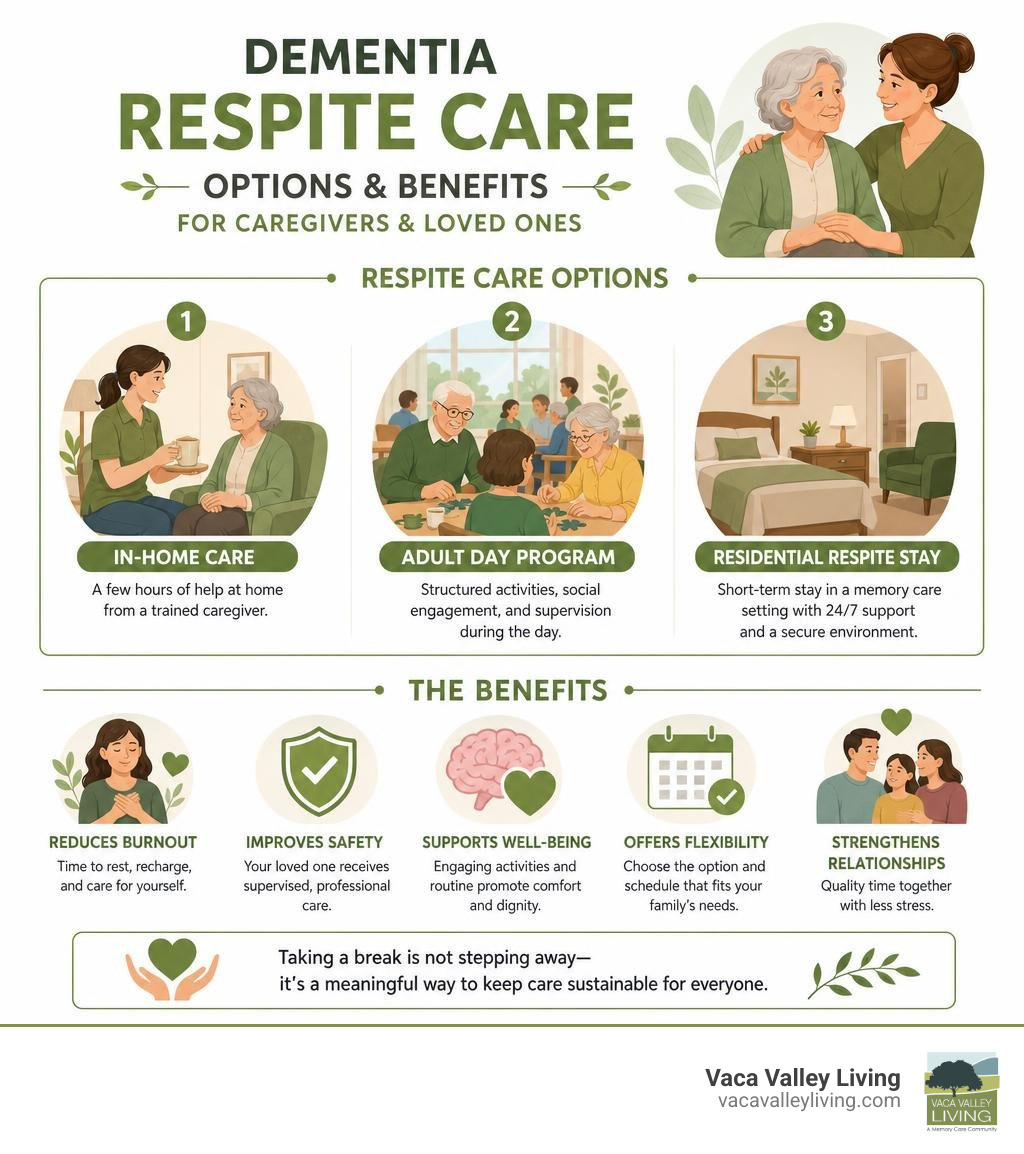
Respite care for dementia provides short-term, supervised care for your loved one so you can rest, work, attend appointments, or handle an emergency. Options include a few hours of in-home help, a structured adult day program, or a short stay in a memory care setting with around-the-clock support.
The right choice depends on your parent's needs. Someone who feels safest at home may do well with a trained in-home caregiver. A parent who enjoys activities may benefit from adult day care. If wandering, nighttime wakefulness, or complex personal-care needs are a concern, a secured residential respite stay may offer greater peace of mind.
Taking a break is not stepping away from your role. It is a practical way to protect your health, reduce burnout, and keep care safer and more sustainable for the person you love. Respite can also give your family a low-pressure chance to see whether future memory care could be a good fit.
Understanding Respite Care for Dementia: Types and Services
Caring for someone navigating cognitive decline is a deeply rewarding act of devotion, but it is also physically demanding and emotionally exhausting. Without structured breaks, primary caregivers face severe burnout, which directly impacts their health and the safety of the individual living with dementia.
According to the Alzheimer's Association guide to respite support, temporary relief services provide a safe, engaging environment for seniors while family members rest, recharge, and attend to their own lives.
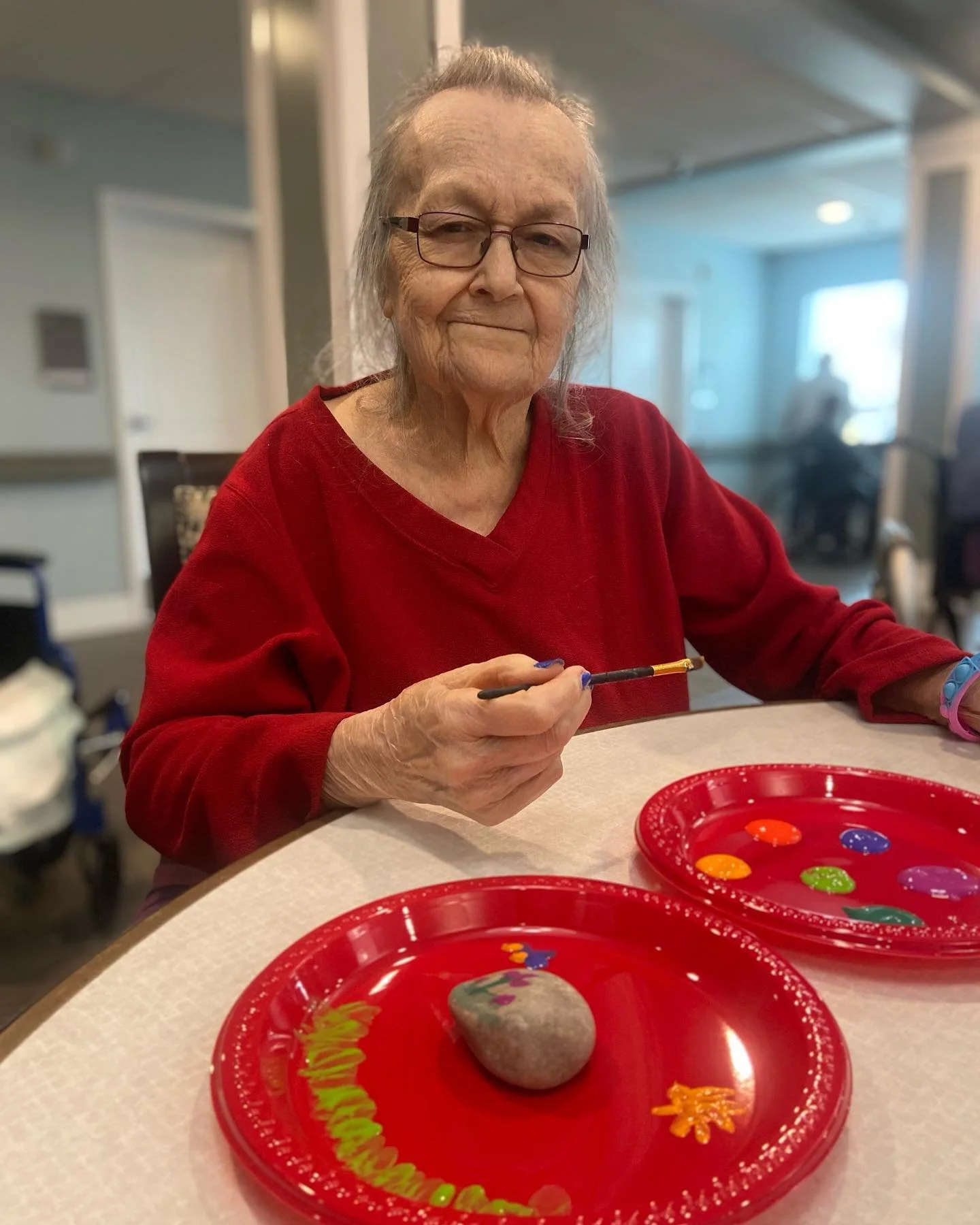
Depending on your family's routine, caregiving burden, and medical requirements, temporary support generally falls into three main categories: in-home care, adult day centers, and residential memory care stays.
In-Home Care and Companion Support
In-home respite allows your loved one to stay in their familiar environment while a professional steps in to assist. This setting works exceptionally well for seniors in the early or moderate stages of dementia who become anxious or disoriented when away from home.
In-home services range from non-medical companion aides—who provide basic supervision, conversation, and recreational activities—to personal care aides who assist with bathing, dressing, and toileting. Homemaker aides can prepare meals and manage light housekeeping, while licensed nurses deliver skilled care, such as wound management, injections, or tube feeding. In-home sitting provides targeted blocks of relief, allowing you to run errands, go to medical checkups, or simply take an uninterrupted afternoon nap.
Adult Day Care Centers
Adult day care centers offer structured daytime programming outside the home, typically operating during standard weekday business hours. These programs are ideal for working family caregivers who need consistent, dependable coverage during the day.
At an adult day center, individuals participate in therapeutic recreation, cognitive exercises, music, and art therapy designed specifically for people with memory loss. In addition to peer interaction and nutritious meals, many licensed centers provide health monitoring, medication reminders, and access to physical, occupational, and speech therapy.
Short-Term Residential Memory Care Stays
When family caregivers need to travel, undergo surgery, or simply take an extended multi-day rest, residential respite care provides complete 24/7 staffing within a specialized memory care community.
Residential settings feature purpose-built environments designed to minimize confusion, prevent elopement, and manage nighttime restlessness. Trained memory care professionals handle all medication administration, personal hygiene, and daily meals while offering purposeful social activities.
Residents also enjoy supportive residential amenities, including community dining rooms, secure walking gardens, and on-site salons, giving families total peace of mind that their loved one is safe and engaged.
| Respite Care Type | Typical Duration | Best Suited For | Key Services Included |
|---|---|---|---|
| In-Home Care | 2 to 8 hours per visit | Seniors who prefer familiar surroundings | Companionship, personal hygiene, meal prep, light housekeeping |
| Adult Day Programs | 4 to 8 hours (weekdays) | Active seniors who enjoy group socialization | Structured activities, meals, peer engagement, therapy services |
| Residential Memory Care | A few days up to 30 days | High care needs, wandering risks, caregiver travel/surgery | 24/7 supervision, medication management, secured suites, full amenities |
When to Seek Respite and How to Select the Right Provider
Caregivers often wait until they are physically and emotionally depleted before considering outside help. However, proactive planning prevents emergencies and preserves your long-term health.
Recognizing Signs of Caregiver Burnout
Recognizing the early warning signs of caregiver strain helps you step in before your own health suffers:
- Chronic fatigue and disrupted sleep: Feeling constantly exhausted, even after sleeping, or waking frequently to check on your loved one.
- Physical strain and frequent illness: Experiencing new aches, recurring infections, or worsening chronic conditions due to chronic stress.
- Neglecting personal health: Skipping your own doctor appointments, dental cleanings, or prescription refills.
- Emotional changes: Increased irritability, anxiety, feelings of hopelessness, or frequent crying spells.
- Social withdrawal: Pulling away from friends, hobbies, and personal interests because caregiving consumes all your time and mental energy.
How to Choose the Right Respite Care for Dementia
Selecting the best care setting depends on the individual's specific cognitive, behavioral, and physical needs. As detailed in this guide on dementia respite options and provider selection, matching the level of service to your loved one's functional stage prevents distress and ensures safety.
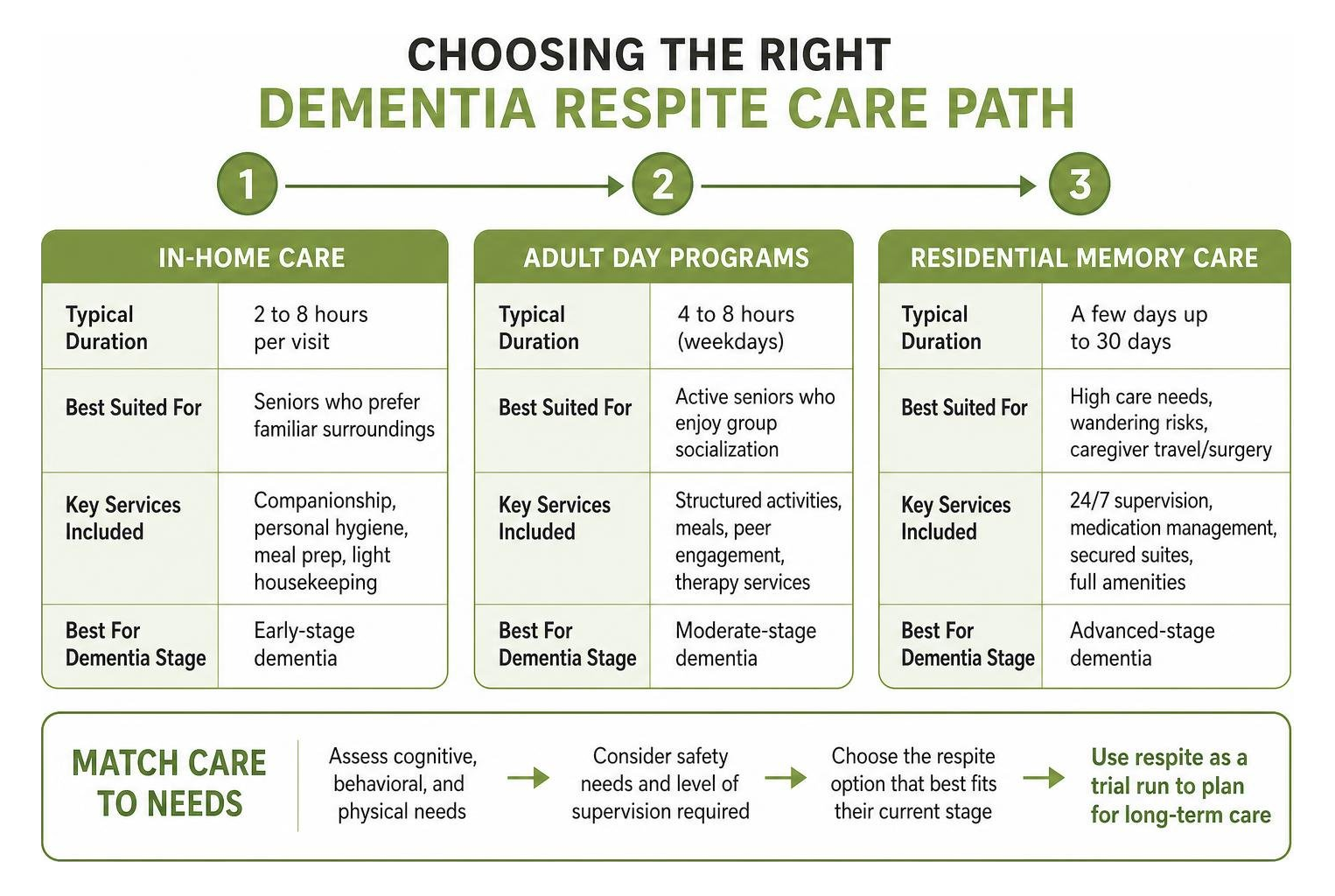
- Early-stage dementia: Individuals who are independent in basic self-care often thrive with in-home companion visits or adult day programs that emphasize social interaction.
- Moderate-stage dementia: Those experiencing sundowning symptoms, confusion, or needing help with bathing and dressing benefit from structured adult day care or short residential stays.
- Advanced-stage dementia: Seniors with severe communication deficits, nocturnal wandering, or complex medical needs require the 24-hour supervision and secured environments found in specialized memory care communities.
Using Respite as a Trial Run for Long-Term Memory Care
One of the greatest practical benefits of a residential respite stay is that it serves as a low-stakes trial run. Transitioning a loved one to long-term memory care can feel overwhelming, but a short stay allows the family to evaluate how their loved one adapts to a new setting.
During a short-term stay, your family can observe the community's daily rhythm, meal quality, and social programming while exploring personalized floor plans to see how private suites feel in everyday use. At the same time, the care team learns your loved one's specific preferences, favorite routines, and soothing techniques. This trial makes any future move smoother and far less stressful for everyone involved.
Financial Planning and Paying for Respite Care
Understanding the costs associated with respite care helps families budget effectively and avoid unexpected expenses.
Assessing Costs of Respite Care for Dementia in 2026
Costs vary widely based on the care setting, geographical location, and the specific level of assistance required:
- Adult Day Care: In 2026, adult day programs average approximately $103 per day (with national median figures historically tracking around $95 per day, or $2,058 per month). This makes daytime community care the most affordable structured option for working caregivers.
- Residential Memory Care Stays: Facility-based respite costs average $152 to $275 per day (roughly $4,560 to $8,250 per month), depending on care levels, room furnishings, and specialized memory support services.
- Nursing Home Respite: High-acuity nursing facilities providing private rooms with skilled medical care average about $305 per day in 2026.
- 24/7 In-Home Care: Hiring an around-the-clock private in-home aide averages $34 per hour, totaling approximately $24,733 per month. Because constant in-home coverage is cost-prohibitive for most families over the long run, residential respite stays frequently offer a much more sustainable and economical solution for full-time care needs.
Medicare, Medicaid, and Caregiver Grant Assistance
Respite services are primarily paid for privately, but several public programs and grants can help offset out-of-pocket costs:
- Medicare Hospice Respite Benefit: Original Medicare does not cover routine or long-term respite care. However, if an individual is enrolled in Medicare hospice care, Medicare covers up to five consecutive days of inpatient hospice respite care per stay at a Medicare-approved facility, with the family paying a 5% coinsurance.
- Medicaid HCBS Waivers: Many state Medicaid programs offer Home and Community-Based Services (HCBS) waivers that reimburse families for adult day care, in-home personal care, and short-term residential stays.
- The GUIDE Model: Medicare's Guiding an Improved Dementia Experience (GUIDE) Model provides eligible dementia patients and their caregivers access to coordinated care, including up to $2,500 annually in reimbursed respite services.
- National Family Caregiver Support Program (NFCSP): Administered by local Area Agencies on Aging, the NFCSP provides grants and vouchers for respite services. Notably, this program waives its standard 60+ age threshold for caregivers assisting individuals of any age diagnosed with Alzheimer's disease or related dementias.
- Veterans Benefits: Eligible veterans and their surviving spouses may access respite days through VA Community Care or apply the VA Aid and Attendance pension toward private respite stays.
Finding Providers, Planning for Emergencies, and Easing the Transition
Setting up respite care before an urgent crisis occurs ensures your loved one receives consistent, compassionate support whenever you need to take time away.
Locating and Vetting Local Programs
To find reputable respite providers in your community, start by contacting your local Area Agency on Aging (AAA) or utilizing the ARCH National Respite Locator Service.
When evaluating potential providers, ask targeted questions:
- Are staff members specifically trained in dementia communication and behavioral management?
- How do you handle exit-seeking behaviors, agitation, or evening sundowning?
- What are your staff-to-resident ratios during both day and night shifts?
- Is medication administration included in the flat daily rate, or billed separately?
- What is your emergency protocol if my loved one requires immediate medical care?
Preparing for Unplanned and Emergency Respite Situations
A caregiver's sudden illness, injury, or family emergency can leave a person living with dementia without supervision. Preparing an emergency respite plan ahead of time prevents panic:
- Pre-qualify with local providers: Complete initial intake paperwork and medical assessments with a local memory care community or home care agency before an emergency happens.
- Maintain an accessible care binder: Keep an updated list of all current medications (including exact dosages and schedules), physician contact details, dietary restrictions, and emergency contacts on your kitchen counter or refrigerator.
- Schedule non-emergency trial visits: Introduce your loved one to a respite provider during planned, low-stress visits. Familiarity with the staff and environment significantly reduces anxiety if sudden emergency placement is required.
Strategies to Ease the Transition for Your Loved One
Transitions can trigger disorientation in seniors with cognitive impairments. Applying thoughtful strategies helps your loved one feel calm, secure, and respected:
- Time conversations carefully: Discuss respite plans during your loved one's best cognitive window—typically in the morning—rather than late in the day when fatigue and sundowning can increase confusion.
- Reframe the visit positively: Introduce an adult day center as a "social club" or a residential respite stay as a "short vacation" or "temporary retreat" while home maintenance is being completed.
- Pack familiar comfort items: Bring family photographs, a favorite soft blanket, a familiar sweater, preferred toiletries, and favorite music or books to make a residential suite feel like home.
- Brief the staff on personal preferences: Provide the care team with a "life story" one-pager outlining their former career, favorite topics of conversation, daily routines, wake-up habits, and foods they love or dislike.
Frequently Asked Questions About Dementia Respite Care
Does Medicare pay for respite care for dementia?
Medicare does not cover general, long-term, or standard residential respite care. It only covers respite under the Medicare Hospice Benefit. If your loved one is actively enrolled in hospice care, Medicare will cover up to five consecutive days of inpatient respite care at a time in an approved facility, with the family responsible for a 5% copay of the Medicare-approved amount.
How long can a person with dementia stay in respite care?
Respite care duration varies depending on your family's needs and provider policies. In-home visits typically run between 2 and 8 hours. Adult day programs offer full-day or half-day coverage during weekdays. In residential memory care communities, respite stays can range from a weekend to up to 30 days, providing plenty of time for caregivers to rest, travel, or recover from an illness.
How do I handle caregiver guilt when booking respite care?
Caregiver guilt is common, but taking time for yourself is essential. Reframing respite care from "taking time off" to "preserving sustainable care" helps you see the broader picture. Respite care directly benefits your loved one by providing specialized social stimulation, group activities, and professional support, while giving you the physical rest required to remain a loving, patient caregiver over the long haul.
Conclusion
Caring for someone with Alzheimer's or memory loss requires deep patience and resilience. However, nobody can do it alone 24 hours a day, 365 days a year. Utilizing temporary care is a practical, healthy choice that protects your physical and mental well-being while ensuring your loved one receives safe, engaging, and compassionate supervision.
Whether you need a few hours of support each week, assistance during a family vacation, or a low-stress trial run to explore memory care options, temporary care provides the balance your family needs. When you are ready to explore supportive options in Solano County, schedule a visit to experience our memory care community and let us give your family lasting peace of mind.