
How Memory Care Keeps Daily Medications Safe

Safe medication management in memory care starts with an accurate medication list and a care plan for each resident. Staff give each dose as prescribed, record what was taken, and watch for side effects or signs of pain. A nurse, prescriber, and pharmacist can review the list regularly to catch problems and ask whether each medicine is still needed.
This extra care matters when a person with dementia cannot explain how they feel, has trouble swallowing, or resists a dose. For families, the key questions are simple: Who gives the medicine, who checks the list, and what happens when something changes?
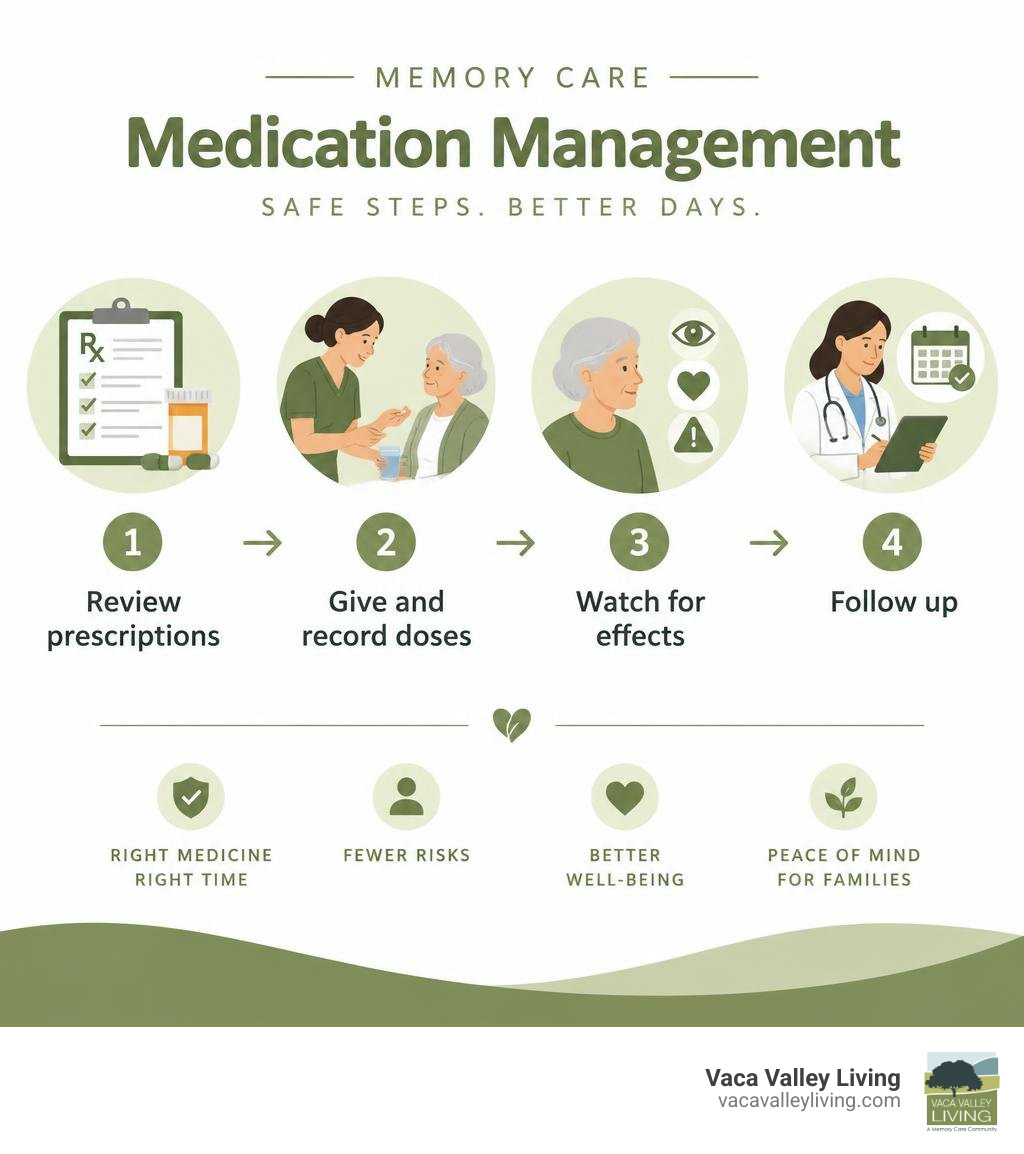
The Clinical Challenges of Medication Administration in Dementia
Caring for individuals with progressive cognitive decline introduces distinct pharmacological hurdles. In long-term residential care, polypharmacy is common. Older residents in residential facilities are often prescribed nearly ten distinct medication classes simultaneously, compared to fewer than seven among seniors living independently.
Nearly 70% of long-term care residents take at least one potentially inappropriate medication based on the Beers criteria, compared to less than half of seniors in community settings. When an individual cannot clearly describe symptoms, differentiate between side effects, or remember if they took a tablet moments ago, the margin for error narrows. Between half and two-thirds of long-term care residents experience an adverse drug reaction within any given year.
At our dementia care community, managing these complexities requires specialized clinical oversight, consistent observation, and a supportive, structured environment.
Physical Administration and Swallowing Complications
As dementia advances, motor planning and neurological swallowing reflexes deteriorate. Dysphagia becomes a daily consideration for many seniors. When a resident struggles to swallow a standard tablet or capsule, forcing administration creates a severe risk of aspiration, choking, or respiratory complications.
Clinical teams address these issues using careful adaptations:
- Dysphagia Screenings: Regular clinical swallow assessments identify early signs of coughing, throat clearing, or pocketing food and pills.
- Formulation Adjustments: Prescriptions may be converted to liquid suspensions, dissolvable oral strips, or transdermal patches.
- Crushed Medication Protocols: When clinically approved and compatible with pharmacological stability, tablets can be crushed and mixed into smooth purees, such as applesauce or yogurt (which can turn pill time into something akin to a small dessert break).
- Behavioral Redirection: If a resident expresses fear or resistance during med passes, staff pause, step back, and use gentle verbal cueing or familiar routines rather than forcing compliance.
Adverse Drug Events and Cognitive Interactions
Older brains affected by Alzheimer’s disease or other dementias show heightened vulnerability to central nervous system agents. Anticholinergic drugs (often found in over-the-counter allergy remedies, sleep aids, and bladder medications) block acetylcholine, a neurotransmitter already depleted in Alzheimer’s disease. This can worsen memory loss, trigger acute delirium, and cause dry mouth or urinary retention.
Similarly, medications carrying high sedative burdens drastically increase fall risks, postural instability, and daytime drowsiness. Because an adverse drug event in a person with dementia frequently manifests as sudden agitation, withdrawal, or confusion rather than a neatly articulated complaint, daily care staff must be trained to recognize behavior changes as possible medication side effects rather than simple disease progression.
How Memory Care Medication Management Protocols Ensure Safety
To prevent errors and adverse events, dedicated memory care units use layered clinical protocols. By maintaining 24-hour staffing, digitized tracking systems, and formal reconciliation procedures, our memory care medication management protocols protect residents from duplicate therapies and missed doses.

Following recognized guidelines for long-term care medication management, teams conduct full medication reconciliations during move-in, after any hospital visit, and following outside medical appointments.
Safe Storage and Dispensing in a Secure Environment
Within a secure memory care unit, physical safety controls prevent accidental ingestion or unauthorized access to pharmaceuticals:
- Double-Locked Storage: Controlled substances are secured behind double locks and digital keycard access, with strict shift-to-shift count verifications.
- The "Five Rights" Verification: Every administration step adheres to the foundational safety rules: the right resident, right medication, right dose, right route, and right time.
- Electronic Medication Administration Records (eMAR): Digital barcode scanning directly matches the resident's profile with the specific medication packaging, logging timestamps and reducing transcription errors.
- Structured Error Tracking: Facilities use standardized occurrence reports to investigate any near-misses, tracking patterns and refining delivery procedures.
Tailoring Medication Schedules to Personalized Care Plans
Rigid, one-size-fits-all schedules rarely work for individuals living with dementia. Medication routines must align with individual circadian rhythms, natural waking patterns, and behavioral tendencies.
For residents who experience sundowning—late-afternoon anxiety, restlessness, or confusion—care teams schedule daily medications well ahead of peak fatigue periods. Creating personalized care plans for seniors ensures that daily doses integrate smoothly into meals, sensory activities, or quiet relaxation periods, preserving resident dignity and minimizing friction.
Deprescribing Strategies and the OptimaMed Framework
Over time, older adults often accumulate prescriptions for conditions that are no longer active, or take medications whose risks outweigh their potential benefits in late-stage dementia. Deprescribing is the planned, supervised process of reducing or discontinuing inappropriate or non-essential medications.
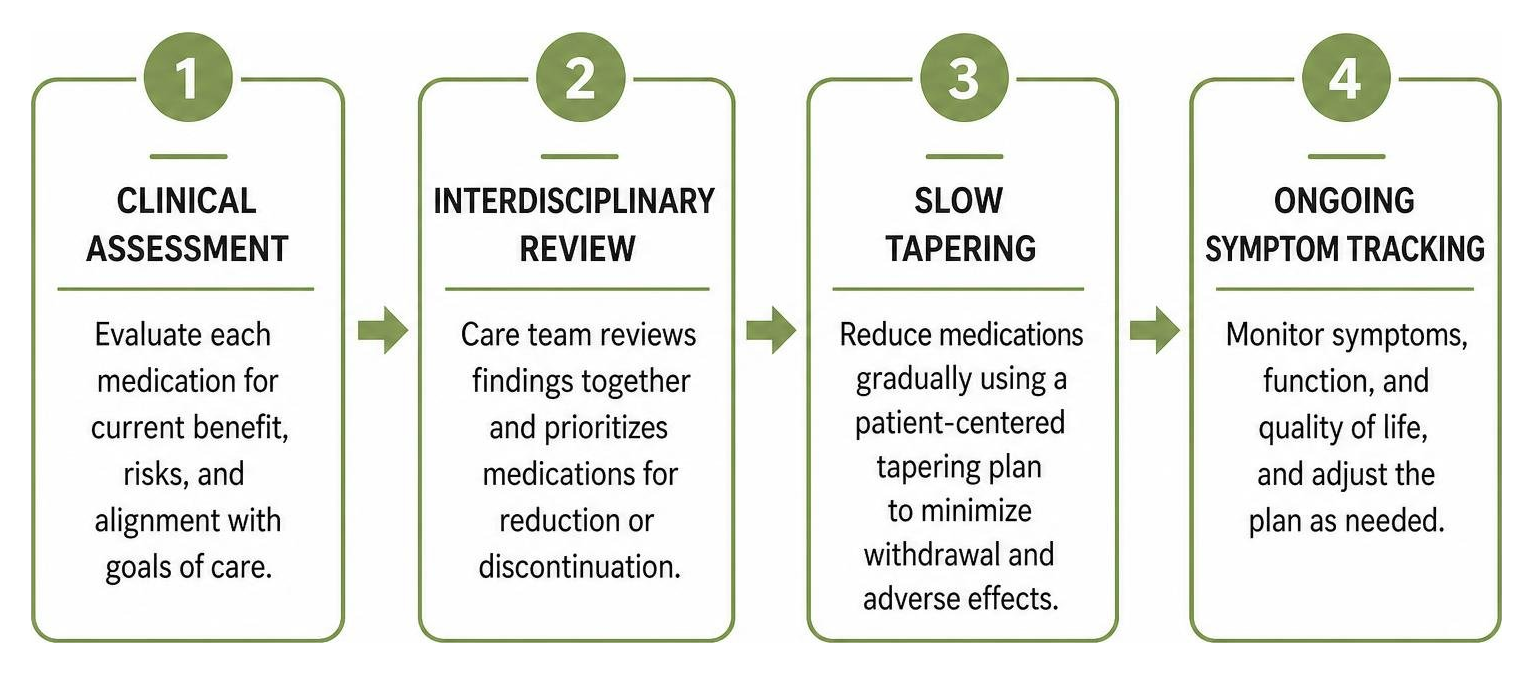
A notable model in this field is the OptimaMed framework (Kröger et al., 2023), evaluated in research on the OptimaMed deprescribing intervention. This pragmatic, interdisciplinary intervention combines structured knowledge-exchange sessions for clinical teams with consensus-based medication review tools tailored for advanced dementia.
In a pilot evaluation of the OptimaMed approach, the average number of medications per resident dropped from 9.43 to 8.41 within four months. In a larger six-month controlled study, daily regular medications dropped from 7.69 to 5.90 in control sites and from 7.1 to 6.6 in intervention sites. Most importantly, these reductions occurred without worsening resident agitation or pain scores, showing that carefully pruning medication lists can lower chemical burdens safely. Integrating these principles into overall dementia care plans keeps therapies aligned with quality of life and comfort.
Applying Deprescribing in Memory Care Medication Management
Systematic reviews covering 41 randomized controlled trials reveal that structured deprescribing interventions achieve a 59% reduction in potentially inappropriate medications and a 24% reduction in hospital admissions among residential care populations. In a Canadian long-term care study, pharmacists put forward 78 targeted deprescribing recommendations; 85.1% were adopted by attending physicians, resulting in residents taking an average of 2.9 fewer daily medications after six months compared to control groups.

To apply these approaches successfully, care teams follow clear steps:
- Tapering Algorithms: High-risk drug classes—including antipsychotics, sedatives, proton pump inhibitors, and blood pressure medications—are tapered gradually according to evidence-based schedules rather than stopped abruptly.
- Consensus Appropriateness Criteria: Using tools such as the STOPP/START and Beers criteria, clinicians evaluate the clinical utility of each drug against the resident's overall prognosis.
- Family Engagement and Education: Caregivers may fear that stopping a medication means withdrawing care. Using clear educational materials and open discussions helps families understand that reducing unnecessary pills decreases fall hazards, nausea, and drug interactions while improving daily alertness.
Monitoring Behavioral Symptoms and Pain During Tapering
Deprescribing requires careful observation. When a medication is tapered, nurses and care staff track comfort indicators using validated clinical tools:
- PACSLAC-F (Pain Assessment in Checklist for Seniors with Limited Ability to Communicate): Evaluates facial expressions, body movements, and vocalizations to identify hidden physical discomfort.
- CMAI (Cohen-Mansfield Agitation Inventory): Monitors physical and verbal behaviors over time to detect shifts in agitation during dosage adjustments.
The table below outlines common medication categories evaluated during residential memory care reviews, their standard indications, and practical considerations for tapering:
| Medication Class | Original Clinical Indication | Deprescribing Considerations & Risks | Monitoring Protocols |
|---|---|---|---|
| Antipsychotics | Severe agitation, hallucinations, or behavioral distress | Increased risk of stroke, extrapyramidal symptoms, and falls; taper slowly unless addressing acute psychosis | CMAI agitation tracking; evaluate non-pharmacological triggers weekly |
| Proton Pump Inhibitors (PPIs) | Acid reflux, GERD, or short-term ulcer prophylaxis | Long-term use linked to C. difficile infection, bone fractures, and impaired micronutrient absorption | Monitor for rebound acid hypersecretion; switch to as-needed antacids if mild |
| Sedative-Hypnotics (Benzodiazepines / Z-drugs) | Insomnia, sleep disruption, or acute situational anxiety | Significant cognitive blunting, worsening daytime confusion, elevated fall and fracture risks | Gradual taper over weeks/months to prevent withdrawal rebound; sleep routine audit |
| Antihypertensives | Essential hypertension or cardiovascular protection | Overly aggressive blood pressure targets cause orthostatic hypotension, dizziness, and falls | Regular sitting/standing BP checks; adjust goals to maintain cerebral perfusion |
| Statins / Lipid Lowering | Primary or secondary cardiovascular disease prevention | Limited short-term benefit in late-stage dementia; potential muscle aching or liver load | Re-evaluate overall life expectancy and preventive goals with family |
Interdisciplinary Collaboration and Clinical Pharmacist Oversight
Safe medication management relies on close teamwork across several disciplines. General practitioners, licensed nurses, certified medication aides, and consulting clinical pharmacists must communicate smoothly to keep therapy aligned with each resident's changing needs.
Published evidence on pharmacist-supported dementia medication reviews highlights the value of this collaboration. When clinical pharmacists evaluate regimens alongside prescribing physicians and bedside nurses, medication errors decrease, therapy appropriateness rises, and physicians report meaningful reductions in clinical review burden.
Integrating Pharmacist Reviews into Memory Care Medication Management
Federal and state guidelines outline strict regulatory standards for medication regimen reviews. Licensed consultant pharmacists must audit the medication profile of every long-term care resident at least monthly.
This regular review process ensures that:
- Every drug has an active, documented clinical indication.
- Required laboratory tests (such as renal panels for kidney-cleared drugs or therapeutic drug levels) are up to date.
- Potential drug-drug and drug-nutrient interactions are caught early.
- Opportunities for dosage reductions are identified and shared with the attending physician.
In specialized memory care settings, these regular audits provide an essential safety net for vulnerable seniors.
Overcoming Communication Gaps and Ensuring Follow-Up
Even the best clinical recommendations can stall if communication across shifts or care teams breaks down. Facilities maintain clear follow-through by:
- Shared Electronic Records: Storing pharmacist notes, nursing observations, and physician orders in an integrated platform where all team members have immediate access.
- Regular Care Conferences: Holding multidisciplinary meetings where nurses share day-to-day behavioral observations that might not appear in standard lab results.
- Care Continuity: Assigning dedicated nurses and pharmacists to specific resident groups, building familiar relationships that make subtle behavioral or physical changes easier to spot.
Frequently Asked Questions About Medication in Memory Care
How does medication administration differ in memory care compared to standard assisted living?
Standard assisted living typically serves residents who can manage their own medications or require basic reminders and assistance opening pill packs. In memory care, staff manage the entire process. Care teams undergo specialized dementia training to address resistance, use adaptive swallowing techniques, follow structured behavioral charting, and maintain secure double-locked storage for all pharmaceuticals.
How often are resident prescriptions reviewed by a medical professional?
Prescriptions undergo several layers of review. A licensed consulting pharmacist audits the complete regimen monthly. Attending physicians evaluate orders during scheduled rounds and care conferences (typically quarterly, or whenever an acute change in health status occurs), and nurses review orders with each shift handoff and prescription refill.
Can family members request a deprescribing review for their loved one?
Yes. Family members and health care proxies can request a medication review during regular care plan meetings or by contacting the director of nursing. Families can ask prescribers to review the necessity, risks, and benefits of each medication, exploring whether certain treatments can be safely tapered to improve comfort and daily alertness.
Conclusion
Managing medications for seniors with advanced dementia requires far more than handing out daily pills. It demands continuous clinical observation, structured interdisciplinary collaboration, and a willingness to thoughtfully deprescribe therapies that no longer serve a resident's well-being.
At Vaca Valley Living in Vacaville, California, our family-owned community draws on more than 50 years of senior care experience. We provide 24-hour staffing, personalized care plans, and a warm, home-like environment where resident safety, dignity, and comfort always come first.
To learn more about how our clinical team supports families across Vacaville, Fairfield, Dixon, and neighboring Northern California communities, explore specialized residential memory care services and schedule a visit today.
References
Kröger E, Wilchesky M, Morin M, Carmichael PH, Marcotte M, Misson L, Plante J, Voyer P, Durand P. "The OptimaMed intervention to reduce medication burden in nursing home residents with severe dementia: results from a pragmatic, controlled study.." BMC geriatrics, 2023. PMCID PMC10464023.