Dementia Care Community Options: Navigating Everyday Support with Confidence
Finding the Right Dementia Care Community Support
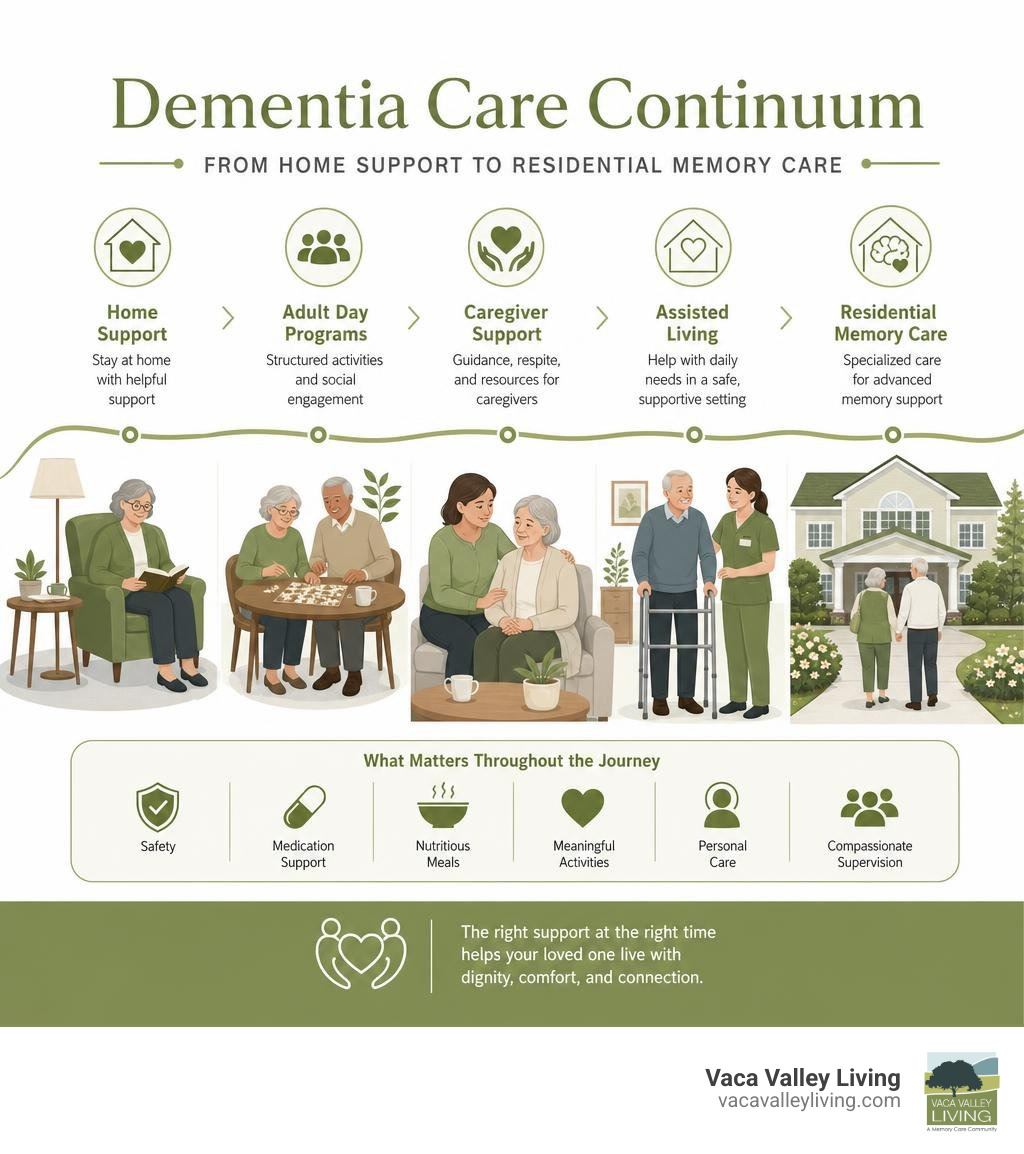
A dementia care community can include help at home, adult day programs, caregiver support, assisted living, and specialized memory care. Start by matching support to your parent's daily needs: safety, medication help, meals, personal care, meaningful activities, and supervision.
For many families, the practical first steps are:
- Ask the person's health care team for a dementia care assessment and local referrals.
- Contact an Area Agency on Aging or the Eldercare Locator for home care, respite, transportation, and adult day services.
- Compare residential options in person if home is no longer safe or caregiving needs exceed what family can provide.
- Look for person-centered care, trained staff, clear family communication, and routines that preserve dignity.
Most people with dementia live outside nursing homes. Research cited in this guide estimates that 57% live in the community with others and 24% live alone. That can make local support essential, especially when memory loss begins to affect cooking, driving, medication routines, falls, wandering, or personal care.
The goal is not simply to find more help. It is to build a dependable circle of support that helps your loved one live as safely, comfortably, and meaningfully as possible.
Understanding Community Disparities and the Social Determinants of Cognitive Health

Dementia does not develop in a vacuum. The environments where we live, work, and grow older play a substantial role in brain health across our entire lives. Neighborhood infrastructure, social cohesion, and physical surroundings influence our baseline cognitive reserve and our daily quality of life after a diagnosis.
When older adults live in neighborhoods rich in green space, walkable sidewalks, and community gathering spots, they maintain higher levels of physical activity and regular social connection. Conversely, persistent exposure to environmental neurotoxicants accelerates cognitive impairment. Studies highlight that chronic exposure to fine particulate air pollution and sustained ambient noise pollution can trigger neuroinflammation, elevate cardiovascular strain, and quicken cognitive decline.
Social isolation poses an equally severe risk. Loneliness deprives the brain of neural stimulation and is closely linked with faster functional decline. When a community fosters strong social networks, it provides a protective cushion that keeps individuals engaged, mentally active, and emotionally secure.
Structural Inequities and the Lifespan Impact on Brain Health
Cognitive disparities often reflect long-standing structural inequities across communities. Historical practices like redlining and systematic municipal disinvestment have left many neighborhoods with fewer healthcare resources, limited access to nutritious foods, and underfunded public services.
These systemic disadvantages shape brain health from early childhood through late adulthood:
- Educational Attainment: Educational access strongly builds cognitive reserve. Research shows that national declines in dementia prevalence among older adults have been largely driven by generational gains in educational attainment, while individuals without a high school diploma face higher lifetime risks and earlier symptom onset.
- Socioeconomic Disadvantage: Neighborhoods with fewer economic resources often lack adult day programs, memory wellness clinics, and accessible transit.
- Protective Cultural Buffering: Strong social cohesion within tight-knit cultural and immigrant communities can provide significant neuroprotective benefits, helping mitigate socioeconomic hurdles through shared family caregiving and communal mutual aid.
Addressing these disparities requires seeing dementia not only as a clinical condition, but as a biopsychosocial experience deeply tied to community equity.
Navigating Care Across Home, Community, and Rural Settings
Finding consistent, high-quality care varies widely depending on where you live. While nursing homes operate under strict federal regulations, Home and Community-Based Services (HCBS) and standard assisted living settings often face variable regulatory oversight. This absence of uniform national standards means that families must carefully evaluate care quality on their own.
In rural communities, geographic isolation, limited specialized transportation, and a shortage of geriatric clinicians create distinct hurdles. When someone lives alone, simple daily routines can turn into safety hazards before local support systems notice. Furthermore, affordable housing options for low-income seniors have extensive backlogs: approximately 4.7 million very low-income older adults qualify for housing assistance, but only about one-third receive it, with waiting lists stretching from 2 to 10 years.
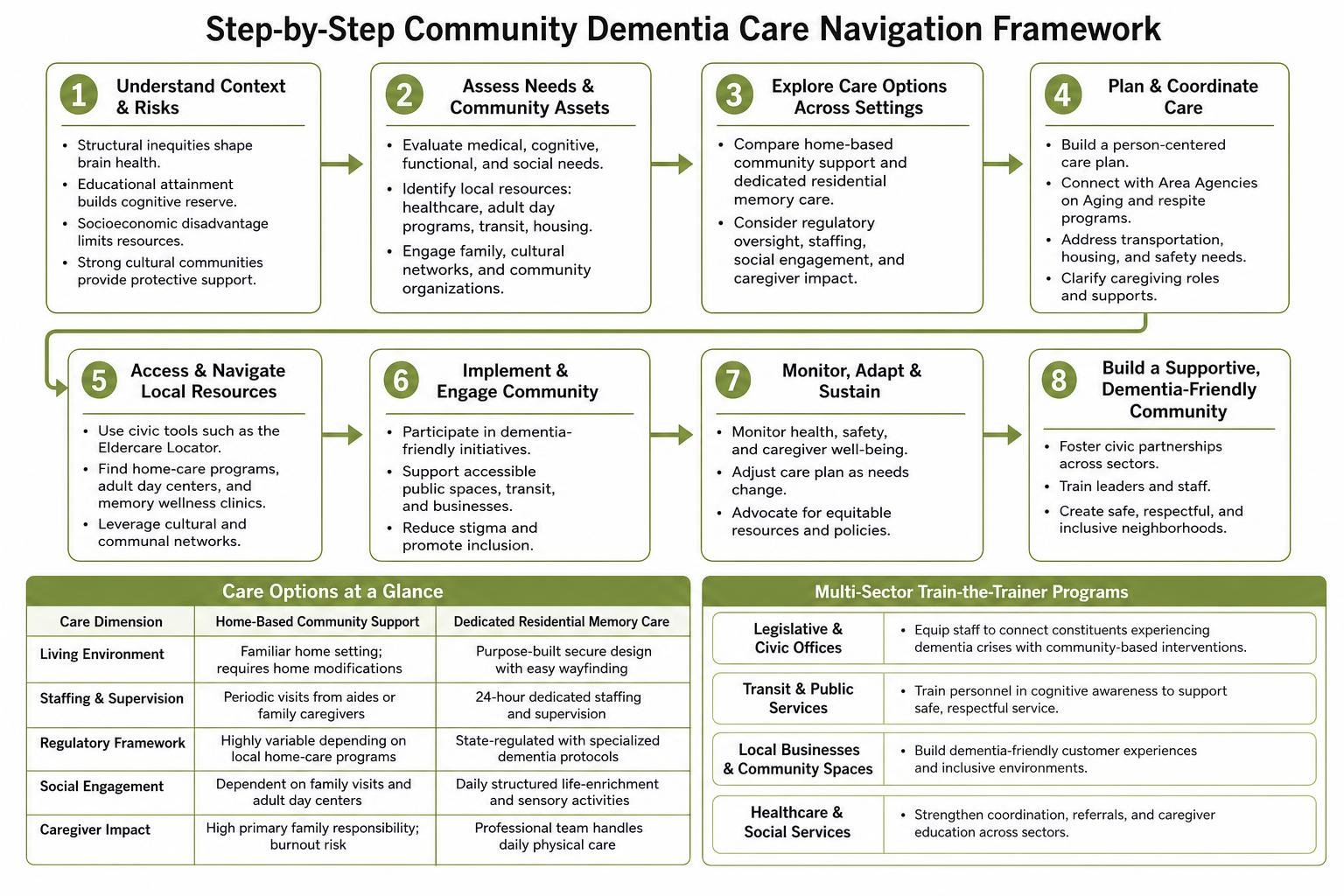
| Care Dimension | Home-Based Community Support | Dedicated Residential Memory Care |
|---|---|---|
| Living Environment | Familiar home setting; requires home modifications | Purpose-built secure design with easy wayfinding |
| Staffing & Supervision | Periodic visits from aides or family caregivers | 24-hour dedicated staffing and supervision |
| Regulatory Framework | Highly variable depending on local home-care programs | State-regulated with specialized dementia protocols |
| Social Engagement | Dependent on family visits and adult day centers | Daily structured life-enrichment and sensory activities |
| Caregiver Impact | High primary family responsibility; burnout risk | Professional team handles daily physical care |
Innovative Models: Building a Dementia-Friendly Community
Transforming neighborhoods into dementia-friendly environments allows people with cognitive decline to travel, shop, and socialize safely. Programs like the Dementia Friends initiative have mobilized more than 15 million participants worldwide to reduce social stigma and offer everyday assistance.
Civic coalitions, local businesses, and municipal leaders collaborate to ensure public facilities are accessible. Simple steps—such as clear public signage, calm customer-service spaces, and transit personnel trained in cognitive awareness—enable older adults to maintain their independence longer. Connecting with an established Dementia Caregivers Community: Support, Resources & Education for Caregivers helps family members discover local Area Agencies on Aging, access respite programs, and navigate civic tools such as the Eldercare Locator.
Multi-Sector Train-the-Trainer Programs for Systemic Support
To build broad community support, multi-sector education programs train leaders across civic and commercial spaces:
- Legislative and Civic Offices: Equipping staff to connect constituents experiencing dementia crises with community-based interventions.
- Workplace HR Teams: Providing practical leave structures and flexibility for employees balancing professional careers with family caregiving.
- Faith-Based Congregations: Training volunteers to identify isolated caregivers and provide regular companionship or meal support.
- Specialized Clinical Networks: Collaborating with platforms like the DLG Community to share non-pharmacological behavioral interventions and evidence-based geriatric practices.
Community-Based Care Models and the CMS GUIDE Initiative
Recent healthcare initiatives have expanded access to community dementia management. A primary example is the Medicare Guiding an Improved Dementia Experience (GUIDE) Model. This multi-year initiative provides participating families with comprehensive care coordination, structured home safety assessments, 24/7 access to clinical support lines, and allocated annual respite funding to give primary caregivers regular relief breaks.
By coordinating care plans, these outpatient initiatives help individuals with dementia live safely at home for as long as possible while giving families the guidance they need.
Choosing the Right Dementia Care Community for Your Loved One
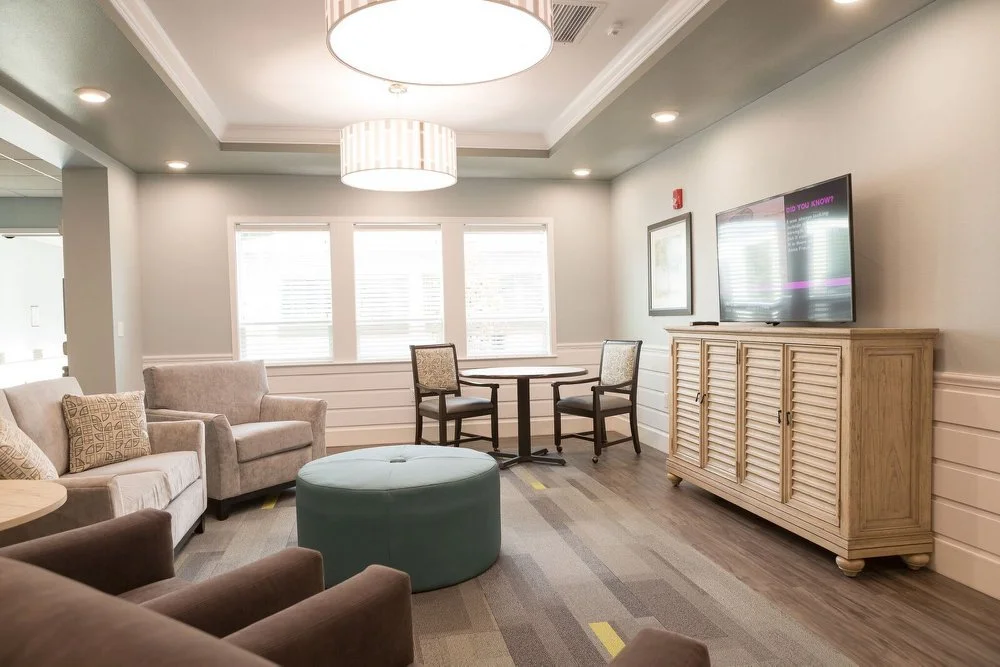
As cognitive conditions progress, a person's needs often surpass what can be safely managed at home. Selecting a residential community involves finding an environment tailored to their functional abilities and emotional comfort.
At Vaca Valley Living, we understand how deeply personal this decision is. From more than 50 years of family-owned experience, our Vacaville, CA community offers a warm, home-like setting tailored to seniors with Alzheimer’s and other dementias. Our approach focuses on personalized care plans, fall reduction strategies, and non-pharmacological engagement to keep residents safe and comfortable around the clock.
Essential Amenities and Design in a Residential Dementia Care Community
A supportive memory care environment uses thoughtful design to minimize anxiety and encourage healthy movement:
- Clear Wayfinding: Visual cues, distinct color schemes, and direct sightlines that help residents navigate corridors without confusion.
- Sensory Gardens and Secure Outdoor Spaces: Calming, enclosed courtyards that let residents enjoy sunlight and fresh air safely.
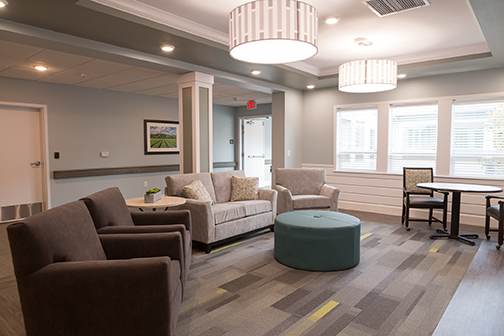
- Purpose-Built Living Spaces: Our residential floor plans prioritize clear pathways, comfortable social nooks, and cozy, private rooms.
- Engaging Daily Services: Thoughtful amenities—such as an on-site hair salon, family dining rooms, structured music programs, and secure group transportation—bring rhythm and joy to daily routines.
- 24-Hour Clinical Oversight: Dedicated 24-hour staffing, thorough medication administration, and routine wellness monitoring to address health changes quickly.
Connecting with an Online Dementia Care Community for Caregiver Well-Being
Caring for someone with dementia brings emotional and physical demands that no one should navigate alone. Over 53% of caregivers served by state family support programs care for an individual with memory loss, and peer validation is vital for preventing burnout.
Online support networks, such as the Dementia Caregiver Collective, help caregivers learn practical task-breakdown methods. When a loved one struggles with a daily task like getting dressed, breaking it into smaller steps often relieves frustration without taking away their sense of independence. Sharing these day-to-day moments with fellow caregivers provides encouragement, practical advice, and a reminder that you are not on this journey by yourself.
Practical Resources and Research Directions in Community Dementia Care
Finding reliable help early makes long-term planning much smoother. A number of national and state resources offer practical guidance:
- ADEAR Center: The Alzheimer’s and Related Dementias Education and Referral Center provides clinical insights, research updates, and care guidelines.
- BenefitsCheckUp: A comprehensive screening tool to identify federal, state, and local assistance programs for daily living costs.
- Social Security Compassionate Allowances: Expedited disability determinations for individuals diagnosed with early-onset Alzheimer's or related progressive conditions.
- Micro-Learning Care Cards: Educational care toolkits that train caregivers on gentle behavioral redirection, infection monitoring, and pain identification.
Evaluating Future Research and Community-Level Interventions
To improve dementia support across all neighborhoods, behavioral and social science research continues to explore how local environments shape care:
- Longitudinal Built-Environment Studies: Tracking how access to safe parks, lower noise levels, and public transit affect cognitive health over decades.
- Evaluating Social Models of Disability: Developing neighborhood programs that emphasize remaining abilities and community inclusion rather than limitations alone.
- Policy and Caregiver Grant Assessments: Measuring how funded respite programs reduce emergency room visits and ease caregiver burnout.
Frequently Asked Questions About Dementia Care Options
What is the difference between standard senior living and a dedicated dementia care community?
Standard assisted living focuses on general personal assistance with bathing, dressing, and meals. A dedicated memory care community provides secured building designs to prevent unsafe wandering, higher staff-to-resident ratios, specialized dementia training, and structured sensory routines tailored to cognitive changes.
How can families access financial aid and support programs in the community?
Families can explore programs like the Medicare GUIDE Model, state Medicaid HCBS waivers, local Area Agency on Aging caregiver respite grants, and Social Security Compassionate Allowances to help cover care expenses.
When is it time to transition from home care to a memory care community?
Common signs include frequent wandering, safety concerns around the stove or medications, unexplained weight loss, social withdrawal, and noticeable physical exhaustion in the primary family caregiver.
Conclusion: Finding the Right Support with Confidence
Navigating dementia requires patience, practical tools, and a reliable circle of support. Whether you are using local home-care resources, taking part in caregiver networks, or considering a dedicated residential setting, planning ahead helps preserve your loved one's dignity and quality of life.
At Vaca Valley Living, we provide compassionate, 24-hour memory care in an intimate setting where every resident is treated like family. We invite you to request a tour of our Vacaville community to see our programs, meet our team, and explore how we can support your family's care journey.