
Finding Relief and Community Through Dementia Support Groups
Find Dementia Support Groups That Fit Your Family's Needs

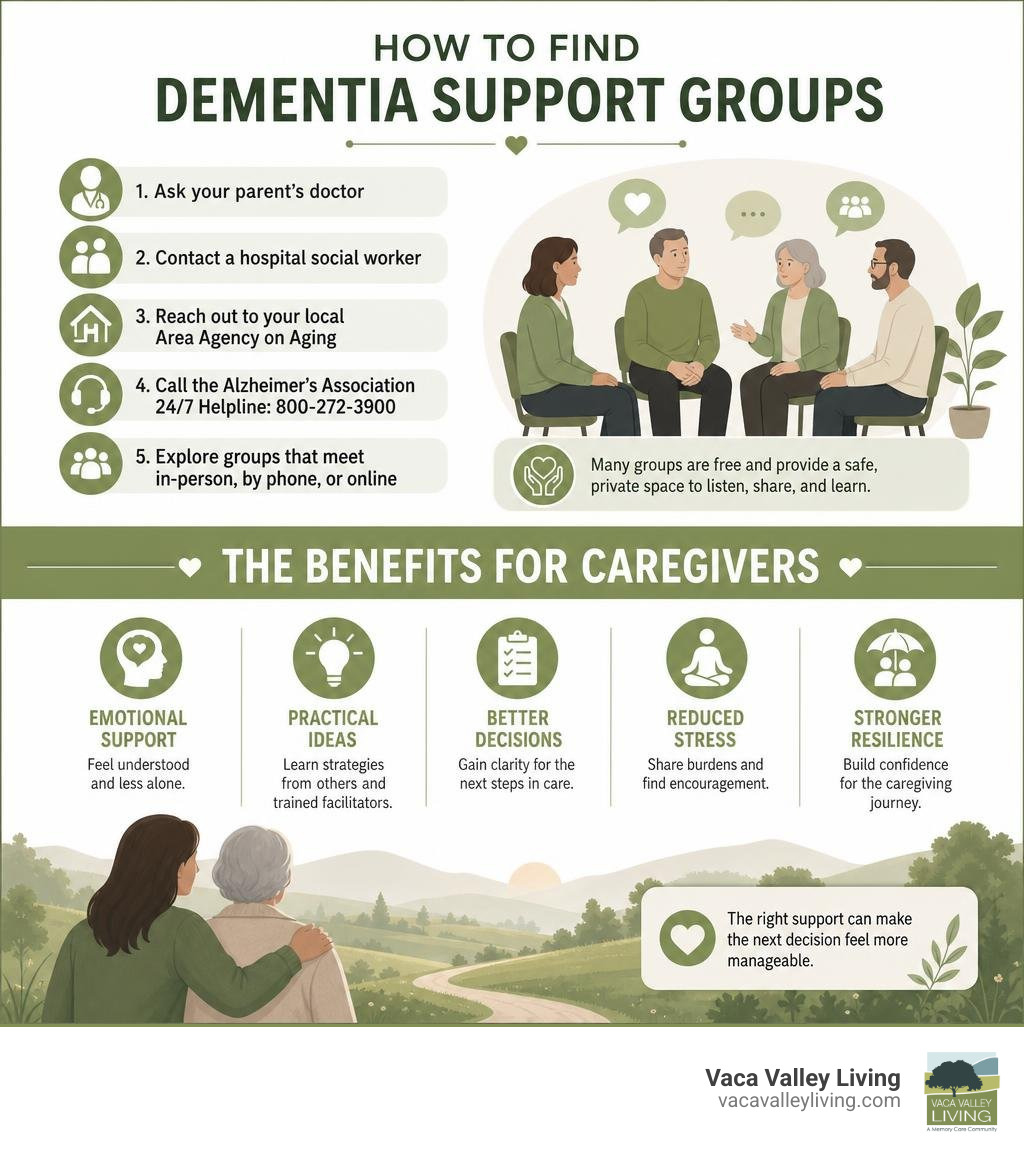
Start by looking for a local or virtual group for adult children caring for a parent with dementia. Ask your parent's doctor, hospital social worker, local Area Agency on Aging, or the Alzheimer's Association's 24/7 Helpline at 800-272-3900 for current meetings and registration details. Many groups are free, and options may include in-person, phone, and video meetings.
Dementia support groups offer a private place to talk with people who understand the hard parts of caregiving: safety worries, changing behavior, family conflict, grief, and the pressure of balancing work and children. You can listen quietly, share when ready, and learn practical ideas from trained facilitators and other care partners.
This support matters. More than half of dementia caregivers have provided care for four years or longer, and more than 40% are handling unpaid care alone. Dementia caregivers also report greater emotional, physical, and financial strain than many other caregivers.
You do not have to solve every problem in one meeting. The right group can make the next decision feel more manageable - whether that means finding respite, improving care at home, or exploring a safe memory care setting close to family.
Introduction
Caregiving is an act of deep devotion, but it can also be one of the most isolating journeys a person ever undertakes. Across the United States, roughly 41 million family caregivers provide 34 billion hours of unpaid care to adults dealing with chronic limitations, representing an economic value approaching $470 billion. Within that broader community, the dementia caregiving crisis presents unique and intense demands. More than 11 million family members and friends dedicate upwards of 16 billion unpaid hours annually to individuals living with Alzheimer’s disease and other forms of cognitive impairment—care valued at over $271.6 billion.
In fact, 92% of all people living with dementia rely on support from family or informal, unpaid care partners. In states across the country, the scale is staggering; in Minnesota alone, 171,000 family caregivers provide 156 million hours of memory care valued at $3.4 billion.
The demographics behind these numbers reveal a complex portrait of modern family life:
- Gender Dynamics: Approximately 2 out of 3 dementia caregivers are women.
- Aging Caregivers: About 1 in 3 caregivers is 65 years or older, often managing their own aging concerns simultaneously.
- A Rising Younger Generation: For adults aged 18 to 49, the proportion caring for someone with cognitive decline has surged three-fold since 2015, rising from 7% to 23%.
- Financial Realities: Slightly more than 40% of dementia caregivers live in households earning $50,000 or less annually.
- The Sandwich Generation: About 25% of dementia caregivers find themselves caught in the middle, actively raising their own children while coordinating care for an aging parent.
- Employment Commitments: Roughly 60% of dementia caregivers work an average of 35 hours per week while carrying out care duties or worked during the year prior to starting care.
Because over 40% of these caregivers are the sole person providing unpaid assistance, chronic stress, isolation, and fatigue build rapidly. This is where finding community becomes an essential lifeline.
Understanding the Core Benefits of Dementia Support Groups

Caring for someone experiencing progressive memory loss is fundamentally different from managing standard physical ailments. Dementia caregivers provide significantly more intensive assistance with Activities of Daily Living (ADLs)—such as bathing, dressing, and eating—as well as Instrumental Activities of Daily Living (IADLs), like managing complex medications and household finances.
Twice as many dementia caregivers report substantial emotional, financial, and physical difficulties compared to non-dementia caregivers. They experience higher rates of depression, anxiety, poor sleep quality, diminished personal health, and emergency room visits. In public health surveys, adults caring for individuals with memory loss report needing supplemental support services at double the rate of other caregivers.
Joining a structured peer or professionally facilitated circle addresses these challenges through several key pillars:
- Emotional Validation and Overcoming Guilt: Caregivers frequently experience ambiguous loss—grieving the psychological presence of a loved one whose physical self is still very much here. Support groups provide a safe harbor to process guilt, sadness, frustration, and fleeting anger without fear of judgment.
- Practical Caretaking Skills and Behavioral Solutions: When a loved one repeats the same question ten times in an hour, shadow-walks late at night, or experiences afternoon agitation, standard advice fails. Group peers and specialists share realistic, battle-tested communication techniques—such as validating feelings rather than correcting mistaken realities.
- Preventing Caregiver Burnout: Hearing others say, "I've been there, and you are doing your absolute best," relieves the crushing pressure of perfectionism. Learning to lean on community reduces the emotional weight that leads to total physical exhaustion.
- Access to Local Resources: Groups serve as organic networks where families learn about elder law attorneys, trusted doctors, specialized day programs, and community initiatives like the Glendale Memory Café supports dementia families project, which provides social engagement alongside caregiver breakouts.
Key Categories of Support Tailored to Your Caregiving Journey
There is no single mold for caregiving, which is why modern support networks have evolved beyond generic, one-size-fits-all formats. Today, specialized circles accommodate specific relationships, diagnoses, and cultural identities.

Specialized Cohorts for Spouses, Adult Children, and Early-Stage Individuals
- Spousal and Partner Caregivers: About 10% of caregivers support a spouse with dementia. These individuals navigate profound changes in marital intimacy, shared retirement dreams, and daily partnership dynamics. Depression and anxiety rates tend to run highest in spousal dynamics, making dedicated spousal cohorts invaluable.
- Adult Children Networks: Over 50% of dementia caregivers support a parent or parent-in-law. Adult children in their 20s, 30s, and 40s often juggle high-demand careers, young children, and complex sibling dynamics while navigating the reversal of parental roles.
- Diagnosis-Specific Circles: Conditions like Frontotemporal Dementia (FTD), Lewy Body Dementia (LBD), and Younger-Onset Alzheimer's (affecting individuals under age 65) carry unique behavioral and physical symptoms. Clinically anchored networks, like those highlighted through Finding Support | Memory and Aging Center, provide specialized insight for families managing conditions that differ from typical late-life Alzheimer's.
- Early-Stage and Dyadic Programs: For individuals with mild cognitive impairment who retain insight into their symptoms, joint "dyadic" groups allow the diagnosed individual and their care partner to participate together, exploring coping strategies and early planning as a unified team.
- Culturally Responsive & LGBTQ+ Groups: Inclusive care circles—including groups for Spanish, Mandarin, Japanese, or Korean speakers, as well as LGBTQ+ older adult networks—ensure that cultural values, language preferences, and unique historical family structures are respected.
How In-Person, Telephone, and Virtual Dementia Support Groups Differ
Choosing how you meet depends on your schedule, geographic location, and caregiving responsibilities at home.
| Feature | In-Person Groups | Virtual (Videoconference) | Telephone Dial-In |
|---|---|---|---|
| Best For | Deep personal connection and local networking | Busy caregivers with limited travel time | Those with limited internet access or technical barriers |
| Accessibility | Requires local travel and arranging care coverage | Accessible from home via computer, tablet, or smartphone | Accessible from any landline or mobile phone |
| Social Dynamic | High non-verbal connection, tactile comfort, and local familiarity | Face-to-face visual interaction from the comfort of home | Auditory focus; easy to participate while resting or listening quietly |
| Facilitator Type | Trained volunteer peers or Licensed Clinical Social Workers (LCSW) | Professional social workers or certified non-profit leaders | Trained specialists and peer facilitators |
How to Connect with the Right Community and Support Network
Taking that first step toward joining a group can feel intimidating, especially when you are already feeling stretched to your limit. Knowing the straightforward steps to find and register for meetings helps remove friction.

How to Find and Register for Dementia Support Groups
National organizations and local health centers maintain free directories to help you find an ideal match. You can reach out directly through the Alzheimer's Association | Alzheimer's Disease & Dementia Help portal, which offers localized program locators and a 24/7 Helpline (800-272-3900) staffed in over 200 languages.
When registering for community-sponsored options, such as an In-Person Dementia Caregiver Support Group - Memory and Brain Wellness Center event, the process typically follows a clear path:
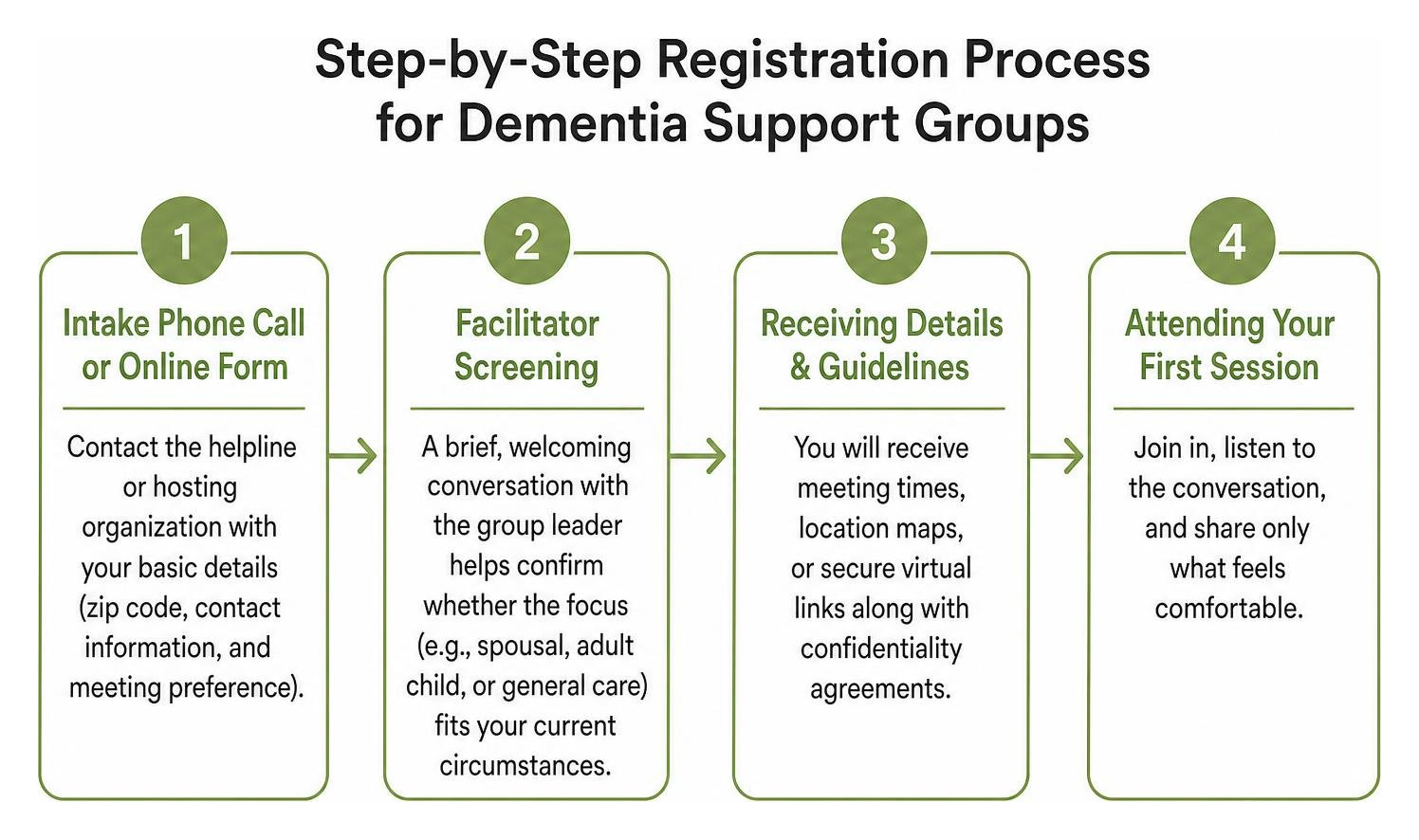
- Intake Phone Call or Online Form: Contact the helpline or hosting organization with your basic details (zip code, contact information, and meeting preference).
- Facilitator Screening: A brief, welcoming conversation with the group leader helps confirm whether the focus (e.g., spousal, adult child, or general care) fits your current circumstances.
- Receiving Details & Guidelines: You will receive meeting times, location maps, or secure virtual links along with confidentiality agreements.
- Attending Your First Session: Join in, listen to the conversation, and share only what feels comfortable.
Complementary Care Resources: Respite Care, Helplines, and Memory Cafés
Support groups work best as part of a well-rounded care strategy. To keep caregiving sustainable over months and years, consider pairing peer meetings with complementary resources:
- Memory Cafés: Social gatherings where individuals with memory loss and their caregivers socialize together in an open, welcoming setting before splitting into optional breakout sessions.
- Cognitive Stimulation Therapy (CST): Evidence-based community workshops utilizing music, creative arts, and thematic discussions, such as programs offered by Dementia Support Groups | Help & Advice | Dementia Support, which keep early-stage minds actively engaged.
- Respite Care Services: Temporary relief care provided by adult day care centers, in-home care aides, or short-term residential stays, allowing caregivers uninterrupted time for self-care, work, or medical appointments.
- Dedicated Memory Care Communities: When care needs exceed what can safely be managed at home, purpose-built environments provide structure and relief. Reviewing specialized residence features and memory care amenities helps families evaluate the supportive environments available when a transition becomes necessary.
Frequently Asked Questions About Dementia Support
Are dementia support groups free to attend?
Yes. The vast majority of dementia support groups offered by non-profit organizations, health systems, and community coalitions are completely free of charge. These programs are sustained through charitable contributions, public health grants, and organizational funding to ensure financial limitations never stand between a family and needed emotional support.
Who facilitates dementia support meetings?
Support groups are typically led either by Licensed Clinical Social Workers (LCSWs) specializing in dementia care or by trained, experienced volunteer facilitators who receive structured instruction through organizations like the Alzheimer's Association. Facilitators ensure discussions remain supportive, constructive, confidential, and safe for all participants.
What should I do if a disease-specific group isn't available locally?
If your area does not have an in-person meeting specifically dedicated to your loved one’s exact diagnosis (such as Lewy Body or Frontotemporal Dementia), joining a general family caregiver support group or an online group hosted by institutions like the Support Groups – Duke Dementia Family Support Program is an excellent step. You can also participate in 24/7 message board communities like ALZConnected to seek advice and share experiences asynchronously.
Navigating the Dementia Journey with Comprehensive Support
Caring for someone with cognitive impairment is a continuous journey that changes over time. Seeking help is not an admission of defeat; it is a vital step toward protecting your own physical, mental, and emotional health so you can continue showing up for the person you love.
Whether you are participating in a weekly telephone circle, meeting fellow adult children on a video call, or exploring comprehensive memory care settings, you do not have to carry the weight alone. When care requirements expand beyond what family can sustain at home, our team at Vaca Valley Living is here to offer 24-hour support, personalized care plans, and a warm, home-like environment designed to bring comfort and dignity to every stage of life. Reach out today to connect with a community that understands and walks beside you every step of the way.