Explore Memory Day Care Options to Reclaim Peace of Mind
Alzheimer’s Day Programs Offer Safe Support and Caregiver Relief
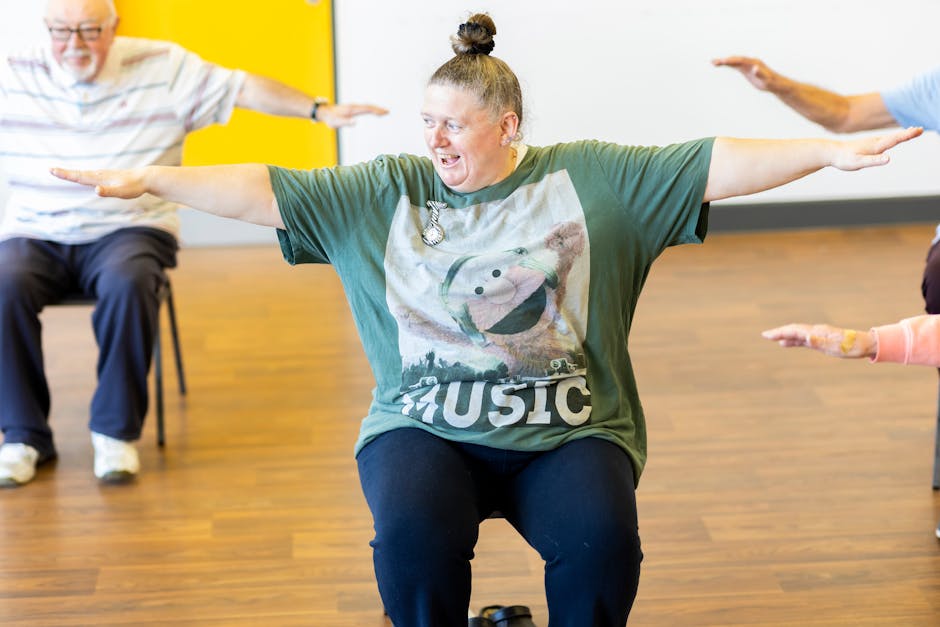
Alzheimer’s day programs provide supervised daytime care for people living with dementia while family caregivers work, rest, or handle daily responsibilities. Most programs combine social activities, meals, personal-care help, and dementia-aware support in a structured setting - without requiring a move from home.
For many families, the biggest benefit is twofold:
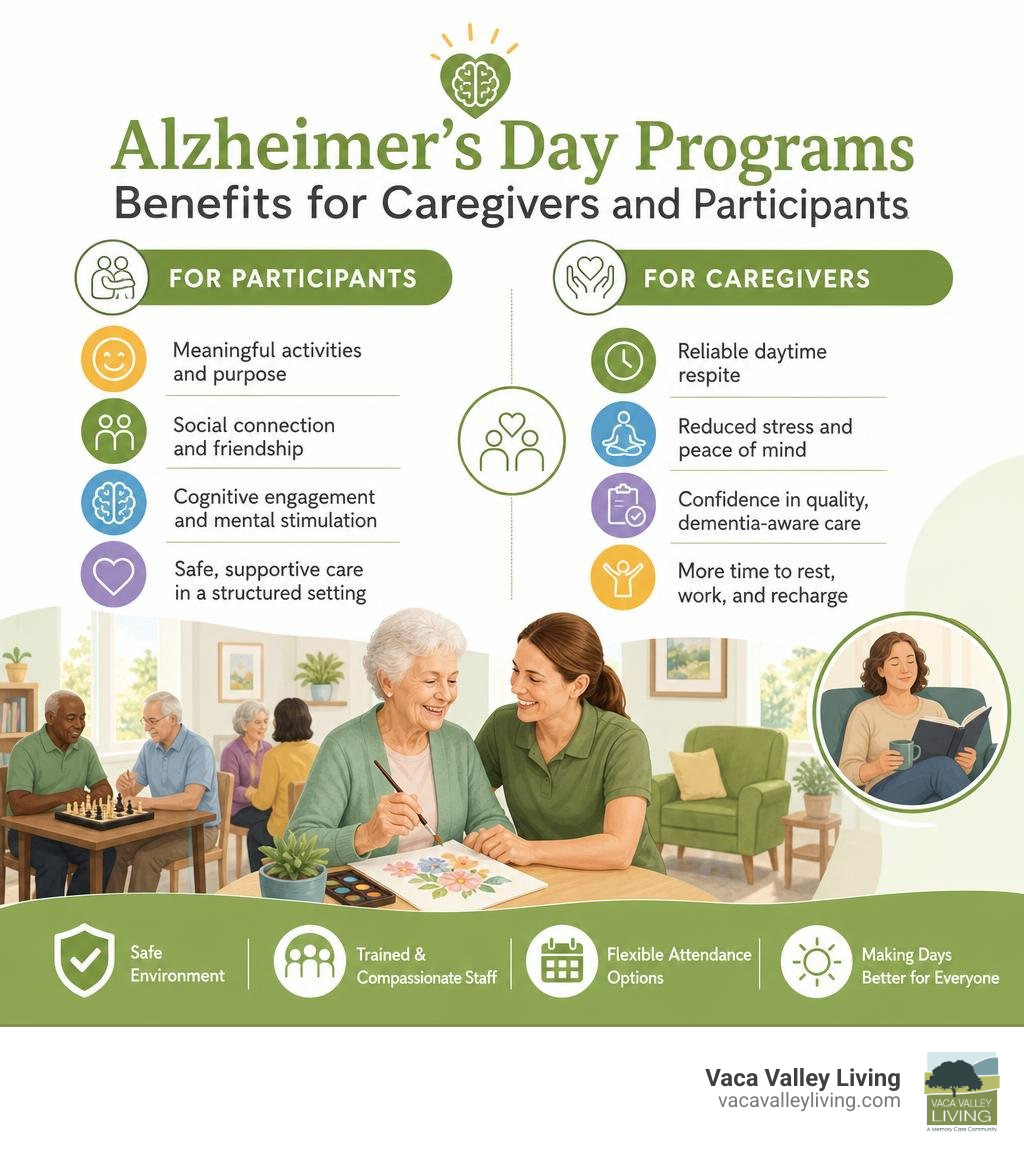
- For your parent: meaningful activity, social connection, and support tailored to their abilities.
- For you: reliable daytime respite and the peace of mind that comes from knowing they are not alone.
Programs commonly run for much of the workday, and some offer flexible attendance from a few days a week to five. The right fit should feel calm, safe, and engaging, with trained staff who understand concerns such as wandering, confusion, mobility limits, and changing behaviors.
This guide explains what to expect, how to compare programs, ways to pay, and when a higher level of memory care may be needed.
Understanding Alzheimer’s Day Programs and How They Work
Navigating cognitive decline can feel overwhelming, but specialized day services exist to offer balance and structure. These centers provide professional supervision, engaging therapeutic environments, and structured routines during typical business hours.
Most facilities operate anywhere from 7 to 10 hours per day, commonly running between 8:30 a.m. and 4:30 p.m. Monday through Friday, with select programs offering weekend or extended evening sessions. Families can often tailor their schedules, choosing enrollment tiers ranging from single-day visits up to five full days per week.
Depending on regulatory standards and client needs, day facilities typically fall into two primary categories:
- Social Day Care Programs: Focus on supervised socialization, group recreation, peer interaction, nutritious dining, and light assistance with activities of daily living (ADLs).
- Adult Day Health Care (ADHC) / Medical Models: Integrate social activities with licensed healthcare services, including skilled nursing assessments, physical or occupational therapy, medication administration, and comprehensive clinical care.
Eligibility typically requires an established medical necessity, such as a formal diagnosis of Alzheimer’s disease, frontotemporal dementia, vascular dementia, general cognitive decline, or a developmental disability. Many community adult day health models serve adults aged 18 and older living at home with family caregivers.
Core Services Provided in Alzheimer’s Day Programs
Specialized adult day facilities are designed to support the whole person while addressing the unpredictable nature of cognitive disorders. Standard services include:
- Health and Wellness Monitoring: Routine checks of vital signs, blood pressure, blood glucose levels, and ongoing tracking of physical or cognitive changes.
- Medication Administration: Secure storage and distribution handled by Certified Medication Aides or licensed nurses.
- Personal Care Assistance: Respectful support with dressing, grooming, ambulation, and dignified continence care.
- Nutritious Dining and Dietary Accommodations: Full, balanced lunches and wholesome morning and afternoon snacks tailored to specialized dietary needs, including diabetic, pureed, low-sodium, and culturally specific preferences.
- Transportation Coordination: Wheelchair-accessible transit vans providing safe door-to-door or community pickup and drop-off services.
Daily Schedules and Cognitive Stimulation Activities
Routine is essential for individuals experiencing memory loss. Predictability reduces anxiety and fosters a comforting sense of control. A well-designed day program weaves therapeutic enrichment into a supportive daily framework.
Many progressive centers incorporate intergenerational programming, partnering with on-site or neighborhood preschools. Sharing stories, working on simple crafts, and singing songs alongside young children regularly sparks joy, encourages spontaneous communication, and brings genuine smiles to participants.
Key Benefits for Individuals with Dementia and Family Caregivers
Enrolling in a day program offers deep physical and emotional advantages for both participants and family members.

For participants, structured social environments help counter the loneliness and depression that often accompany memory loss. Sharing meals and participating in group exercises validates self-worth and preserves vital functional capabilities far longer than staying isolated at home.
For families providing uncompensated care, daytime support is an essential lifeline. Caregivers frequently experience burnout, sleep disruption, and chronic stress. Utilizing day services alleviates guilt, creates time for career demands and personal tasks, and restores the patience needed to provide compassionate care at home.
Therapeutic Engagement and Behavior Management
Dementia can bring complex behavioral changes, including mood fluctuations, agitation, wandering tendencies, and sundowning in the late afternoon. Qualified day program staff receive extensive training to manage these challenges with calm, proactive de-escalation techniques rather than restraint or overmedication.
Activities are intentionally adapted to meet each person's current cognitive level. Creative expression through painting, tactile woodworking, sensory gardens, and familiar music stimulates long-term memory retrieval and reduces restlessness. Emerging clinical research on dementia day programs confirms that structured daytime cognitive interventions help stabilize mood, improve nighttime sleep patterns, and significantly lessen behavioral distress.
Caregiver Respite and Burnout Prevention
Caring for someone with dementia is a marathon. It is impossible to pour from an empty cup, yet many family members feel conflicted about taking time for themselves.
Adult day programs offer essential relief by allowing caregivers to:
- Maintain professional careers and sustain household income.
- Attend personal medical checkups and complete errands without rushing.
- Enjoy uninterrupted restorative rest and mental decompression.
- Dedicate quality time to spouses, children, and other family relationships.
Recognizing personal limits is an act of love, not abandonment. When caregivers receive regular respite, their physical health and emotional patience improve, directly benefiting their loved one.
How to Choose and Evaluate Alzheimer’s Day Programs
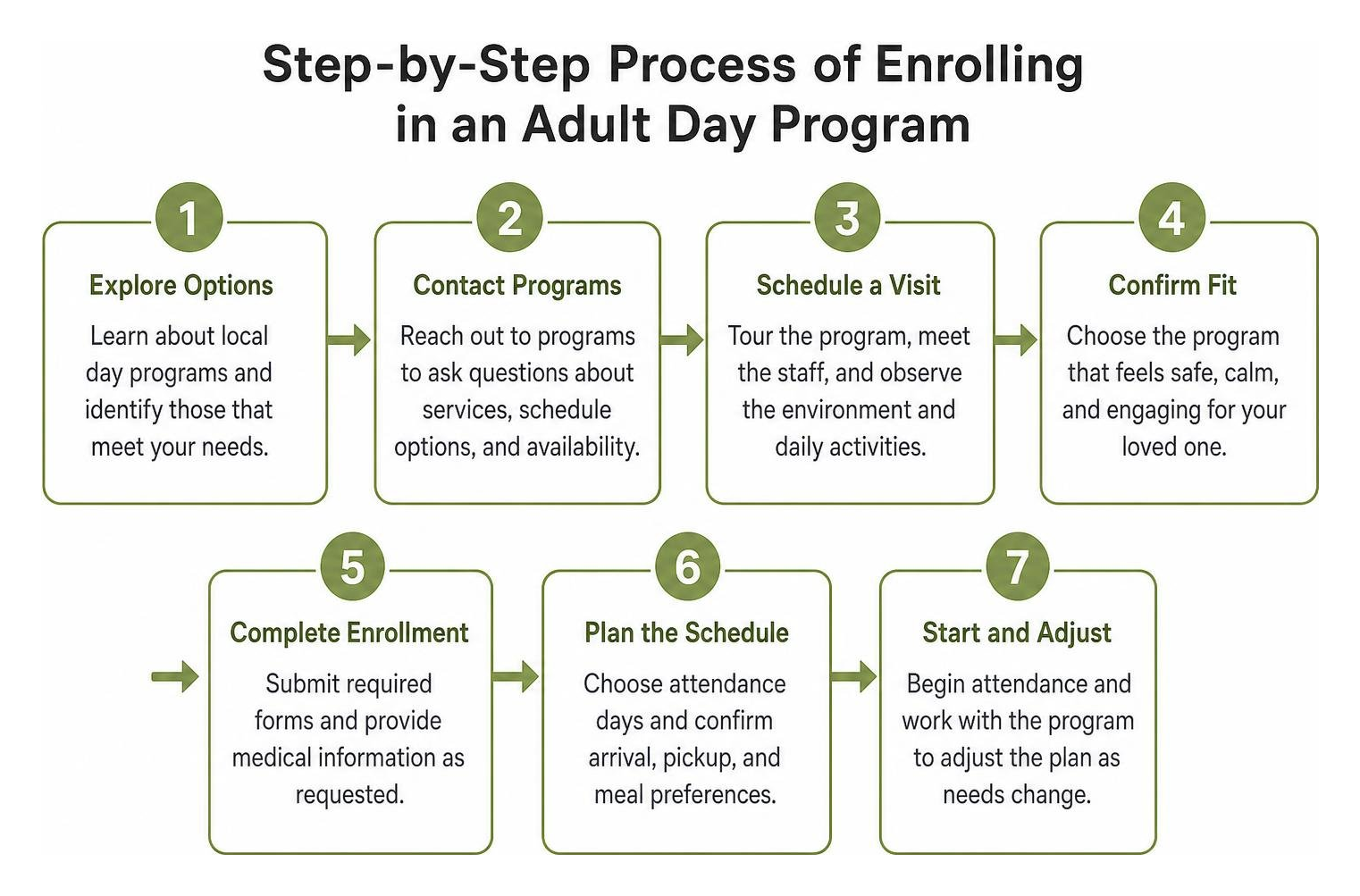
Selecting the right facility requires careful research, on-site observations, and direct questions. Every program has its own atmosphere, staff culture, and clinical depth.
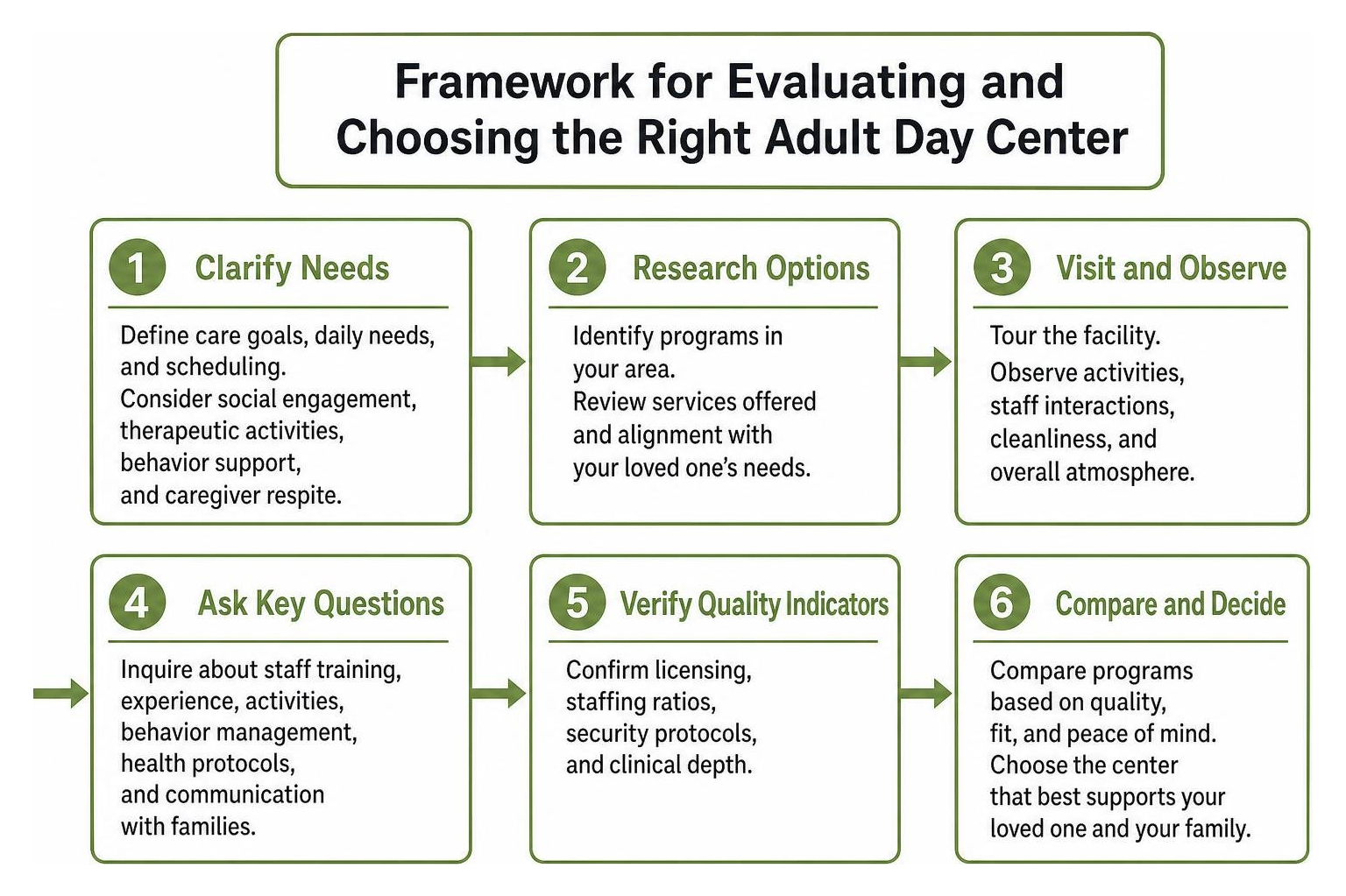
When touring potential centers, look for these key indicators of quality:
- Licensing and Accreditation: Verify state licensing compliance and clear standing with local regulatory boards.
- Direct Staffing Ratios: Look for a low staff-to-participant ratio (ideally 1:4 to 1:6) to ensure attentive personal care.
- Security Protocols: Ensure the facility utilizes secured perimeters, alarmed delayed-exit doors, and enclosed outdoor courtyards to safely prevent wandering.
- Staff Credentials: Confirm the continuous presence of Certified Nursing Assistants (CNAs), Medication Aides, licensed nurses, or social workers.
- Atmosphere and Cleanliness: Observe whether participants are actively engaged or left sitting idle in front of televisions.
When starting, plan for a trial period of at least two days per week for a full month. Seniors living with dementia often resist new environments initially, but consistent routines help them settle in comfortably over time.
Questions to Ask During On-Site Tours
Take this practical checklist with you during facility visits:
- [ ] What specific dementia training and behavioral certifications does your staff complete?
- [ ] How do you handle agitation, exit-seeking behaviors, or catastrophic reactions?
- [ ] What is your policy for administering daily prescription medications?
- [ ] Are meals cooked on-site, and can we sample a meal during our tour?
- [ ] How do you handle personal care needs, such as incontinence or mobility support?
- [ ] What emergency medical procedures are in place if a participant falls or becomes ill?
- [ ] What are the attendance requirements, absence notification rules, and incidental fees?
Program Costs and Financial Assistance Options
Adult day services remain one of the most cost-effective senior care options available. Private pay rates generally range from $40 to $60 for a half-day session (four hours or less) and $70 to $125 or more for a full day, which typically includes all meals, snacks, and therapeutic activities.
Several financial support options can help reduce out-of-pocket expenses:
- Medicaid Waivers and Managed Care: In many states, Home and Community-Based Services (HCBS) waivers and Medicaid managed care programs cover adult day health services for low-income seniors.
- State Subsidies and Respite Funds: Dedicated state initiatives—such as New Jersey's Alzheimer's Adult Day Services Program, which provides sliding-scale subsidies covering 20% to 100% of attendance costs for qualifying residents—help reduce financial burdens.
- Veterans Affairs (VA) Benefits: Eligible veterans enrolled in VA healthcare can frequently access adult day health care coverage through standard medical benefit packages.
- Non-Profit Hardship Scholarships: Many community organizations offer income-based sliding-scale fees or private scholarships.
- Long-Term Care Insurance: Comprehensive private policies often provide daily stipends that can be applied directly to licensed adult day health centers.
When to Transition Beyond Adult Day Care to Full-Time Memory Care
Adult day programs are an exceptional community-based resource, but dementia is a progressive disease. Over time, care needs may expand beyond daytime hours. Recognizing when day programs are no longer sufficient is essential for keeping your loved one safe.
Consider exploring full-time residential memory care if you notice:
- Persistent Nighttime Wandering: Sleep disturbances and wandering during late-night hours create severe safety hazards.
- Escalating Physical Care Needs: Transferring, heavy lifting, and total incontinence care become too demanding for a single caregiver at home.
- Caregiver Exhaustion: Chronic fatigue compromises the family caregiver's physical health or emotional well-being.
- Advanced Behavioral Symptoms: Severe paranoia, hallucinations, or unmanageable agitation require round-the-clock clinical supervision.
| Feature | Adult Day Care Programs | Residential Memory Care Community |
|---|---|---|
| Care Schedule | Daytime only (approx. 7–10 hours/day) | 24 hours a day, 7 days a week, 365 days a year |
| Living Arrangements | Participant resides at home | Full-time private or semi-private residential suites |
| Medical Supervision | Daytime health monitoring and medication help | Continuous 24-hour trained staffing and nursing oversight |
| Overnight Safety | Managed entirely by family at home | Secured perimeter, night checks, and immediate call response |
| Meals Provided | Lunch and daytime snacks | 3 chef-prepared meals daily plus snacks and dining assistance |
| Caregiver Role | Primary caregiver manages evenings and weekends | Professional care team manages all daily care and logistics |
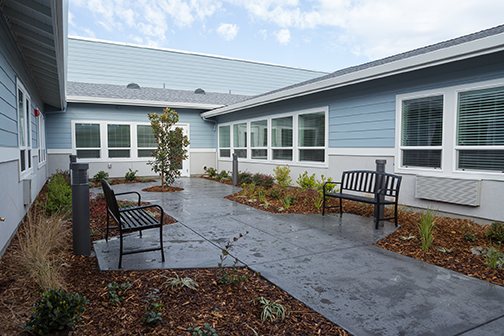
When continuous support becomes necessary, transition planning provides peace of mind. Moving to a dedicated community offering specialized amenities—such as secure landscaped walking courtyards, sensory engagement spaces, on-site styling salons, and tailored social calendars—ensures your loved one remains safe, active, and cared for at every stage.
Frequently Asked Questions About Memory Day Programs
How long does it take for a senior to adjust to a day program?
Adjustment typically takes three to four weeks of consistent attendance. It is very common for an individual with memory loss to express hesitation or ask to leave during the first few visits. Sticking to a steady routine of at least two to three visits per week allows them to build comfort with the staff, make connections with peers, and settle into the daily rhythm.
Does Medicaid or private insurance cover adult day care costs?
Standard Medicare does not cover adult day care services. However, state-specific Medicaid programs, Home and Community-Based Services (HCBS) waivers, and Veterans Affairs (VA) health benefits frequently provide coverage for qualified participants. Traditional private health insurance rarely pays for day programs, but long-term care insurance policies commonly include an adult day care benefit.
What is the difference between social and medical adult day care?
Social day care centers focus primarily on socialization, group crafts, cognitive recreation, exercise, and supervised nutrition. Medical adult day care (often called Adult Day Health Care or ADHC) provides those same social activities alongside comprehensive clinical services, including licensed nursing assessments, physical/occupational therapy, dedicated medical monitoring, and hands-on assistance with complex personal care needs.
Conclusion
Navigating an Alzheimer’s diagnosis is a profound journey, but you do not have to walk it alone. Adult day programs offer a compassionate balance, giving your loved one an enriching environment while providing you with the reliable daytime respite needed to recharge.
As dementia progresses, care requirements naturally change. When the time comes to look beyond daytime services toward around-the-clock support, our home offers a welcoming, secure environment. At Vaca Valley Living, our family-owned community brings over 50 years of dedicated experience to providing personalized 24-hour residential memory care in Vacaville, California.
If you have questions about memory care transitions or are looking for guidance tailored to your family's needs, please contact our compassionate team today.