
Understanding Anger in Dementia: Causes, Stages, and Coping Tips
When Does Aggression Usually Appear in Dementia?
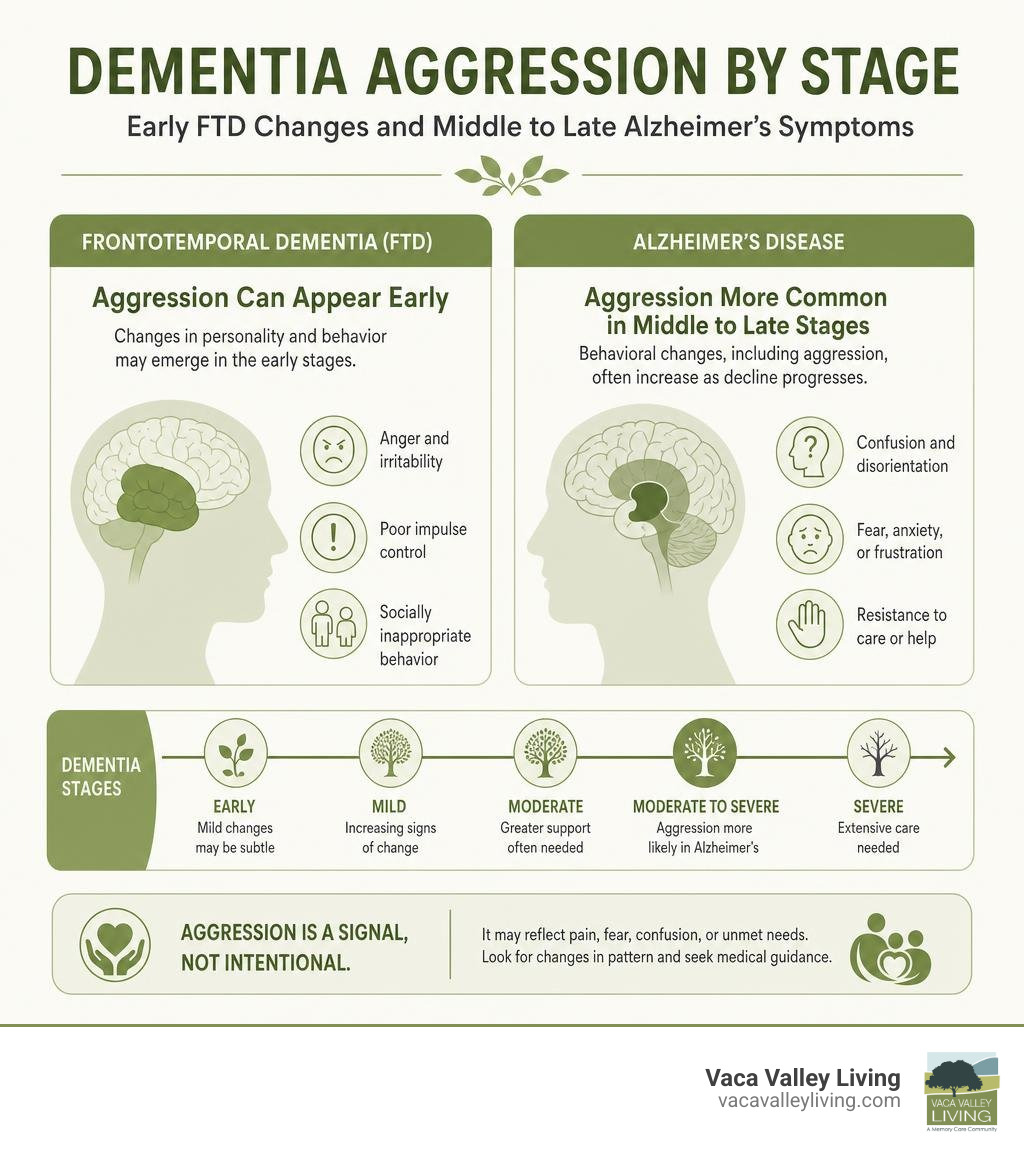
Aggression can happen at any point in dementia, but it is most common in the middle to later stages. In Alzheimer's disease, it often becomes more noticeable during moderate to severe decline, commonly linked with FAST stages 6 and 7. In contrast, frontotemporal dementia can cause anger, poor impulse control, or socially inappropriate behavior much earlier.
Aggression is not a separate, inevitable "stage." It is usually a sign that the person feels frightened, overwhelmed, confused, in pain, or unable to explain what they need. Yelling, pushing away help during bathing, swearing, or refusing care may be a distress response rather than intentional hostility.
For families asking what stage is aggression in dementia, the most useful first step is to look for a change in pattern. Sudden or worsening aggression deserves a medical check for pain, infection, constipation, dehydration, medication side effects, or another treatable cause.
Determining What Stage Is Aggression in Dementia and How Long It Lasts
Caring for a loved one with cognitive decline comes with unexpected emotional twists and turns. Up to 80% to 90% of individuals with dementia experience Behavioral and Psychological Symptoms of Dementia (BPSD) at some point, and between 20% and 40% exhibit overt aggression. In residential and nursing care settings, those figures can reach 40% to 60%.
To understand why and when these behaviors surface, clinicians turn to standardized frameworks like the Global Deterioration Scale (GDS) and the Functional Assessment Staging (FAST) tool. Aggression rarely operates like a light switch that clicks on permanently; rather, it follows a fluctuating wave pattern influenced by neurological shifts, sensory challenges, and environment.
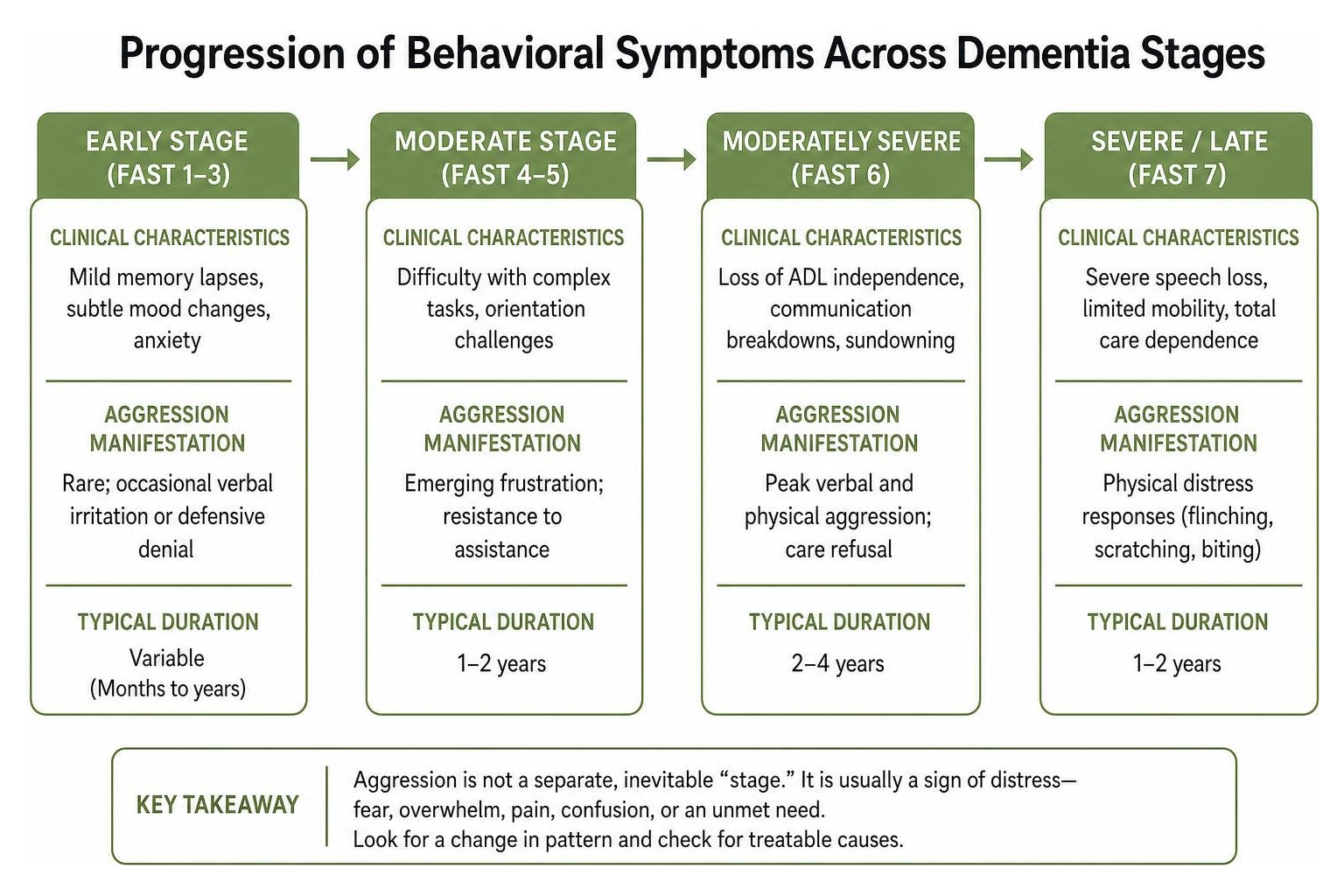
| Dementia Stage | Clinical Characteristics | Aggression Manifestation | Typical Duration |
|---|---|---|---|
| Early Stage (FAST 1–3) | Mild memory lapses, subtle mood changes, anxiety | Rare; occasional verbal irritation or defensive denial | Variable (Months to years) |
| Moderate Stage (FAST 4–5) | Difficulty with complex tasks, orientation challenges | Emerging frustration; resistance to assistance | 1–2 years |
| Moderately Severe (FAST 6) | Loss of ADL independence, communication breakdowns, sundowning | Peak verbal and physical aggression; care refusal | 2–4 years |
| Severe / Late (FAST 7) | Severe speech loss, limited mobility, total care dependence | Physical distress responses (flinching, scratching, biting) | 1–2 years |
Global Deterioration and FAST Scales: What Stage Is Aggression in Dementia Typically Diagnosed?
Clinically, aggressive behaviors in Alzheimer's disease are most pronounced in Stage 6 (Moderately Severe Decline) and transition into physical resistance in Stage 7 (Severe Cognitive Decline).
During Stage 6, individuals lose the ability to independently manage basic activities of daily living (ADLs) such as dressing, bathing, and toileting. Because their ability to process language declines faster than their awareness of personal space, intimate care routines can feel invasive. A caregiver attempting to help with bathing might be met with shouting, shoving, or door-slamming. Research detailed in a ScienceDirect review on aggression development shows that aggression correlates directly with cognitive impairment severity: appearing in about 13% of mild cases, 24% of moderate cases, and 29% of severe cases.
By Stage 7, verbal speech diminishes to a handful of words. Aggression in this final stage shifts from active combativeness to reflexive distress responses—such as teeth clenching, groaning, scratching, or biting—when physical discomfort is triggered during repositioning or personal hygiene.
Disease Variations and What Stage Is Aggression in Dementia Diagnosed by Subtype
While Alzheimer's follows a middle-to-late stage pattern, the timeline differs across other dementia subtypes:
- Frontotemporal Dementia (FTD): Because FTD targets the frontal lobes responsible for judgment, empathy, and impulse control, aggression and dramatic personality shifts often appear in the earliest stages, long before major memory deficits emerge.
- Lewy Body Dementia (LBD): Individuals with LBD experience vivid visual hallucinations and fluctuating alertness early on. Aggression often surfaces in response to terrifying delusions or sleep disturbances.
- Vascular Dementia: Following a step-wise progression caused by small strokes, aggression can appear suddenly at any stage depending on the brain region impacted.
As highlighted in clinical research on aggressive behavior in dementia, individuals with Alzheimer's are five times more likely to show aggression than healthy peers. Understanding these subtype differences helps families anticipate challenges without feeling blindsided.
Duration and Trajectory of Mid-Stage Behavioral Challenges
A common question caregivers ask is: How long does this aggressive period last?
In middle-stage Alzheimer's, the phase of heightened agitation and aggression typically persists for 2 to 4 years, while late-stage behavioral issues generally span 1 to 2 years. However, this period is rarely constant. Most families experience a wave pattern, with weeks of calm interrupted by sudden flare-ups. Over time, as the disease moves into its final stages, physical aggression naturally wanes due to progressive loss of motor function and muscle strength.
Identifying Common Causes and Hidden Triggers of Dementia Outbursts
Aggression is almost always a reaction to internal distress or an unsupportive environment. People living with dementia do not wake up choosing to be difficult; their changing brains simply struggle to interpret incoming sensory information.
The Alzheimer's Society factsheet on aggressive behaviour categorizes aggression into verbal forms (screaming, cursing, accusations) and physical actions (hitting, pinching, kicking). Both are communication tools used when words fail.
Physical Discomfort, Pain, and Medical Issues
When an individual with moderate or severe dementia suddenly lashes out, physical discomfort is often the primary suspect. Common hidden medical triggers include:
- Urinary Tract Infections (UTIs): A sudden, 24- to 48-hour spike in combativeness is frequently the first outward sign of a UTI or systemic infection.
- Undiagnosed Pain: Chronic arthritis, dental abscesses, or constipation can cause severe discomfort. Because verbal self-reporting drops, observational tools like the PAINAD (Pain Assessment in Advanced Dementia) scale evaluate breathing, vocalization, facial expressions, and body language to detect pain.
- Basic Needs: Dehydration, hunger, a full bladder, or feeling too hot or cold can easily trigger a defensive reaction.
Environmental Overstimulation and Sundowning Patterns
Sensory overload is a frequent catalyst for anger. Crowded rooms, blaring televisions, harsh fluorescent lighting, or rushed care routines can trigger a fight-or-flight response.
Furthermore, sundowning—a phenomenon characterized by heightened confusion, restlessness, and agitation beginning in the late afternoon (often after 4:00 PM)—can turn a peaceful morning into a challenging evening. Fading daylight, circadian rhythm disturbances, and mental fatigue all contribute to late-day behavioral escalation.
Differentiating Aggression from Agitation, Confusion, and Depression
It is vital to distinguish true aggression from other related dementia symptoms:
- Agitation: Non-aggressive motor restlessness, such as pacing, fidgeting, rummaging through drawers, or repetitive questioning.
- Confusion & Delusions: Misplacing an item and firmly believing a caregiver stole it. Defensive hostility here stems from genuine fear.
- Depression & Apathy: Manifesting as withdrawal, refusal to eat, or irritability, which requires emotional support rather than behavioral restraint.
De-Escalation Techniques and Non-Pharmacological Management Strategies
When handling aggressive behaviors, non-pharmacological interventions are the recommended first-line approach. Pushing through a task or trying to reason using logic often escalates the situation. Instead, person-centered redirection and validation de-escalate tension effectively.

Crisis Response: What to Do During an Active Outburst
If your loved one experiences an aggressive episode, follow this step-by-step crisis protocol:
- Ensure Immediate Safety: Step back and give them physical space (at least arm's length). Remove dangerous objects from reach. Never attempt physical restraint unless there is immediate danger.
- Regulate Your Body Language: Maintain an open posture, avoid crossing your arms, move slowly, and keep your hands visible.
- Speak in a Gentle, Low Tone: Use short, simple sentences. Reassure them with phrases like: "You are safe here," or "I am here to help you."
- Avoid Arguing or Correcting: Do not say "Don't you remember?" or argue about distorted facts. Validate their emotional reality: "I can see you're upset, and I'm sorry this is frustrating."
- Redirect Attention: Introduce a calming stimulus—a warm blanket, a favorite cup of tea, a photo album, or moving to a quieter room.
Daily Sensory Routines and Environmental Adaptations
Preventing aggression starts with shaping a predictable, calming daily rhythm. Consistent wake, meal, and bedtimes provide psychological security. Engaging residents in gentle tactile tasks—like folding towels, sorting buttons, or watering plants—fosters purpose and reduces restlessness.
Sensory interventions also yield positive results. Playing personalized music playlists from a person's youth can reduce care resistance during bathing. Incorporating specialized amenities like therapeutic sensory spaces, peaceful gardens, and salon care helps lower daily stress thresholds.
When to Evaluate Medical Interventions and Pharmacological Risks
Non-drug therapies should always come first. However, if an individual poses an imminent physical danger to themselves or others, medical evaluation is necessary.
Antipsychotics (such as risperidone or quetiapine) carry FDA black-box warnings for older adults with dementia due to increased risks of stroke and mortality. If prescribed, they should be used at the lowest effective dose as a temporary measure and systematically reviewed every 6 to 12 weeks to assess whether they can be safely tapered.
Long-Term Care Planning and Knowing When Professional Memory Care Is Needed
Caring for someone experiencing dementia-related aggression takes an enormous emotional and physical toll. Chronic sleep deprivation, physical strain, and constant vigilance frequently lead to severe caregiver burnout.
Recognizing that home care is no longer safe is an act of love and protection, not failure.
Evaluating Home Safety Versus Specialized Residential Care
When evaluating whether home care remains viable, consider the following safety markers:
- Physical safety risks to the primary caregiver or the individual during daily care.
- Severe sundowning that prevents the household from sleeping safely.
- Wandering or elopement attempts paired with aggressive resistance when redirected.
- Caregiver isolation, depression, or declining physical health.
Dedicated memory care communities are purposefully designed to reduce behavioral triggers. Thoughtfully planned floor plans eliminate confusing dead-end hallways, incorporate natural lighting to mitigate sundowning, and provide secure indoor and outdoor spaces where residents can walk safely.
Support Systems and Resources for Family Caregivers
No one should navigate dementia care alone. Joining local caregiver support groups, utilizing adult day programs, and staying informed through educational tools are essential lifelines. You can find regular caregiving tips, stage management guides, and family resources by subscribing to the Vaca Valley Living newsletter.
Frequently Asked Questions About Aggression in Dementia
Can aggression in dementia appear suddenly without warning?
Yes. A sudden, dramatic shift in behavior over 24 to 48 hours almost always signals an acute, underlying medical issue—such as a urinary tract infection (UTI), severe constipation, pneumonia, or an adverse drug interaction—rather than natural disease progression.
Does every person with dementia become aggressive?
No. While behavioral symptoms affect up to 80% to 90% of individuals with dementia, only about 20% to 40% experience significant aggression. Many individuals progress through all stages exhibiting gentle confusion, passivity, or mood changes without ever becoming combative.
How can you tell when an aggressive episode is about to escalate?
Early warning signs include non-verbal physical cues: pacing, clenching fists or jaws, heavy sighing, rapid breathing, glaring, muttering under their breath, or pulling away abruptly from touch. Catching these cues early allows caregivers to step back and redirect before an outburst occurs.
Finding Compassionate Support for Your Loved One
Managing middle- and late-stage dementia challenges requires patience, specialized expertise, and a supportive environment. At Vaca Valley Living in Vacaville, California, our family-owned community brings over 50 years of dedicated experience to senior care. We provide 24-hour staffing, individualized memory care plans, and life-enriching programs designed around each resident's unique history and needs.
If you are navigating behavioral changes and need a safe, nurturing environment for your loved one, explore dedicated memory care support designed with dignity at its heart. We invite you to connect with our family by visiting our contact page to schedule a personal visit and discover how we can help your family find peace of mind.