10 Must-Have Amenities to Compare in Senior Retirement Communities
What to Compare in Senior Retirement Communities
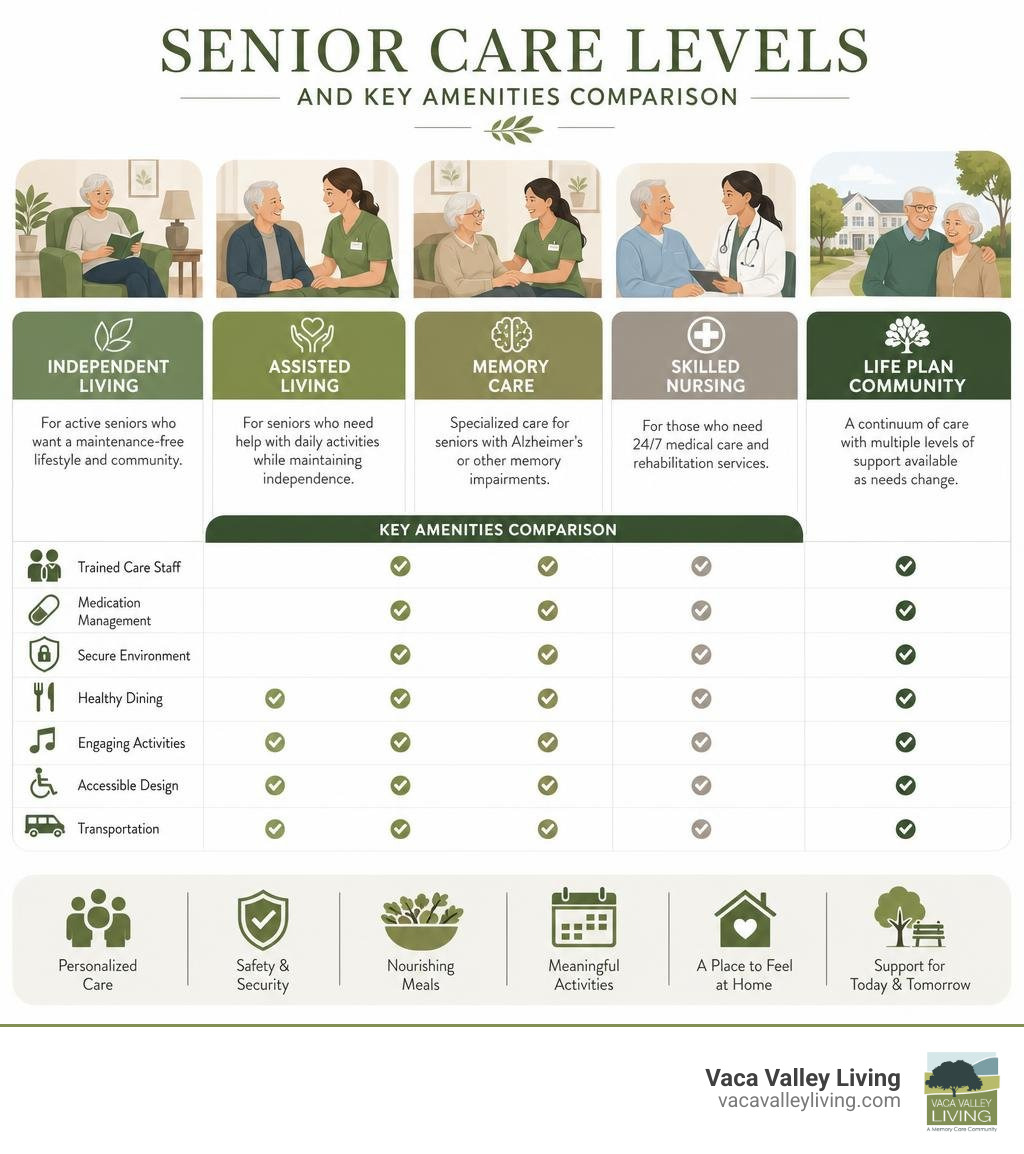
When comparing senior retirement communities, start with the amenities that most affect daily safety, comfort, and connection: trained care staff, medication support, secure spaces, healthy dining, engaging activities, accessible design, and transportation. For a parent with Alzheimer's, also ask how the community prevents wandering, responds to emergencies, and supports meaningful routines.
The right community is not simply a place to live. It should match your parent's current needs while offering support if those needs change. Independent living, assisted living, memory care, skilled nursing, and Life Plan communities provide very different levels of care.
This guide covers 10 amenities worth comparing before you tour or make a decision. Focus on what happens every day: who provides help, how residents spend their time, and whether the environment feels safe, calm, and home-like.
Understanding Care Levels and Costs Across Senior Retirement Communities
Navigating senior living options begins with understanding where your loved one fits along the long-term care continuum. Today, approximately 80 million baby boomers control nearly $25 trillion in wealth, and many seek environments that support active aging, reduce isolation, and offer personalized health oversight.
When evaluating potential communities, care needs are broadly divided into two categories:
- Activities of Daily Living (ADLs): Fundamental daily self-care tasks, including bathing, dressing, eating, transferring, toileting, and personal hygiene.
- Instrumental Activities of Daily Living (IADLs): Complex daily living tasks, such as managing medications, cooking meals, handling housekeeping, arranging local transit, and keeping track of personal finances.
Selecting the right level of support ensures residents enjoy autonomy while receiving targeted assistance. Whether your priority is finding maintenance-free living or exploring spacious residential floor plans designed with universal accessibility in mind, understanding care differences helps avoid unexpected expenses.
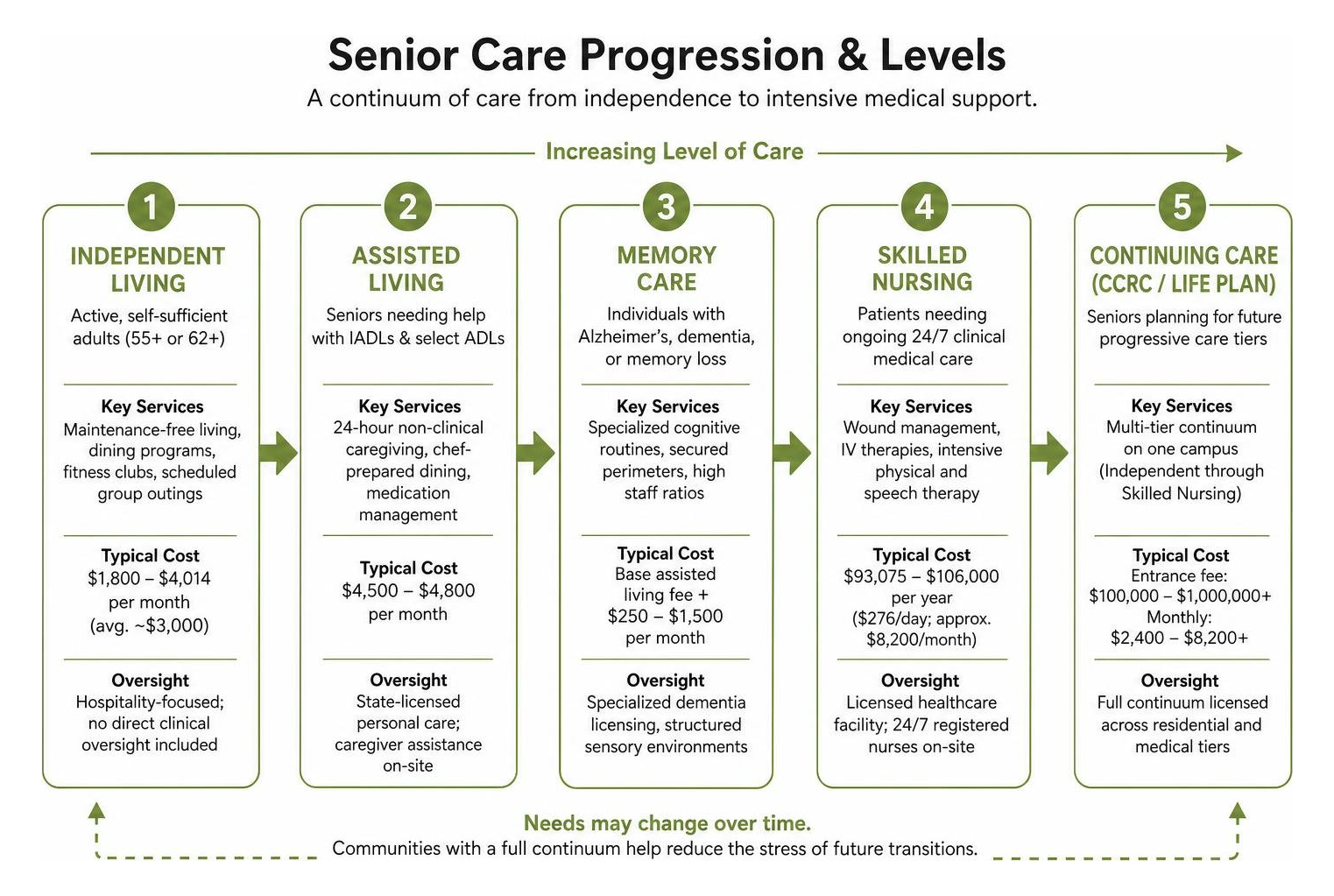
| Care Level | Primary Target Demographic | Key Services & Amenities Included | Typical Monthly / Annual Cost Range | Medical Oversight & Licensing |
|---|---|---|---|---|
| Independent Living | Active, self-sufficient adults (55+ or 62+) | Maintenance-free living, dining programs, fitness clubs, scheduled group outings | $1,800 – $4,014 / month (avg. ~$3,000) | Hospitality-focused; no direct clinical oversight included |
| Assisted Living | Seniors needing help with IADLs & select ADLs | 24-hour non-clinical caregiving, chef-prepared dining, medication management | $4,500 – $4,800 / month | State-licensed personal care; caregiver assistance on-site |
| Memory Care | Individuals with Alzheimer's, dementia, or memory loss | Specialized cognitive routines, secured perimeters, high staff ratios | Base assisted living fee + $250 – $1,500 / month | Specialized dementia licensing, structured sensory environments |
| Skilled Nursing (Nursing Home) | Patients needing ongoing 24/7 clinical medical care | Wound management, IV therapies, intensive physical and speech therapy | $93,075 – $106,000 / year ($276/day; ~$8,200/month) | Licensed healthcare facility; 24/7 registered nurses on-site |
| Continuing Care (CCRC / Life Plan) | Seniors planning for future progressive care tiers | Multi-tier continuum on one campus (Independent through Skilled Nursing) | Entrance fee: $100,000 – $1,000,000+; Monthly: $2,400 – $8,200+ | Full continuum licensed across residential and medical tiers |
Independent Living, Assisted Living, and Skilled Nursing Differences
Independent living focuses on lifestyle convenience, providing maintenance-free apartments, communal dining rooms, social calendars, and group outings. In contrast, assisted living bridges the gap between total autonomy and intensive medical care, assisting with bathing, dressing, and daily medication administration.
Memory care provides specialized dementia programming, secure architectural layouts to prevent wandering, and staff trained in cognitive support. When seniors require continuous medical oversight or post-acute clinical intervention, skilled nursing facilities provide hospital-grade care. Choosing a community with a complete care continuum reduces transition trauma—the emotional and physical distress that can occur when moving vulnerable seniors between unfamiliar environments as their health requirements evolve.
Pricing Structures, Community Fees, and Monthly Costs
Senior living financing varies significantly based on contract structure and care level:
- Monthly Rental Models: Most independent living and assisted living communities operate on predictable monthly leases covering rent, utilities, maintenance, security, and dining plans.
- Tiered Care Fees: Assisted living and memory care often add point-based or tiered fees to base rent to cover individualized care needs, such as dressing assistance or specialized incontinence care.
- CCRC Entrance Fee Models: Continuing Care Retirement Communities often require an upfront buy-in alongside ongoing monthly maintenance fees. In 2010, over 2,000 CCRCs served an estimated 640,000 residents across the United States. Common contract models include:
- Type A (Life Care): Higher initial entrance fees (averaging $270,000) paired with predictable monthly fees (around $2,750), covering unlimited future assisted living and nursing care at minimal extra cost.
- Type B (Modified): Moderate entrance fees ($239,000 average) covering higher-level care for a set period, after which market rates apply.
- Type C (Fee-for-Service / Pay-as-You-Go): Lower upfront entrance costs ($238,000 average), with assisted living (~$4,300/month) and skilled nursing (~$7,700/month) billed at prevailing market rates as needed.
- Refund Policies & Escalation: Many communities offer partially refundable entrance fees (e.g., 50% to 90% returned to the estate). However, families should budget for annual monthly fee increases, which typically average between 3% and 6%.
- Medicare & Insurance Boundaries: Medicare does not cover ongoing room, board, or custodial care in independent living, assisted living, or memory care. It only covers up to 100 days of skilled rehabilitative care in a licensed nursing facility following a qualifying three-day inpatient hospital stay. Families typically rely on private savings, long-term care insurance, or Veterans Aid and Attendance benefits.
10 Core Amenities to Compare Before Choosing a Community
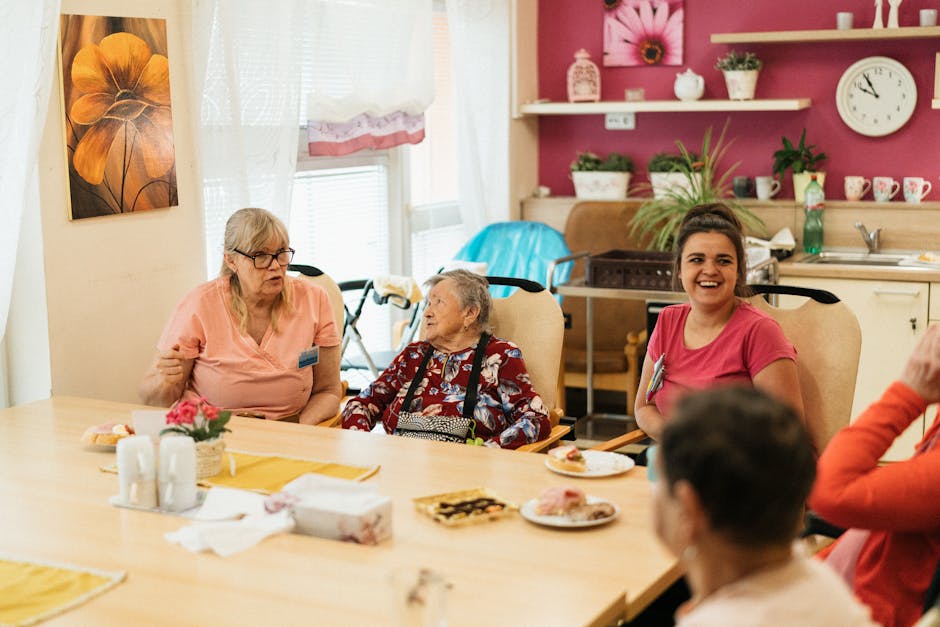
When comparing options, look past aesthetic finishes and evaluate how comprehensive senior living amenities support physical wellness, cognitive vitality, and daily independence.
Essential Health and Wellness Features in Senior Retirement Communities
- 24/7 Professional Nursing & Caregiver Staffing: On-site licensed nurses and trained personal care staff ensure rapid responses to acute medical events, routine vitals monitoring, and coordinated clinical care.
- Comprehensive Medication Management: Dedicated wellness teams coordinate prescriptions, track daily dosages, and minimize adverse pharmaceutical interactions.
- On-Site Physical, Speech, and Occupational Therapy: Access to rehabilitation gyms and therapy providers helps seniors maintain functional mobility, regain independence after injuries, and safely preserve physical strength.
- Whole-Brain Fitness and Cognitive Enrichment: Structured memory programs, cognitive fitness exercises, and sensory stimulation help slow cognitive decline and preserve mental acuity.
Dining Programs and Social Engagement Spaces
- Nutritious, Chef-Prepared Dining Options: High-quality culinary programs cater to specific dietary needs (e.g., low-sodium, diabetic-friendly, pureed textures) while offering varied, balanced menus.
- Social Dining Venues and Casual Bistros: Casual gathering spots, private family dining rooms, and coffee bars encourage social connection, turning daily meals into engaging social experiences.
- Dynamic Social and Recreational Calendars: Diverse daily activities—such as book clubs, gardening workshops, music performances, and movie nights—help combat social isolation and build meaningful friendships.
Niche and Lifestyle Amenities in Senior Retirement Communities
- Active Sports and Specialized Recreation: Over 36 million Americans play pickleball, and many active retirement communities now feature dedicated pickleball courts, heated saltwater lap pools, fitness centers, and walking trails to promote cardiovascular health.
- Lifelong Learning and Academic Partnerships: Higher education partnerships bring university lectures, fine art workshops, and modern literature courses directly to residents.
Across the country, specialized communities cater to distinct affinities and backgrounds. For instance, with over 3 million LGBT older adults in the United States, welcoming affinity environments address unique historical challenges, particularly since nearly two-thirds of LGBT seniors do not have children and up to half live alone.
Safety Infrastructure, Accessibility, and Transportation
- Universal Accessibility, Secured Grounds, and Coordinated Transit: Purpose-built senior communities feature zero-threshold entryways, wide hallways, roll-in showers, emergency pull cords, wearable pendant systems, and secured outdoor courtyards. Scheduled transportation shuttles ensure residents can attend off-site medical appointments, run personal errands, and enjoy shopping trips without needing to drive.
Evaluating Modern Senior Living Designs and Amenity Trends
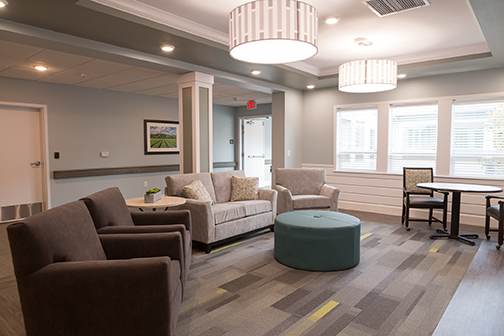
Modern retirement housing models extend far beyond traditional suburban campuses. Seniors today can choose from high-rise urban buildings, master-planned neighborhoods, Danish-inspired senior cohousing (collaborative neighborhoods built around shared facilities), and Naturally Occurring Retirement Communities (NORCs). NORCs emerge organically when long-term neighborhood residents age in place together and coordinate shared health and social support systems.
Architectural Layouts and Campus Environments
Forward-thinking communities use intentional, evidence-based architectural layouts:
- Indoor-Outdoor Connectivity: Walkable pathways, private balconies, and landscaped courtyards encourage fresh air, sunlight, and regular movement.
- Sensory and Memory Gardens: Secured circular walking paths, raised planting beds, and therapeutic water fountains provide calming, secure outdoor spaces for memory care residents.
- Neighborhood-Style Residential Wings: Dividing large campuses into smaller residential clusters creates a warm, manageable, home-like atmosphere that minimizes sensory overload.
Emerging Technology and Lifestyle Amenities
Smart home automation is increasingly integrated into modern senior residences. Motion sensors, discreet circadian lighting systems, automated temperature controls, and voice-assisted emergency tools support daily safety without compromising resident dignity. Furthermore, communities frequently coordinate intergenerational initiatives—partnering with local nursery schools and youth organizations—to foster social vitality and mutual connection across generations.
Key Downsides, Financial Risks, and Selection Checklist
While senior retirement communities offer robust social and wellness advantages, prospective residents and their families should carefully consider potential trade-offs:
- Financial Insolvency & Complex Contracts: Review audited financial statements and understand entrance fee refund structures before committing significant capital to a CCRC.
- Annual Cost Inflation: Ensure your retirement budget accounts for annual rate adjustments, which commonly range from 3% to 6%.
- Social and Ideological Polarization: Highly insular or affinity-specific communities can sometimes feel socially limiting or lead to ideological echo chambers.
- Caregiver-to-Resident Ratios: Verify actual day and night staffing ratios, especially in assisted living and memory care neighborhoods where direct care needs are highest.
Essential On-Site Touring Checklist
When touring communities, use this checklist to evaluate operational quality and daily atmosphere:
- [ ] Cleanliness & Atmosphere: Does the building smell clean and fresh? Are the common areas well-lit, inviting, and actively utilized by residents?
- [ ] Resident Engagement: Do residents appear happy, active, and comfortably engaged in activities, or are they isolated in their rooms?
- [ ] Staff-to-Resident Interactions: Are staff members warm, patient, and attentive, addressing residents by their preferred names?
- [ ] Dining Quality & Flexibility: Can you sample a meal during your tour? Are alternative meal options readily available for distinct dietary requirements?
- [ ] Safety & Emergency Protocols: Are emergency pull cords or wearable alert pendants functional? How does the community manage wandering or falls?
- [ ] Care Continuity: What specific physical or cognitive changes would require a resident to move to a higher level of care?
- [ ] Fee Transparency: Are all care fees clearly outlined in writing, or are there hidden charges for medication delivery, laundry, and incontinence support?
To experience a personalized, supportive care environment firsthand, we invite you to schedule an on-site visit and request a tour with our dedicated team.
Frequently Asked Questions About Senior Living Amenities
What is the average monthly cost of living in a retirement community?
Independent living generally ranges from $1,800 to $4,014 per month, with a national average near $3,000. Assisted living averages approximately $4,500 to $4,800 per month. Memory care services typically add $250 to $1,500 monthly to base assisted living rates, while skilled nursing facilities average around $8,200 per month for a semiprivate room ($93,075 to $106,000 annually). CCRC entrance fees vary widely, ranging from $100,000 to well over $1,000,000 depending on location, unit size, and contract structure.
Does Medicare pay for amenities and rent in retirement communities?
No. Standard Medicare does not cover monthly rent, board, or custodial care (such as help with bathing, dressing, and eating) in independent living, assisted living, or memory care communities. Medicare only pays for medically necessary, short-term skilled nursing or rehabilitation care (up to 100 days) following a qualified hospital stay.
Can couples with different care needs stay together in the same community?
Yes. Many communities hold dual or tiered licensing, allowing one spouse to receive assisted living or memory support services while the other lives relatively independently within the same apartment. Life Plan communities and comprehensive campuses also make it easy for spouses to visit each other daily, even if one requires advanced memory care or skilled nursing support.
Conclusion
Choosing the right senior living environment requires balancing current lifestyle preferences with long-term care predictability. By comparing core amenities—including around-the-clock professional staffing, comprehensive wellness programs, chef-prepared nutrition, accessible design, and engaging social calendars—families can make confident, informed choices.
At Vaca Valley Living, we bring over 50 years of family-owned caregiving experience to our residential memory care community in Vacaville, California. We provide 24-hour staffing, personalized care plans, on-site salon services, and secure, home-like surroundings tailored to seniors with Alzheimer’s and dementia. When you are ready to explore specialized care options, explore dedicated residential memory care and community support designed to bring comfort, security, and lasting peace of mind to your entire family.