
Medicare Nursing Homes Near You: A Practical Guide to Coverage and Quality
Find Medicare-Certified Nursing Homes Near You

To find nursing homes that accept Medicare near me, start with Medicare's official Care Compare tool. Enter your ZIP code, city, or address, select nursing homes, and compare Medicare certification, distance, staffing, inspection results, and 1-to-5 star ratings.
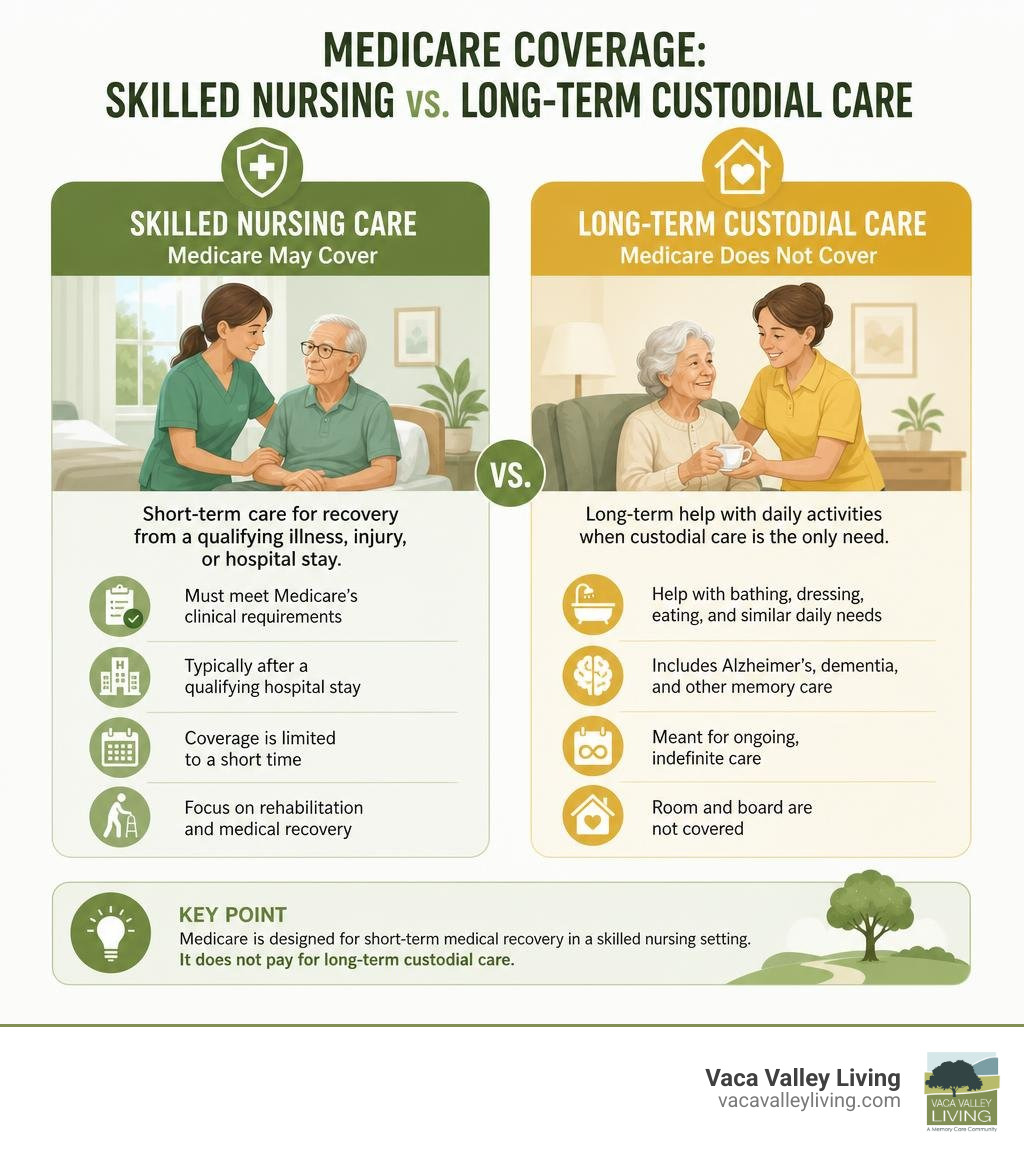
Before you call a facility, know this key point: Medicare usually covers short-term skilled nursing care after an illness, injury, or qualifying hospital stay. It does not usually pay for long-term help with bathing, dressing, eating, or ongoing memory care when custodial care is the only need.
For a parent living with Alzheimer's, the right choice depends on more than whether a community accepts a particular payer. Ask about dementia training, 24-hour supervision, staff consistency, care planning, safety practices, and whether the setting can meet your loved one's current and future needs.
This guide explains how to search, compare quality, understand coverage, prepare for admission, and protect your parent's rights.
Understanding What Medicare Covers in Nursing Homes
Navigating the financial landscape of senior healthcare can feel overwhelming, especially during a health crisis. The most critical distinction to understand is that Original Medicare (Part A) is designed primarily as a short-term post-acute medical benefit, not a permanent funding source for long-term residency.
To qualify for Medicare Part A coverage in a skilled nursing facility (SNF), a resident must satisfy strict clinical criteria:
- Qualifying Hospital Stay: A formal inpatient hospital stay of at least three consecutive calendar days (not counting the day of discharge). Time spent in observation status does not qualify.
- Physician Certification: A doctor must verify that the patient requires daily, skilled rehabilitative therapies or skilled nursing interventions that can only be practically delivered in an inpatient facility.
- Timely Admission: The patient must enter the Medicare-certified SNF within 30 days of leaving the hospital for the same condition or a related medical issue.
Medicare measures coverage through "benefit periods." A benefit period begins the day you enter a hospital or skilled nursing facility and ends once you have been out of both for at least 60 consecutive days. Within a single benefit period, Medicare Part A provides up to 100 days of skilled nursing coverage, structured as follows:
| Days of Care | Resident Out-of-Pocket Cost | Medicare Coverage Level |
|---|---|---|
| Days 1 – 20 | $0 copayment per day | 100% covered for all approved services |
| Days 21 – 100 | Daily coinsurance copayment (adjusted annually) | Covered minus daily coinsurance |
| Days 101+ | 100% of all costs (Private pay, Medicaid, or LTC insurance) | Zero coverage provided by Medicare |
Skilled Nursing Care vs. Custodial Care
The dividing line between what Medicare pays for and what families must fund themselves comes down to clinical necessity versus personal support.
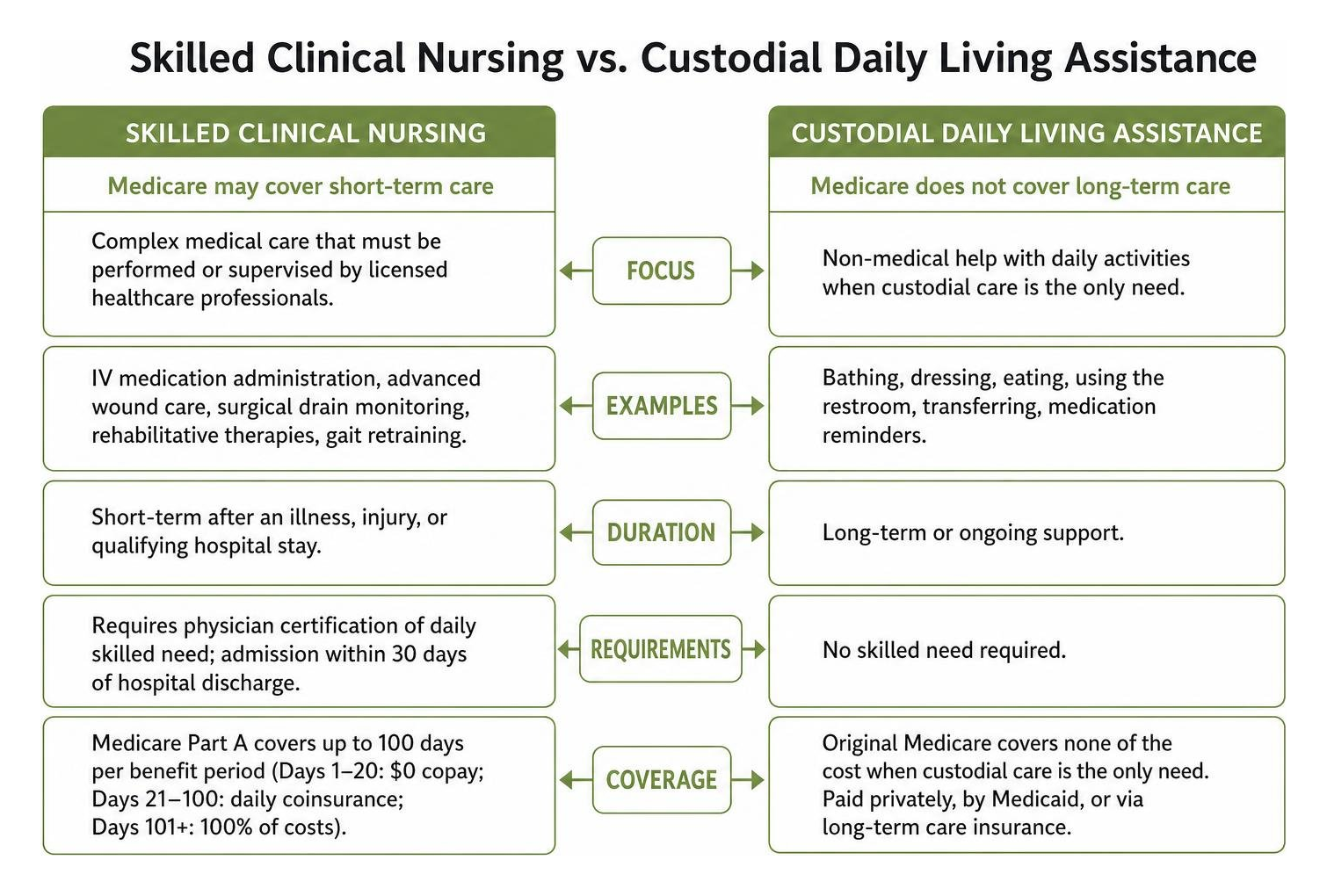
- Skilled Nursing Care: Refers to complex medical interventions and therapies that must be performed or supervised directly by licensed healthcare professionals, such as registered nurses (RNs), physical therapists, occupational therapists, and speech-language pathologists. Examples include intravenous (IV) medication administration, advanced wound management, surgical drain monitoring, and intensive gait retraining.
- Custodial Care: Involves non-medical assistance with Activities of Daily Living (ADLs)—such as bathing, dressing, eating, using the restroom, transferring from bed to chair, and basic medication reminders. If custodial support is the only type of care a person needs, Original Medicare covers none of the cost.
Specialized Clinical Services and High-Acuity Care
Modern skilled nursing centers often function as specialized post-acute hubs providing high-acuity medical care. These services allow medically complex seniors to transition safely from intensive hospital settings:
- Ventilator Care and Weaning: Dedicated respiratory units staffed 24/7 by licensed respiratory therapists, offering specialized weaning protocols, tracheostomy maintenance, and pulmonary rehabilitation.
- Onsite Hemodialysis and Peritoneal Dialysis: Specialized clinical setups that allow residents with end-stage renal disease to receive life-sustaining dialysis on campus without exhausting ambulance transfers.
- Advanced Wound Care: Multidisciplinary management of surgical dehiscence, stage 3 or 4 pressure injuries, and diabetic ulcers using negative-pressure wound therapy (wound VACs) and specialized biophysical dressings.
- Neurological and Orthopedic Rehabilitation: Seven-day-a-week therapy programs designed to restore independence following strokes, joint replacements, and neurological events.
Finding Nursing Homes That Accept Medicare Near Me
When searching for certified facilities, families should rely on verified government directories and objective performance data rather than marketing materials alone.

How to Search for Nursing Homes That Accept Medicare Near Me
Locating top-rated facilities involves a clear, methodical process:
- Access the Medicare Care Compare Directory: Visit the official Medicare portal and enter your ZIP code, city, or county.
- Set Your Search Radius: Expand your radius (5, 10, 25, or 50 miles) to identify regional centers of excellence, particularly if your loved one needs specialized clinical tracks like ventilator management.
- Verify Active Certification: Ensure the facility maintains current Medicare and Medicaid certifications. Uncertified communities cannot bill Medicare Part A for skilled stays.
- Download CMS Open Data: For deeper analysis, explore Data.cms.gov to inspect granular incident reports, state survey citations, and historical compliance records.
Comparing Quality at Nursing Homes That Accept Medicare Near Me
The Centers for Medicare & Medicaid Services (CMS) assigns a 1-to-5 Star Quality Rating to every certified facility. This overall rating compiles performance across three vital pillars:
- Health Inspections: Based on onsite health and safety inspections conducted over the past 36 months, assessing infection control, medication safety, food preparation, and life safety codes.
- Staffing Ratios: Evaluates the average hours of daily direct nursing care provided per resident, paying close attention to registered nurse (RN) hours versus certified nursing assistant (CNA) hours.
- Quality Measures (QMs): Tracks clinical outcomes, such as rates of successful community discharge, pressure injury prevention, fall frequencies, and the management of antipsychotic medication usage.
Admission Requirements, Payment Options, and Resident Rights
Transitioning into a skilled nursing facility requires specific paperwork, clinical reviews, and clear financial planning.

To initiate admission, the facility will require:
- A completed admissions application and signed financial agreement
- Current medical records, physician orders, and recent clinical notes
- State-mandated pre-admission screening (such as PASRR to evaluate mental health or intellectual disability support needs)
- Valid identification along with copies of Medicare, Medicaid, or supplemental insurance cards
Navigating Costs and Long-Term Financing Options
When skilled Medicare coverage concludes, families transition to alternative funding mechanisms for ongoing custodial or long-term nursing support:
- Medicaid: The primary payer for long-term custodial care in the United States. Eligibility depends on state-specific income and asset thresholds, often requiring a formal "spend-down" process.
- Dual-Eligible Programs (Medicare & Medicaid): For seniors qualifying for both programs, Medicare covers acute medical needs while Medicaid subsidizes room, board, and personal care.
- Veterans Affairs (VA) Benefits: Veterans may access Community Nursing Home programs, Aid and Attendance pensions, or VA-contracted facility beds.
- Long-Term Care Insurance (LTCI): Private insurance policies that provide daily or monthly stipends for personal care, assisted living, and memory support.
- Private Pay: Direct out-of-pocket funding utilizing personal savings, pensions, or family resources.
Resident Rights and Quality Protections
Federal and state laws guarantee comprehensive rights to every nursing home resident, ensuring dignity, autonomy, and quality care:
- Individualized Care Planning: Residents and their designated family representatives have the legal right to participate in creating and updating their personal care plan.
- Discharge and Transfer Protections: Facilities cannot discharge a resident without written notice, clear clinical justification, and an established safe discharge plan.
- Long-Term Care Ombudsman Program: Every state maintains an independent ombudsman advocate dedicated to resolving resident grievances and protecting personal rights.
- Complaint Reporting: Anyone can report concerns, neglect, or safety violations directly to the State Department of Public Health or through CMS complaint portals.
Choosing the Right Setting: Skilled Nursing vs. Residential Memory Care
While skilled nursing facilities excel at acute clinical rehabilitation, they operate under an institutional hospital model that may feel overwhelming to individuals with progressive cognitive decline.
For seniors living with Alzheimer's disease or other forms of dementia, a dedicated residential memory care community often provides a warmer, more supportive environment. Unlike clinical nursing wards designed for medical convalescence, specialized memory care focuses on holistic engagement, behavioral reassurance, and purposeful daily living.
At Vaca Valley Living, our family-owned community brings over 50 years of dedicated experience to seniors throughout Vacaville, CA. We provide a secure, home-like setting featuring 24-hour compassionate supervision, specialized dementia care programs, and personalized support plans. Residents enjoy access to supportive residential amenities—such as an on-site beauty salon, secure outdoor courtyards, and organized group outings—along with comfortable memory care floor plans tailored for safety and peace of mind.
Frequently Asked Questions About Medicare Nursing Homes
What is the 100-day Medicare skilled nursing benefit limit?
Medicare Part A covers up to 100 days of skilled nursing care per benefit period. Days 1 through 20 are covered at 100% with $0 coinsurance. For days 21 through 100, the resident pays a daily coinsurance rate, while Medicare covers the remaining eligible costs. Coverage ends immediately if the resident no longer requires daily skilled rehabilitation or clinical care, even if 100 days have not passed.
Does Medicare cover long-term memory care in a nursing home?
No. Original Medicare does not cover long-term custodial care, dementia supervision, or residential room and board when personal assistance is the only care required. Ongoing memory care is typically paid through private funds, long-term care insurance, or state Medicaid programs once financial eligibility is met.
How do I file a complaint against a Medicare-certified facility?
You can file a formal complaint by contacting your State Survey and Certification Agency (usually housed within the State Department of Public Health) or by reaching out to your regional Long-Term Care Ombudsman. Additionally, you can submit quality-of-care complaints directly through Medicare's official portal at Medicare.gov.
Conclusion
Choosing the right care setting for an aging family member requires balancing immediate medical needs with long-term quality of life. Medicare provides an essential safety net for short-term clinical rehabilitation following acute illnesses or hospital stays, but it is not built to sustain ongoing, day-to-day custodial care.
If your loved one requires specialized, ongoing cognitive support rather than hospital-level nursing intervention, we encourage you to explore personalized memory care and senior living options designed to foster dignity, safety, and personal connection.