
Connect With Top Dementia Support Services in Your Community Today
Find Local Dementia Support Services and Take the Next Step
Start by matching help to your loved one's needs today. Dementia support services can include a care assessment, in-home help, adult day programs, caregiver respite, support groups, safety resources, and residential memory care. A primary doctor, memory clinic, hospital social worker, or local aging agency can help you identify the right options near you.
For a fast local search, focus on these three steps:
- Ask the doctor or a social worker for a care plan and referrals.
- Contact your county's Area Agency on Aging for meals, transportation, respite, and care navigation.
- Compare providers based on dementia training, supervision, safety features, daily routines, and how they communicate with families.
A dementia diagnosis changes over time, and the right level of care can change with it. Getting support early can ease caregiver strain, improve safety, and help your parent keep familiar routines and meaningful connections for as long as possible.
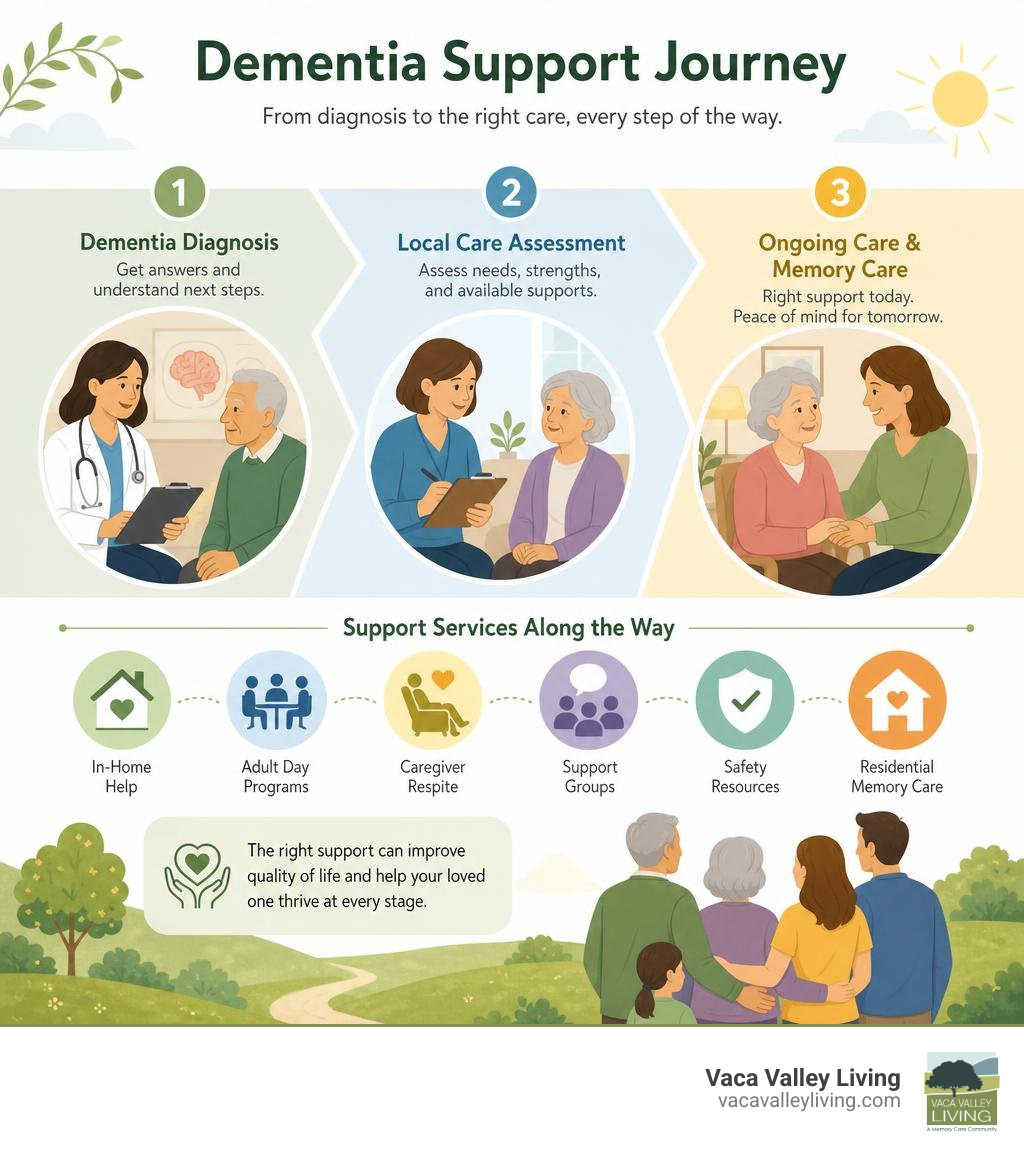
1. Start With Dementia Support Services That Match Your Loved One’s Current Needs
Dementia is not a one-size-fits-all condition. It encompasses various diagnoses, including Alzheimer’s disease, vascular dementia, Lewy body dementia, and frontotemporal dementia. Each condition impacts the brain differently, meaning symptoms progress at varying speeds.
In the early (mild) stage, your loved one might only need gentle reminders for medications or help managing bills. By the middle stage, safety concerns multiply as wandering, confusion, and changes in mood emerge. In the late stage, extensive assistance with activities of daily living (ADLs) such as bathing, dressing, and eating becomes necessary.
Balancing these evolving symptoms against your personal caregiving capacity is essential. To help you choose the best care option, consider how each major service model functions:
| Care Setting | Best Suited For | Core Services Provided | Typical Level of Supervision |
|---|---|---|---|
| In-Home Care | Mild to moderate stages; individuals who want to stay at home | Companionship, meal preparation, bathing, light housekeeping, medication cues | Hourly or drop-in visits; part-time or full-time day coverage |
| Adult Day Care | Daytime supervision while family caregivers work or take a break | Structured activities, meals, socialization, basic health monitoring | Full daytime supervision in a community group setting |
| Respite Care | Short-term relief for family caregivers (days or weeks) | Temporary in-home aid or short-term residential community stays | Variable, based on whether care is delivered at home or in a facility |
| Residential Memory Care | Middle to late stages; individuals with complex safety or behavioral needs | 24-hour specialized care, secure environments, dining, medication management, tailored life enrichment | Continuous 24/7 staffing with secured perimeters and cognitive programming |
How to Identify the Right Level of Dementia Support Services
Pinpointing the exact care level your loved one requires comes down to practical everyday realities:
- Symptom Severity and Daily Needs: Are they struggling to prepare meals, dress appropriately, or remember their hygiene routines?
- Safety Risks: Has your loved one started leaving the stove on, misplacing critical items, or experiencing unexpected falls?
- Behavior Changes: Are you seeing signs of sundowning (increased late-afternoon agitation), intense anxiety, or wandering?
- Caregiver Capacity: Are you managing care alongside your own job and family? Taking on 24-hour care alone often leads to physical and emotional burnout.
When Standard Senior Care Is Not Enough
Standard assisted living or basic companion care is great for seniors who just need a hand with chores. However, dementia requires a higher degree of structure and security.
When wandering becomes a risk or behavioral changes need skilled redirection, a dedicated memory care community provides the specialized environment your loved one needs. These settings feature 24-hour staffing, secure outdoor courtyards, visual wayfinding cues, and dementia-trained caregivers who understand how to de-escalate anxiety while preserving your loved one's dignity and quality of life.
2. Get a Care Plan, Needs Assessment, and Professional Guidance After Diagnosis
Receiving a dementia diagnosis can feel overwhelming, but establishing a clear care path right away brings immediate structure. You can explore Help after a dementia diagnosis to understand how structured assessments work.
Your loved one’s care team—consisting of their primary care doctor, neurologist, geriatrician, and clinic social workers—can conduct a formal needs assessment. This evaluation measures cognitive capacity, physical mobility, and self-care abilities. It is best practice to review this care plan at least once every 12 months to adapt to any shifts in health.
What a Dementia Care Plan Should Include
An effective dementia care plan serves as a living roadmap. It should clearly outline:
- Medical and Clinical Summary: A record of diagnoses, active prescriptions, physician contacts, and scheduled checkups.
- Daily Routines and ADLs: Preferred waking times, meal preferences, hygiene routines, and specific areas where physical assistance is needed.
- Safety Protocols: Wandering management plans, fall prevention strategies, and emergency contacts.
- Communication and Comfort Preferences: Calming strategies, musical interests, and preferred conversational styles.
- Review Milestones: Clear timelines for adjusting the plan as cognitive conditions evolve.
Who Can Help Build and Coordinate the Plan
You do not have to map out this journey alone. Building a collaborative circle ensures everyone shares the caregiving load:
- Healthcare Professionals: Neurologists, geriatricians, and specialized nurses evaluate clinical needs and monitor medications.
- Geriatric Care Managers: These licensed social workers or nurses act as professional care coordinators, helping you evaluate housing, medical services, and local programs.
- Local Aging Agencies: Area Agencies on Aging (AAAs) connect families to community services like home-delivered meals and transportation.
- Personal Support Networks: Family members, trusted neighbors, and faith communities provide practical day-to-day help and emotional support.
3. Find Local Dementia Support Services Near You
Accessing local resources is one of the most practical steps you can take to make daily care manageable.

Across the country, the Alzheimer's Association provides care and support over 10 million times annually through local care consultations, educational programs, and support groups. Organizations also partner with dozens of national and hundreds of local groups to ensure families in underserved communities receive the care navigation they need.
Best Places to Search for Dementia Support Services in Your Community
When looking for direct help in your area, start with these established channels:
- Area Agencies on Aging (AAAs): Your county’s agency is a central hub for senior resources, adult day programs, and subsidized respite services.
- Memory Clinics and Hospital Social Work Teams: Hospital discharge planners and clinic social workers maintain directories of vetted in-home care agencies and memory care providers.
- Community Resource Locators: You can search online for local dementia resources to locate support groups, educational workshops, and respite providers right in your area.
- State Ombudsman Offices: Long-term care ombudsmen offer objective insights into residential community standards, licensing reviews, and senior rights.
National Helplines and Online Tools That Connect You to Local Help
When questions arise outside of regular office hours, round-the-clock help is available:
- 24/7 Helplines: You can reach a 24/7 dementia helpline anytime at 800.272.3900 to speak with master's-level dementia specialists. This service offers crisis assistance, emotional support, and local referrals in more than 200 languages.
- Specialist Nurse Advice: Programs like the Admiral Nurse Dementia Helpline - Dementia UK highlight how specialist dementia nurses can guide families through complex behavioral and clinical changes.
- Online Care Communities: Platforms like ALZConnected and virtual webinars let caregivers share practical tips and find encouragement from others walking the same path.
Safety and Wandering Resources to Ask About Locally
Wandering is a common symptom of dementia that requires proactive planning:
- Project Lifesaver: Many local sheriff and emergency search-and-rescue teams partner with Project Lifesaver. This initiative provides individuals who wander with radio-frequency tracking bracelets to ensure rapid location if they go missing.
- Environmental Safety Adaptations: Simple changes, such as door chimes, safety locks, stove turn-off sensors, and medication lockboxes, help maintain safety at home.
- Identification Systems: Ensure your loved one wears an engraved medical ID bracelet with your contact numbers and emergency details.
4. Compare Care Options: In-Home Help, Adult Day Programs, Residential Memory Care, and Hospice
Choosing between staying at home and moving to a specialized community is an evolving decision. Let's look at the main care paths available:
In-Home Care and Home Health Care
In-home care falls into two main categories:
- Non-Medical In-Home Care: Paid aides assist with daily activities like meal preparation, companionship, dressing, bathing, and light housekeeping. This care is private-pay or covered by long-term care insurance.
- Licensed Home Health Care: A doctor orders skilled nursing, physical therapy, or occupational therapy for specific medical needs. Medicare generally covers short-term, intermittent home health when clinical criteria are met.
Adult Day Care, Respite Care, and Community-Based Programs
Adult day centers provide a safe, engaging daytime environment with hot meals, social programs, and medication supervision. This gives family caregivers essential breaks to handle work or personal obligations. Respite care programs also offer short-term stays in residential settings, giving caregivers time to recharge and prevent burnout.
Residential Memory Care Settings
When home care is no longer safe or sustainable, dedicated memory care communities provide a secure, engaging environment. At Vaca Valley Living, we understand that moving a loved one is a major family transition. Our family-owned community brings over 50 years of experience to providing a warm, home-like environment in Vacaville, California.
Our residents benefit from 24-hour staffing, personalized care routines, secure outdoor grounds, and helpful on-site amenities like a full-service salon, chef-prepared dining, and scheduled transportation.
Common Signs It May Be Time for Residential Memory Care:
- Wandering or attempting to leave home unsupervised
- Increasing difficulty managing personal hygiene, eating, or medications
- Frequent falls, home accidents, or safety incidents
- Extreme caregiver exhaustion, stress, or health complications
- Escalating agitation, confusion, or sundowning behaviors in the evening
Hospice and End-of-Life Dementia Support
In the late stages of dementia, comfort and pain management become the central focus of care. Hospice care teams—including doctors, nurses, social workers, and chaplains—provide palliative support wherever your loved one lives. They manage symptoms, support changing nutritional needs, and offer emotional and bereavement support to the whole family.
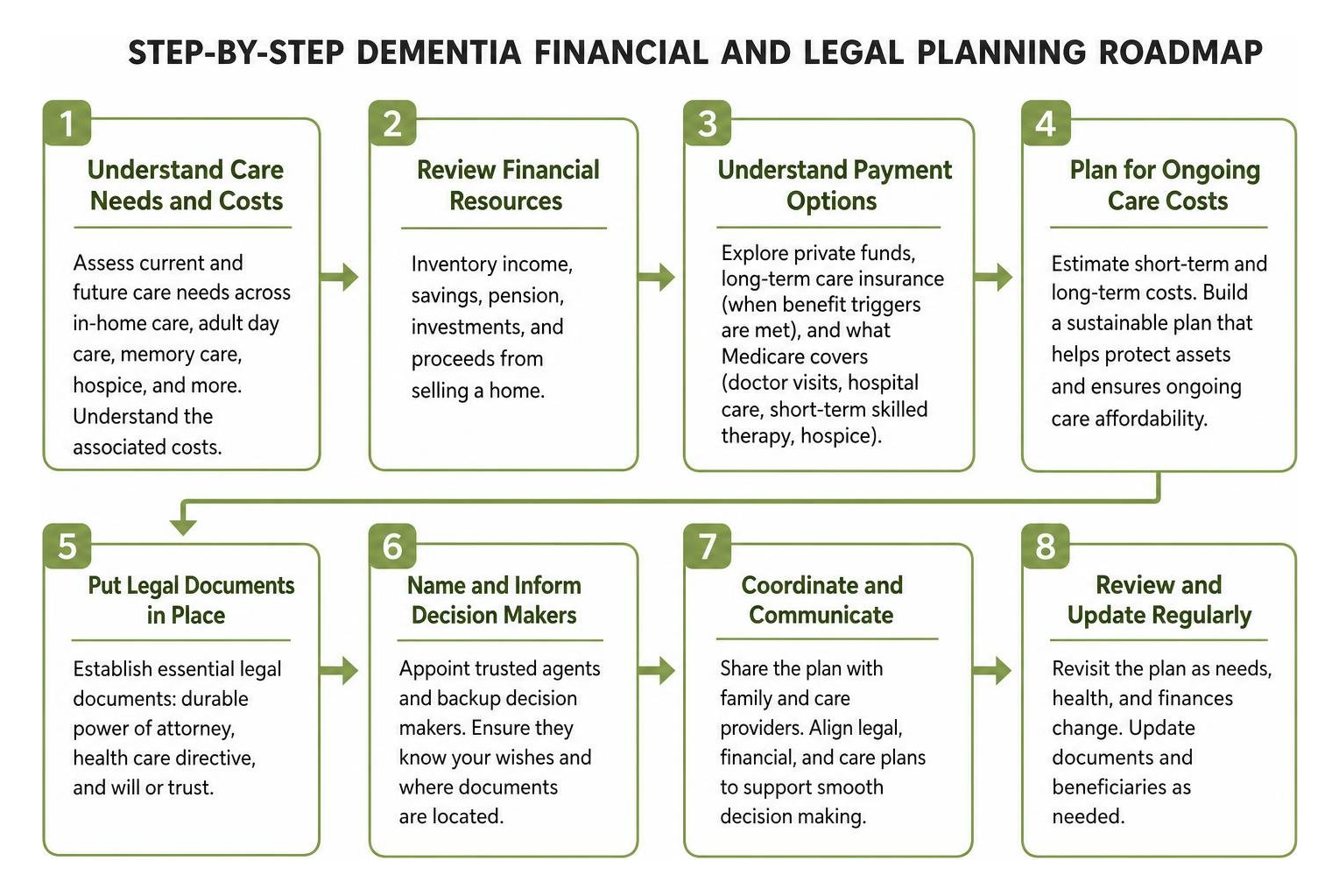
5. Plan How to Pay for Dementia Care and Protect the Family’s Future
Dementia care requires thoughtful financial planning. Mapping out available resources early protects your family's finances and ensures ongoing stability. You can learn how modern care frameworks operate through this Alzheimer’s and dementia care coordination model.
Common Ways Families Pay for Dementia Care
- Private Funds: Personal savings, pension income, and proceeds from selling a home are the most common ways families fund residential care.
- Long-Term Care Insurance: Policies often cover in-home assistance, adult day care, and residential memory care once benefit triggers are met.
- Medicare: While Medicare does not cover long-term custodial care, it covers doctor visits, hospital care, short-term skilled therapy, and hospice services.
- Medicaid and Medi-Cal: For individuals with limited income and assets, state Medicaid programs (such as Medi-Cal in California) help cover qualified nursing and long-term care services through state waivers.
- Veterans Aid and Attendance: Qualified wartime veterans and surviving spouses can receive monthly pension benefits to help cover assisted living and memory care expenses.
- Social Security Compassionate Allowances: The Social Security Administration expedites disability determinations for specific early-onset dementias.
- Medicare GUIDE Model & PACE: Initiatives like the CMS GUIDE model help cover respite care and care coordination, while PACE (Program of All-Inclusive Care for the Elderly) offers comprehensive community-based care for eligible seniors.
Legal, Financial, and End-of-Life Planning Steps to Take Early
Completing legal paperwork early ensures your loved one’s personal preferences are respected:
- Durable Power of Attorney (DPOA): Designates a trusted agent to manage financial and legal matters.
- Advance Healthcare Directive: Outlines medical treatment wishes and appoints a healthcare proxy.
- Living Trust and Will: Clarifies asset distribution and simplifies estate management.
- POLST (Physician Orders for Life-Sustaining Treatment): Translates medical wishes into actionable, signed medical orders.
Training and Education for Caregivers and Professionals
Learning effective dementia care techniques helps de-escalate difficult moments and reduces everyday friction:
- Communication Techniques: Using simple sentences, a gentle tone of voice, and validating emotions rather than correcting mistaken memories.
- Managing Behavior Changes: Identifying unmet physical needs—like pain, hunger, or overstimulation—that cause agitation or resistance.
- Caregiver Educational Workshops: Free webinars and workshops offered through national associations and local aging departments teach practical skills for every stage of care.
Frequently Asked Questions About Dementia Support Services
What types of dementia support services are available?
Dementia support covers a wide continuum of care: comprehensive health assessments, non-medical in-home aides, home health nursing, adult day programs, caregiver respite, support groups, 24/7 helplines, secured residential memory care, and palliative hospice care.
Where can I find dementia support services near me?
You can find local services through your county's Area Agency on Aging, hospital social work teams, primary care referrals, or online directories such as the Eldercare Locator and local nonprofit chapter finders.
What support is available for caregivers of people with dementia?
Caregivers can access subsidized respite breaks, educational training courses, peer-led support groups, and free 24/7 helpline consultations. They can also connect with care managers to build balanced daily routines and reduce personal burnout.
Conclusion
Finding the right support begins with a single step: getting a clear assessment of your loved one's current needs and connecting with local resources. By building a trusted care team, establishing safety measures, and planning your finances early, you can navigate dementia with confidence and peace of mind.
If you are exploring long-term memory care options in Northern California, we invite you to learn About Vacavalley Living. You can discover our personalized programs on our Home page or visit Contact to schedule a tour of our home-like memory care in Vacaville today.