
Empower Your Loved One: Essential Strategies for Early-Stage Dementia
Start Early Stage Dementia Care With Support, Safety, and a Plan

Early stage dementia care works best when you support your loved one's abilities instead of taking over. Start by working together on a simple daily routine, using reminders for key tasks, making the home safer, and having early conversations about medical, legal, and financial wishes.
In the early stage, many people can still manage much of daily life, including hobbies, social time, and sometimes work or driving. Your role is often that of a care partner: notice changes, offer help when needed, and protect independence and dignity.
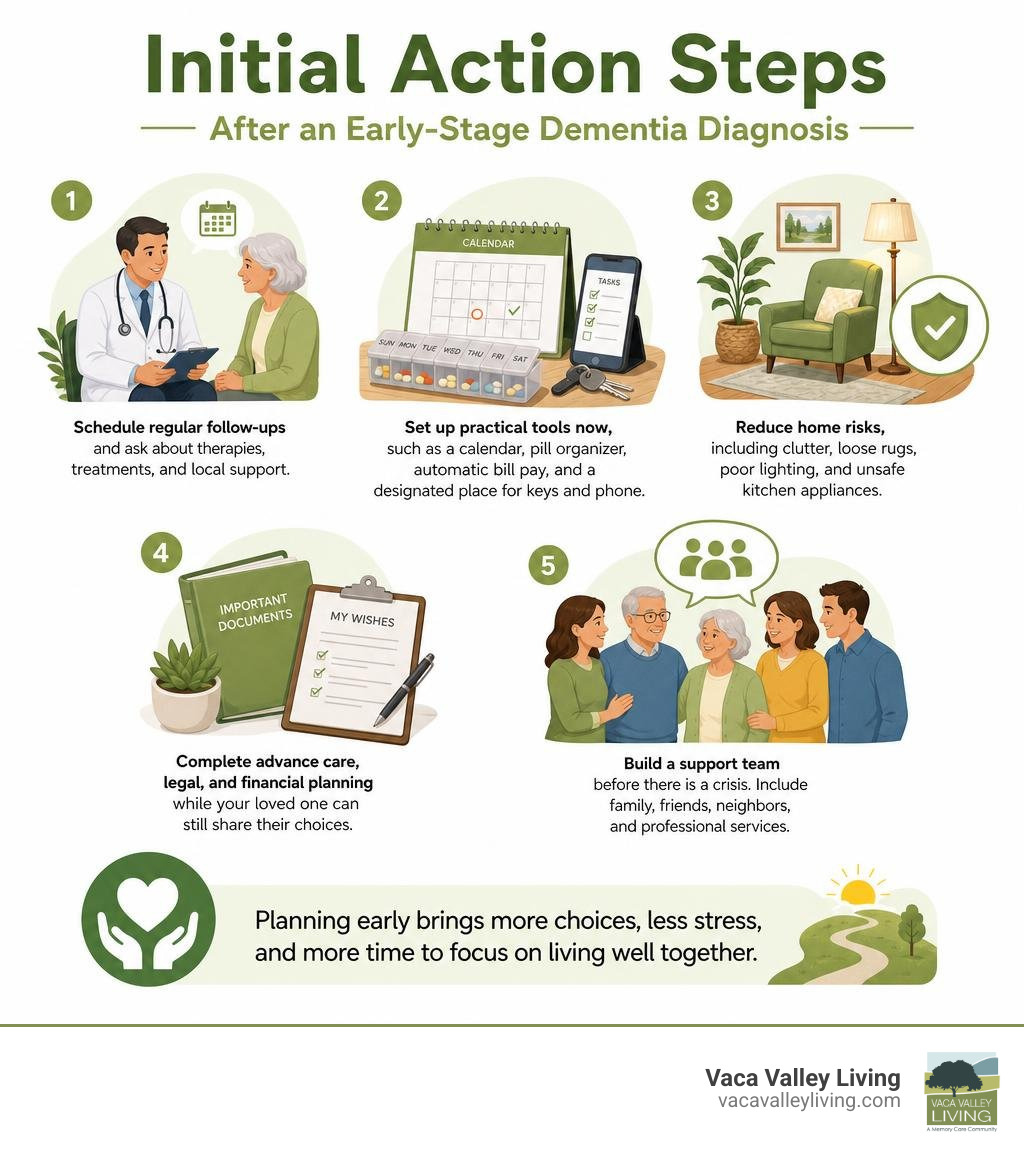
Focus on these first steps:
- Schedule regular follow-ups with the medical team and ask about therapies, treatments, and local support.
- Set up practical tools now, such as a shared calendar, pill organizer, automatic bill pay, and a designated place for keys and phone.
- Reduce home risks, including clutter, loose rugs, poor lighting, and unsafe kitchen appliances.
- Complete advance care, legal, and financial planning while your parent can still share their choices.
- Build a support team before there is a crisis. Include family, friends, neighbors, and professional services.
A diagnosis can bring fear, denial, sadness, or anger for everyone involved. Those feelings are real, but planning early gives your family more choices and more time to focus on living well together.
Understanding Early Signs and Clinical Diagnosis
Recognizing the boundary between normal age-related forgetfulness and early cognitive impairment can feel tricky. We all walk into a room occasionally and wonder why we entered, or misplace our reading glasses only to find them perched on our head. However, neurodegenerative changes involve persistent patterns that disrupt daily life and problem-solving abilities.
Understanding these distinctions helps families seek a prompt and accurate medical evaluation rather than assuming symptoms are simply "getting older."
| Category | Normal Age-Related Changes | Early Dementia Symptoms |
|---|---|---|
| Short-Term Memory | Forgetting names or appointments occasionally, but remembering them later | Forgetting recently learned information, asking the same question repeatedly |
| Planning & Executive Function | Making occasional errors when balancing a checkbook or managing household bills | Inability to develop or follow a familiar plan, trouble working with numbers and recipes |
| Familiar Tasks | Occasionally needing help with complex microwave settings or recording a show | Difficulty completing daily tasks like driving to a familiar location or managing a grocery list |
| Time & Spatial Orientation | Getting confused about the day of the week but figuring it out later | Losing track of dates, seasons, the passage of time, or forgetting where they are and how they arrived |
| Language & Conversation | Sometimes struggling to find the exact word | Stopping in the middle of a conversation, repeating stories, or substituting unusual words |
| Object Placement & Logic | Misplacing items occasionally and retracing steps to find them | Putting items in unusual places (e.g., wallet in the freezer) and inability to retrace steps |
During an initial clinical assessment, physicians work to differentiate progressive neurodegenerative conditions from treatable, reversible issues. Thyroid imbalances, urinary tract infections, sleep apnea, normal pressure hydrocephalus, depression, and vitamin B12 deficiencies can all mimic dementia symptoms.
When establishing a definitive diagnosis, clinicians rely on evidence-based diagnostic pathways and clinical assessment standards to guide cognitive screenings, structural neuroimaging (such as MRI or CT scans), and specialized biomarker testing. Seeking these evaluations early ensures access to symptomatic treatments and gives your family precious time to organize future care.
Differentiating Subtype Symptoms
Dementia is an umbrella term encompassing several distinct neurological conditions, each presenting with unique early indicators:
- Alzheimer's Disease: The most common form, typically beginning in the hippocampus and medial temporal lobes. It first manifests as difficulty forming new episodic memories, misplacing items, and struggling to recall recent conversations, while long-term memories remain intact.
- Vascular Dementia: Often linked to minor strokes or reduced blood flow to deep white matter. Symptoms frequently appear as executive dysfunction—difficulties with planning, step-by-step reasoning, organization, and slowed processing speed—rather than immediate memory loss.
- Dementia with Lewy Bodies (DLB): Characterized early on by visual hallucinations (often seeing animals or people that are not there), fluctuating levels of alertness, motor stiffness resembling Parkinsonism, and spatial perception changes.
- Frontotemporal Dementia (FTD): Often diagnosed in individuals under 65. The behavioral variant typically presents with sudden shifts in personality, loss of empathy, social disinhibition, and impulsivity, while memory functions may remain preserved initially.
Understanding these subtype variations ensures that support strategies are tailored directly to your loved one's specific cognitive strengths and challenges.
Foundational Principles of Early Stage Dementia Care
The heart of supporting someone in the initial stages is treating the relationship as an empowering partnership. In professional care communities and modern support circles, we prefer the term "care partner" over "caregiver." This linguistic shift reflects an essential reality: during this stage, your loved one retains substantial functional capacity, personal insight, and autonomy.

Effective early-stage support balances safety with self-determination by applying several foundational practices:
- Make Positive Assumptions: Always assume your loved one is capable of completing a task until they demonstrate otherwise or express frustration. Jumping in too quickly can cause feelings of helplessness.
- Establish Pre-Agreed Help Signals: Discuss and agree upon a discreet phrase, nod, or hand gesture that signals when your loved one wants you to step in during a conversation or task. This protects their dignity in public and social settings, as highlighted in practical care partner strategies and empowerment techniques.
- Communicate with Calm Validation: Speak at an unhurried pace, maintain eye contact, and use concise, direct sentences. Avoid quiz-like questions such as "Do you remember who called earlier?" or blunt corrections like "I just told you that five minutes ago."
- Avoid Confrontational Reality Checks: If your loved one misremembers a minor detail or expresses anxiety based on a confused thought, validate the emotion behind the words rather than arguing over factual accuracy.
Supporting Independence in Early Stage Dementia Care
Maintaining functional independence for as long as possible is not just emotionally empowering—it is neurologically protective. While explicit episodic memory (recalling what happened yesterday) begins to decline early in conditions like Alzheimer's, procedural memory (the automatic motor patterns and habits governed by the basal ganglia and prefrontal networks) remains relatively intact.
This dynamic creates a vital window of opportunity. Engaging in structured, repetitive habit rehearsal allows older adults to solidify compensatory routines before cognitive load increases. Clinical studies exploring neuroplasticity and routine rehearsal benefits demonstrate that proactive strategy practice can extend independent functioning by an average of 6 to 18 months.
Collaborating with occupational therapists and speech-language pathologists early after diagnosis provides personalized exercises to adapt daily living activities. These specialists analyze specific daily workflows—such as preparing morning coffee or tracking appointments—and engineer multi-sensory environmental cues that build cognitive reserve.
Practical Daily Living and Home Safety Strategies
Making thoughtful adjustments around the house reduces frustration, prevents accidents, and preserves self-reliance. The goal is not to turn the home into an institutional setting, but to create an intuitive, low-stress environment.

Implement these straightforward home adaptations:
- Establish a Centralized Launchpad: Place a dedicated table or organizer near the main entryway for essentials like glasses, wallet, keys, and phone to eliminate frantic searches.
- Install Clear Visual Prompts: Use simple, neat labels or pictures on kitchen cabinets, pantry shelves, and linen closets to make finding daily items effortless.
- Upgrade Lighting and Remove Fall Hazards: Increase ambient illumination in hallways and stairwells to prevent shadows that cause misperceptions. Remove throw rugs, eliminate floor clutter, and secure exposed electrical cords.
- Regulate Water and Kitchen Safety: Lower water heater thermostats to 120°F to prevent accidental scalding. Install automatic shut-off switches on stoves or encourage using simplified countertop appliances like microwaves and slow cookers.
- Automate Financial Tracking: Set up automatic bill payment systems for recurring monthly utilities, mortgage, and insurance to avoid missed payments or accidental double-payments.
- Evaluate Future Residential Settings: Families planning ahead often tour dedicated memory care communities to explore purpose-built residential amenities designed specifically for cognitive ease, secure movement, and social enrichment.
Considerations for Individuals Living Alone
Many individuals with mild cognitive impairment or early dementia live independently. While this is entirely feasible during the initial period, it requires deliberate safety frameworks and proactive communication.
- Build an Informal Neighborhood Watch: With your loved one's consent, inform trusted neighbors, local shopkeepers, or building managers about the diagnosis. They can serve as a compassionate safety net if they notice uncollected mail, unusual property maintenance, or signs of disorientation.
- Wear Discreet Medical Identification: Encourage wearing a medical alert bracelet or necklace engraved with contact details, medical conditions, and key allergies.
- Leverage Public Protections and Community Aids: Utilize local community resources, meal delivery programs, and senior transportation services. For those still in the workforce, review safety strategies for individuals living alone, which detail protections like workplace accommodations under the Americans with Disabilities Act (ADA) and expedited Social Security disability claims through the Compassionate Allowances initiative.
Establishing Routines in Early Stage Dementia Care
A structured daily rhythm provides a dependable sense of security, reduces anxiety, and helps regulate natural sleep-wake cycles.
- Maintain Balanced Nutrition and Hydration: Dehydration is a frequent, overlooked trigger for sudden confusion and urinary tract infections in older adults. Keep fresh water, herbal teas, and fruit-infused beverages within easy reach, aiming for 6 to 8 cups daily. Serve nutrient-dense, vegetable-rich meals at predictable times.
- Engage in Daily Physical Activity: A brisk 20- to 30-minute morning walk or light chair yoga stimulates cerebral blood flow, uplifts mood, and reinforces circadian rhythms to reduce late-afternoon restlessness (sundowning).
- Stimulate Cognition and Social Connection: Participate in group Cognitive Stimulation Therapy (CST), creative arts, gardening, or local "Memory Cafés"—welcoming community gatherings where individuals with memory changes and their care partners socialize free of stigma.
Legal, Financial, and Long-Term Care Planning
Addressing legal, healthcare, and estate matters immediately after an early-stage diagnosis is one of the greatest gifts a family can give itself. Completing these arrangements while your loved one possesses full legal capacity ensures their exact wishes dictate all future medical and personal decisions.

Work with an elder law attorney to prepare and update critical documentation:
- Durable Power of Attorney for Healthcare (Healthcare Proxy): Designates a trusted family member or advocate to make medical decisions if your loved one becomes unable to do so.
- Durable Power of Attorney for Finances: Authorizes a designated agent to manage bank accounts, pay bills, handle property, and oversee investments.
- Living Will and Advance Directives: Outlines clear personal preferences regarding life-sustaining interventions, palliative measures, pain management, and ventilator support, following official guidance on advance care planning documentation.
- Living Trusts and Updated Wills: Ensures estate assets are properly managed and distributed according to current family intentions.
- Long-Term Care Preferences: Discuss prospective residential transitions openly. Reviewing specialized memory care options and touring supportive memory care floor plans early removes future crisis decision-making and allows your loved one to participate in choosing their future living space.
Caregiver Wellness and Burnout Prevention
Supporting a loved one through cognitive changes is an emotional journey filled with moments of deep connection, but it can also bring physical and emotional fatigue. Care partners frequently experience anticipatory grief—mourning the gradual loss of shared plans and shifting relationship roles while the person is still very much present.
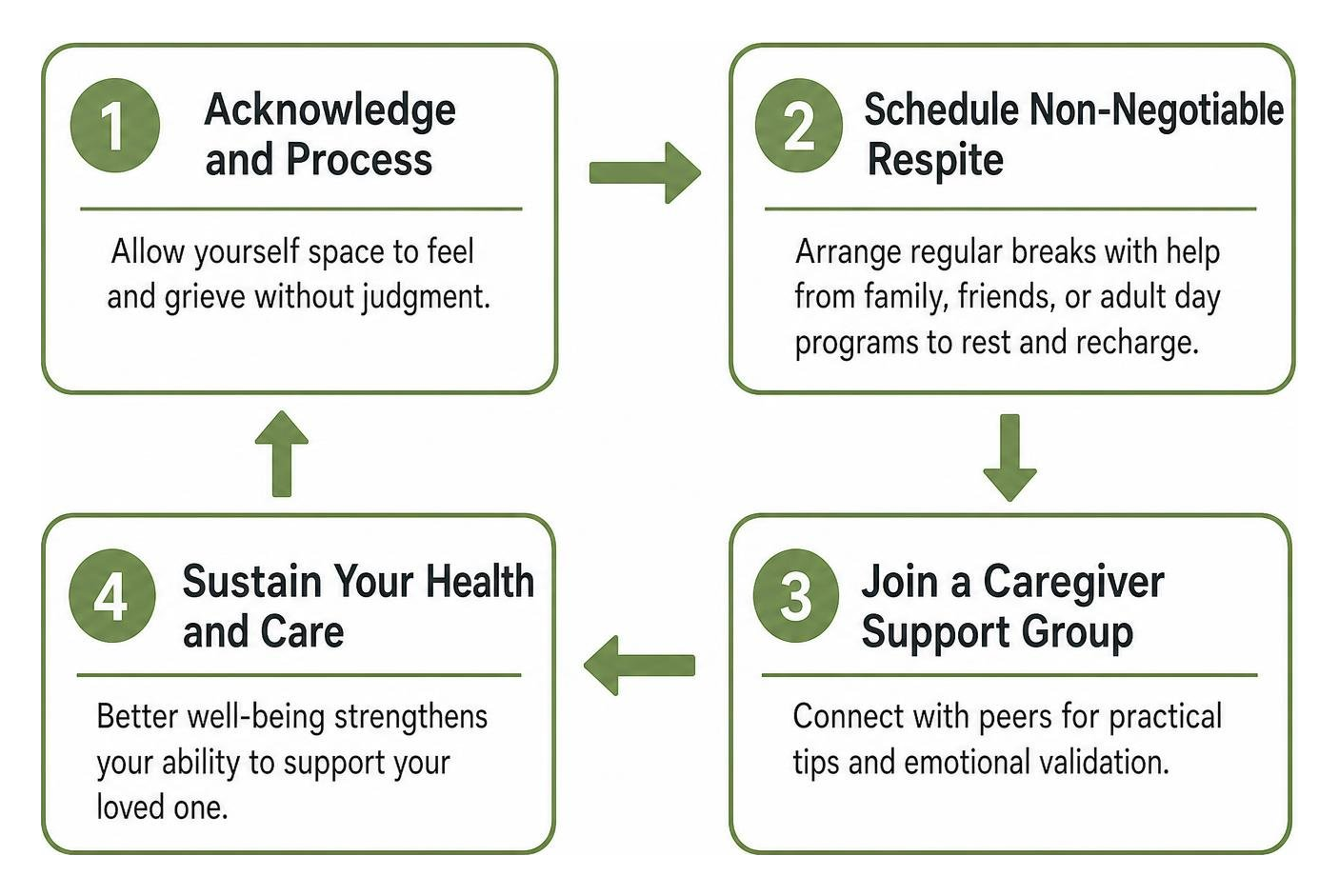
To sustain your own health and remain an effective partner, integrate these boundaries into your weekly schedule:
- Acknowledge and Process Complex Feelings: Feelings of shock, anger, denial, or guilt are natural responses to a life-altering diagnosis. Allow yourself space to grieve without judgment.
- Schedule Non-Negotiable Respite: Caring for yourself is not selfish; it is essential. Arrange for another family member, trusted friend, or adult day program to step in regularly so you can rest, exercise, and pursue personal interests.
- Join a Dedicated Caregiver Support Group: Sharing experiences with peers navigating identical challenges provides practical tips and invaluable emotional validation.
- Seek Professional Counseling: Speaking with a licensed therapist specializing in chronic illness and caregiver dynamics offers healthy coping mechanisms for managing stress.
- Use 24/7 Helpline Resources: Keep national and regional crisis lines handy for immediate guidance whenever unexpected behavioral questions or acute care challenges arise.
Frequently Asked Questions About Early-Stage Dementia
How long does the early stage of dementia typically last?
On average, the early stage of dementia lasts approximately two to four years, though progression rates vary significantly from person to person. Factors such as underlying pathology, overall physical health, cardiovascular wellness, cognitive reserve, and access to therapeutic routines all influence this timeline. Maintaining an active, socially connected lifestyle and managing co-existing health conditions can help preserve functional stability throughout this phase.
Can a person still drive safely during early-stage dementia?
Many individuals can continue driving safely for a period following an initial diagnosis, but driving capacity must be evaluated continuously and objectively. Because dementia affects reaction times, spatial judgment, divided attention, and navigational abilities, family members should arrange an objective clinical driving evaluation through an occupational therapist or driving assessment center. It is equally important to research local licensing reporting requirements and begin integrating alternative transportation options early so driving cessation does not lead to sudden social isolation.
How should care partners respond to repetitive questions or lapses?
When your loved one repeats a question or forgets a recent conversation, respond with a calm, reassuring tone rather than pointing out the repetition. Stating "You already asked me that three times" can trigger unnecessary embarrassment, defensiveness, or agitation. Instead, answer the question simply, address any underlying anxiety or emotional reassurance they may be seeking, and gently redirect their attention to an engaging, enjoyable activity or a light snack.
Conclusion
Navigating an early dementia diagnosis is a transformative journey, but you do not have to walk this path alone. By establishing a collaborative care partner mindset, simplifying daily living environments, building supportive habits early, and completing legal and financial plans, your family can navigate this chapter with confidence, purpose, and peace of mind.
At Vaca Valley Living in Vacaville, CA, our family-owned community brings over 50 years of dedicated experience to providing compassionate, individualized residential memory care. When you are ready to explore future living arrangements, learn more about Vaca Valley Living, review our available floor plans, or contact our caring team directly.
We invite you to schedule a personalized consultation and request a tour to discover how our warm, home-like environment and 24-hour specialized support can empower your loved one. Explore our complete range of services by visiting Vaca Valley Living today.