
Transforming Daily Life Through Specialized Senior Memory Care Programs
How Senior Memory Care Programs Improve Daily Life
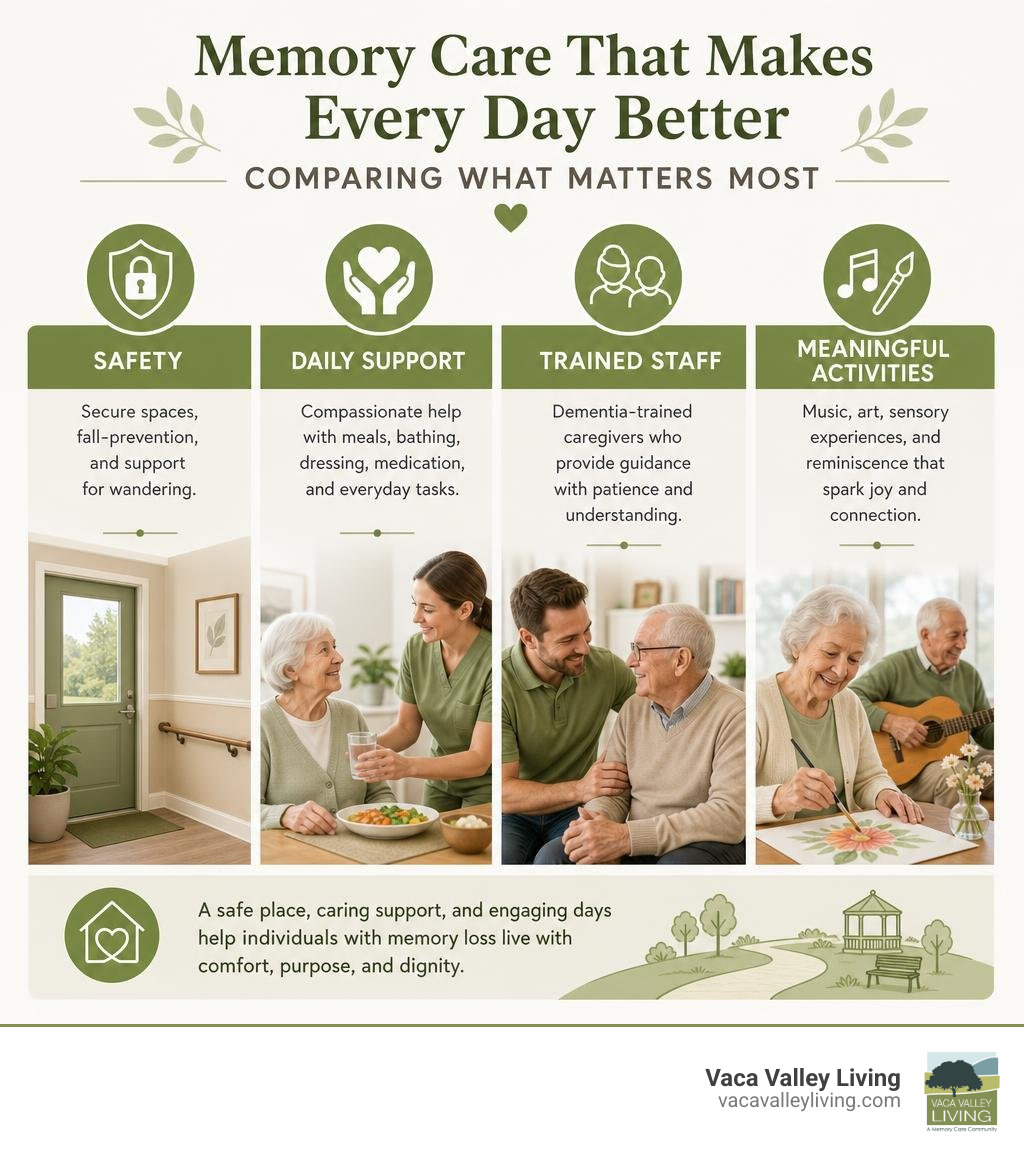
The best senior memory care programs provide more than a safe place to live. They combine 24-hour support, dementia-trained staff, secure spaces, and meaningful daily routines to help a person with Alzheimer's disease or another dementia live with more comfort and dignity.
When evaluating a program, focus first on whether it can meet your loved one's current needs:
- Safety: Secure exits, fall-prevention practices, and support for wandering. The Alzheimer's Association reports that 6 in 10 people with dementia may wander.
- Daily care: Help with meals, bathing, dressing, medication, and other everyday tasks.
- Staff and routines: Caregivers trained in dementia care who can guide residents through calm, structured days.
- Connection: Activities such as music, art, sensory experiences, and reminiscence that match the person's interests and abilities.
As dementia progresses, family caregiving can become harder to manage safely at home. Specialized residential care can offer steady supervision while helping residents stay engaged in familiar, purposeful moments each day.
Understanding Dementia Progression and Residential Memory Care
Dementia is not a single disease or a standard part of aging. It is an umbrella term encompassing progressive cognitive decline, with Alzheimer’s disease representing the most common form. As cognitive changes advance, an individual’s ability to plan, organize, and perform Activities of Daily Living (ADLs) diminishes.
Navigating these stages requires understanding how residential support models differ in their environment, care approach, and clinical capabilities:
| Care Setting | Primary Purpose | Supervised Routine & Navigation | Typical Staff Training | Average Monthly Cost |
|---|---|---|---|---|
| Independent Living | Social, maintenance-free lifestyle for active seniors | Self-directed; residents manage own schedules | Hospitality & basic first aid | Varies widely by region |
| Assisted Living | Help with basic personal care (ADLs) and medication reminders | Semi-independent; residents self-navigate to dining and events | General eldercare & ADL assistance | $6,694 |
| Memory Care | Specialized, secure 24-hour dementia support & purposeful routines | Actively guided; staff cue transitions, meals, and activities | Dementia-specific behavioral & cognitive training | $8,399 |
| Nursing Home (Skilled Nursing) | 24-hour high-level clinical and medical care | Clinically scheduled; intensive nursing oversight | Registered nurses (RNs), LPNs, & certified aides | $12,240 |
While traditional assisted living provides personal care, it relies heavily on the resident's ability to navigate their day independently. In contrast, residential memory care incorporates thoughtful community features and purposeful amenities designed specifically for cognitive security, dignity, and calm.
When Is the Right Time to Transition to Dedicated Care?
Deciding to transition a loved one from home to a dedicated community is one of the most emotional choices a family faces. Often, families wait until a crisis occurs. However, identifying early warning signs helps preserve your loved one's well-being and prevents acute caregiver burnout.
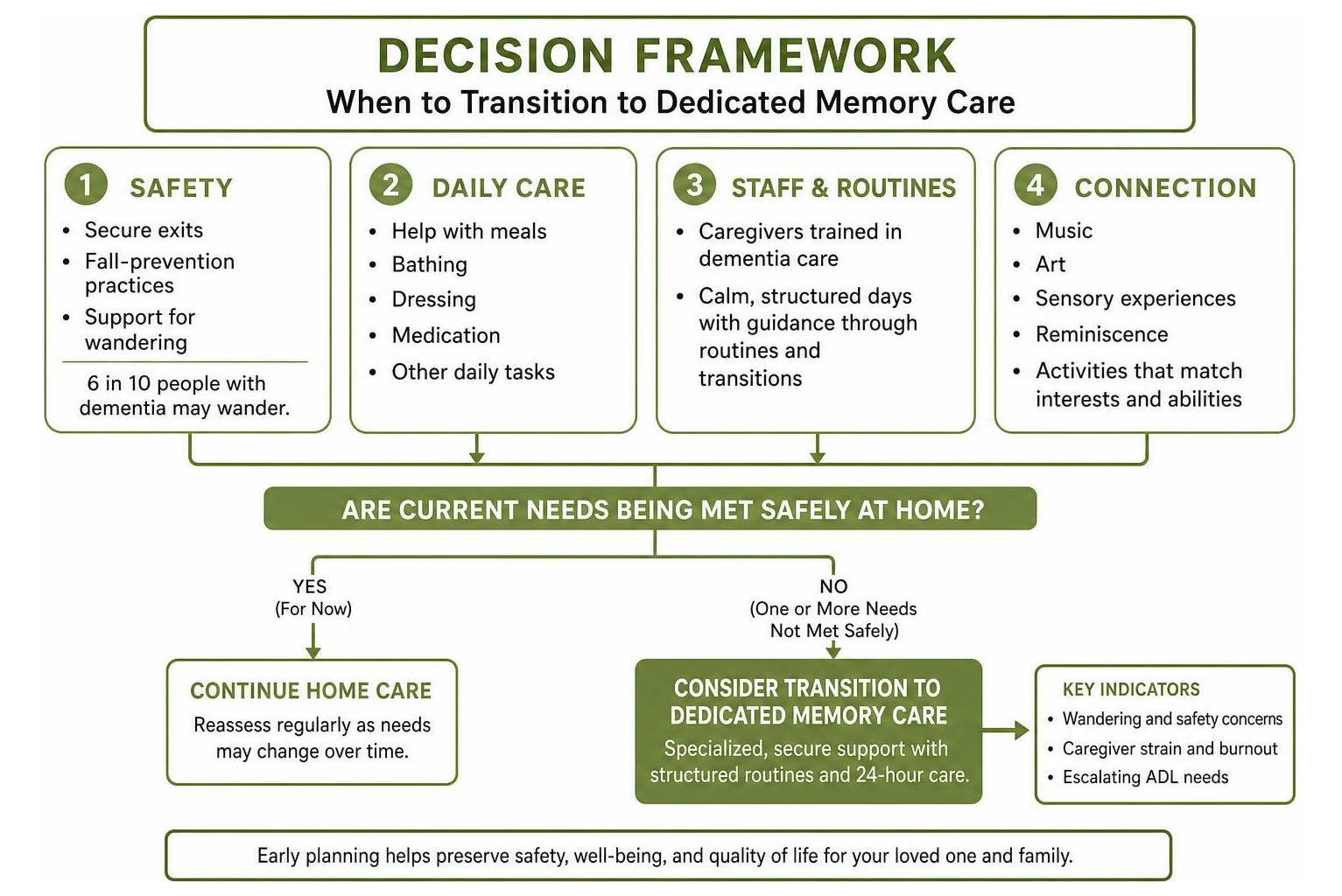
Key indicators that it is time to transition include:
- Wandering and Safety Concerns: Because 6 in 10 individuals living with dementia wander, unexpected departures or disorientation in familiar surroundings present severe, immediate hazards.
- Caregiver Strain: Providing 24/7 care takes a profound physical and emotional toll. Chronic fatigue, health issues, and emotional exhaustion indicate that home care is becoming unsustainable.
- Escalating ADL Needs: When assistance with bathing, dressing, toileting, and mobility exceeds what family members or visiting home aides can safely manage.
- Sundowning and Sleep Disruption: Increased agitation, confusion, or restlessness in the late afternoon and evening creates unsafe sleep environments for both the senior and caregiver.
- Social Isolation: Progressive cognitive decline often leads to withdrawal from social circles, leading to depression and accelerated functional decline.
Essential Pillars of Top Senior Memory Care Programs
High-quality memory care communities build every aspect of their physical design and daily philosophy around the unique cognitive needs of their residents.
Architectural Design and Environmental Cues
The physical environment can either reduce anxiety or create frustration. Purpose-built memory care uses specific architectural approaches:
- Continuous, Circular Hallways: Hallways that loop naturally prevent the frustration and agitation caused by dead ends.
- Visual Wayfinding and Cues: Clear signage incorporating both recognizable text and imagery, along with personalized memory shadow boxes outside resident rooms, helps individuals navigate independently.
- Circadian Lighting: Natural, daylight-mimicking illumination helps regulate sleep-wake cycles and minimizes evening confusion.
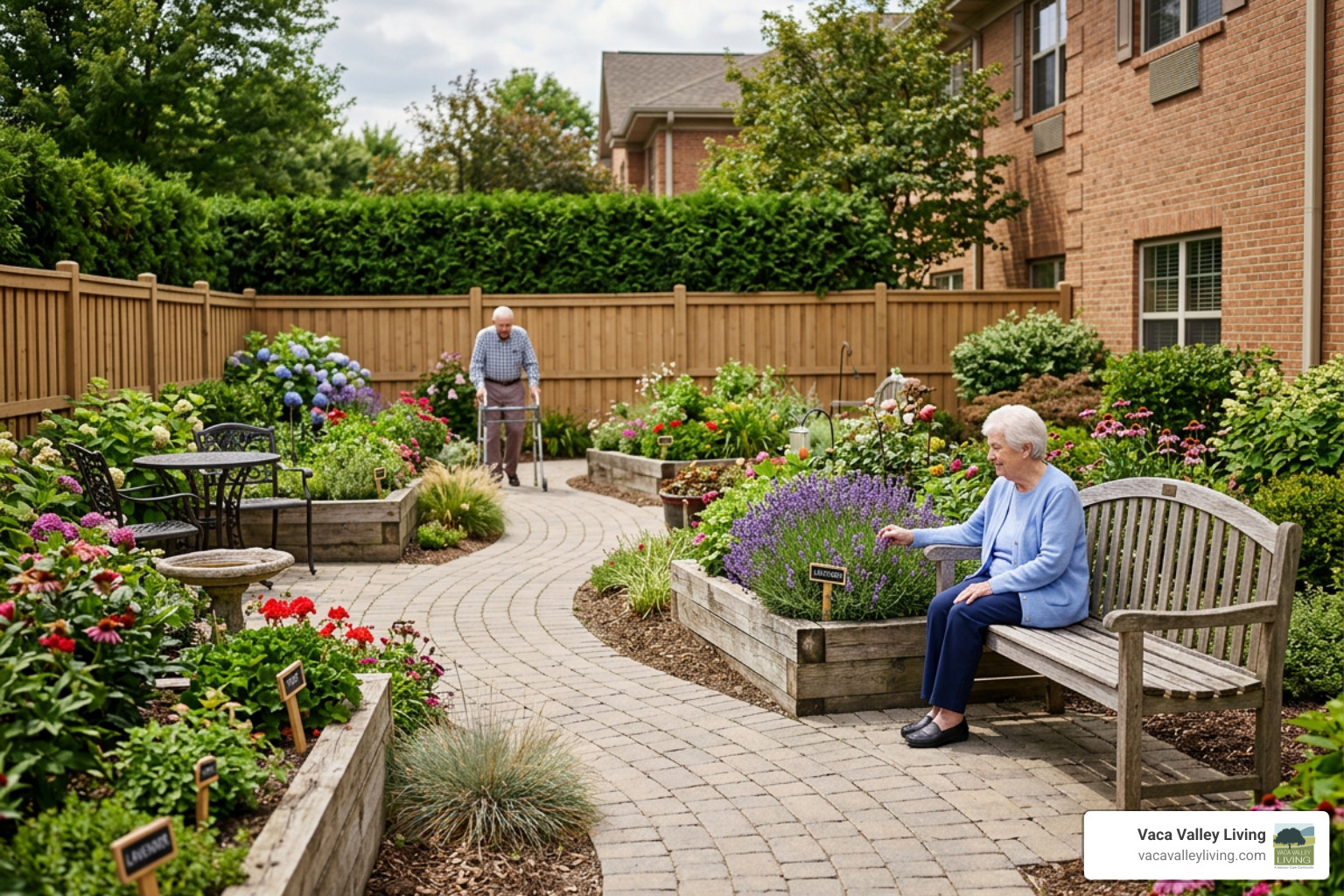
- Secure Outdoor Spaces: Enclosed courtyards and sensory gardens allow residents to enjoy fresh air, tend plants, and walk safely without feeling restricted.
Personalized Cognitive Therapies in Senior Memory Care Programs
Effective memory care focuses on what a resident can do, rather than what has been lost. Structured daily programs lean on evidence-based non-pharmacological interventions:
- Reminiscence Therapy: Using familiar music, historical photographs, and meaningful personal items to prompt positive memories, spark conversation, and provide comfort.
- Sensory Stimulation: Aromatherapy, gentle hand massages, tactile textiles, and outdoor gardening stimulate the senses and reduce agitation.
- Music and Expressive Arts: Melodic memory often remains intact long after verbal language declines. Singing, instrument play, and guided art provide self-expression.
- Predictable Daily Structure: Calm, consistent daily schedules lower stress by removing the anxiety of the unknown. Communities design private and semi-private floor plans to offer peaceful retreats between structured group activities.
Evaluating Safety Protocols in Senior Memory Care Programs
Safety in a memory care setting balances physical security with resident autonomy:
- Discreet Perimeter Security: Delayed-egress doors, secure courtyards, and silent electronic wander-management sensors prevent unsafe departures without creating an institutional atmosphere.
- Fall Mitigation: Low-barrier entryways, zero-threshold showers, strategically placed grab bars, and continuous staff oversight minimize fall hazards.
- Professional Medication Management: Dedicated nurses and trained medication technicians ensure medications are administered accurately and reviewed regularly to avoid unnecessary antipsychotics or sedatives.
- 24-Hour Emergency Response: Readily available call systems and attentive nighttime staff ensure immediate assistance for any emergency.
Costs, Financial Planning, and Payment Strategies for Memory Care
Understanding the financial landscape allows families to make realistic, sustainable long-term care plans.
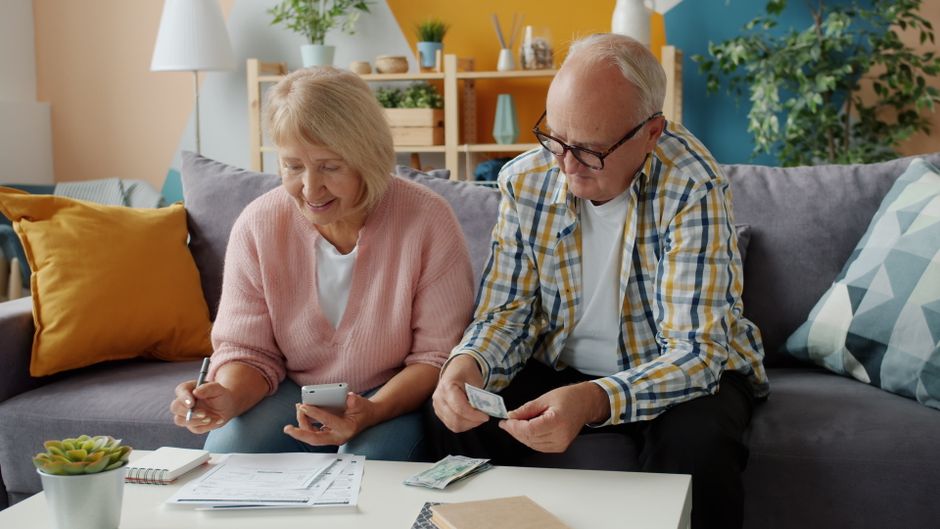
According to industry data from the National Investment Center for Seniors Housing & Care (NIC), the nationwide average monthly cost for memory care is approximately $8,399, compared to $6,694 for standard assisted living and $12,240 for skilled nursing facilities. Memory care costs reflect higher staffing ratios, specialized programming, and continuous security.
Funding Options and Payment Strategies
- Private Pay and Asset Utilization: Most families initially fund memory care through personal savings, retirement accounts, pensions, and proceeds from the sale of a home.
- Long-Term Care Insurance (LTCI): Traditional or hybrid LTCI policies frequently cover a substantial portion of residential memory care, provided policy elimination periods and ADL criteria are met.
- Veterans Aid and Attendance Benefit: Eligible wartime veterans and surviving spouses can receive non-service-connected monthly pension benefits to offset assisted living and memory care costs.
- Medicaid and State Waiver Programs: While Medicare does not cover residential room and board, some state Medicaid waiver programs assist with care costs for individuals who meet strict income and asset thresholds.
- Elder Law and Estate Planning: Consulting an elder law attorney early helps structure assets appropriately, establish necessary powers of attorney, and plan for sustainable long-term funding.
Step-by-Step Guide to Evaluating and Touring Facilities
Reviewing websites and brochures is only the first step. Visiting communities in person allows you to observe the interactions, culture, and care firsthand.

- Conduct an Initial Scheduled Tour: Walk through the entire community. Observe the cleanliness, natural light, security systems, and whether residents appear calm, well-groomed, and engaged.
- Observe a Live Dining Service: Dining is a vital daily touchpoint. High-quality programs serve nutritious, visually distinct meals in an unhurried, restaurant-style atmosphere with dignity—never rushing residents or relying on plastic utensils.
- Inquire About Dementia-Specific Staff Training: Ask how many hours of dementia-specific instruction caregivers receive annually. Inquire about turnover rates and nighttime staff-to-resident ratios.
- Review State Licensing Reports: Check public state licensing databases to ensure the community holds an active, clear license without unaddressed health or safety violations.
- Make an Unannounced Follow-Up Visit: Drop by in the evening or on a weekend when administrative staff are off-duty. This provides an authentic look at how the team handles sundowning, mealtimes, and resident requests during peak care hours. When you are ready to evaluate a community, you can request a tour to experience their daily environment in person.
Frequently Asked Questions About Dementia and Memory Care
How does dedicated memory care support cognitive health?
Dedicated memory care supports cognitive health by pairing a safe physical space with predictable daily routines and specialized therapies. Trained caregivers guide residents through gentle transitions, reducing the confusion and anxiety that often trigger behavioral distress. Purposeful activities—such as music therapy, sensory experiences, and structured socialization—help maintain existing functional abilities.
Does Medicare pay for residential memory care?
No. Medicare, Medicare Advantage, and standard health insurance policies do not pay for custodial care, room, or board in residential memory care or assisted living communities. Medicare covers only qualified medical services, such as physician visits, physical therapy, hospital care, and hospice. Families typically fund memory care through private resources, long-term care insurance policies, or veterans benefits.
How can families prepare for a transition to memory care?
Families can prepare by gathering a thorough personal history of their loved one—including past career achievements, hobbies, food preferences, and daily habits—to share with the care team. Decorate the new living space with familiar furniture, favorite photographs, and cherished bedspreads before move-in day. Plan the arrival during the resident’s best time of day, and lean on community staff to guide the initial adjustment period with patience and care.
Finding Peace of Mind for Your Loved One
Watching a family member experience cognitive decline is challenging, but you do not have to carry the journey alone. Seeking specialized care is an act of deep love and advocacy that restores safety, balance, and quality of life for your loved one and your entire family.
At Vaca Valley Living in Vacaville, CA, our family-owned community brings over 50 years of dedicated experience to supporting seniors with Alzheimer's disease and other forms of dementia. We offer 24-hour compassionate staffing, highly individualized care plans, and life-enriching amenities—from on-site salon services to accessible transportation and secure outdoor courtyards. We invite you to discover how our dedicated senior memory care community provides the individualized support, dignity, and warmth your family deserves.