Navigating Memory Care with Skilled Nursing for Complex Medical Needs
Comparing Memory Care with Skilled Nursing: Key Differences and Overlaps
Families exploring long-term residential options often find themselves comparing specialized cognitive support with intensive clinical care. While standard senior retirement communities offer social connection and independent living, individuals facing neurodegenerative diseases alongside chronic medical conditions require higher levels of supervision.
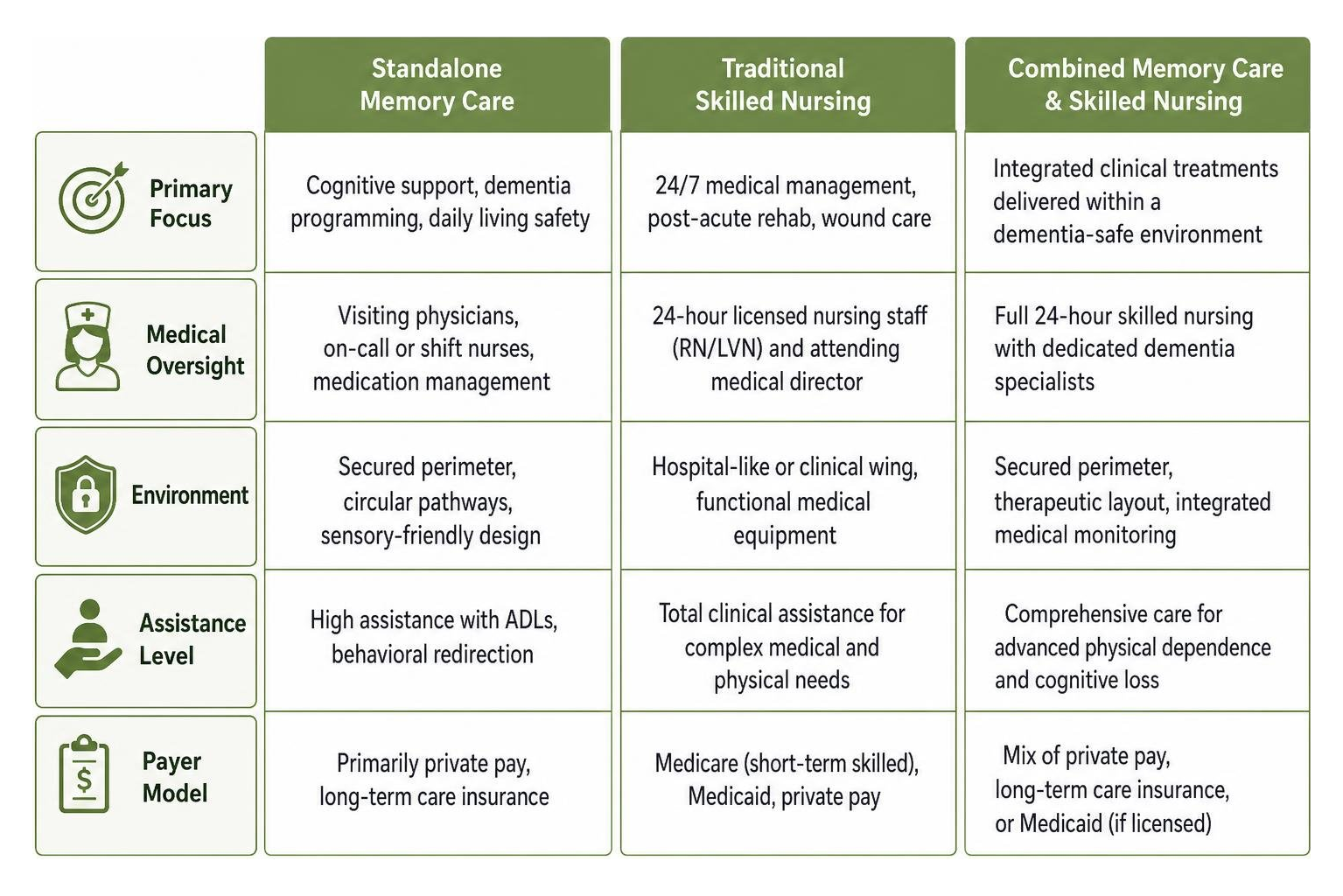
| Feature | Standalone Memory Care | Traditional Skilled Nursing | Combined Memory Care & Skilled Nursing |
|---|---|---|---|
| Primary Focus | Cognitive support, dementia programming, daily living safety | 24/7 medical management, post-acute rehab, wound care | Integrated clinical treatments delivered within a dementia-safe environment |
| Medical Oversight | Visiting physicians, on-call or shift nurses, medication management | 24-hour licensed nursing staff (RN/LVN) and attending medical director | Full 24-hour skilled nursing with dedicated dementia specialists |
| Environment | Secured perimeter, circular pathways, sensory-friendly design | Hospital-like or clinical wing, functional medical equipment | Secured perimeter, therapeutic layout, integrated medical monitoring |
| Assistance Level | High assistance with ADLs, behavioral redirection | Total clinical assistance for complex medical and physical needs | Comprehensive care for advanced physical dependence and cognitive loss |
| Payer Model | Primarily private pay, long-term care insurance | Medicare (short-term skilled), Medicaid, private pay | Mix of private pay, long-term care insurance, or Medicaid (if licensed) |
Core Focus of Standalone Memory Care
Standalone memory care communities center around the daily rhythm, psychological well-being, and personal dignity of residents living with Alzheimer’s disease or other forms of dementia. The core focus is not intensive hospital-level clinical intervention, but rather structured routines that minimize anxiety, prevent wandering, and promote cognitive stimulation.
In these communities, care plans highlight life enrichment, sensory programming, and person-centered therapy. Caregivers use behavioral redirection techniques rather than pharmacological restraint to help residents navigate confusion, agitation, or sundowning. The environment is engineered specifically to prevent elopement through secured perimeters and tranquil, easy-to-navigate common spaces.
Clinical Scope of Traditional Skilled Nursing
Traditional skilled nursing facilities (SNFs), historically known as nursing homes, operate as medical-first institutions. Their clinical scope focuses on round-the-clock nursing care, extensive physical therapy, wound management, IV therapy, enteral feeding, and post-stroke rehabilitation.
In a standard skilled nursing ward, care is coordinated directly under physician oversight to stabilize acute flare-ups, treat complex chronic diseases, and assist residents who are medically fragile or bedbound. While staff can assist with activities of daily living (ADLs), traditional skilled nursing wings may lack the sensory design, secure architectural layouts, and specialized behavioral programs required to help someone with active dementia feel calm and purposeful.
Clinical Features and Specialized Staffing Models
When a resident experiences both progressive memory loss and complicated physical ailments, combining these two care philosophies becomes essential. Facilities that provide memory care with skilled nursing offer a specialized model of care where clinical equipment blends discreetly into a warm, residential environment.
Whether managing brittle diabetes or monitoring severe fall risks, having an assisted living caregiver collaborating directly with registered nurses ensures that safety, nutrition monitoring, and chronic illness therapies happen seamlessly without disrupting the resident's daily comfort.
Specialized Staff Training and Dementia Communication
A high-quality dual-care setting relies heavily on its people. Registered nurses and certified nursing assistants must possess strong geriatric clinical skills alongside deep empathy and dementia-specific communication training.
Staff members are trained in non-verbal communication techniques, recognizing that changes in behavior—such as agitation, withdrawal, or restlessness—are often attempts to express unmet physical needs like pain, hunger, or sensory overload. Ongoing education covers:
- Person-centered therapy techniques that respect personal history and individual preferences.
- Gentle de-escalation methods to manage behavioral distress without relying on sedatives.
- Validation therapy to connect with residents in their current reality rather than causing distress through forced reorientation.
- Safe transfer techniques for residents with advanced physical frailty and cognitive resistance.
Environmental Safety and Therapeutic Design
The physical space plays a therapeutic role in managing cognitive decline and clinical vulnerability. Facilities designed for dual care eliminate long, intimidating, hospital-style corridors in favor of continuous circular walking paths that prevent dead ends and reduce resident frustration.
Key design elements include:
- Secured Perimeters and Delayed-Egress Doors: Allowing freedom of movement within the community while preventing unsafe elopement.
- Color-Coded Wayfinding: Distinct visual cues on walls and doorways to help residents locate their private rooms, bathrooms, and dining areas independently.
- Sensory Lighting: Circadian lighting systems that mimic natural daylight cycles to balance sleep patterns and mitigate evening sundowning.
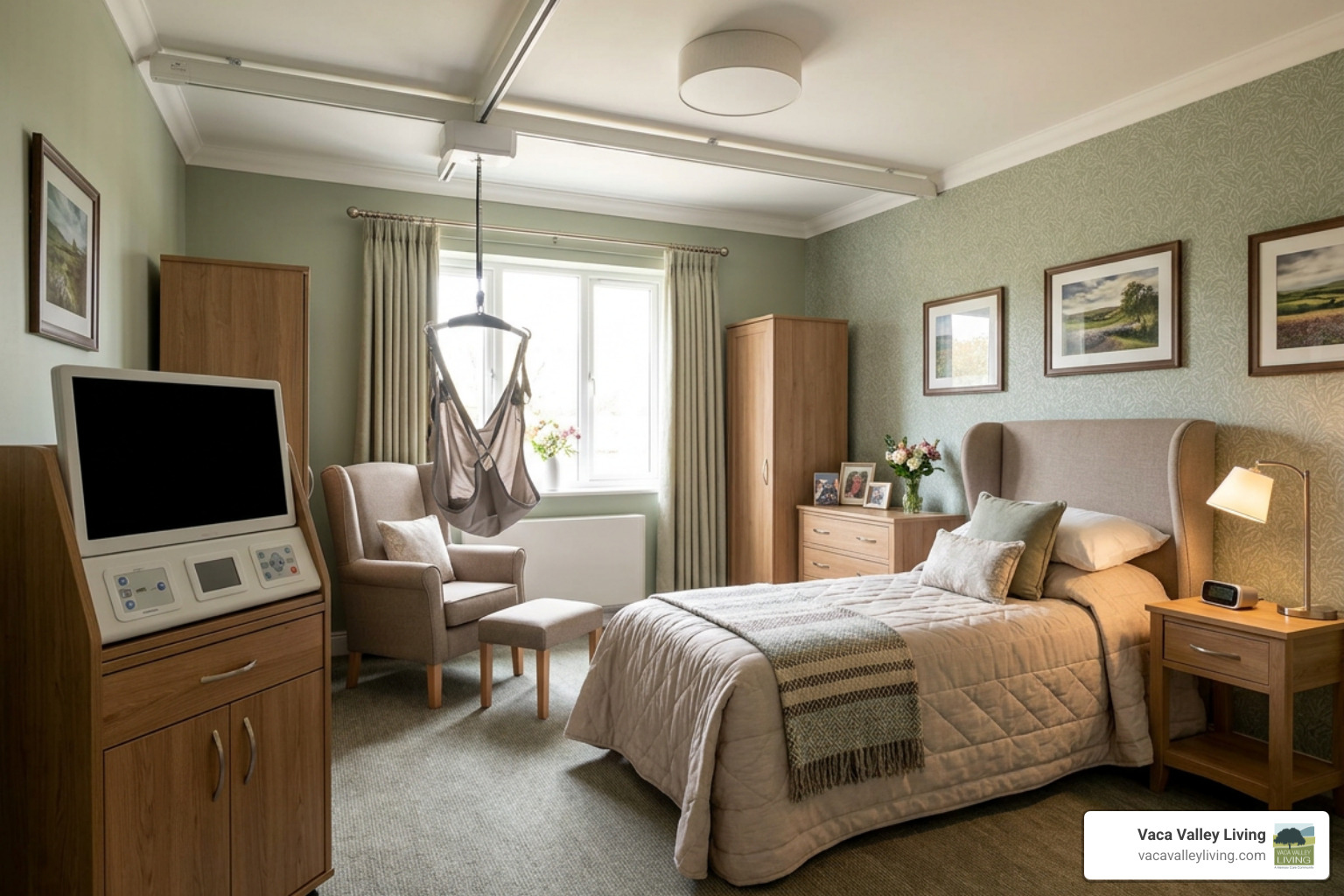
- Therapeutic Floor Plans: Thoughtfully planned suites that accommodate medical equipment, such as mobility lifts and oxygen concentrators, without sacrificing a welcoming, home-like feel.
- Community Amenities: Secure outdoor courtyards, quiet activity parlors, and full-service dining rooms that encourage socialization and healthy movement.
How to Determine the Right Level of Care for Your Loved One
Deciding to move a family member into a residential community is rarely simple. Families often navigate feelings of guilt, exhaustion, and uncertainty. However, when care needs surpass what can safely be managed at home—or when daytime respite options like Alzheimer's day programs no longer provide enough medical oversight—a higher level of residential support protects both the senior's well-being and the caregiver's health.
Identifying When a Loved One Needs Memory Care with Skilled Nursing
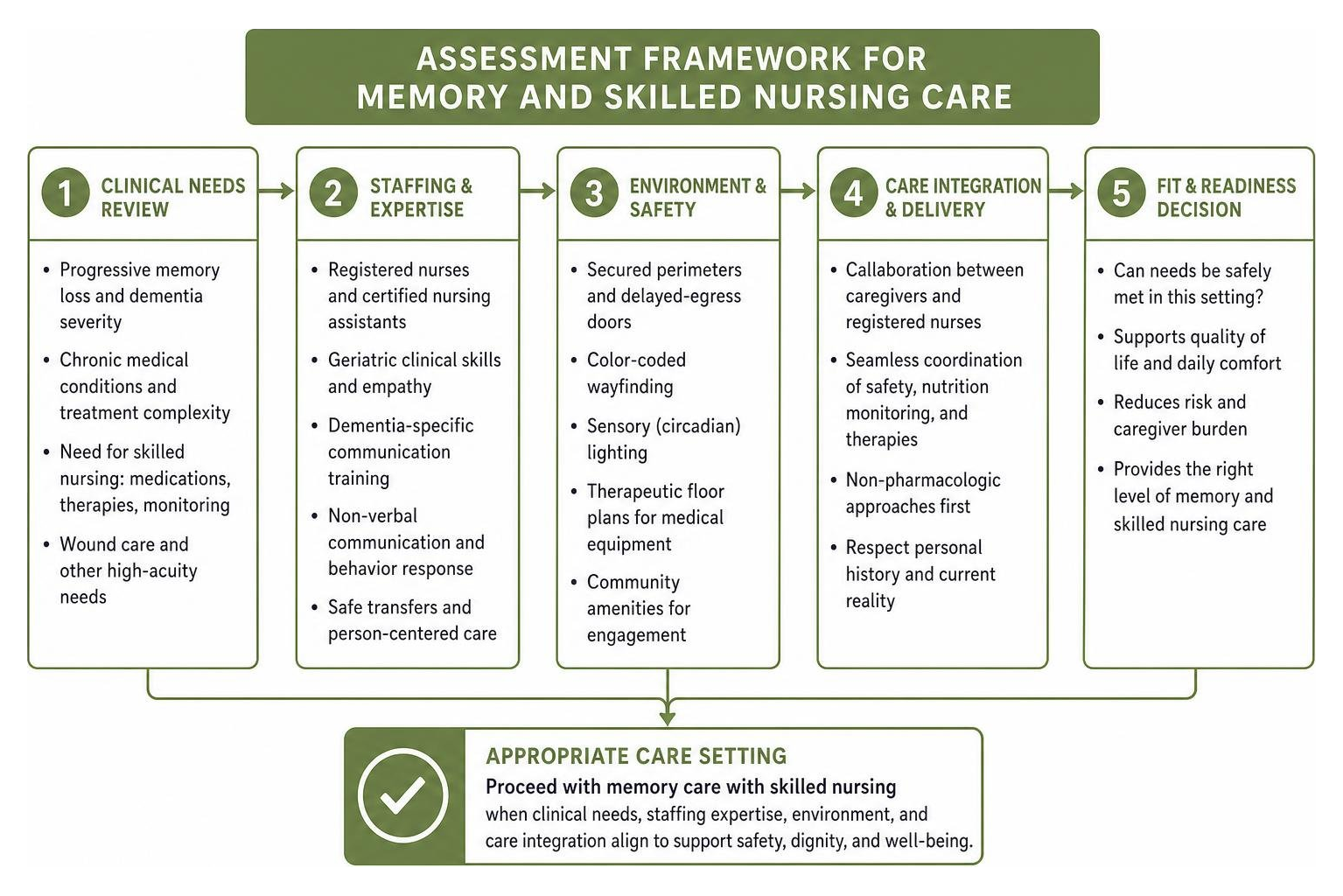
A person usually requires this combined level of support when advanced cognitive decline intersects with high-acuity medical treatments. Consider evaluating a dual-care setting if your loved one presents:
- Advanced Alzheimer’s or dementia alongside unmanaged chronic diseases like advanced congestive heart failure, severe COPD, or brittle diabetes requiring frequent insulin titration.
- Complex wound care needs, such as stage 3 or 4 pressure ulcers, that demand daily sterile dressing changes by a licensed nurse.
- Severe dysphagia (swallowing difficulties) requiring specialized clinical diets, thickened liquids, or enteral tube feeding.
- Complete physical dependence for mobility, transfers, and total ADL support, especially when combined with behavioral agitation.
- Frequent, unexplained hospitalizations or emergency room visits due to recurring infections (like aspiration pneumonia or chronic UTIs) that go unnoticed until critical.
Assessing Physical Health Versus Cognitive Decline
To determine the ideal setting, schedule a comprehensive clinical evaluation involving your loved one’s primary physician, a neurologist, and geriatric care managers.
This assessment reviews:
- Cognitive Functioning: Standardized scoring (such as the MMSE or MoCA) to evaluate memory, judgment, orientation, and language abilities.
- Functional and ADL Mobility: Evaluating their capability to safely transfer from bed to chair, walk, bathe, dress, and feed themselves.
- Medical Complexity: Calculating the frequency of required skilled nursing interventions—such as IV therapy, catheter maintenance, and clinical vital monitoring.
- Behavioral Patterns: Assessing whether wandering, combativeness, or intense sundowning require a secure perimeter and specialized dementia-trained staff.
Costs, Regulations, and Financial Planning Considerations
Navigating the financial landscape of senior healthcare requires clear expectations around service models and room options.
Financial Planning for Memory Care with Skilled Nursing Facilities
Costs vary considerably based on geographic location, the level of medical acuity, and whether accommodations are private or shared:
- The national median cost of standalone memory care is $6,450 per month (approximately $77,400 annually).
- Basic assisted living services average roughly $74,400 per year.
- The national median cost of skilled nursing care is $9,277 per month for a semi-private room (averaging $114,975 per year) and $10,646 per month for a private room (averaging $129,575 per year).
When clinical skilled nursing services are delivered within a specialized memory care setting, fees typically reflect the higher skilled nursing price structure due to 24/7 licensed nurse staffing and specialized oversight.
Families should also understand how insurance programs apply to these costs:
- Medicare: Does not pay for long-term residential memory care or ongoing custodial care. It covers only short-term, medically necessary skilled nursing care (up to 100 days) following a qualifying three-day inpatient hospital stay.
- Medicaid: May cover long-term skilled nursing care for individuals who meet state-specific medical and financial asset criteria, though not all private memory care communities accept Medicaid beds.
- Long-Term Care Insurance & Veterans Benefits: Many private long-term care policies and VA programs (such as the Aid and Attendance benefit) provide significant monthly stipends toward memory care and skilled nursing services.
Regulatory Oversight and Licensing Requirements
Skilled nursing facilities and memory care units operate under distinct regulatory frameworks:
- Skilled Nursing Regulations: Regulated heavily at both the federal level by the Centers for Medicare & Medicaid Services (CMS) and by state departments of public health. They must comply with strict mandates regarding 24-hour RN coverage, physician visits, comprehensive MDS (Minimum Data Set) assessments, and medication administration records.
- Memory Care Regulations: Primarily licensed at the state level under assisted living or residential care statutes. States often require Special Care Unit (SCU) disclosure forms detailing staff ratios, secured perimeter rules, and mandatory dementia-specific training hours.
- Inspection Surveys: State regulatory bodies conduct unannounced annual inspections. Families can review these public inspection reports and performance ratings to gauge regulatory compliance, staffing consistency, and safety records.
How to Evaluate and Tour a Dual-Care Facility
Reading brochures provides a helpful overview, but walking through a community offers genuine insight into its daily atmosphere, staff responsiveness, and quality of care.
When you request a tour, visit during an active time of day, such as lunch or mid-afternoon activity hours. Take note of subtle details: Is the community free of unpleasant odors? Are residents engaged in meaningful social interactions, or are they sitting unattended in front of television screens? Are staff speaking to residents with patience and dignity?
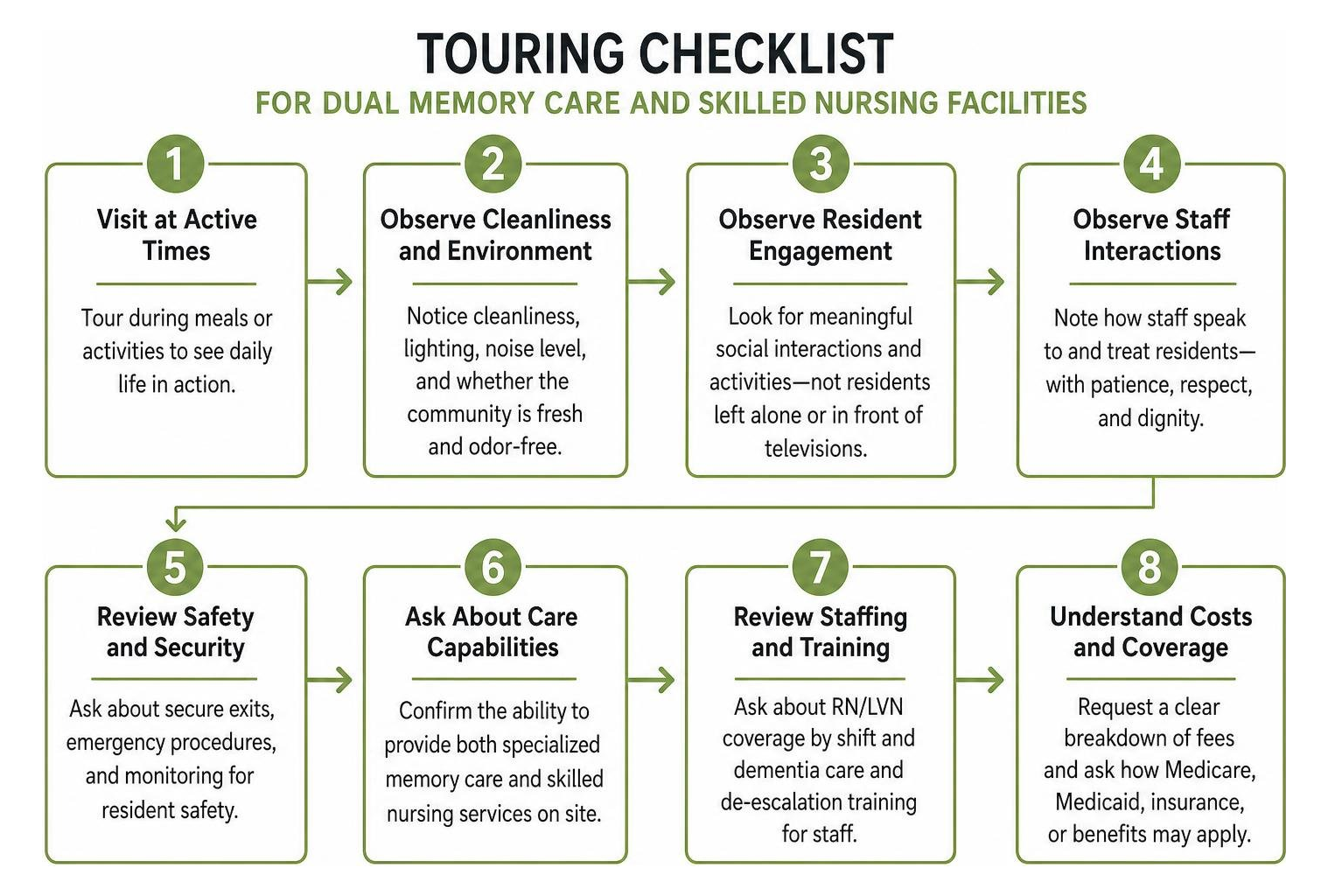
Essential Questions to Ask Facility Administrators and Nursing Staff
Bring a structured list of questions when speaking with administrators and directors of nursing:
- Staffing Levels and Availability: “How many Registered Nurses (RNs) and Licensed Vocational Nurses (LVNs) are physically on the floor during day, evening, and overnight shifts?”
- Staff Training: “What specific dementia care and de-escalation training do your clinical nurses and aides receive upon hire and on an ongoing basis?”
- Continuity of Care: “If my loved one’s dementia progresses or their physical health declines, under what circumstances would they need to be transferred to another wing or external hospital?”
- Behavioral Management: “What is your protocol if a resident experiences severe agitation, confusion, or attempts to leave the secure area?”
- Family Communication: “How often are formal care plan reviews conducted, and how are family members updated regarding medication adjustments or health changes?”
If you are beginning your search and want personalized guidance on finding the right level of care, contact our experienced team to discuss your family’s unique situation.
Frequently Asked Questions About Memory Care and Skilled Nursing
Can a resident transition between memory care and skilled nursing in the same facility?
Yes. Many life plan communities, continuing care retirement communities (CCRCs), and multi-level campuses house both memory care and skilled nursing within the same physical property. This setup allows residents to transition smoothly from assisted memory care to a skilled nursing wing as clinical needs increase, without the disruption of moving to an unfamiliar community.
Does Medicare cover long-term memory care with skilled nursing?
No. Medicare does not fund long-term, ongoing custodial memory care or permanent nursing home placement. It exclusively pays for short-term rehabilitation and skilled care following a qualifying hospital stay (covering 100% of costs for days 1–20, and partial costs with a daily copay for days 21–100, provided the patient demonstrates measurable therapeutic progress).
How do staff manage wandering behaviors in a skilled nursing setting?
In dedicated dual-care or skilled nursing memory units, wandering is managed through environmental safeguards and attentive supervision rather than physical or chemical restraints. Facilities use delayed-egress magnetic doors, wander-management sensor bracelets, enclosed sensory courtyards, and structured engagement programs to give residents the freedom to walk safely.
Conclusion
Finding the ideal balance between clinical medical attention and compassionate memory support is one of the most loving, important decisions you can make for a family member. When complex medical issues arise alongside cognitive decline, memory care with skilled nursing bridges the gap—ensuring your loved one receives around-the-clock clinical oversight without losing the warmth, dignity, and specialized behavioral care they deserve.
At Vaca Valley Living, we understand that every resident’s journey with memory loss is deeply personal. Backed by over 50 years of family-owned senior living experience in Vacaville, California, our team delivers individualized care plans, 24-hour dedicated staffing, and a secure, home-like environment where seniors are supported with true clinical excellence and respect.