
Unlocking Past Memories: Designing Shadow Boxes for Dementia Residents
The Science and Purpose of Memory Care Memory Boxes

Memory care memory boxes are personalized collections of safe, multi-sensory keepsakes—such as textured fabrics, familiar scents, photographs, and meaningful objects—arranged around a clear theme to help dementia residents recall past experiences and feel more oriented. To design one, choose a sturdy container, center the items on a single life chapter or passion, screen every object for safety, and prioritize high sensory value. These boxes work because dementia alters how the brain stores and retrieves information, but emotional memory and sensory recognition often remain resilient far into the progression of cognitive decline. Designing thoughtful memory boxes relies on the principles of reminiscence therapy—a structured approach that uses tangible cues to help individuals recall past experiences, roles, and accomplishments.
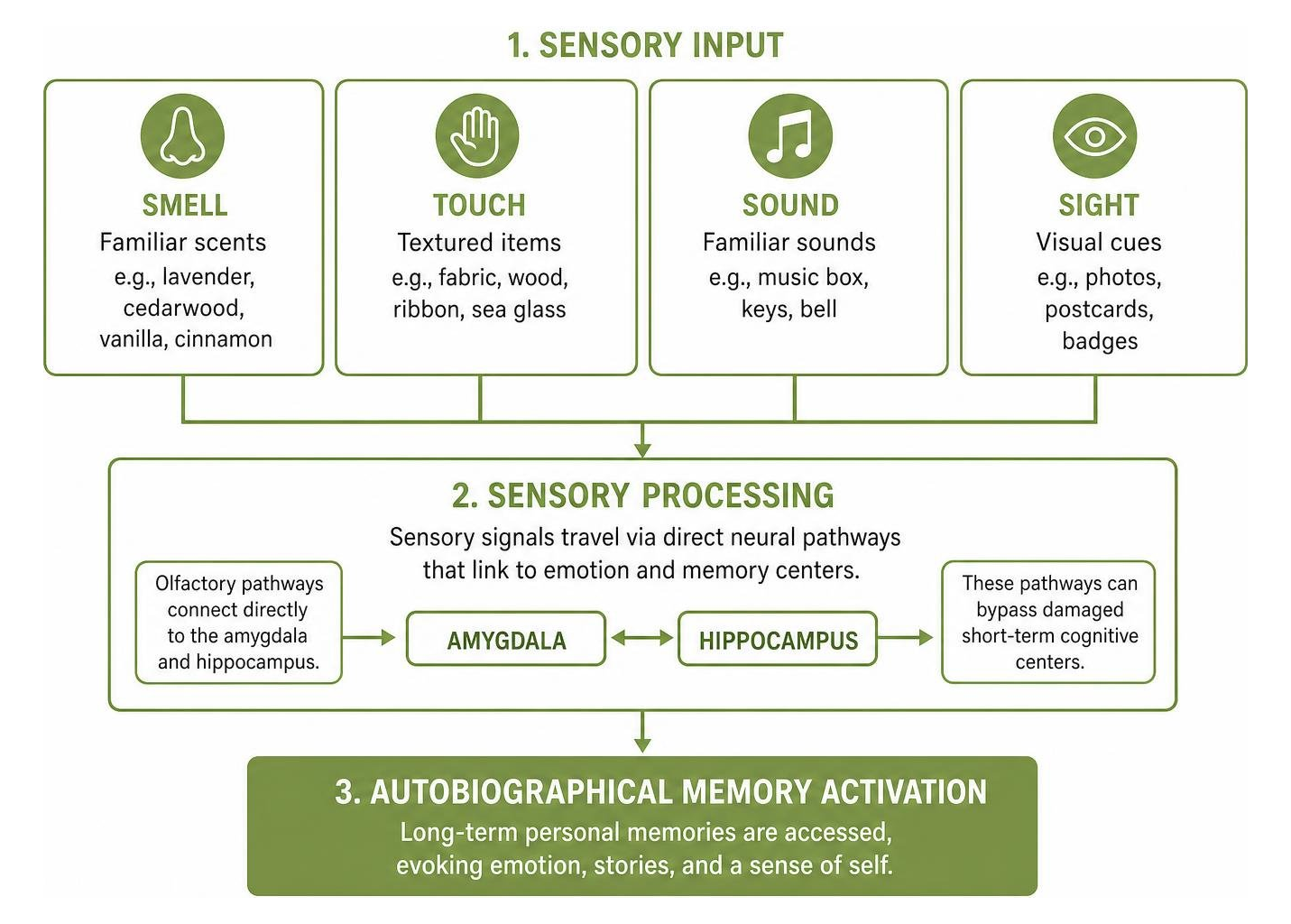
When a person interacts with familiar items, neural pathways linked to long-term autobiographical memory are engaged. These pathways frequently bypass damaged short-term cognitive centers, creating moments of clarity, pride, and comfort. Using these sensory tools alongside early-stage dementia care strategies helps preserve identity during key transitions. Clinical recommendations from resources like the CARE Compass clinical guidelines highlight how personalized artifacts reduce feelings of disorientation, offering a stable anchor in an environment that might otherwise feel unfamiliar.
How Multi-Sensory Triggers Spark Autobiographical Recall
Memory retrieval in dementia is rarely an intellectual exercise; it is an emotional and sensory experience. Incorporating multiple sensory elements transforms a simple box into a powerful bridge to the past:
- Olfactory Pathways (Smell): The olfactory bulb has direct neural connections to the amygdala and hippocampus, the brain areas responsible for emotion and memory. Familiar scents—such as lavender, cedarwood, vanilla, or cinnamon—can immediately evoke vivid autobiographical recollections and soothe an unsettled mood.
- Tactile Feedback (Touch): Handling textured items, such as a piece of velvet ribbon, smooth sea glass, or a sanded block of wood, provides calming sensory input. Tactile engagement keeps hands comfortably occupied while grounding the person in the present moment.
- Auditory Cues (Sound): Including items that make familiar sounds—like a wind-up music box playing an old tune, jingling keys, or a small bell—can trigger long-held musical memories and spontaneous storytelling.
- Visual Cues (Sight): Bright, high-contrast images, iconic badges, or vibrant postcards capture visual attention, helping residents focus without feeling overwhelmed by complex details.
What the Clinical Evidence Says About Memory Tools
Researchers have studied structured reminiscence and sensory interventions extensively. A 2022 meta-analysis of 29 studies involving 3,102 participants demonstrated that reminiscence therapy significantly improved cognition and overall quality of life while reducing depressive symptoms and neuropsychiatric distress in older adults.
However, evidence also reminds us that these tools must be used thoughtfully. A 488-person randomized trial evaluating joint reminiscence groups found no broad advantage over standard care and noted increased caregiver anxiety after 10 months when sessions placed unintentional pressure on participants. Furthermore, a systematic review conducted by the University of Twente pointed out that much of the existing research on life-story and remembrance tools consists of qualitative case studies or small pilot programs.
These findings teach us a vital lesson: memory boxes are not formal cognitive tests or rigid clinical treatments. They are flexible tools designed for warm, person-centered interaction. When caregivers remove expectations and focus purely on comfort, these tools consistently foster meaningful moments of connection.
Step-by-Step: Assembling a Personalized Memory Shadow Box
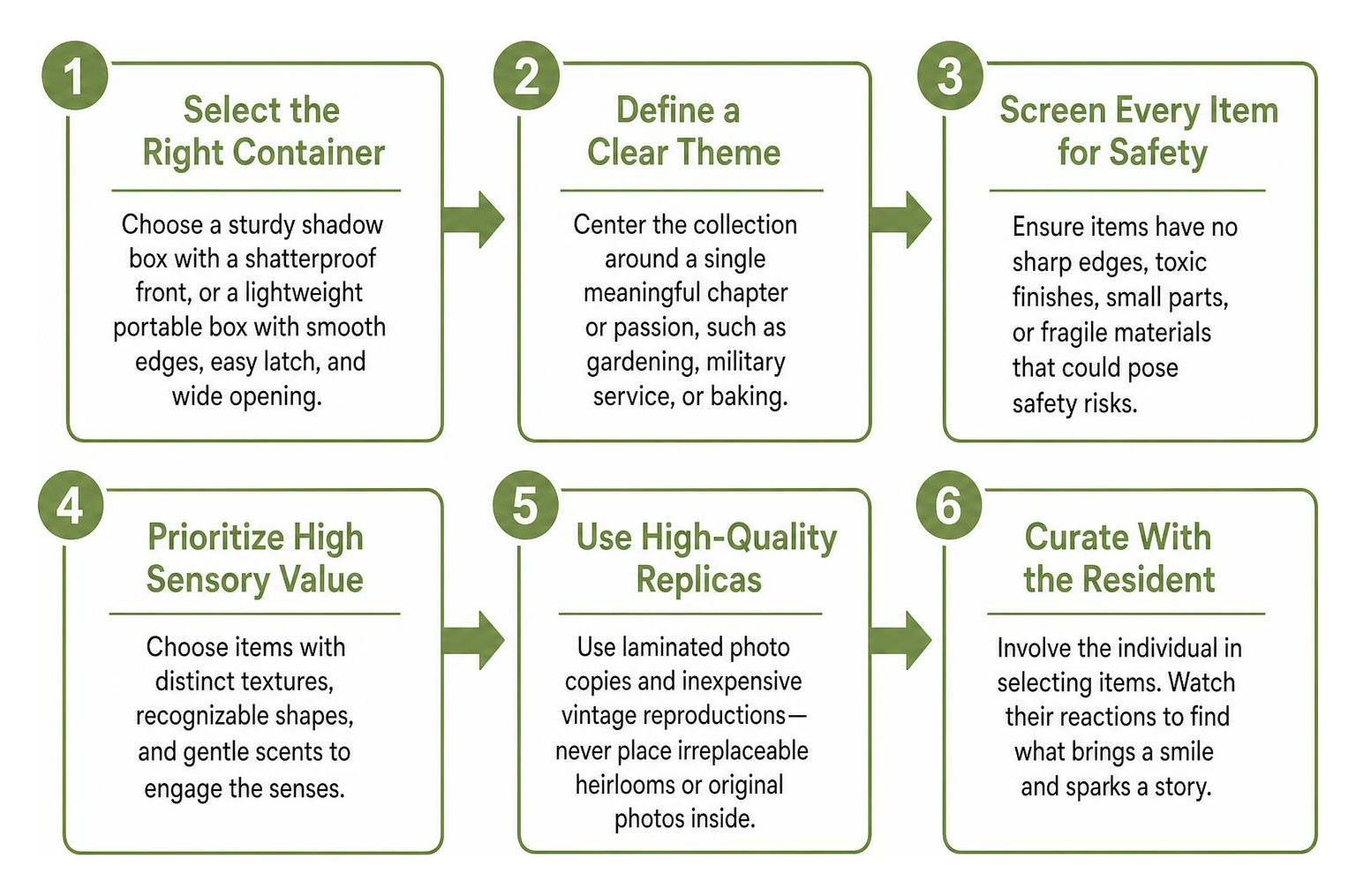
Creating an engaging shadow box or portable memory kit requires thoughtful planning, durable materials, and a deep understanding of your loved one's unique life history. Integrating these activities alongside structured dementia support services ensures consistent emotional reinforcement across daily routines.
- Select the Right Container: For a wall-mounted shadow box outside a bedroom door, choose a sturdy wooden or composite frame with a shatterproof acrylic front. If you are building a portable exploration box, select a lightweight container with smooth edges, an easy-to-open latch, and a wide top opening.
- Define a Clear Theme: Rather than tossing random keepsakes together, center the collection around a single meaningful chapter or passion—such as gardening, military service, baking, parenthood, or family road trips.
- Screen Every Item for Safety: Verify that no objects have sharp corners, toxic finishes, small detachable parts that pose choking risks, or fragile glass.
- Prioritize High Sensory Value: Choose items with distinct textures, recognizable silhouettes, and gentle scents.
- Use High-Quality Replicas: Never place irreplaceable family heirlooms or one-of-a-kind original photographs inside. Use laminated color copies and inexpensive vintage reproductions instead.
- Curate With the Resident: Whenever possible, involve the individual in selecting items. Watch their natural reactions to see which textures and pictures bring a smile or spark a story.
Choosing Themed Items for Memory Care Memory Boxes
Focusing on a specific hobby or life milestone creates a coherent narrative that is easy for someone with memory loss to process.
| Box Theme | Recommended Objects | Primary Sensory Triggers | Conversational Prompts |
|---|---|---|---|
| Kitchen & Homemaking | Wooden measuring spoons, vintage recipe cards, mini rolling pin, dried cinnamon sachet | Touch (smooth wood), Smell (cinnamon), Sight (scripted recipes) | "Did your family have a favorite holiday dish?" or "This rolling pin feels so smooth in your hands." |
| Gardening & Nature | Empty seed packets, small trowel with rounded edges, burlap square, dried lavender bundle | Smell (lavender), Touch (rough burlap), Sight (colorful flower art) | "What was your favorite flower to grow in springtime?" |
| Workshop & Crafting | Sanded wood block, measuring tape, oversized colorful buttons, spools of bright thread | Touch (ribbed wood, smooth plastic), Sight (bold colors) | "Look at how bright this yellow thread is. What do you think of this color?" |
| Travel & Adventure | Vintage postcards, luggage tags, laminated road maps, smooth souvenir seashells | Touch (cool seashell surface), Sight (scenic landmarks) | "I love the sound of the ocean. Have you ever felt a shell this smooth?" |
| Music & Performance | Playbills, small tambourine, sheet music copy, vintage vinyl record sleeve | Sound (gentle rhythm), Touch (grooved record sleeve), Sight (vintage typography) | "What kind of music always made you want to get up and dance?" |

Sourcing Safe and Meaningful Household Keepsakes
You do not need an expensive specialty kit to build an impactful memory display. Many of the most effective items can be gathered right from your home or local thrift shops:
- Fabric Swatches: Cut squares of lace, denim, faux fur, or corduroy to provide satisfying tactile variety.
- Household Hardware: Large wooden spools, oversized metal washers strung securely on thick twine, or clean vintage paintbrushes offer familiar textures for former handymen and crafters.
- Paper Ephemera: Print high-resolution copies of old postcards, concert programs, rail tickets, or newspaper headlines from their hometown.
- Scent Pouches: Place whole cloves, dried lavender buds, or cedar shavings inside tightly stitched fabric pouches so scents can be enjoyed safely without risk of ingestion.
Best Practices for Caregivers and Residential Integration
Within a dedicated secure memory care unit, memory shadow boxes do double duty. They act as welcoming front doors that aid navigation while serving as conversation starters for care teams. Incorporating these personal artifacts into personalized care plans for seniors allows staff to understand each resident's life narrative, career achievements, and personal preferences, as emphasized in dementia engagement insights.
Facilitating Safe Engagement with Memory Care Memory Boxes
How you open and explore a memory box matters just as much as what is inside. To keep the experience relaxing and positive, keep these facilitation techniques in mind:
- Choose Calm, Unrushed Moments: Introduce the box when your loved one is well-rested and relaxed. Avoid bringing it out during noisy shift changes or right before bedtime.
- Present One Item at a Time: Handing someone five objects at once can overwhelm their senses. Pull out a single item, place it gently in their hands or within easy view, and allow them to explore it at their own speed.
- Use Open-Ended Invitations: Avoid direct quiz questions like "Do you remember who gave you this?" or "What year was this photo taken?" Instead, use non-demanding observations: "This velvet ribbon is so soft," or "Look at the classic car in this postcard."
- Embrace Patient Silence: Give your loved one ample time to process what they are seeing and feeling. If they hold an item quietly for a few minutes without speaking, that silence is often a sign of deep, peaceful reflection.
- Follow Their Emotional Lead: If an object sparks a memory that does not match objective reality, resist the urge to correct them. Validate the feeling behind the words and let the conversation flow naturally.
Enhancing Wayfinding and Personalization in Residential Settings
In larger care settings, hallways can sometimes look identical to someone experiencing spatial disorientation. Mounting an individualized, visually distinct shadow box right beside a resident's doorway creates an intuitive visual landmark.
Seeing their wedding photo, their favorite classic car emblem, or a set of colorful paintbrushes helps the individual recognize their personal space instantly. It transforms an anonymous door into their own front porch. For staff members, these displays offer immediate insight into the resident's rich life story, sparking warm, spontaneous conversations during daily check-ins.
Frequently Asked Questions About Memory Boxes in Dementia Care
What items should never be included in a dementia memory box?
Never include irreplaceable original photographs, valuable jewelry, or cherished family heirlooms that would cause heartbreak if misplaced or damaged. Additionally, avoid items with sharp metal edges, breakable glass, heavy stone components, or toxic materials. Ensure all items are large enough to eliminate any risk of accidental swallowing.
How often should the items inside a shadow box be rotated?
Shadow boxes mounted for wayfinding should remain relatively consistent so they continue to serve as reliable visual landmarks. However, for portable, hands-on memory boxes, rotating two or three items every few weeks—or introducing seasonal themes like autumn leaves or springtime flowers—helps prevent sensory fatigue and sparks fresh conversations.
What should a caregiver do if a memory box causes agitation?
If an item triggers distress, sorrow, or confusion, gently remove it from view without drawing undue attention to the reaction. Validate their feelings by saying something soothing, such as, "I can see this brought up heavy thoughts today; let's put this aside and listen to some music." Note which specific items caused the reaction so you can avoid them in future sessions.
Conclusion
Memory boxes are far more than decorative displays; they are gentle invitations to connect, celebrate personal identity, and bring comfort to seniors navigating cognitive change. By blending familiar textures, comforting scents, and meaningful imagery, you create a safe space where words are not required to feel understood and valued.
At Vaca Valley Living, our family-owned community brings over 50 years of dedicated experience to providing compassionate, highly individualized care in Vacaville, California. We believe in honoring every resident's personal history through thoughtful environments, 24-hour support, and person-centered engagement. Explore our comprehensive memory care community to learn how our dedicated team creates a warm, home-like setting tailored to your family's needs.