Questions to Ask Memory Care Facilities Before You Choose
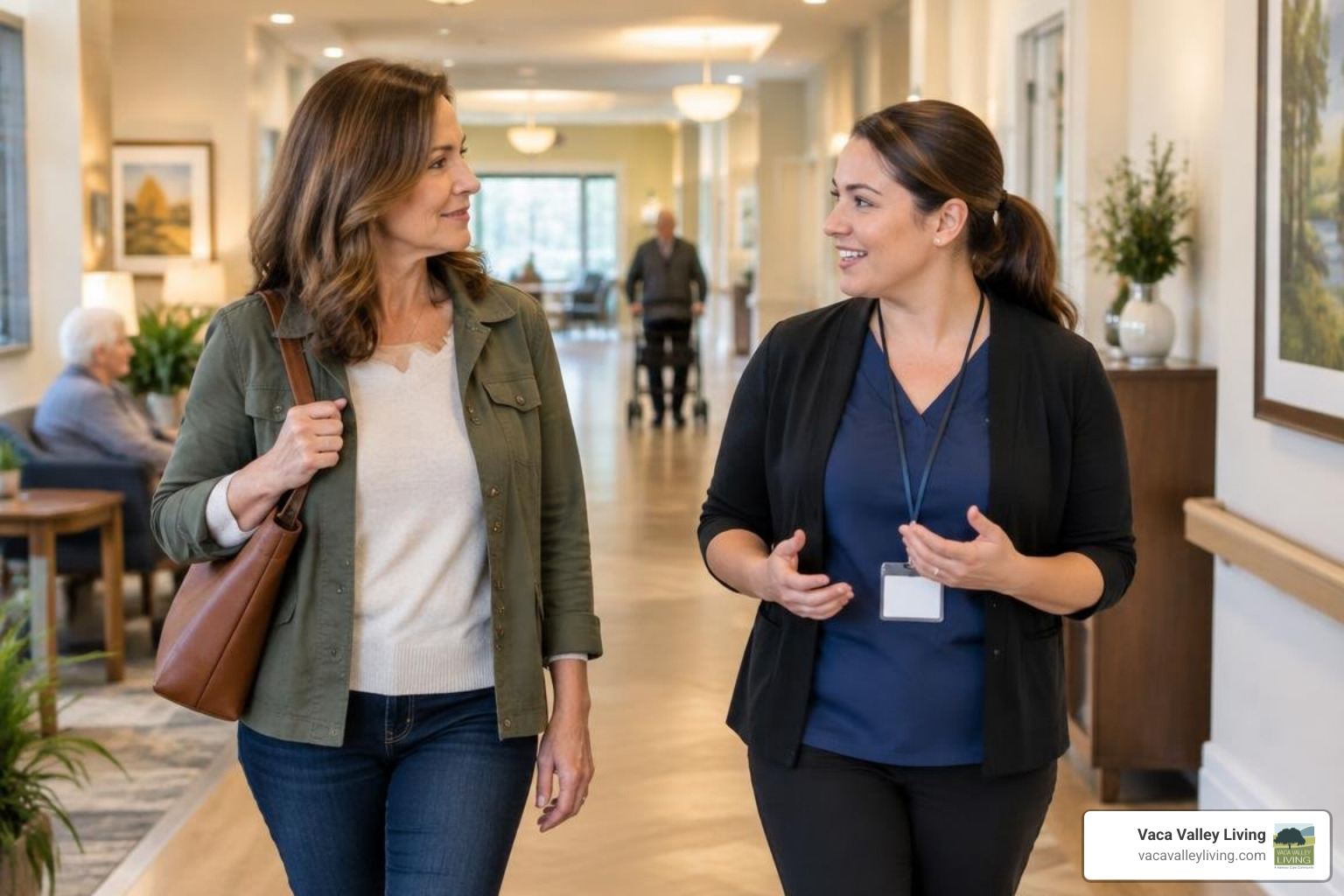
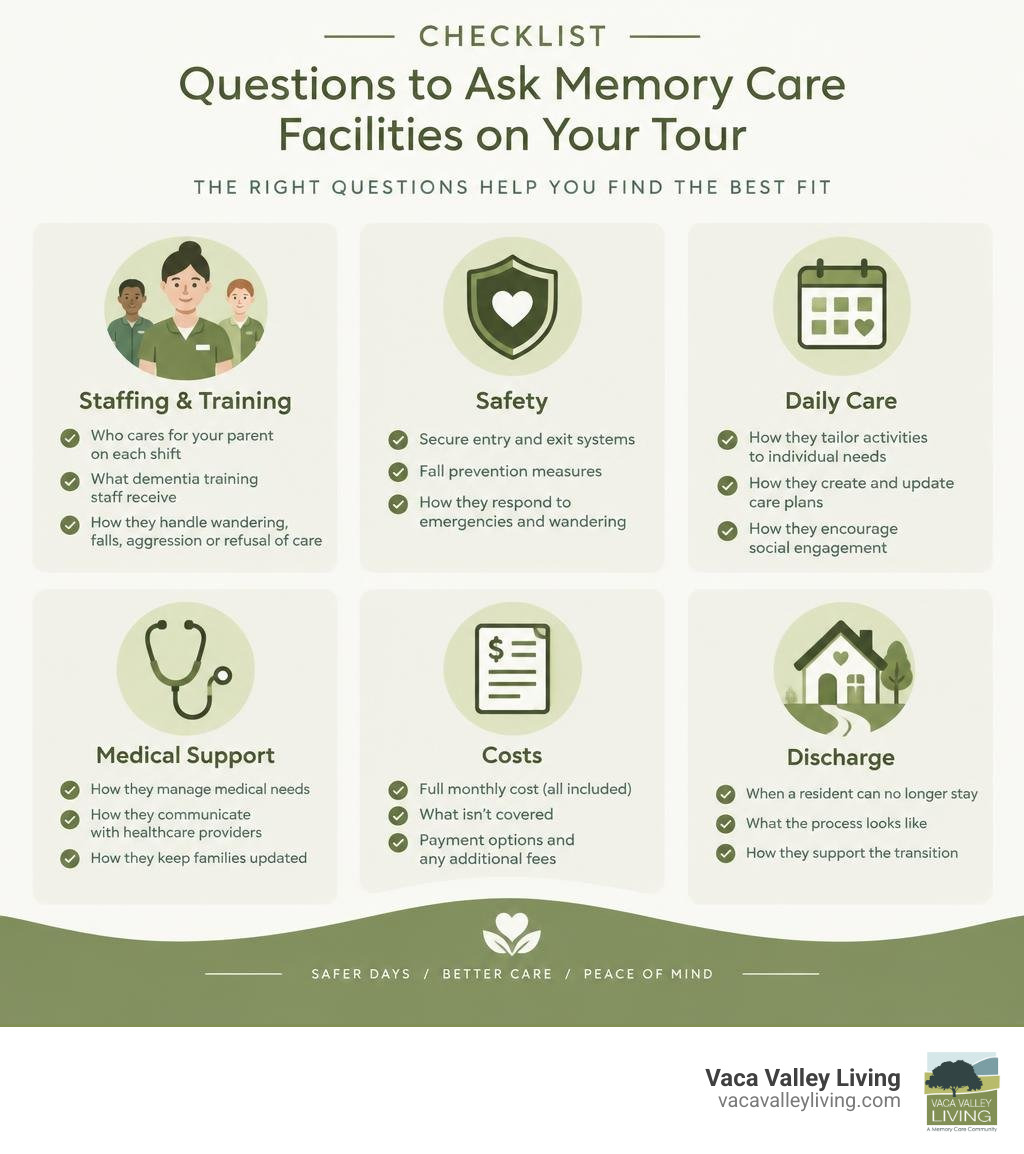
Ask each facility who will care for your parent on every shift, what dementia training staff receive, and how they respond to wandering, falls, aggression, or refusal of care. Then ask how they tailor daily activities and care plans, manage your parent's medical needs, update families, and decide when a resident can no longer stay. Get the full monthly cost and discharge policy in writing.
Bring the same questions to every tour. The answers matter, but so does what you see: Are staff patient? Are residents engaged? Does the place feel safe and comfortable for your parent?
Essential Questions to Ask Memory Care Facilities About Staffing and Training
When evaluating communities for someone living with dementia or Alzheimer's disease, the physical building is only part of the equation. A beautiful dining room or manicured garden means very little at 3:00 a.m. if a resident wakes up disoriented and frightened. The quality of daily life and physical safety depends entirely on the caregivers present around the clock.
According to national data, Alzheimer's disease affects more than 6.5 million Americans and accounts for 60 to 80 percent of all dementia cases. Furthermore, approximately 1 in 9 adults over the age of 45 report experiencing subjective cognitive decline. Providing meaningful, dignified support requires specialized skills, patience, and stable staffing.
Before committing to a community, it is vital to bring targeted Alzheimer's Foundation of America questions for care communities directly to the administrative and nursing teams.
Shift Ratios and Caregiver Turnover Rates
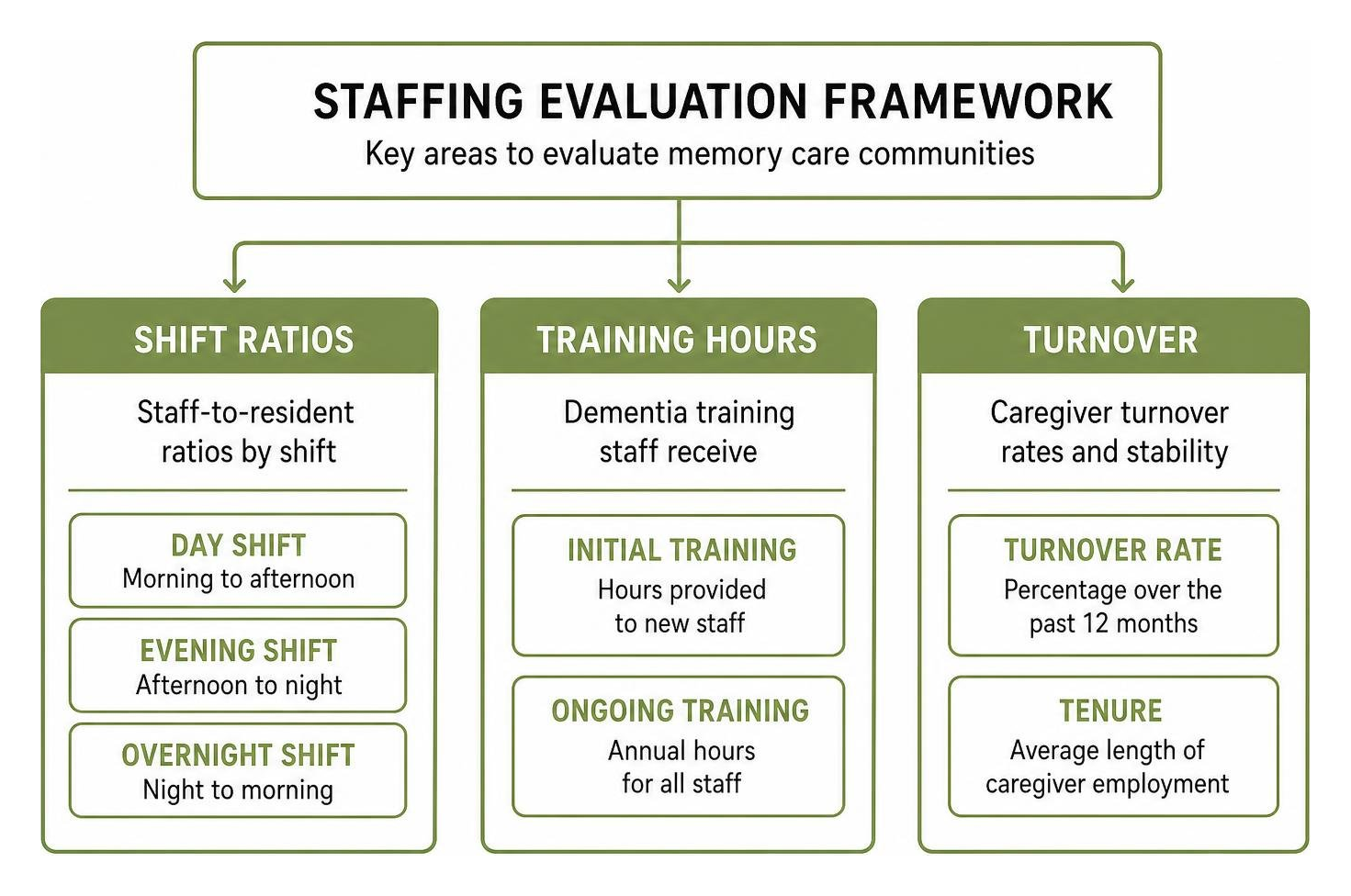
Staff-to-resident ratios directly influence how quickly care calls are answered, whether dining assistance is unhurried, and how effectively fall risks are managed. Ask the team to break down these ratios by specific shifts rather than accepting a generic daily average:
- Day Shift: What is the direct caregiver-to-resident ratio from morning to afternoon? (A standard daytime ratio should ideally range between 1:4 and 1:6).
- Evening Shift: How many aides are on the floor during dinner and evening wind-down, when sundowning behaviors often peak?
- Overnight Shift: What is the coverage while residents sleep? (Ratios should not exceed 1:10 overnight to ensure rapid emergency response and scheduled wellness checks).
- Nursing Oversight: Is a licensed nurse (RN or LVN) on-site 24/7, or are they on call? If on call, what is their guaranteed physical response time?
- Staff Retention and Consistency: What was the caregiver turnover rate over the last 12 months, and how often does the community rely on temporary agency staff?
Consistent caregivers learn subtle non-verbal cues, personal histories, and baseline demeanors. High turnover disrupts this continuity, often causing increased confusion and behavioral distress for residents.
Dementia Certifications and Behavioral Training
General caregiving experience does not automatically translate into effective dementia care. Industry research indicates that while 79% of memory care communities provide specialized memory care training for their staff, the depth and frequency of this education vary significantly.
When inquiring about education standards in residential memory care, ask these precise questions:
- How many hours of dementia-specific training must an employee complete before working alone on the floor?
- Are staff certified through accredited programs (such as Certified Dementia Care Managers® or equivalent state-approved curricula)?
- Is dementia training repeated annually, and does it include non-clinical team members such as housekeeping, dietary staff, and maintenance workers?
- What specific techniques are taught to manage care refusal, pacing, exit-seeking, or catastrophic reactions without relying on physical or chemical restraints?
Evaluating Safety Protocols and Physical Design
Safety in memory care involves a careful balance: protecting vulnerable individuals from physical hazards and elopement while preserving their freedom of movement, personal dignity, and access to fresh air.
Industry benchmarks show that 88% of dedicated memory care environments operate as secure communities, and 76% feature physical designs purpose-built for cognitive impairment.

Questions to Ask Memory Care Facilities About Wandering and Fall Prevention
Wandering and exit-seeking are common manifestations of cognitive decline. Data indicates that 89% of communities offer programming to manage restlessness or wandering, while 82% provide services to address exit-seeking behaviors. Furthermore, 41% utilize specialized electronic wandering management systems.
When touring, evaluate memory care safety features by asking:
- Wander Management: What specific technology is in place (e.g., wearable wander-alert pendants, magnetic delayed-egress doors, discreet keypad entry)?
- Door-Testing Protocols: How do staff respond when a resident repeatedly attempts to open secured doors? Ask the director to walk you through how the team handled their most recent elopement attempt.
- Fall Mitigation: Falls represent a major health risk for seniors. Does the facility utilize low-profile beds, motion sensors, anti-skid flooring, and walk-in zero-threshold showers?
- Nighttime Monitoring: How frequently are quiet room checks conducted during the night without waking the resident?
Purpose-Built Layouts and Secure Outdoor Spaces
A supportive physical environment reduces cognitive fatigue and frustration. Research shows that 78% of specialized communities offer enclosed outdoor spaces. Look for thoughtful architecture in a secure memory care unit, including:
- Continuous Walking Paths: Circular or looping hallways eliminate dead ends, which can trigger agitation and anxiety.
- Visual Wayfinding Cues: Color-coded neighborhoods, distinct wall murals, and personalized shadow boxes outside bedroom doors help residents locate their rooms independently.
- Secure Courtyards: Safe, secure outdoor courtyards allow residents to enjoy sunshine, gardening, and light exercise without the risk of elopement.
- Calming Lighting and Acoustic Design: Glare-free indirect lighting and noise-dampening flooring minimize sensory overload throughout the day.
Assessing Daily Programming, Care Plans, and Quality of Life
A memory care community should be an active, engaging home rather than a quiet holding area. Engaging the brain through structured sensory, physical, and cognitive routines helps maintain retained abilities and improves sleep patterns.
| Feature / Area | Standard Assisted Living | Specialized Memory Care |
|---|---|---|
| Environmental Design | Open residential hallways, self-directed access | Secure perimeters, looping paths, visual wayfinding cues |
| Staffing & Supervision | Intermittent assistance based on scheduled requests | 24/7 proactive supervision, specialized dementia training |
| Activity Structure | Large group events, lectures, self-directed games | Small group, ability-tailored sensory and cognitive therapy |
| Dining Assistance | Standard seated restaurant-style dining | Adaptive utensils, finger foods, cueing, quiet dining areas |
| Care Plan Updates | Semi-annual or annual reviews | Bi-monthly to quarterly reviews with behavioral tracking |
Personalized Care Plan Development and Review Cycles
Every individual experiences dementia differently, requiring tailored support that honors their unique background, preferences, and lifestyle.
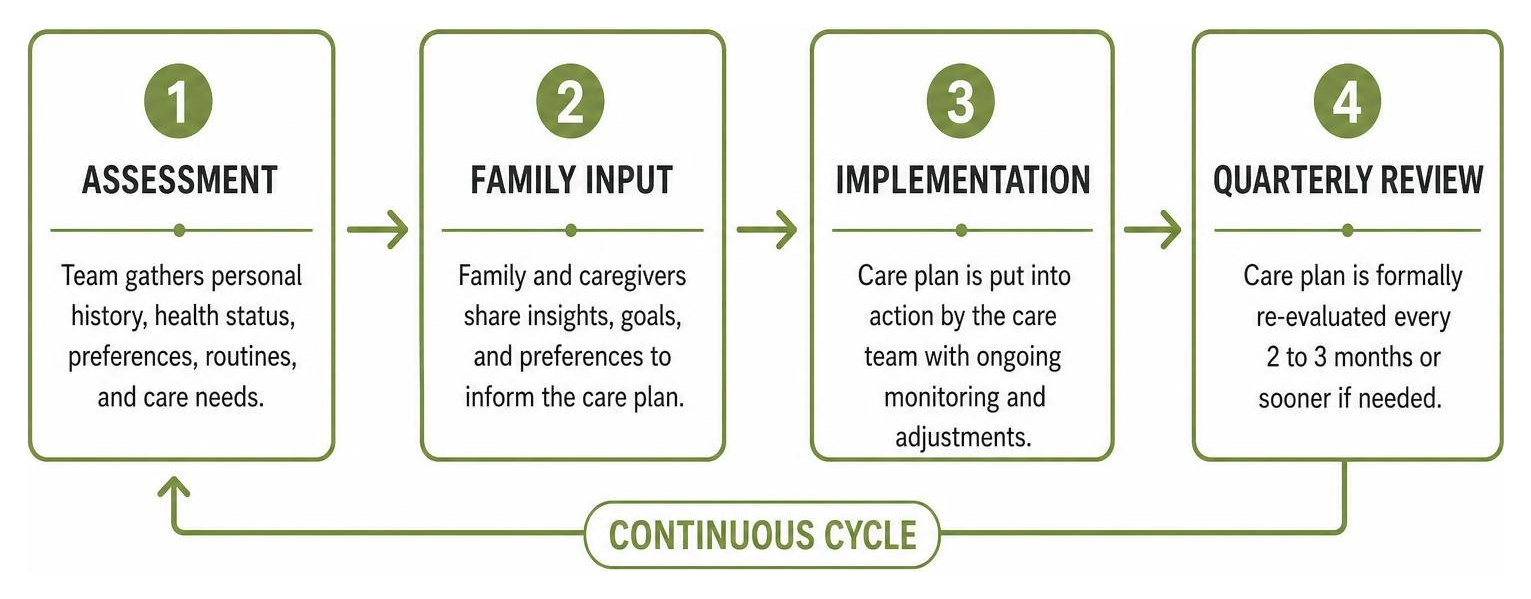
When discussing personalized care plans, ask:
- Intake Process: How does the team gather the resident’s personal history, former career milestones, family traditions, and daily routines?
- Review Cadence: How often is the care plan formally re-evaluated? (Best practices require reviews every 2 to 3 months, or immediately following any change in health status).
- Multidisciplinary Involvement: Who participates in care plan meetings? Are family members, primary caregivers, nursing staff, and activity coordinators included?
- Behavioral Tracking: How are emerging behavioral patterns, sleep changes, or dietary shifts documented and addressed in the care plan?
Cognitive Therapies, Dining, and Daily Routines
Meaningful engagement requires evidence-based stimulation rather than generic pastimes. When exploring memory-enhancing therapies and daily activities, inquire about specific therapeutic offerings:
- Therapeutic Modalities: Does the community offer music therapy, reminiscence programs, sensory Snoezelen rooms, art therapy, or gentle physical exercise?
- Sundowning Interventions: What structured, calming routines take place around 4:00 p.m. to ease late-afternoon restlessness and anxiety?
- Adaptive Dining Support: Dementia can affect motor coordination and the ability to recognize food. Does the kitchen offer textured diets, visual contrast plating, high-calorie finger-food options, and verbal cueing from caregivers?
- Routine Flexibility: Can your loved one maintain their natural circadian rhythms, such as waking late or enjoying breakfast at non-standard hours?
Medical Capabilities, Health Transitions, and Discharge Policies
As dementia progresses, health and personal care requirements naturally change. Selecting a community that can manage escalating physical and medical complexity prevents traumatic relocations later on.
Reviewing resources like Harvard Health's overview of memory care options can help clarify the clinical distinctions between assisted living memory care and skilled nursing environments.

Critical Questions to Ask Memory Care Facilities Regarding Complex Medical Needs
Understanding clinical boundaries helps families avoid unexpected care gaps. Ask the wellness director:
- Medication Administration: Who administers medications, and how are dosage adjustments tracked and communicated to physicians and family members?
- Physician Services: Do primary care physicians, geriatric psychiatrists, podiatrists, or physical therapists make regular on-site visits?
- Complex Medical Support: Can the facility manage chronic conditions such as sliding-scale diabetes, catheter care, oxygen therapy, or specialized wound management?
- Emergency Response: What is the protocol if a resident experiences an acute health change? Who contacts the family, and does staff accompany the resident to the emergency room?
- Hospice and End-of-Life Care: Does the community partner with local hospice agencies to allow residents to remain comfortably in place through end-of-life?
Discharge Triggers, Notice Periods, and Aging in Place
One of the most difficult experiences for families is receiving an unexpected discharge notice because a resident's care needs have exceeded the facility's licensing capacity.
Ask for the written discharge policy and review these specific criteria:
- Behavioral Triggers: Under what exact circumstances would a resident be asked to leave (e.g., persistent physical aggression, combative behavior during personal care)?
- Mobility Thresholds: What happens if a resident becomes non-ambulatory or requires two-person transfers?
- Notice Requirements: How much written notice is provided prior to discharge (typically 30 days under standard regulations), and what transition assistance is offered?
- Aging in Place Policies: What medical services can be brought in by third-party providers to help your parent remain in the community as long as possible?
Understanding the True Cost and Contract Terms
Navigating the financial aspects of memory care requires clear transparency. Long-term care pricing involves multiple variables, including base room rates, specialized care levels, and ancillary services.
Consulting guides such as the Alzheimer's Association guide to long-term care can provide a comprehensive framework for planning family finances and long-term care insurance benefits.
Nationally, the median cost of memory care in 2026 is approximately $6,690 per month. By comparison, annual costs for basic assisted living average $74,400 per year, while skilled nursing home care averages $104,025 to $116,800 annually for semi-private and private rooms respectively.
| Fee Model | How It Works | Potential Advantages | Potential Drawbacks |
|---|---|---|---|
| All-Inclusive Pricing | A single monthly rate covering room, board, activities, and all levels of personal care. | Predictable monthly budgeting; no surprise fees as care needs advance. | Initial rate may appear higher if care needs are currently mild. |
| Tiered / A La Carte Pricing | Base rent covers accommodation and meals; additional care levels are billed separately. | Families pay only for the exact services currently utilized. | Costs can escalate rapidly as physical and cognitive needs increase. |
All-Inclusive vs. Tiered Pricing Models
To avoid unexpected bills, ask the business office director to outline every line item:
- What is the total, all-in monthly fee based on your parent's current clinical assessment?
- What specific services trigger a move to the next care tier, and what is the cost difference between tiers?
- Are there ancillary fees for medication management, incontinence supplies, escorting to meals, or specialized behavioral redirection?
- Can long-term care insurance or Veterans Aid and Attendance benefits be applied directly toward monthly costs?
Rate Increases, Community Fees, and Contract Clauses
Before signing an admission agreement, review the financial fine print:
- Community Fees: Is there a one-time community or entrance fee, what does it cover, and is any portion refundable if your loved one leaves within the first 30 days?
- Historical Rate Increases: How much have monthly rates increased annually over the past three years, and how much advance notice is provided before rate adjustments take effect?
- Bed-Hold Policies: If a resident is hospitalized for several days or weeks, what portion of the monthly fee is required to hold their room?
- Financial Contingency: What happens if a resident exhausts their private funds over time? Does the community accept state Medicaid waiver programs, or is private pay required indefinitely?
Frequently Asked Questions About Memory Care Placement
What happens if a resident exhibits severe aggression or behavioral changes?
Dementia can sometimes cause distressing personality shifts, verbal outbursts, or physical resistance to daily care. High-quality memory care communities employ non-pharmacological de-escalation strategies first. Caregivers are trained to identify underlying unmet needs—such as untreated pain, fear, sensory overload, or urinary tract infections—rather than reacting with frustration.
When behavioral changes occur, the care team updates the behavioral plan, consults visiting geriatric specialists, and modifies environmental triggers. Physical or chemical restraints are avoided; care focuses instead on validation, gentle redirection, and structured sensory calming techniques. Approximately 52% of memory care communities maintain dedicated programming to manage anxiety, agitation, and aggression.
What is the average monthly cost of memory care in 2026?
In 2026, the national median cost of residential memory care is $6,690 per month. However, actual monthly rates depend significantly on geographic location, room style (private vs. semi-private), and the resident’s required level of assistance.
In California communities—including the San Francisco Bay Area, Solano County, and the Sacramento metropolitan region—monthly rates often range between $6,000 and $9,500 depending on specialized clinical needs and floor plan options. Semi-private suites generally offer a more cost-effective choice while providing valuable social companionship, whereas private studios offer a quiet, personalized sanctuary.
How do I evaluate a memory care facility during an unannounced visit?
While a scheduled tour introduces you to leadership and community amenities, an unannounced follow-up visit provides genuine insight into daily operations. Visit during transition times, such as mid-morning activities or dinner around 5:00 p.m.
During your visit, observe:
- Sensory Cues: Is the environment clean, odor-free, well-lit, and calm without blaring televisions or ringing alarms?
- Caregiver Interactions: Do staff members make eye contact, address residents by their preferred names, smile, and speak in unhurried, reassuring tones?
- Resident Engagement: Are residents actively participating in activities or resting comfortably, or are they left unattended in common areas for long periods?
- Dining Atmosphere: Is the dining room supportive and pleasant? Are caregivers actively assisting residents who struggle with utensils?
Conclusion
Choosing the right memory care community for an aging parent is a profound, emotional milestone. By preparing a thorough list of questions, visiting multiple times, and carefully reviewing contracts, you can look beyond surface appearances and choose a home that delivers safety, clinical competence, and heartfelt compassion.
At Vaca Valley Living, we understand that specialized memory care is deeply personal. As a family-owned community with over 50 years of senior living experience in Vacaville, California, our team provides 24-hour individualized care, engaging life-enrichment programs, and a warm, secure environment where residents are treated like family. We invite you to tour our community, ask these essential questions in person, and discover the peace of mind that comes from exceptional, compassionate memory care.