
What Are the Best Memory Care Activities for Seniors at Home?
Core Benefits of Memory Care Activities for Seniors
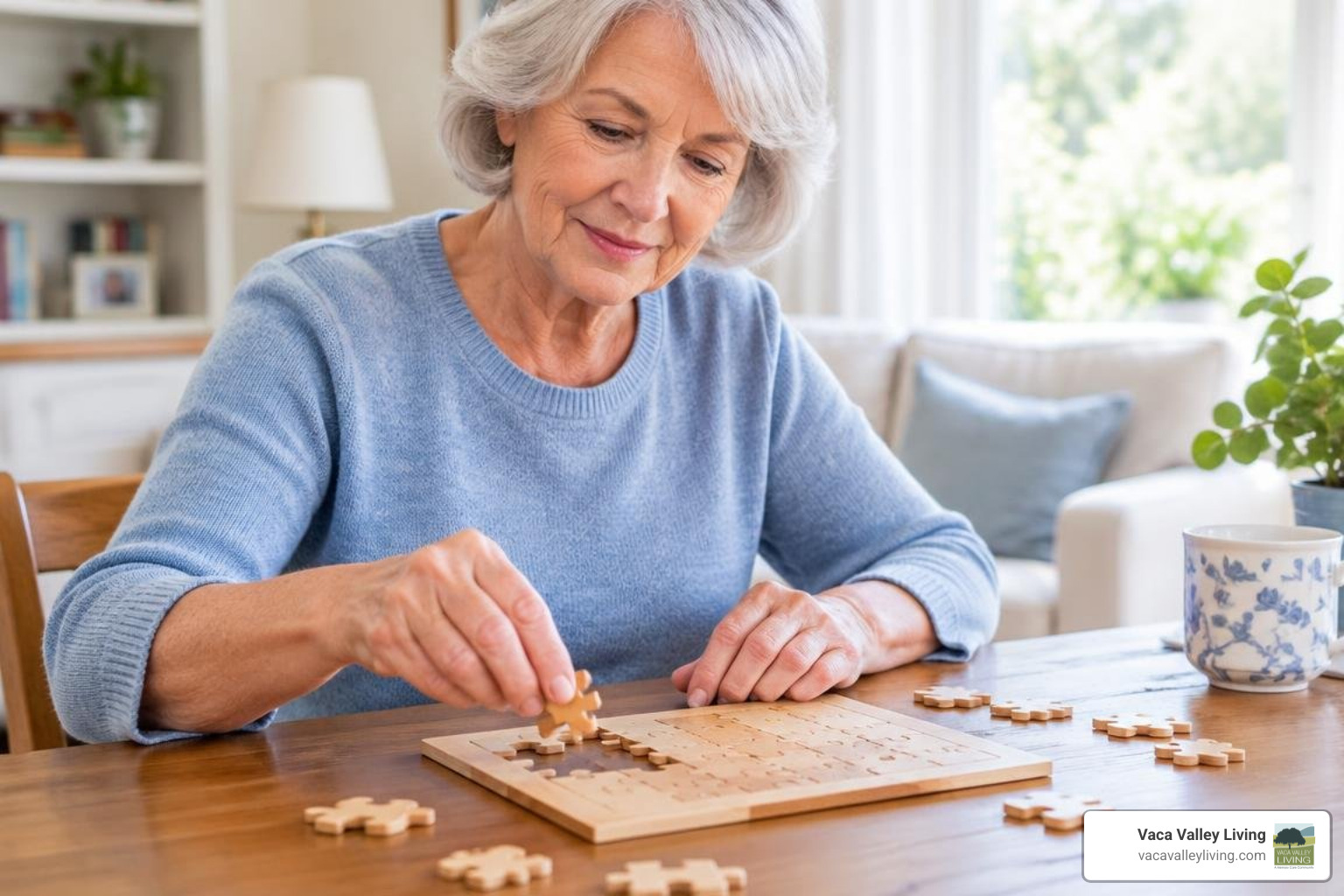
The best memory care activities for seniors at home include reminiscence therapy with photo albums, listening to familiar music, sensory bins and textured fabrics, gentle physical movement like chair yoga or seated marching, and routine household tasks such as folding towels or sorting silverware. These activities provide cognitive stimulation, reduce anxiety, and support emotional wellness without requiring complicated equipment or rigid schedules.
Caring for a loved one with Alzheimer's disease or another form of dementia involves navigating evolving cognitive shifts, physical changes, and emotional needs. Meaningful engagement plays a foundational role in maintaining health and happiness. Industry research shows that over 55% of memory care communities offer targeted brain fitness exercises, while nearly 79% incorporate musical activities into daily life because of their proven therapeutic benefits.
Participating in structured, enjoyable tasks offers several vital benefits:
- Cognitive Preservation: While activities cannot cure progressive neurological conditions, regular mental stimulation exercises neural pathways. Engaging in problem-solving or reminiscence helps seniors maintain their existing functional abilities longer, particularly during early stage dementia care.
- Anxiety and Agitation Reduction: Boredom and confusion often trigger distress or restlessness. Therapeutic activities provide a safe outlet for nervous energy, replacing uncertainty with purposeful focus.
- Sleep Regulation: Gentle physical movement and regular daytime engagement help calibrate natural circadian rhythms. Seniors who remain active during morning and afternoon hours tend to experience fewer sleep disturbances and reduced nighttime wandering.
- Motor Skill Maintenance: Fine motor tasks like painting or sorting silverware preserve hand-eye coordination and manual dexterity, while gross motor exercises like walking promote balance and lower fall risks.
- Emotional Connection and Self-Worth: Completing a task—no matter how simple—delivers a genuine sense of accomplishment. Shared activities also create joyful moments of connection between seniors, family members, and caregivers without relying strictly on verbal communication.
Stimulating Indoor and Cognitive Activities at Home
Indoor activities provide wonderful opportunities to stimulate recall, practice problem-solving, and spark shared joy. The key is to avoid anything that feels like a test or an exam. The focus should always be on the experience rather than a "correct" outcome.
- Reminiscence Therapy: Long-term memories often remain intact much longer than short-term recall. Looking through curated photo albums, watching home movies, or exploring scrapbooks can unlock vivid memories from childhood, wedding days, or family vacations. Ask open-ended prompts such as, "Tell me about this dress," rather than quiz-like questions like, "Do you remember who this is?"
- Familiar Melodies: Music taps into deep emotional centers of the brain that remain accessible even in advanced stages of dementia. Playing favorite tunes from a person's teens and twenties can prompt spontaneous singing, rhythmic tapping, and storytelling.
- Storytelling and Conversation Starters: Use vintage magazine clippings, classic postcards, or historical memorabilia to prompt discussions. Sharing humorous family anecdotes or lighthearted jokes is also remarkably therapeutic; clinical observations show that shared laughter significantly eases tension and anxiety.
- Brain Teasers and Large-Piece Puzzles: Word searches with large print, matching games, and jigsaw puzzles featuring 12 to 36 large pieces keep minds active without inducing overwhelm. If a puzzle piece does not fit, gently guide their hand or celebrate the pieces already placed.
Sensory Memory Care Activities for Seniors
Sensory engagement is one of the most effective non-pharmacological tools in dementia care. When processing complex spoken instructions becomes challenging, sensory stimulation directly engages the nervous system to soothe and ground the individual.
- Themed Sensory Bins: Fill shallow plastic tubs with everyday items centered around a familiar theme, such as gardening (smooth river stones, seed packets, small trowels, faux flowers) or sewing (spools of colorful thread, measuring tapes, textured fabric swatches). Explore these Senior Day Care Activity Ideas for Memory Care Patients to discover how tactile exploration fosters calm and dignified focus.
- Aromatherapy and Scent Memory: Scents bypass cognitive filters and connect straight to the brain's emotional center. Diffusing lavender or vanilla promotes relaxation in the late afternoon, while peppermint or citrus can gently invigorate senses in the morning.
- Textured Fabrics and Fidget Quilts: Seniors with restless hands benefit from handling varying textures like velvet, fleece, silk, corduroy, or ribbons. Tactile stimulation provides comfort and reduces the impulse to pull at clothing or dressings.
- Warm Hand Massages: Gently massaging a loved one's hands with an unscented or lightly scented lotion combines the soothing power of human touch with gentle physical relief for stiff joints.
- Auditory Landscapes: Soft instrumental music, nature sounds (such as ocean waves or rainfall), and wind chimes create a peaceful background ambiance that minimizes startling household noises.
Creative Memory Care Activities for Seniors
Creative expression provides an emotional outlet when verbal language becomes difficult to navigate. Nearly 75% of dedicated memory care communities host regular arts and crafts programming because creative expression does not require logical sequencing or linear memory.
- Watercolor Painting: Watercolors offer fluid, low-pressure creative exploration. Freeform strokes, blending colors, or using water-reveal coloring books allows seniors to produce vibrant artwork without worrying about staying inside lines.
- Soft Modeling Clay or Dough: Squeezing, rolling, and shaping non-toxic clay strengthens hands and provides a relaxing tactile outlet for nervous tension.
- Collage Making: Provide pre-cut magazine photos, scenic landscape pictures, and stickers. Let your loved one arrange and paste images onto cardstock, discussing the pictures as you work together.
- Music Making and Sing-Alongs: Shaking maracas, tapping a tambourine, or playing along with simple percussion instruments invites active physical participation alongside melodic enjoyment.
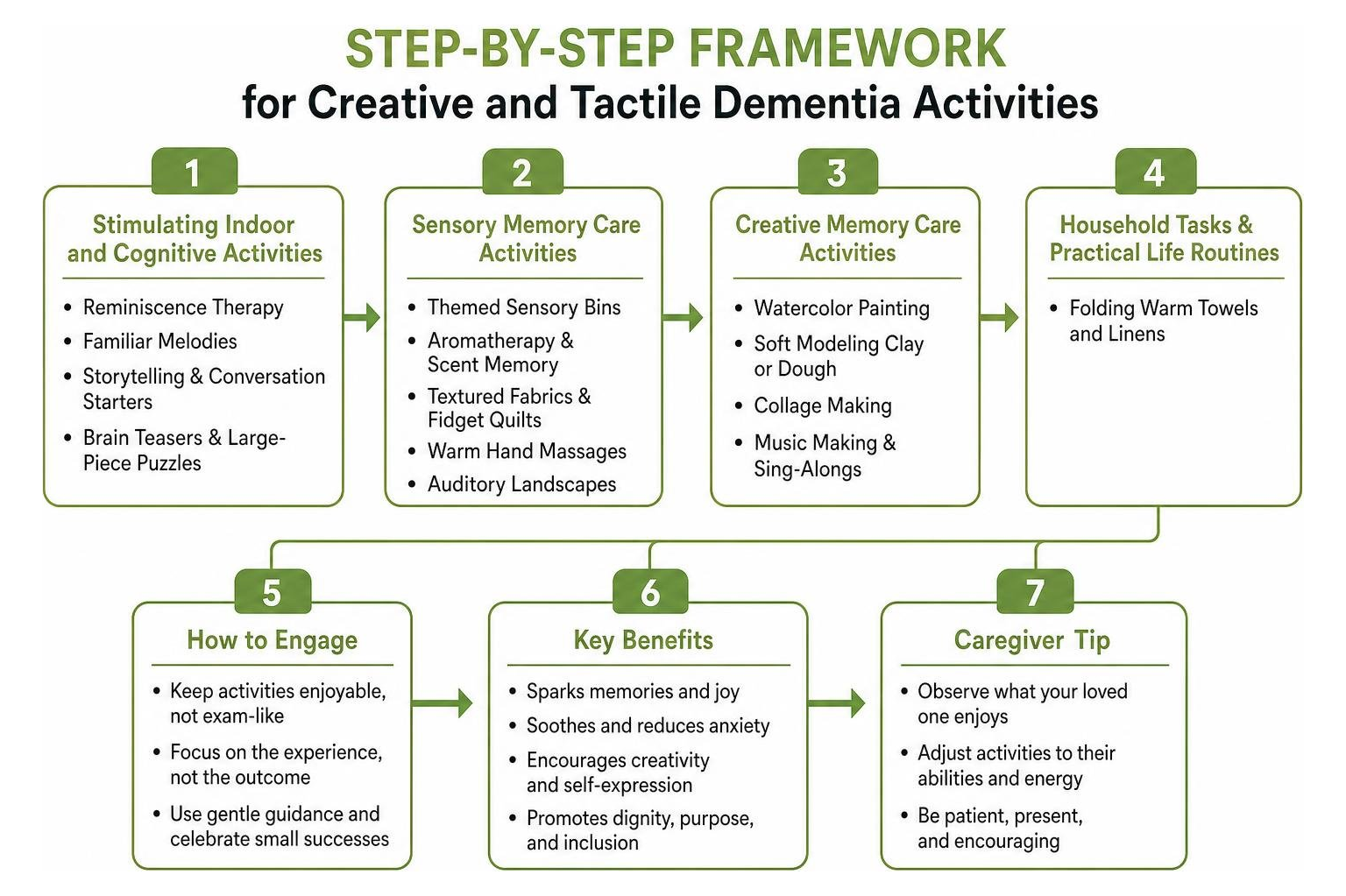
Household Tasks and Practical Life Skill Routines
Many caregivers overlook the deep comfort found in everyday chores. Routine tasks tap into procedural memory—motor memory built over decades of daily living. Inviting a senior to participate in household rhythms fosters dignity, purpose, and inclusion.
- Folding Warm Towels and Linens: Folding washcloths, hand towels, or napkins provides familiar, repetitive movement with an immediate sense of accomplishment.
- Sorting Cutlery and Kitchen Items: Matching spoons and forks or organizing lightweight, non-breakable plastic containers exercises sorting and spatial skills.
- Sweeping Patios and Porches: Simple, rhythmic physical chores like sweeping a walkway or dusting a tabletop allow seniors to contribute meaningfully to their living space.
- Prepping Ingredients: Depending on safety and motor skills, seniors can snap green beans, shell peas, tear lettuce leaves for a salad, or stir batter in a secure bowl. Over 56% of memory care communities offer cooking and food preparation activities to foster this exact sense of community.
Physical and Outdoor Activities for Mobility and Wellness
Physical movement is essential for maintaining joint flexibility, cardiovascular wellness, and neuromuscular balance. Studies indicate that approximately 70% of memory care communities integrate structured fitness into their weekly schedules to help prevent physical decline.
- Gardening and Raised Beds: Over 60% of specialized communities run gardening clubs. Planting seeds, watering herbs, and feeling rich soil provide sensory richness, gentle exercise, and connection to the natural world.
- Chair Yoga and Seated Stretching: Gentle upper-body stretches, shoulder rolls, and seated side bends improve flexibility while eliminating fall hazards.
- Seated Marching and Ball Tosses: Marching in place while seated stimulates lower-body circulation. Tossing a soft, lightweight foam ball back and forth exercises hand-eye coordination and reaction time in an upbeat, playful setting.
- Tai Chi and Guided Balance: Slow, rhythmic, continuous movements enhance spatial awareness, reduce postural instability, and cultivate inner calm.
- Supervised Nature Walks and Bird Watching: Walking along flat, clear paths provides fresh air and cardiovascular exercise. Setting up a bird feeder outside a window or patio encourages peaceful observation and curiosity about local wildlife.
Comparing Low-Impact Physical Activities
| Activity | Primary Physical Benefit | Cognitive & Emotional Impact | Adaptability Level |
|---|---|---|---|
| Chair Yoga & Stretching | Preserves joint flexibility & range of motion | Lowers cortisol; induces physical relaxation | High (suitable for limited mobility) |
| Raised-Bed Gardening | Strengthens grip & functional hand dexterity | Connects to nature; provides nurturing purpose | Medium (requires sitting or standing balance) |
| Seated Marching & Ball Toss | Promotes lower-body blood flow & coordination | Enhances focus; encourages social playfulness | High (performed entirely seated) |
| Supervised Nature Walks | Builds cardiovascular endurance & leg strength | Elevates mood; stimulates sensory awareness | Medium to High (adjusted by distance & terrain) |
Adapting Activities Across Different Stages of Dementia
Dementia is progressive, which means an activity that sparks joy today may cause confusion or frustration several months from now. Adapting your approach ensures your loved one always feels capable and supported.
- Early-Stage Dementia: Seniors in the early stage can enjoy structured board games, detailed baking projects, book club discussions, and extended community outings. The focus is on preserving autonomy, encouraging decision-making, and maintaining established social connections.
- Middle-Stage Dementia: As cognitive processing slows, multi-step instructions become overwhelming. Break tasks down into single, manageable steps (e.g., say "Hold this brush" rather than "Paint the flower pot"). Shift toward tactile crafts, familiar music, repetitive sorting, and supervised outdoor walks.
- Late-Stage Dementia: In late stages, active participation shifts toward sensory reception. Focus on passive enjoyment: listening to soft classical music, feeling a plush blanket, inhaling familiar floral scents, and experiencing the comfort of gentle touch.
Managing cognitive transitions also requires understanding behavioral changes. If a loved one becomes easily agitated or overwhelmed, it helps to review guidance on what stage is aggression in dementia to identify environmental or sensory triggers. When at-home care needs exceed what family caregivers can safely manage, exploring a dedicated secure memory care unit or specialized Alzheimer's care facilities ensures continuous support within an intentionally designed environment. Families seeking daytime respite can also look into structured Alzheimer's day programs or comprehensive dementia support services.
Frequently Asked Questions About Dementia Activities
How long should daily memory care activities last?
Activities should generally last anywhere from 5 to 30 minutes, depending on the individual's attention span, energy level, and cognitive stage. Quality matters far more than duration. If your loved one engages happily for ten minutes and then shows signs of restlessness or fatigue, conclude the activity on a positive note. Flexibility is essential.
What should caregivers do if a senior refuses to participate?
Never force, argue, or insist. If a senior declines an activity, step back and try modeling it yourself nearby without placing direct demands on them. For instance, start sorting colorful buttons or listening to an upbeat song at the table. Curiosity will often draw them in naturally. If disinterest persists, honor their choice, offer a comforting beverage or sensory alternative, and try a different activity later in the day.
How can home activities be adapted for late-stage dementia?
In advanced stages, adapt activities from "doing" to "experiencing." Replace structured games with soothing sensory experiences: brush their hair gently, hold their hand while sitting in warm sunshine, read a favorite poem aloud in a calm voice, or diffuse soothing essential oils. Emotional connection and physical comfort remain deeply meaningful regardless of cognitive stage.
Conclusion
Enriching the daily life of a loved one living with dementia does not require complicated equipment or rigid schedules. By focusing on sensory comfort, simple physical movement, familiar creative outlets, and purposeful daily routines, you can cultivate moments of joy, dignity, and calm right at home.
At Vaca Valley Living, we understand that every individual's journey with memory loss is unique. As a family-owned community with over 50 years of senior living experience in Vacaville, CA, our mission is to deliver compassionate, person-centered memory care in a warm, home-like setting. Our 24-hour dedicated team provides individualized engagement programs, thoughtful amenities, and thoughtfully designed floor plans tailored to meet each resident's physical and emotional needs.
If you are exploring care options or need guidance supporting your loved one, we invite you to contact our caring team or request a tour of our community today. Discover how our personalized residential memory care provides seniors with purposeful living and families with lasting peace of mind.