
Stop Mixing Up Memory Care and Dementia Care
Memory Care vs. Dementia Care: The Simple Difference
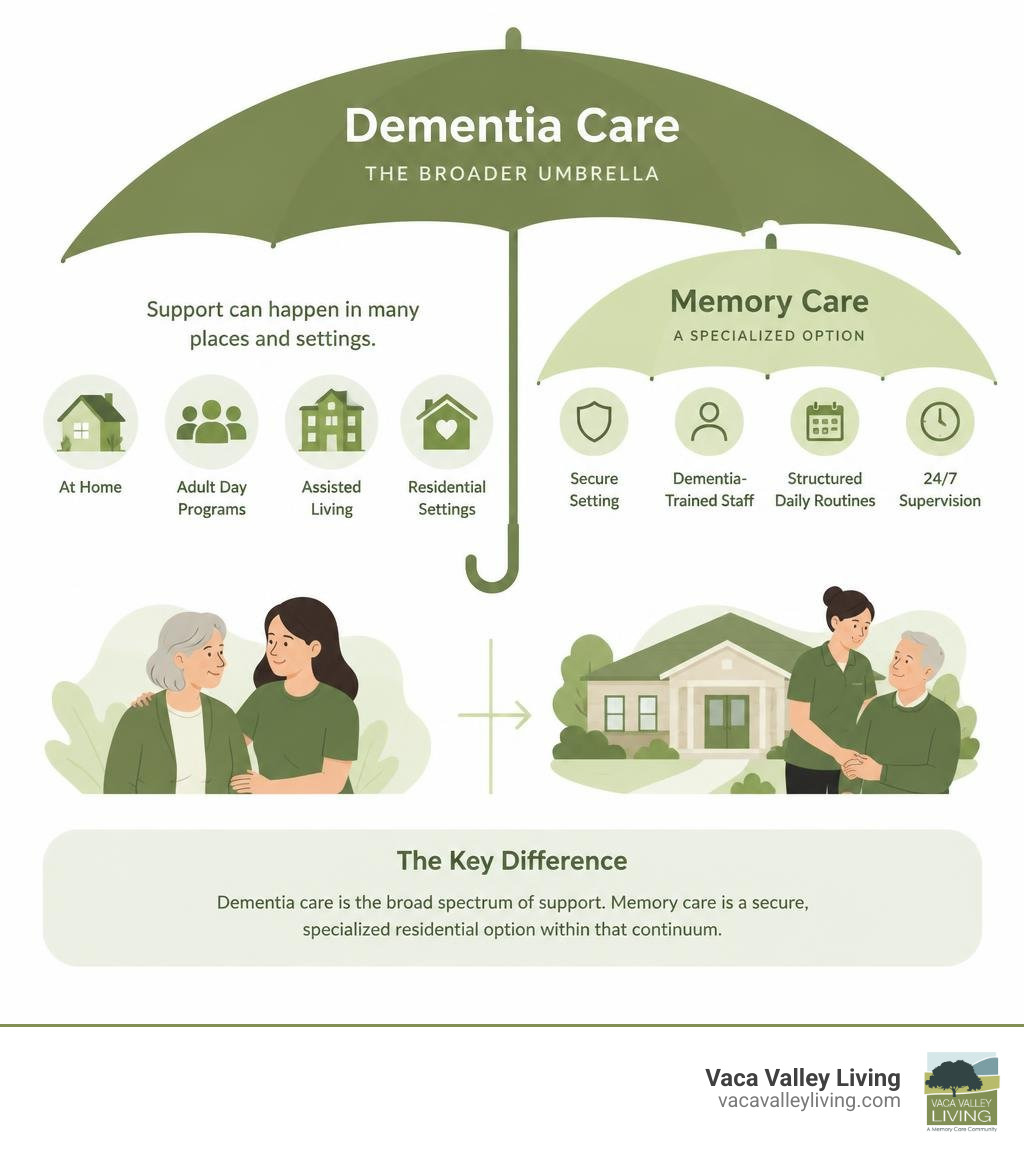
Dementia care is the broad term for support for a person with dementia. It can happen at home, in adult day programs, in assisted living, or in a dedicated residential setting.
Memory care is a specialized type of dementia care. It usually provides a secure setting, dementia-trained staff, structured daily routines, and 24/7 supervision for people whose cognitive changes create greater safety or daily-care needs.
In short, the answer to what is the difference between memory care and dementia care is scope: dementia care can describe many kinds of support, while memory care is a purpose-built residential option within that broader care continuum.
For a family, the practical question is not which label sounds best. It is whether your parent is safe, supported, and able to enjoy daily life. Wandering, frequent confusion, medication mistakes, nighttime distress, or caregiver burnout can signal that a more structured memory care setting may help.
Understanding Core Distinctions: What Is the Difference Between Memory Care and Dementia Care?
Navigating cognitive health diagnoses can feel overwhelming. Families are suddenly faced with clinical jargon, evolving symptoms, and a confusing array of care options. To make confident decisions, it helps to understand the diagnostic spectrum. Dementia is not a single disease; rather, it is an overarching umbrella term for conditions characterized by cognitive decline severe enough to interfere with daily life. Alzheimer's disease is the most prevalent form, accounting for 60% to 80% of cases, but the spectrum also includes vascular dementia, Lewy body dementia, frontotemporal disorders, and mixed dementia.
Because dementia progresses along a continuum—from subtle forgetfulness to profound physical and cognitive dependency—the level of support a person requires must evolve over time. That is where confusion often arises. While "dementia care" refers to any service designed to assist someone experiencing cognitive decline, "memory care" is an intensive, specialized residential model.
To help clarify how these models differ from broader senior living choices, here is a direct comparison:
| Care Setting / Model | Primary Focus | Staffing & Supervision | Security Features | Typical Setting |
|---|---|---|---|---|
| Dementia Care (General) | Broad support for cognitive symptoms | Varies from hourly aides to family caregivers | Standard home or community security | In-home, adult day centers, assisted living |
| Memory Care | Specialized, 24/7 dementia-specific residential care | High staff-to-resident ratio, dementia-certified staff | Secured perimeter, keypad entries, anti-wandering tech | Dedicated residential wings or standalone communities |
| Standard Assisted Living | Help with Activities of Daily Living (ADLs) | Caregivers available 24/7, standard training | Open floor plans, unlocked exterior doors | Multi-story residential communities |
| Skilled Nursing Facility | Complex 24-hour clinical and medical care | Registered nurses (RNs), licensed practical nurses (LPNs) | Clinical hospital-style environment, locked units if specialized | Medical health centers, rehabilitation units |
Dementia Support Models: What Is the Difference Between Memory Care and Dementia Care for Daily Living?
General dementia care spans a flexible range of non-residential and transitional services. In the earliest stages of cognitive decline, individuals often remain in their own homes. Families can leverage early-stage dementia care strategies such as structured daily calendars, simplified living spaces, and part-time in-home caregiver visits.
As needs increase, families often access specialized dementia support services to assist with meal preparation, bathing, and medication reminders. For social engagement and daytime supervision, community-based options like Alzheimer's day programs provide interactive cognitive stimulation while giving family caregivers essential respite.
These general models work well when an individual retains functional independence and does not display severe wandering behaviors or acute safety hazards. However, they rely heavily on informal family caregiving coordination and outside support to maintain a safe environment.
Dedicated Residential Facilities: What Is the Difference Between Memory Care and Dementia Care Environments?
Unlike non-residential support or standard senior housing, a purpose-built secure memory care unit is intentionally engineered from the ground up for individuals experiencing moderate to advanced cognitive impairment.
In a dedicated dementia care community, architecture plays a therapeutic role. The layout eliminates dead-end hallways that cause frustration, incorporates clear sightlines to common areas, and utilizes soft, glare-free lighting to minimize visual misinterpretations. Round-the-clock supervision ensures that if a resident wakes up disoriented at 2:00 AM, a trained caregiver is immediately present to provide gentle reassurance, prevent wandering, and guide them safely back to bed.
Comparing Settings, Safety Features, Staff Ratios, and Daily Therapies
The architectural and operational distinctions between standard residential living and memory care are vital for resident safety and emotional well-being.

Staff Credentials, Caregiver Ratios, and Specialized Therapies
In standard residential settings, assisted living caregivers provide exceptional help with physical tasks like dressing, hygiene, and mobility. However, specialized memory care settings require advanced credentials in dementia communication, behavioral de-escalation, and validation techniques.
Staffing ratios in memory care are significantly higher than in general assisted living. This allows our team at Vaca Valley Living to craft highly personalized care plans for seniors that honor individual histories, preferences, and circadian rhythms.
Daily therapies in memory care go beyond standard entertainment. They include:
- Reminiscence Therapy: Utilizing tactile memory boxes, vintage photographs, and familiar music to trigger long-term memories and spark joyful conversation.
- Sensory Stimulation: Aromatherapy, tactile textiles, and calming audio environments to reduce anxiety and sensory overload.
- Structured Music and Art Programs: Engaging creative pathways in the brain that often remain intact long after verbal processing declines.
- Failure-Free Activities: Purposefully designed games and crafts that have no "right" or "wrong" outcome, preserving self-esteem and dignity.
Setting Distinctions: Assisted Living vs. Memory Care vs. Skilled Nursing
Families often ask how these environments compare when evaluating residential care options. While an assisted living community focuses on lifestyle convenience and physical independence, memory care focuses on cognitive safety and structured reassurance.
When comparing these settings to a nursing home, the distinction lies in medical acuity. Reviewing a medical perspective on skilled nursing versus memory units reveals that nursing homes are designed for individuals with complex, chronic medical needs requiring continuous skilled clinical care (such as IV therapy, wound management, or ventilator support). In fact, approximately 15% of nursing homes and 14% of assisted living communities operate a dedicated dementia unit to bridge this gap.
For a detailed side-by-side analysis, read our complete breakdown of assisted living vs. memory care: 5 key differences to see how daily amenities compare.
Cost Comparisons and Financial Strategies in 2026
Planning for long-term care requires a clear financial roadmap. Because memory care involves higher staffing ratios, specialized programming, and advanced security infrastructure, its cost structure differs from standard residential living and home care.
Monthly Cost Breakdown: In-Home Care vs. Memory Care Facilities
Nationally in 2026, the cost of long-term care reflects the level of hands-on supervision provided:
- In-Home Dementia Care: Averages roughly $34 per hour nationwide. For families requiring 40 hours of weekly care, this equates to approximately $5,400 to $6,300 per month. However, if around-the-clock 24/7 care is required at home, monthly costs can exceed $18,000 to $24,000.
- Standard Assisted Living: The national average cost is approximately $5,830 per month.
- Residential Memory Care: Averages between $6,935 and $7,900 per month nationally (around $83,220 to $94,800 annually) according to national industry data.
While memory care has a higher baseline price than standard assisted living, it is often all-inclusive. It covers 24-hour supervision, specialized meals, personal care assistance, medication management, housekeeping, and access to thoughtfully designed floor plans and secure amenities like therapeutic gardens and salon services.
Payment Solutions, Long-Term Care Insurance, and Government Programs
Navigating payment methods requires exploring several avenues:
- Private Funds and Home Equity: Most families utilize private savings, retirement accounts, pensions, or proceeds from the sale of a primary residence.
- Long-Term Care Insurance: Policies typically cover non-medical custodial care, including residential memory care, once a policyholder cannot perform two or more Activities of Daily Living (ADLs) or requires supervision due to cognitive impairment.
- Medicare Limitations: Medicare does not pay for long-term custodial memory care or room and board. It only covers short-term skilled nursing rehabilitation (up to 100 days following a qualifying hospital stay), home health therapy, and hospice care. Families exploring options often search for nursing homes that accept Medicare for short-term clinical rehabilitation rather than permanent dementia residence.
- Medicaid and HCBS Waivers: Medicaid may cover nursing home care and, in select states through Home and Community-Based Services (HCBS) waivers, provide partial subsidies for memory care room and board for qualifying low-income seniors.
- Veterans Aid and Attendance: Eligible wartime veterans and surviving spouses can receive substantial monthly pension supplements to offset memory care costs.
Assessing Stages and Knowing When to Transition Care
Determining when to transition from home-based dementia care or standard assisted living into a dedicated memory care setting is one of the most emotional decisions a family can make. People diagnosed with Alzheimer's disease live an average of 8 to 10 years following diagnosis, with some living up to 20 years. Because the condition evolves over many years, care settings must adjust accordingly.

Key indicators that signal it is time to consider residential memory care include:
- Unsafe Wandering or Elopement: The individual attempts to leave the home, becomes lost in familiar neighborhoods, or does not recognize their own residence.
- Sundowning and Sleep Reversal: Severe evening agitation, distress, or night-time wandering that leaves caregivers exhausted.
- Caregiver Burnout: Family caregivers experiencing physical illness, severe sleep deprivation, anxiety, or depression.
- Medication Non-Compliance: Forgetting doses, taking duplicate doses, or refusing essential medications.
- Nutritional Decline and Hygiene Challenges: Significant unexplained weight loss, forgetting to eat, or resistance to bathing and grooming.
- Inability to React to Emergencies: Inability to dial 911, respond safely to a fire alarm, or recognize basic safety hazards (like leaving burners lit).
Monitoring Cognitive Decline, Sundowning, and Behavioral Changes
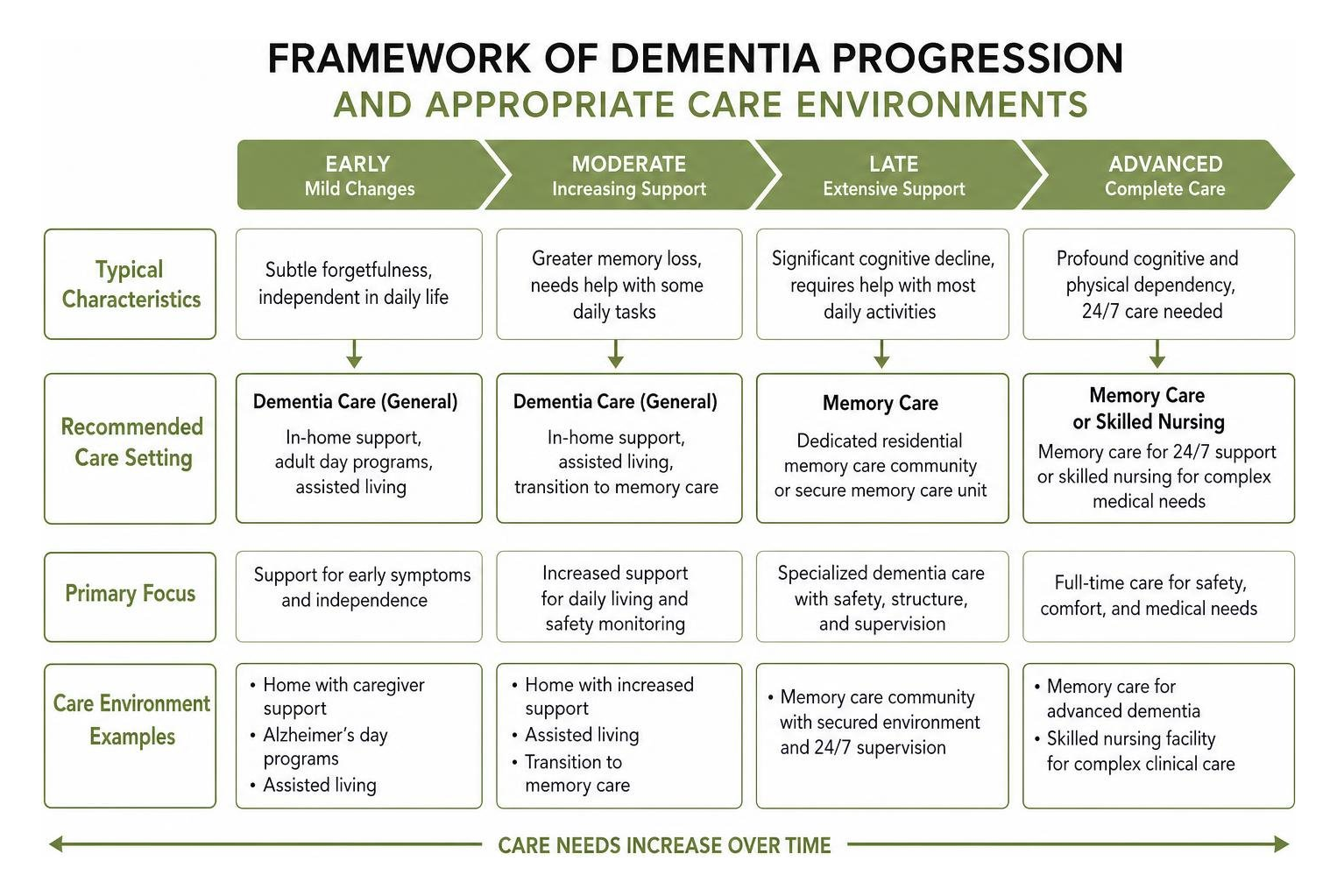
Dementia progression is frequently tracked using clinical tools like the Functional Assessment Staging Tool (FAST) scale:
- Early-Stage (FAST 1–3): Mild forgetfulness, difficulty with complex financial tasks or travel planning. General dementia care, in-home support, and lifestyle modifications are typically sufficient.
- Mid-Stage (FAST 4–5): Needs assistance choosing clothing, managing personal hygiene, and preparing meals. Disorientation to time and place becomes frequent.
- Late-Stage (FAST 6–7): Severe memory loss, incontinence, difficulty speaking, and loss of motor control. Round-the-clock hands-on care is required.
During the mid-to-late transitions, behavioral shifts such as paranoia, sundowning, and distress can escalate. Understanding what stage aggression occurs in dementia helps families recognize that these behaviors are biological symptoms of brain changes rather than intentional actions. In a specialized setting, staff utilize non-pharmacological behavioral de-escalation, redirection, and soothing sensory environments to restore comfort.
Facility Licensing, Quality Standards, and Choosing a Community
State regulations play a crucial role in senior safety. For example, Florida memory care regulations require facilities to hold a specialized Memory Care Services license, requiring distinct physical plant safeguards and mandatory staff dementia training hours. Similarly, in California, residential care facilities for the elderly (RCFEs) must meet stringent state safety and staffing guidelines to operate secured memory care units.
When evaluating communities:
- Confirm their state licensing status and check for any state audit deficiencies.
- Observe how caregivers interact with residents—look for patience, eye contact, and warm engagement.
- Ask about staff turnover rates and ongoing dementia-specific training hours.
- Connect with local caregiver networks by reviewing a dementia support groups guide to gain insights from other families.
- Utilize local Alzheimer's family support resources to understand community reputations.
- Always request a tour during mealtime or an afternoon activity to see the environment in action.
Frequently Asked Questions About Memory and Dementia Care
Is memory care only for seniors diagnosed with Alzheimer’s disease?
No. While Alzheimer’s is the most common diagnosis, memory care is designed for individuals with all forms of progressive dementia, including vascular dementia, Lewy body dementia, frontotemporal dementia, Parkinson’s disease dementia, and mixed dementia. The structured environment and trained staff support any senior experiencing significant memory loss, executive dysfunction, or disorientation.
Can personal pets and flexible family visitation be accommodated in memory care?
While many standard senior retirement communities allow residents to keep personal pets in their private apartments, dedicated memory care environments generally do not allow individual resident pets due to safety concerns, fall risks, and the resident's inability to reliably care for an animal. However, memory care communities frequently feature gentle community therapy pets and encourage families to bring well-behaved pets during visits. Visitation is encouraged, though communities often recommend visiting during structured daytime hours when residents are most alert and comfortable.
How do state regulations govern when a resident must transition to memory care?
State regulations typically do not set a rigid calendar date for transitions. Instead, regulations establish clinical threshold criteria. If an assisted living resident exhibits exit-seeking behavior, requires continuous physical assistance with all transfer and hygiene tasks, or poses a safety risk to themselves or others, state licensing rules dictate that the facility must transition the resident to a licensed memory care community or skilled nursing facility equipped to manage those specific needs.
Conclusion
Understanding the difference between dementia care and memory care allows you to make informed, compassionate choices for your loved one. While dementia care encompasses all forms of support throughout cognitive decline, memory care provides a specialized, secure, and deeply supportive residential environment tailored to the challenges of moderate to advanced memory loss.
At Vaca Valley Living in Vacaville, California, our family-owned community brings over 50 years of dedicated experience to senior care. We provide a warm, home-like setting featuring 24-hour staffing, individualized life-enrichment programs, and compassionate support designed to give your family complete peace of mind. We invite you to explore compassionate memory care at Vaca Valley Living, learn more about Vaca Valley Living, and contact us today to schedule a personal visit.