
A Practical Guide to Compare Assisted Living Options
Understanding Assisted Living and Long-Term Residential Care

To compare assisted living options effectively, families must evaluate three essential factors: assessing medical versus custodial care needs, analyzing base rental rates against tiered pricing structures, and checking staffing ratios and state licensing records. Assisted living provides a supportive residential setting with personal care assistance, bridging the gap between living independently at home and receiving complex clinical treatment in a skilled nursing facility.
Across the United States, approximately 41,465 assisted living communities operate today, managing nearly 1.4 million licensed beds according to the National Center for Assisted Living. The residential care sector is diverse: about four out of five communities operate on a for-profit basis, roughly 57.3% are chain-affiliated, and 42.7% are independently owned. While the average community size is 33 licensed beds, options range from small residential care homes with fewer than ten residents to expansive campuses supporting hundreds of older adults.
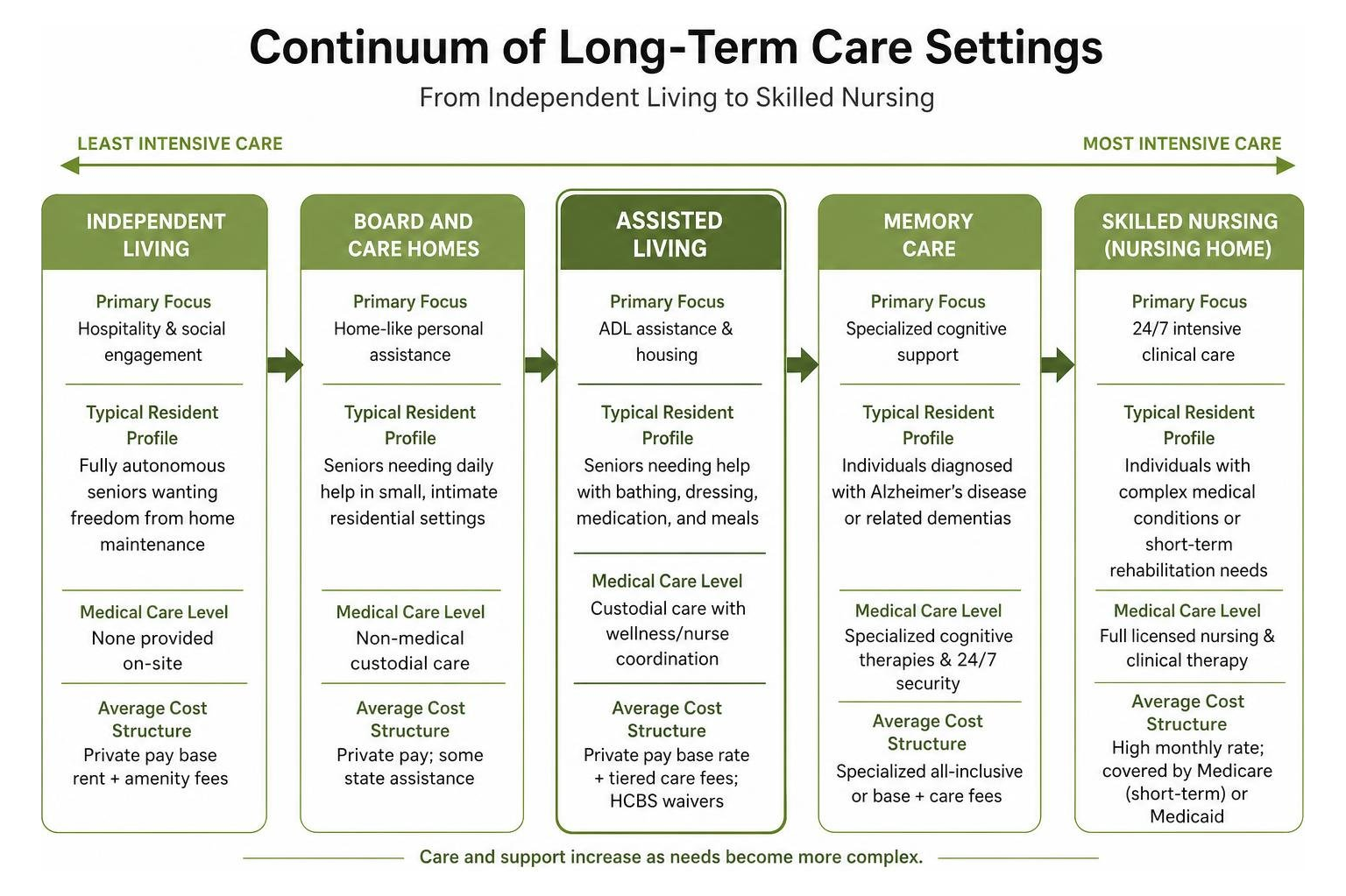
| Care Setting | Primary Focus | Typical Resident Profile | Medical Care Level | Average Cost Structure |
|---|---|---|---|---|
| Independent Living | Hospitality & social engagement | Fully autonomous seniors wanting freedom from home maintenance | None provided on-site | Private pay base rent + amenity fees |
| Board and Care Homes | Home-like personal assistance | Seniors needing daily help in small, intimate residential settings | Non-medical custodial care | Private pay; some state assistance |
| Assisted Living | ADL assistance & housing | Seniors needing help with bathing, dressing, medication, and meals | Custodial care with wellness/nurse coordination | Private pay base rate + tiered care fees; HCBS waivers |
| Memory Care | Specialized cognitive support | Individuals diagnosed with Alzheimer's disease or related dementias | Specialized cognitive therapies & 24/7 security | Specialized all-inclusive or base + care fees |
| Skilled Nursing (Nursing Home) | 24/7 intensive clinical care | Individuals with complex medical conditions or short-term rehabilitation needs | Full licensed nursing & clinical therapy | High monthly rate; covered by Medicare (short-term) or Medicaid |
Looking into dedicated senior retirement communities helps families evaluate the right balance of privacy, lifestyle programs, dining services, and supportive oversight across different residential settings.
Core Services Provided by an Assisted Living Caregiver
The day-to-day quality of life in a residential community depends heavily on direct care personnel. A dedicated assisted living caregiver assists residents with Activities of Daily Living (ADLs). Across the country, resident needs are substantial: 77% of residents require help with bathing, 69% need assistance with walking or mobility, and 61% need daily support with dressing.
Standard supportive services include:
- Personal Care: Dignified assistance with bathing, grooming, dressing, and continence management.
- Medication Support: Reliable administration, reminders, and prescription refills managed under nurse oversight.
- Nutritional Services: Three chef-prepared, balanced daily meals tailored to therapeutic dietary requirements.
- Housekeeping & Laundry: Regular apartment cleaning, linen laundering, and trash removal.
- Community Life: Social activities, light exercise sessions, arts and crafts, and scheduled local transportation.
Quality communities incorporate purposeful on-site amenities, such as full-service beauty salons, therapy spaces, secure courtyards, and communal dining rooms to keep days fulfilling and structured.
Comparing Levels of Care and Memory Support
As care needs change, standard custodial support may no longer be enough. While general residential care focuses on physical ADL assistance, cognitive impairments require dedicated environments. Approximately 4 in 10 residential care residents live with Alzheimer's disease or another form of dementia.
When cognitive decline affects safety, judgment, or orientation, dedicated Alzheimers care facilities offer specialized environments. These secure memory care neighborhoods feature secured architectural layouts, specialized multi-sensory activities, visual navigation cues, and caregivers trained specifically in redirection and de-escalation techniques. Understanding these distinctions helps families select a community that can handle changing needs over time without requiring disruptive emergency moves.
Recognizing When a Loved One Needs Daily Support
Knowing when to transition a family member to residential care is rarely straightforward. Many seniors mask their struggles during short family visits, making functional decline difficult to notice until a safety incident occurs.
Life expectancy in the U.S. has increased significantly over recent decades, with expectations to climb toward 85 years by 2060 as the senior population doubles to nearly 98 million. However, extended longevity brings greater physical vulnerability: 4 in 10 seniors aged 65 to 79 live with at least one disability affecting mobility, self-care, or household chores. For adults aged 80 and older, that figure rises to 7 in 10.
Physical and Cognitive Indicators
Families should look for concrete signs that living alone is no longer safe:
- Frequent Falls or Mobility Issues: Unexplained bruising, hesitancy when standing, or holding onto walls and furniture while walking.
- Nutritional Decline and Weight Loss: Spoiled food in the refrigerator, unpaid utility bills, or noticeable, unmanaged weight loss.
- Medication Non-Adherence: Missed doses, incorrect pill counts in organizers, or unrefilled maintenance prescriptions.
- Cognitive Changes: Leaving burners on, getting lost along familiar driving routes, or sudden confusion regarding dates and appointments.
- Social Isolation: Giving up long-held hobbies, withdrawing from family gatherings, or neglecting personal hygiene.
Recognizing these issues early allows families to plan a move thoughtfully, avoiding the stress of an emergency placement following a hospitalization.
Support Considerations for Veterans and Seniors with Disabilities
Special populations often require specialized care approaches. Today, approximately 1 in 4 military veterans (4.7 million individuals) live with a service-connected disability—a figure that has risen by 117% since 1990. These veterans, along with seniors managing lifelong physical disabilities, benefit from communities designed with zero-threshold entries, widened doorways, ADA-compliant roll-in showers, and integrated physical therapy partnerships.
Veterans and their surviving spouses may also qualify for the VA Aid and Attendance benefit. This monthly pension supplement helps cover the cost of daily custodial care for eligible veterans who need help with everyday activities like bathing, dressing, or medication management.
Analyzing Costs, Financing, and Industry Economics

Planning for senior care requires a clear look at long-term finances. Across the United States, the national median rate for residential assisted living services stands at approximately $6,200 monthly ($74,000 annually). While localized baseline pricing can start around $4,500 per month depending on region and apartment style, costs have historically outpaced inflation. Between 2004 and 2021 alone, median annual care costs grew by 31% over inflation.
Despite these figures, residential care remains an economical alternative to skilled nursing facilities. The average cost of assisted living is less than half the expense of a private nursing home room ($4,015 to $6,200 monthly compared to upwards of $8,517 to $9,500+ monthly for skilled care). The industry is supported by a workforce of 512,300 dedicated professionals—including 455,900 full-time nurses, aides, and social workers—generating over $86 billion in total economic activity.
How to Budget for Assisted Living Expenses
Most residential care is funded privately. When budgeting, families should ask providers for an itemized breakdown of base rental rates versus tiered care charges. Base rent typically covers apartment maintenance, utility access, three daily meals, housekeeping, and core social activities.
To choose an appropriate budget, families can review private studio and one-bedroom floor plans to balance living space with overall monthly expenses.
Common financing strategies include:
- Private Assets & Home Equity: Proceeds from selling a family home, bridge loans, or drawing from retirement savings and investment portfolios.
- Long-Term Care Insurance: Policies that pay out daily or monthly non-taxable stipends once a policyholder requires assistance with two or more ADLs.
- Veterans Benefits: VA Aid and Attendance allowances designed to offset direct care expenses.
- Life Insurance Conversions: Converting active life policies into long-term care benefit accounts to pay providers directly.
Public Programs: Medicare Limitations and Medicaid Waivers
A common misconception is that standard Medicare pays for residential assisted living. Medicare does not cover residential room and board or daily custodial care. It only covers medically necessary clinical expenses, such as physician visits, short-term rehabilitation, hospice, and outpatient therapies. For options regarding clinical stays, consult our guide to nursing homes that accept Medicare near me.
Medicaid, by contrast, assists lower-income older adults through state-specific Home and Community-Based Services (HCBS) waiver programs. Nationally, almost 1 in 5 residents (17%) relies on Medicaid to fund their daily personal care services. In FY 2023, 63.8% ($145.9 billion) of all Medicaid long-term care spending went toward HCBS programs. While Medicaid waivers do not pay for a resident's physical room and board, they help cover the cost of personal care aides, medication administration, and case management. Families researching lower-cost alternatives can consult our affordable retirement communities guide 2026 for state assistance options.
Selecting a Community, Safety Standards, and Move-In Transition
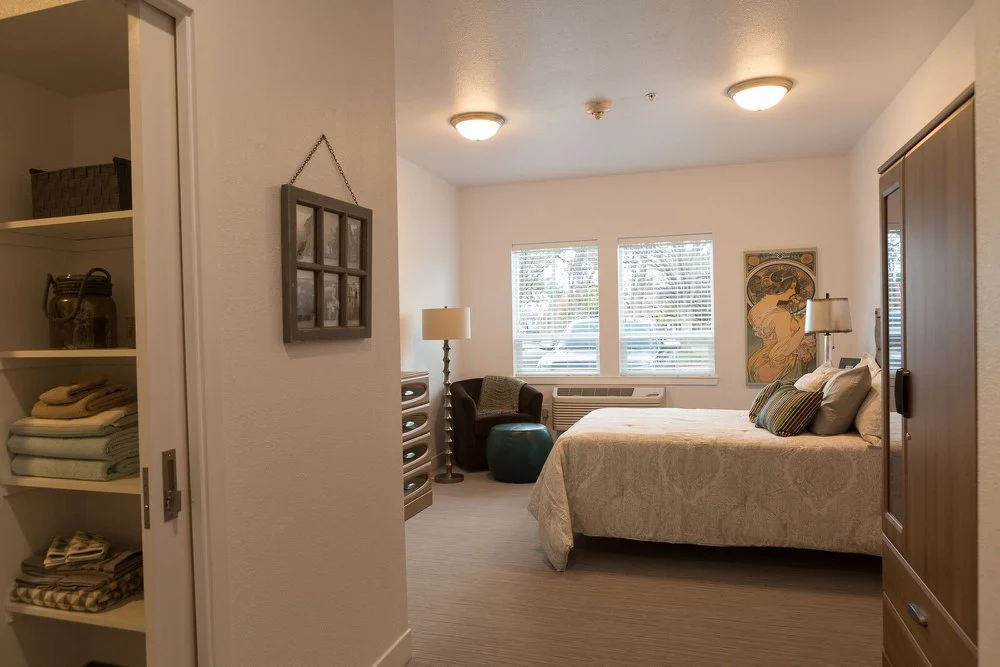
Choosing a residential community requires careful research into safety records, state licensing standards, and community culture. Unlike skilled nursing facilities, which follow uniform federal regulations, residential care is licensed and regulated entirely at the state level.
States inspect communities regularly, enforce staff-to-resident training requirements, and manage reporting systems for safety violations. Families can access state licensing portals or speak with their local Long-Term Care Ombudsman—an independent advocate dedicated to resolving resident safety and care complaints—to review past survey results and inspection histories.
Evaluation Checklist and Touring Criteria
When visiting a community, look beyond the lobby decor and observe how staff interact with residents. Use this checklist during your visit:
- Staffing and Clinical Oversight: Are licensed nurses on-site 24/7 or on-call during weekends and evenings? What is the staff-to-resident ratio on day and night shifts?
- Safety Features: Are emergency pull cords or wearable alert pendants functional throughout the building? Are bathrooms fully accessible with securely mounted grab bars?
- Cleanliness and Maintenance: Is the environment fresh, well-lit, clean, and free of unpleasant odors?
- Dining Standards: Are meals fresh, appealing, and adaptable for specialized diets? Can you sample a meal during your tour?
- Staff Culture: Do staff members greet residents warmly by name, treat them with patience, and maintain a calm, supportive atmosphere?
To see how high-quality care operates in person, you can easily request a tour to view suites, speak with caregivers, and inspect community amenities firsthand.
Supporting a Smooth Move-In Process
Moving into a residential community brings significant emotional change for both seniors and their family caregivers. A structured transition helps ease anxiety and foster a sense of security from day one:
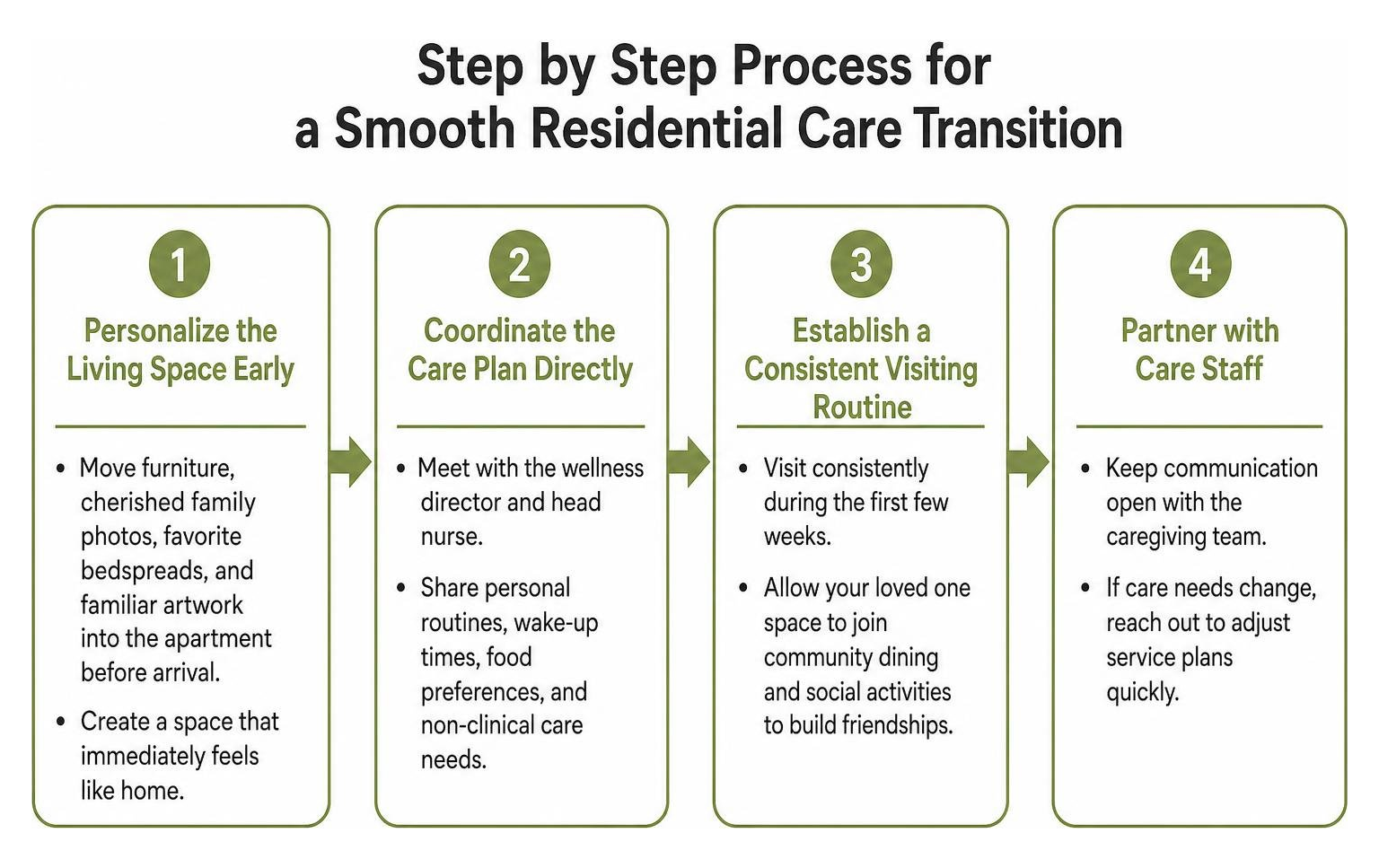
- Personalize the Living Space Early: Move furniture, cherished family photos, favorite bedspreads, and familiar artwork into the apartment before your loved one arrives so the room immediately feels like home.
- Coordinate the Care Plan Directly: Meet with the wellness director and head nurse to share personal routines, wake-up times, food preferences, and non-clinical care needs.
- Establish a Consistent Visiting Routine: Visit consistently during the first few weeks, but allow your loved one space to join community dining and social activities to build friendships.
- Partner with Care Staff: Keep communication open with the caregiving team. If care needs change, reach out via our contact page to adjust service plans quickly.
Frequently Asked Questions About Residential Senior Care
What is the average monthly cost of residential senior care in 2026?
The national median cost for residential assisted living is approximately $6,200 per month ($74,000 annually), though baseline rates can begin around $4,500 depending on location, unit size, and care tiers. Pricing varies based on geographical market rates, the level of physical care required, and whether specialized dementia support services are needed.
How does residential assisted living differ from specialized memory care?
Assisted living provides supportive personal care for older adults who are cognitively aware but need physical help with tasks like bathing, dressing, and medication management. Specialized memory care is a secure environment specifically designed for individuals living with Alzheimer's disease or other dementias. Memory care offers 24-hour secured perimeters, structured routines, sensory-focused activities, and caregivers trained to support cognitive challenges.
Does Medicaid or Medicare pay for room and board?
No. Medicare does not cover custodial care or room and board in residential assisted living settings. Medicaid does not pay for room and board either, but in many states, Medicaid Home and Community-Based Services (HCBS) waivers can help eligible low-income seniors pay for their daily personal care services, medication oversight, and supportive care.
Conclusion
Choosing the right residential care community is one of the most important decisions you will make for an aging parent or loved one. By understanding the continuum of care, reviewing financial options, and evaluating communities on safety, staff culture, and personalized care, families can make this transition with confidence.
At Vaca Valley Living, we bring more than 50 years of family-owned experience to senior care in Vacaville, California. We specialize in compassionate, residential memory care tailored to seniors living with Alzheimer's disease and related dementias. Our community offers 24-hour dedicated staffing, personalized wellness plans, on-site salon services, secure outdoor spaces, and engaging social programs in a warm, home-like setting.
If your loved one is showing signs of cognitive decline or daily functional challenges, explore our specialized memory care and senior support to discover how our experienced team can bring comfort, dignity, and peace of mind to your entire family.