
Caring for the Caregiver: Essential Dementia Support Strategies
Dementia Support for Caregivers Starts With a Clear Plan

After a dementia diagnosis, focus on a few practical steps: learn what support is available, make the home safer, schedule follow-up medical care, and ask family or professionals to share the load. Dementia support for caregivers is not about doing everything alone. It is about building a plan that protects your parent’s comfort, safety, and dignity - while protecting your own health, too.
Start with these priorities:
- Ask the care team what changes to expect and what symptoms need urgent attention.
- Create simple daily routines for meals, medications, activity, and rest.
- Begin legal, financial, and care-preference conversations early, while your loved one can participate.
- Contact local aging services, caregiver groups, or respite providers before you reach a crisis point.
Caring for a parent with Alzheimer’s or another dementia can feel overwhelming, especially as memory, communication, and everyday abilities change. The right tools, reliable support, and a safe care setting can make daily life more manageable for everyone involved.

First Steps and Understanding Disease Progression

Receiving a diagnosis of Alzheimer's disease or a related dementia often brings a mix of shock, grief, and confusion. Taking immediate, structured steps helps you regain control. Your first priority should be establishing open communication with the primary physician, neurologist, and clinical care team.
Reviewing evidence-based educational materials—such as the National Institute on Aging's guidance on caring for a person with Alzheimer’s disease—gives you a realistic view of the journey ahead. Setting up an organized carebinder or digital folder to track diagnostic reports, medication schedules, and physician notes will save hours of stress down the road. During this initial period, focusing on early stage dementia care allows you to establish healthy routines, open lines of communication, and build a collaborative care network while your loved one can actively share their personal preferences.
Early, Middle, and Late Stage Expectations
Dementia is progressive, and the level of assistance required will evolve through distinct stages:
- Early Stage (Mild): The individual may experience mild forgetfulness, difficulty finding words, or trouble managing complex tasks like balancing a checkbook. At this stage, your role is supportive—helping them maintain independence, organize appointments, and establish predictable daily rhythms.
- Middle Stage (Moderate): This is typically the longest stage. Damage to brain cells makes it harder to express thoughts and perform routine activities. You may see changes in sleep patterns, increased confusion about time and place, and difficulties with dressing or bathing. Behavioral changes, such as paranoia or frustration, frequently surface here.
- Late Stage (Severe): In the final stage, individuals lose the ability to respond to their environment, carry on conversations, and eventually control physical movements like swallowing or walking. Care shifts toward around-the-clock intensive support, preserving comfort, managing skin integrity, and upholding personal dignity through gentle sensory engagement.

Legal, Financial, and Advance Care Planning
Completing legal and financial documentation early ensures your loved one’s wishes are respected before their decision-making capacity declines:
- Durable Power of Attorney (POA) for Healthcare: Designates a trusted person to make medical decisions if the individual becomes incapacitated.
- Durable Power of Attorney for Finances: Authorizes a representative to manage bank accounts, pay bills, and handle property transactions.
- Living Will / Advance Directives: Outlines explicit preferences regarding life-sustaining measures, tube feeding, and palliative comfort care.
- Will and Estate Plans: Clarifies the distribution of assets and names an executor.
- Long-Term Care Financial Strategy: Review existing long-term care insurance policies, Medicare limitations, Medicaid eligibility requirements, and veterans' benefits to build a sustainable budget.
Practical Everyday Strategies and Dementia Support for Caregivers
Daily caregiving requires shifting expectations from efficiency to emotional connection. Establishing structured routines reduces decision fatigue for both you and your loved one.
| Daily Care Task | Common Challenge | Practical Caregiver Strategy |
|---|---|---|
| Bathing & Hygiene | Fear of water, agitation, feeling vulnerable | Warm the room, use a handheld showerhead, preserve modesty with a towel, and play soothing music. |
| Dressing | Confusion over clothing order, motor difficulty | Lay out two pre-selected outfits, choose elastic waistbands, and replace buttons with velcro. |
| Meals & Nutrition | Distraction, reduced appetite, swallowing issues | Serve finger foods, use high-contrast plates (e.g., red plates), and offer small, nutrient-dense snacks. |
| Medication Management | Missed doses, paranoia, pill swallowing refusal | Use locked blister packs, set digital alarms, and consult a pharmacist about liquid formulations. |
If balancing these tasks alongside your personal schedule becomes unsustainable, seeking structured support and assisted living caregiver assistance can provide essential hands-on relief while keeping your loved one safe and comfortable.
Effective Communication Techniques for Dementia Care
As cognitive processing slows, words can become confusing. Use these evidence-based techniques to foster calm interactions:
- Make Direct Eye Contact: Approach from the front at eye level. Say their name and introduce yourself if necessary.
- Simplify Your Language: Speak in short, clear sentences. Ask one question at a time that can be answered with a simple "yes" or "no," or offer simple binary choices (e.g., "Would you like soup or a sandwich?").
- Practice Validation Therapy: Avoid arguing, quizzing, or harshly correcting their reality. If they believe they need to catch a bus for work, validate the underlying emotion: "You were always so dedicated to your work. Tell me about your favorite project."
- Mind Your Non-Verbal Cues: A calm voice, relaxed posture, and warm smile convey safety far more effectively than words.
Managing Challenging Behaviors: Sundowning, Wandering, and Aggression
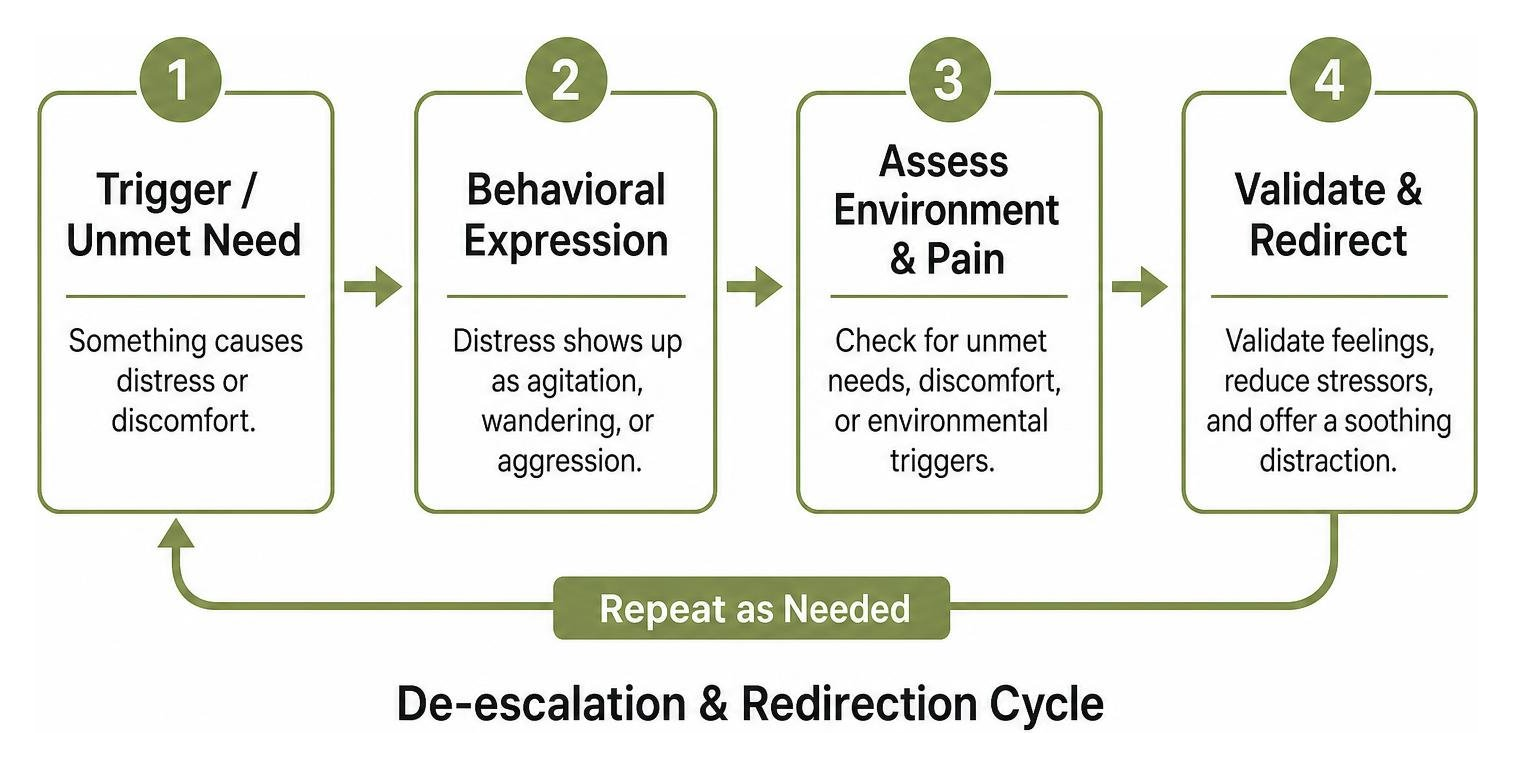
Behavioral expressions are forms of unmet communication. When a person cannot express that they are cold, in pain, or overstimulated, it often manifests as distress.
Understanding what stage aggression occurs in dementia helps caregivers recognize that combative reactions usually peak during the middle stage due to frustration or sensory overload, rather than intentional hostility. De-escalate situations by stepping back, maintaining a quiet tone, removing environmental stressors, and offering a soothing distraction like a warm drink or a soft blanket.
For sundowning—a state of confusion and agitation occurring in late afternoon and evening—open curtains during the day to support circadian rhythms, minimize caffeine after noon, and close blinds before sunset while turning on warm indoor lighting to eliminate shadows.
Home Safety and Wandering Prevention Systems
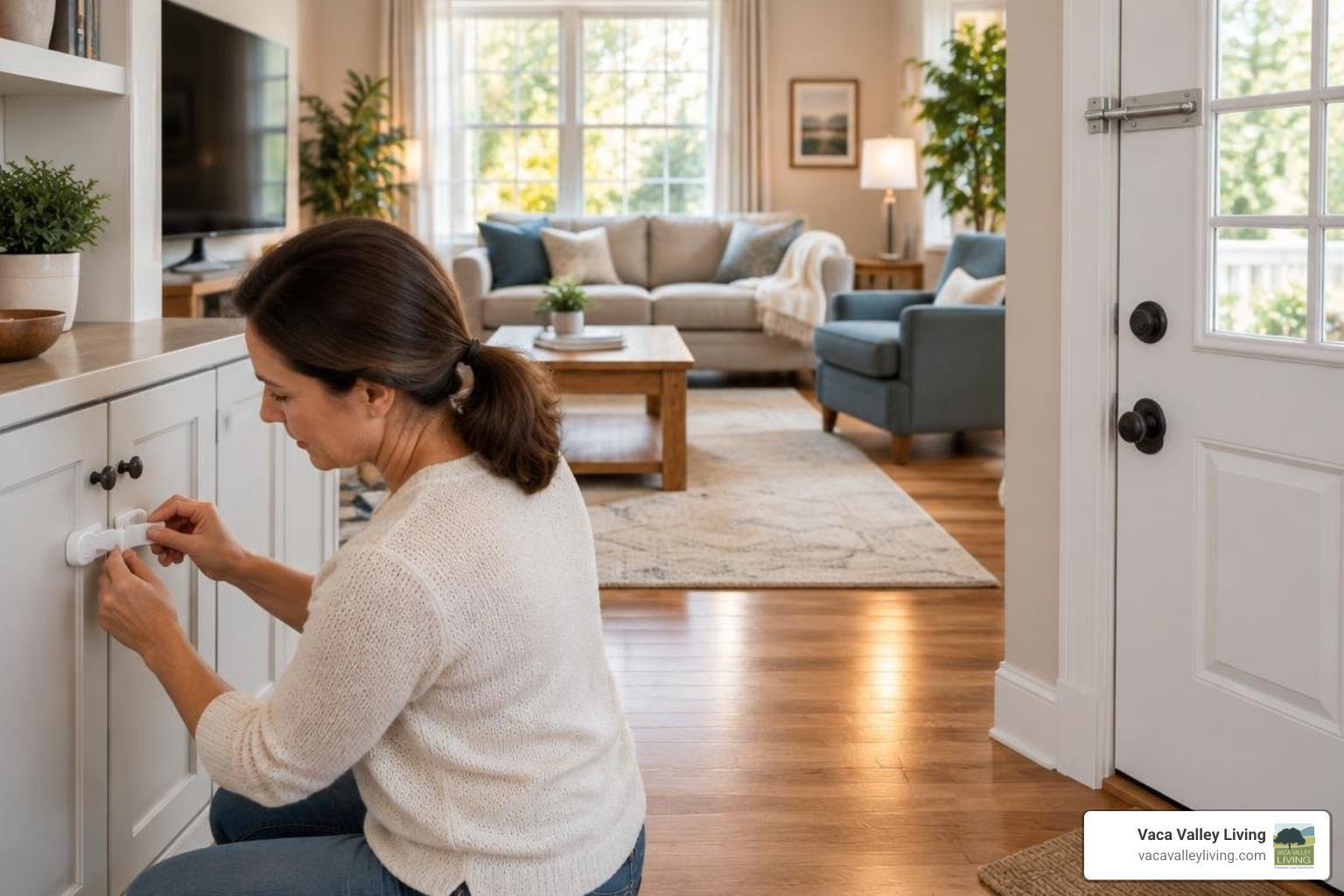
Six in ten people with dementia will wander at some point. Ensuring a secure home environment reduces injury risks:
- Secure Access Points: Install slide bolts or discrete childproof locks at the top or bottom of exterior doors outside the direct line of sight.
- Digital Monitoring: Utilize smart door sensors, chime alerts, and wearable GPS tracking devices through programs like Project Lifesaver or MedicAlert®.
- Hazard Mitigation: Remove trip hazards, secure loose rugs, lock away cleaning chemicals, medications, and sharp cutlery, and install safety shut-offs on stoves.
- Companion Cards: Carry small cards to hand discreetly to restaurant staff or store clerks that read: "My companion has dementia. Thank you for your patience."
When home modifications are no longer sufficient to prevent wandering or falls, transitioning to a secure memory care unit provides specialized architectural layouts designed specifically to promote safe movement and minimize disorientation.
Community Resources and Professional Dementia Support Services
You do not have to walk this path alone. A wide range of state, federal, and community programs exist to support family caregivers.
Connecting with your local Area Agency on Aging (AAA) via the federal Eldercare Locator connects you to meal delivery, transportation assistance, and local care coordinators. You can also explore centralized federal resources for caregivers to access government publications and care planning tools.
For military families, the VA Caregiver Support Program offers specialized training, peer coaching, and monthly stipends through programs like the Program of Comprehensive Assistance for Family Caregivers (PCAFC). Finding comprehensive dementia support services in your area ensures your family has access to professional case management, specialized equipment, and direct caregiver relief.
Navigating Local Caregiver Relief and Support
Caregiver fatigue is real, and taking planned breaks is essential to prevent chronic illness. Structured respite options include:
- Family and Volunteer Respite: Rotating responsibilities among trusted family members, friends, or volunteer caregiver programs to secure scheduled breaks.
- Community Day Programs: Local day centers offering supervised therapeutic activities, music programs, and social interaction, giving you time to recharge.
- Scheduled Personal Time: Setting aside consistent blocks of time, supported by trusted family or community volunteers, so you can rest, run errands, or simply recharge.
Finding Local and Online Dementia Support for Caregivers
Connecting with peers who understand your daily reality is one of the most effective ways to reduce isolation. Non-profit organizations such as the Alzheimer's Association provide specialized Alzheimer's and dementia caregiver support networks that include telephone helplines, localized support groups, and online message boards.
Furthermore, the National Institute on Aging's ADEAR Center (Alzheimer’s and Related Dementias Education and Referral Center) offers direct access to information specialists who can answer questions about clinical trials, treatments, and local resources.
When to Transition to Dedicated Memory Care
While many families strive to care for their loved ones at home indefinitely, the progression of dementia can reach a point where professional care becomes the safest, most loving choice. Consider residential memory care if:
- Wandering behaviors pose an immediate danger despite home security modifications.
- The physical demands of lifting, bathing, and incontinence care cause you injury.
- Your loved one requires constant 24-hour supervision and wakeful night monitoring.
- Caregiver burnout has severely degraded your physical or mental health.
Dedicated Alzheimer's care facilities offer secured environments staffed around the clock by trained professionals who understand dementia behaviors, providing engaging activities and customized personal care.
Protecting Caregiver Health and Well-Being
Caregiver burden is a documented medical concern. Studies consistently show that family members caring for individuals with dementia face higher rates of depression, anxiety, hypertension, and immune system compromise compared to their peers.
Guilt often prevents caregivers from seeking help, but running yourself to physical exhaustion compromises your ability to provide safe care. Setting boundaries, learning to say "no" to non-essential tasks, and speaking with a licensed mental health counselor can help you process the ambiguous grief associated with watching a parent change.
Essential Self-Care Routines in Dementia Support for Caregivers
Self-care does not require elaborate retreats; it requires consistent, non-negotiable micro-habits:
- Schedule Daily Respite Pockets: Set aside 20 to 30 minutes daily where you disconnect from caregiving duties. Read, walk outside, or practice breathwork.
- Prioritize Preventative Healthcare: Do not skip your own dental checkups, mammograms, or annual physician visits.
- Maintain Social Ties: Keep in touch with at least one friend or family member outside the caregiving circle to ground your personal identity.
- Accept Help When Offered: Keep a written list of small tasks (e.g., picking up groceries, mowing the lawn, staying with your loved one for an hour) so when someone asks, "How can I help?", you can give them a specific item immediately.
Frequently Asked Questions About Dementia Support for Caregivers
What are the best emergency helplines for immediate caregiver support?
For immediate, confidential crisis support, you can call the Alzheimer's Association helpline at 1-800-272-3900. It operates 24 hours a day, 365 days a year, with translation services available in more than 200 languages. Master's-level clinicians provide crisis intervention, practical advice for sudden behavioral challenges, and local resource referrals. The Alzheimer's Foundation of America (AFA) also offers a national toll-free helpline (1-866-232-8484) staffed by licensed social workers seven days a week.
How can family caregivers cope with daily caregiver burnout?
Coping with burnout requires actively reducing your care load. Start by joining a peer support group to talk through emotional stressors with people facing identical hurdles. Incorporate regular respite care—utilizing community day programs or scheduling short-term residential respite stays—so you can rest. If feelings of overwhelm persist, work with a therapist specializing in caregiver stress to develop boundary-setting strategies and release feelings of caregiving guilt.
What financial assistance is available to family members caring for someone with dementia?
Financial resources vary based on income, location, and military service:
- Medicaid Home and Community-Based Services (HCBS) Waivers: These state programs help cover adult day care, caregiver training, and respite care services to support families.
- Veterans Benefits: Eligible veterans and their surviving spouses can access the VA Aid and Attendance benefit or the Caregiver Support Program (PCAFC), which provides monthly stipends and health insurance support to eligible family caregivers.
- State Respite Grants: Many state health departments offer annual mini-grants to help families pay for temporary respite care.
- Tax Credits: Consult a CPA regarding the Child and Dependent Care Credit or claiming your loved one as a qualifying dependent to offset medical expenses.
Conclusion
Caring for someone with dementia is an act of deep dedication, but it should never be an isolating journey. By building a reliable network of medical advisors, community programs, legal safeguards, and personal self-care routines, you create a sustainable environment that protects both your loved one's dignity and your own health.
At Vaca Valley Living, we bring more than 50 years of family-owned experience to senior care in Vacaville, CA. We understand that as memory loss advances, family caregiving dynamics change. Our warm, home-like community offers 24-hour professional staffing, personalized care plans, and specialized amenities—including on-site styling salons, chef-prepared dining, and coordinated transportation. Whenever you are ready to explore your options, our team is here to provide guidance and welcome you to our personalized memory care community resources.