Understanding the Core Differences Between Assisted Living and Memory Care
Standard assisted living and memory care both provide residential housing, hospitality, and assistance with activities of daily living (ADLs), such as dressing, bathing, and medication administration. However, the foundational design, staffing philosophy, and care models differ substantially. Assisted living is built for older adults who maintain general cognitive awareness but require custodial physical support. Residents are expected to navigate their surroundings independently, manage a calendar of unstructured social events, and advocate for themselves when they need assistance.
When progressive cognitive decline enters the picture, traditional assisted living settings often fall short. A person living with progressive memory impairment experiences subtle to severe changes in spatial awareness, executive functioning, short-term memory, and emotional regulation. In standard assisted living, emergency pull cords or open exit doors are standard. For a senior with cognitive impairment, an emergency cord might be forgotten entirely, while an unlocked door presents an immediate wandering risk.
Specialized memory care steps into that gap. It is a distinct, dedicated service model engineered specifically around the neuropsychological realities of Alzheimer’s disease and other forms of dementia. Staff members do not simply respond to calls for help; they practice proactive, continuous intervention. They anticipate needs before frustration or distress boils over, guide residents through multi-step daily activities using specialized communication techniques, and maintain an environment that minimizes confusion. As highlighted in clinical insights on memory care living options, memory care combines clinical oversight with intentional behavioral and environmental safeguards to preserve dignity and comfort.
| Feature | Standard Assisted Living | Specialized Memory Care |
|---|---|---|
| Primary Focus | Physical assistance, hospitality, socialization | Cognitive support, behavioral management, safety |
| Physical Security | Open access, standard entryways | Keypad security, delayed-egress doors, secure courtyards |
| Caregiver Training | General personal care, basic first aid | Dementia-specific communication, de-escalation, redirection |
| Staff-to-Resident Ratio | Lower ratio (e.g., 1:12 to 1:15) | Higher ratio (e.g., 1:5 to 1:8) for hands-on oversight |
| Activity Programming | Broad social gatherings, independent outings | Structured, sensory-based, failure-free cognitive therapies |
| Environmental Design | Standard apartment style, open floor plans | Wayfinding visual cues, color coding, circular walking paths |
| Wandering Management | Minimal to none (not designed for elopement) | Integrated wandering management systems and tracking alerts |
The Role of Early Stage Dementia Care in Decision Making
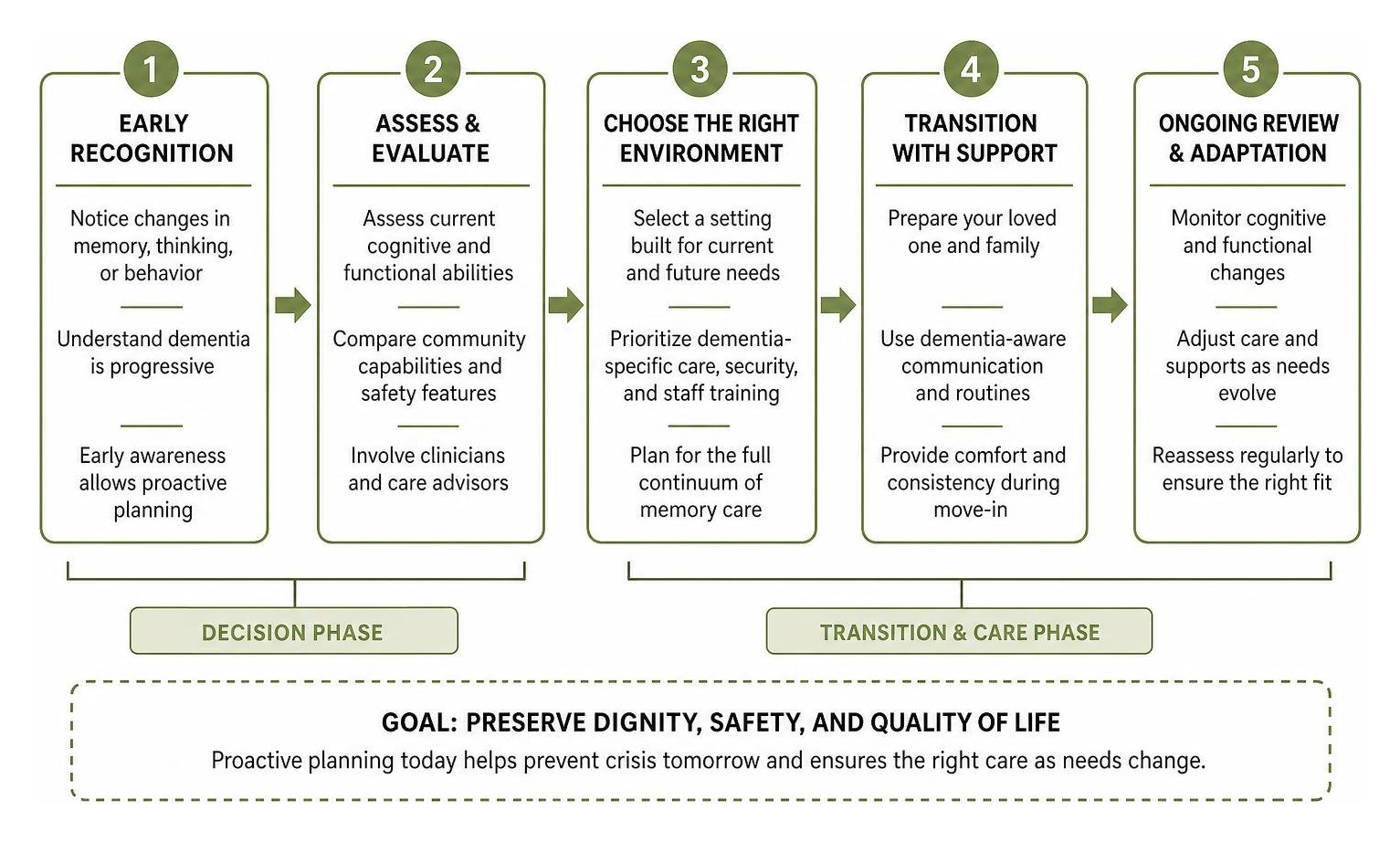
Recognizing cognitive decline early allows families to plan proactively rather than reacting to a medical emergency or safety crisis. In the initial phases of mild cognitive impairment or early-stage Alzheimer's, a senior might manage daily routines with light prompting. They might still participate comfortably in general social events or engage in structured adult day programs.
However, cognitive decline is progressive. As executive functioning shifts, standard environments quickly become disorienting. Proactive planning helps families evaluate how a community handles advancing symptoms. While about 80% of assisted living communities offer some level of memory support services, choosing an environment equipped for the full continuum of memory care ensures that as needs change, your loved one does not face the emotional trauma of multiple abrupt relocations.
Key Distinctions in Memory Care for Seniors with Dementia vs. Assisted Living
Memory care communities are engineered from the ground up to eliminate sensory overload and prevent the frustration that comes from navigating a world that no longer makes sense. While assisted living prioritizes independent apartment-style living, memory care prioritizes an environment of failure-free living backed by 24-hour specialized supervision.
When individuals with dementia find themselves in open, complex settings, they can become overwhelmed by visual and auditory overstimulation. In response, memory care neighborhoods utilize smaller communal living footprints, serene lighting, and specialized spatial layouts. If a resident begins pacing or searching for a familiar face, trained caregivers recognize this not as a problem behavior, but as an unmet emotional or physical need, stepping in with calm reassurance and gentle redirection.
Environmental Safety in a Secure Memory Care Unit
Safety in memory care goes far beyond locking the front door. Research indicates that 88% of dedicated memory care communities are secure environments, with 41% featuring integrated wandering management systems designed to support residents who exhibit pacing or exit-seeking tendencies.
Key architectural and environmental adaptations include:
- Obscured Exits and Keypad Access: Doors leading outside are often discreetly camouflaged or equipped with delayed-egress systems to prevent elopement without causing agitation.
- Continuous, Circular Walking Paths: Pacing is a frequent expression of dementia-related restlessness. Circular interior corridors and enclosed courtyards allow seniors to walk freely and safely without encountering dead ends that cause anxiety.
- Wayfinding and Visual Cues: Memory care communities frequently implement color-coded walls, contrasting floor trims, and easily recognizable pictorial signage to help residents find their bedrooms and dining areas independently.
- Personalized Memory Boxes: Mounted outside each resident’s door, these shadow boxes display treasured family photos, vintage keepsakes, or personal mementos that act as visual landmarks for room identification.
- Secure Enclosed Courtyards: Roughly 78% of dedicated memory care residences feature secure, enclosed sensory gardens. These allow seniors to enjoy fresh air, sunshine, and gardening therapy safely without risk of disorientation.
Specialized Dementia Staff Training and Behavioral Management
The quality of daily life in memory care depends heavily on caregiver expertise. Approximately 79% of partner memory care communities provide extensive, specialized dementia training to their teams. This training transforms the caregiving dynamic from task-oriented assistance to relationship-centered behavioral support.
Memory care staff are trained to decode non-verbal expressions, identify triggers for distress, and implement gentle de-escalation strategies. For example, late-afternoon restlessness—commonly known as sundowning—is met with therapeutic lighting adjustments, quiet music, and low-stimulation tactile activities rather than increased physical restrictions. Furthermore, when understanding what stage is aggression in dementia, families learn that agitation often peaks during middle to late stages due to sensory overload, fear, or communication deficits. Specially trained caregivers know how to enter the resident’s reality, validating their emotions instead of arguing, which calms difficult situations before they escalate.
Therapeutic Daily Programming and Cognitive Engagement
While assisted living calendars often feature trivia nights, card games, and independent excursions, memory care daily programming focuses on therapeutic engagement tailored to varying cognitive levels. Daily routines are consistent and predictable, creating a comforting sense of rhythm that reduces anxiety.
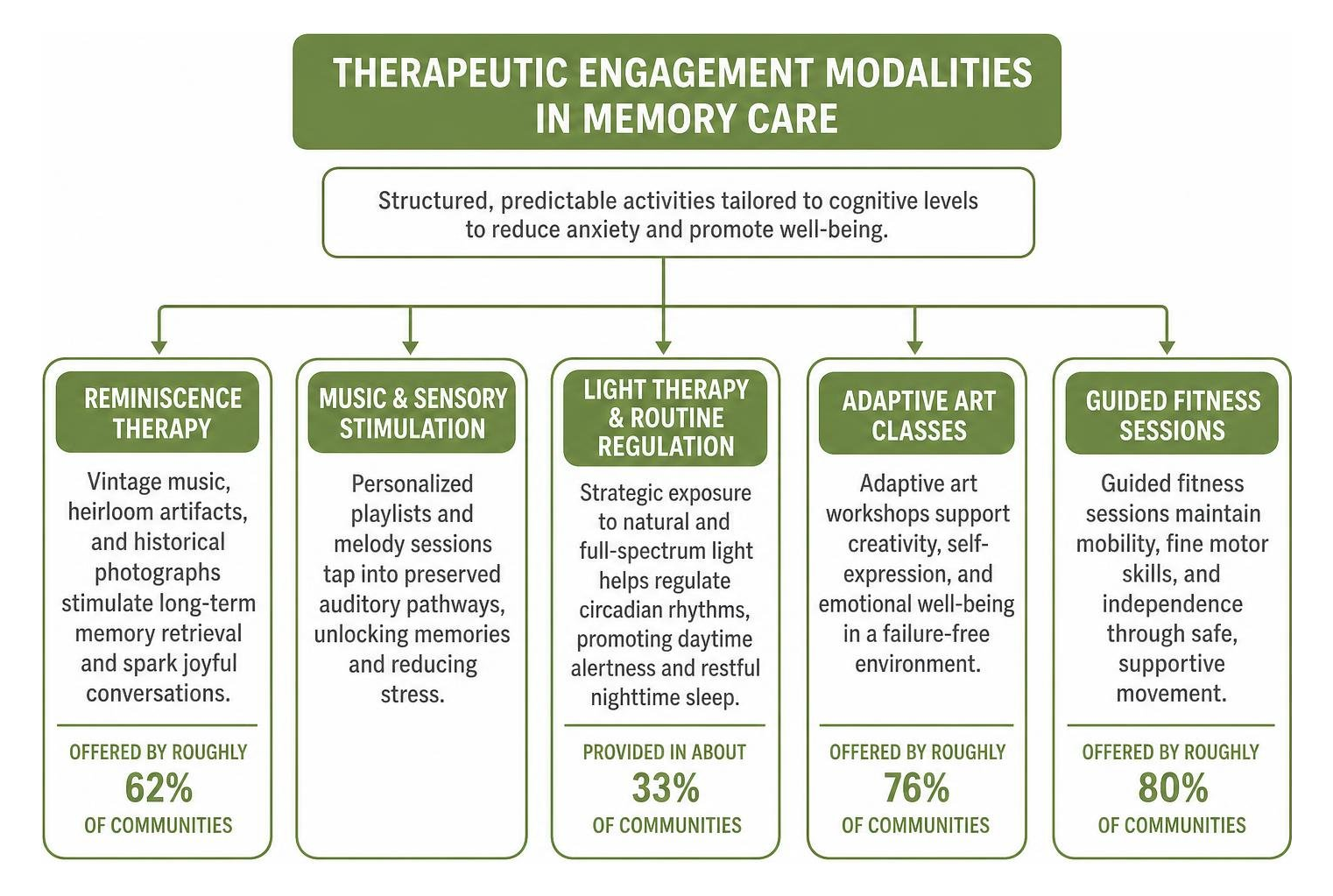
These structured activities include:
- Reminiscence Therapy: Utilizing vintage music, heirloom artifacts, and historical photographs to stimulate long-term memory retrieval and spark joyful conversations (offered by roughly 62% of specialized communities).
- Music and Sensory Stimulation: Personalized playlists and melody sessions tap into preserved auditory pathways. A well-timed music session can be more calming than a cup of tea, unlocking memories and reducing stress.
- Light Therapy and Routine Regulation: Strategic exposure to natural and full-spectrum light (provided in about 33% of communities) helps regulate circadian rhythms, promoting daytime alertness and restful nighttime sleep.
- Adaptive Art and Fitness Classes: Around 76% of communities host adapted art workshops and 80% offer guided fitness sessions designed to maintain fine motor skills, mobility, and self-expression in a failure-free format.
Signs It Is Time to Transition from Home or Assisted Living
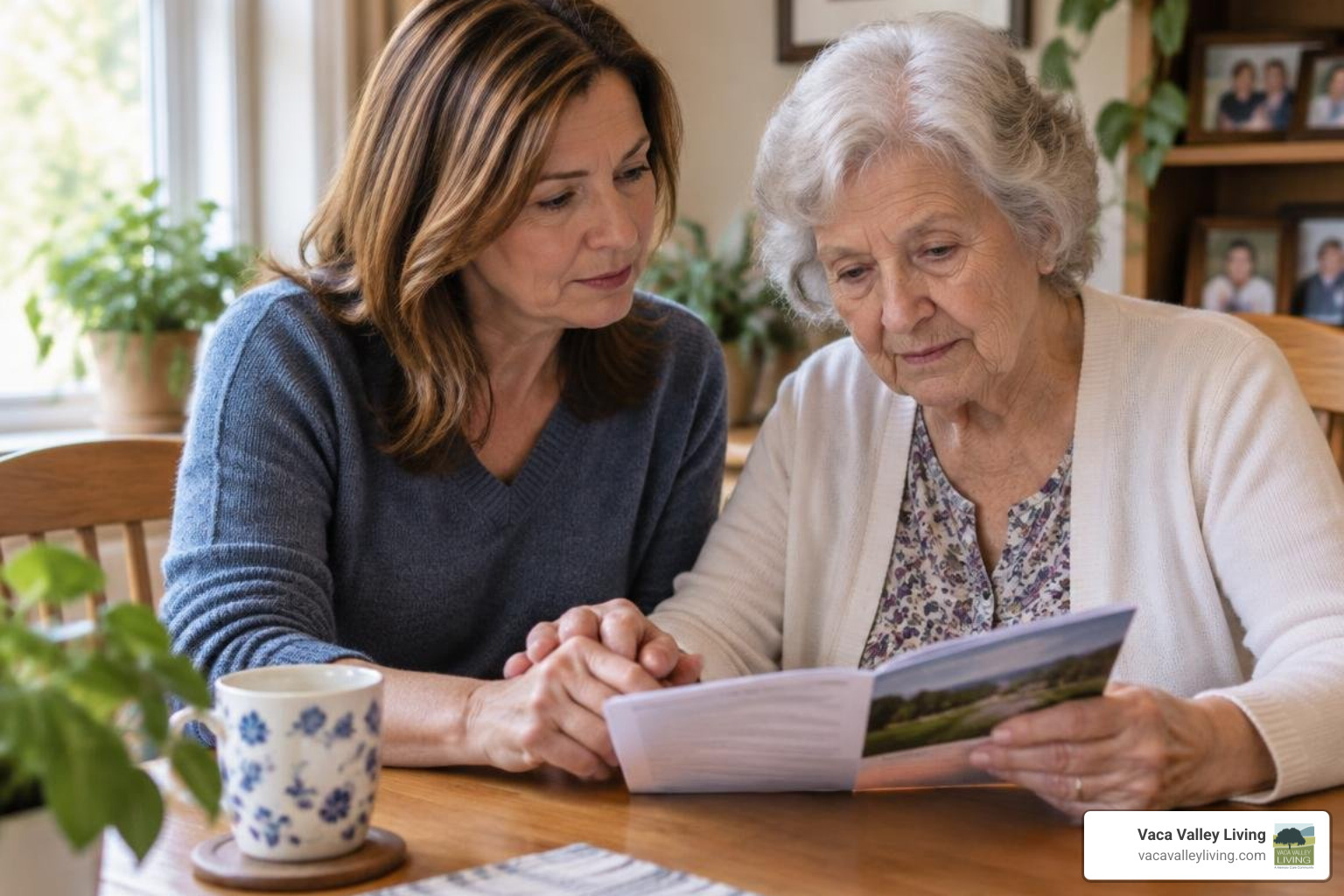
Determining when to transition a loved one from their private home or a standard assisted living apartment into specialized memory care is one of the most challenging decisions a family faces. Often, families attempt to manage caregiving at home for years until physical exhaustion, medical complexities, or behavioral changes make the situation unsustainable. Utilizing local dementia support services can help assess whether care needs have surpassed what home care or basic assistance can manage.
Common indicators that it is time to evaluate dedicated memory care include:
- Wandering and Safety Incidents: The individual has gotten lost in a familiar neighborhood, attempted to leave the house at unusual hours, or left cooking appliances unattended.
- Changes in Personal Hygiene and ADLs: Significant unmanaged weight loss, wearing unwashed clothes repeatedly, or refusing assistance with bathing and grooming.
- Medication Mishaps: Forgetting daily doses, taking duplicate medications, or hiding prescriptions due to paranoia.
- Severe Caregiver Fatigue: Family caregivers experiencing chronic sleep deprivation, isolation, declining physical health, or intense emotional distress.
- Social Withdrawal and Depression: The senior is retreating into isolation because standard community settings feel overwhelming or confusing.
When to Choose Specialized Memory Care for Seniors with Dementia
When safety risks escalate and personal care needs demand constant oversight, exploring dedicated Alzheimer's care facilities becomes necessary. Memory care is appropriate when a senior no longer thrives in an independent or semi-independent environment and requires a structured setting where every caregiver understands the nuances of cognitive decline.
In these environments, 24-hour supervision ensures that residents receive help with personal care, dining, and hydration throughout the day. Nutritious meals are served in calm, intimate dining rooms with adaptive utensils and finger-food options if needed. Medical oversight is integrated directly into daily life, with nurses and wellness directors monitoring subtle health shifts that someone with dementia might not be able to verbalize.
Evaluating the Costs of Memory Care for Seniors with Dementia
Understanding the financial landscape of senior care helps families plan their long-term budget without unexpected surprises. Nationally, the median cost for standard assisted living sits around $5,419 per month, whereas dedicated memory care averages approximately $6,690 to $8,399 per month, depending on location, apartment style, and required level of care. Private rooms in specialized skilled nursing memory units can reach between $104,025 and $116,800 annually.
The higher cost of memory care reflects its specialized infrastructure: secure building designs, significantly higher staff-to-resident ratios, comprehensive dementia training programs, and specialized therapeutic amenities.
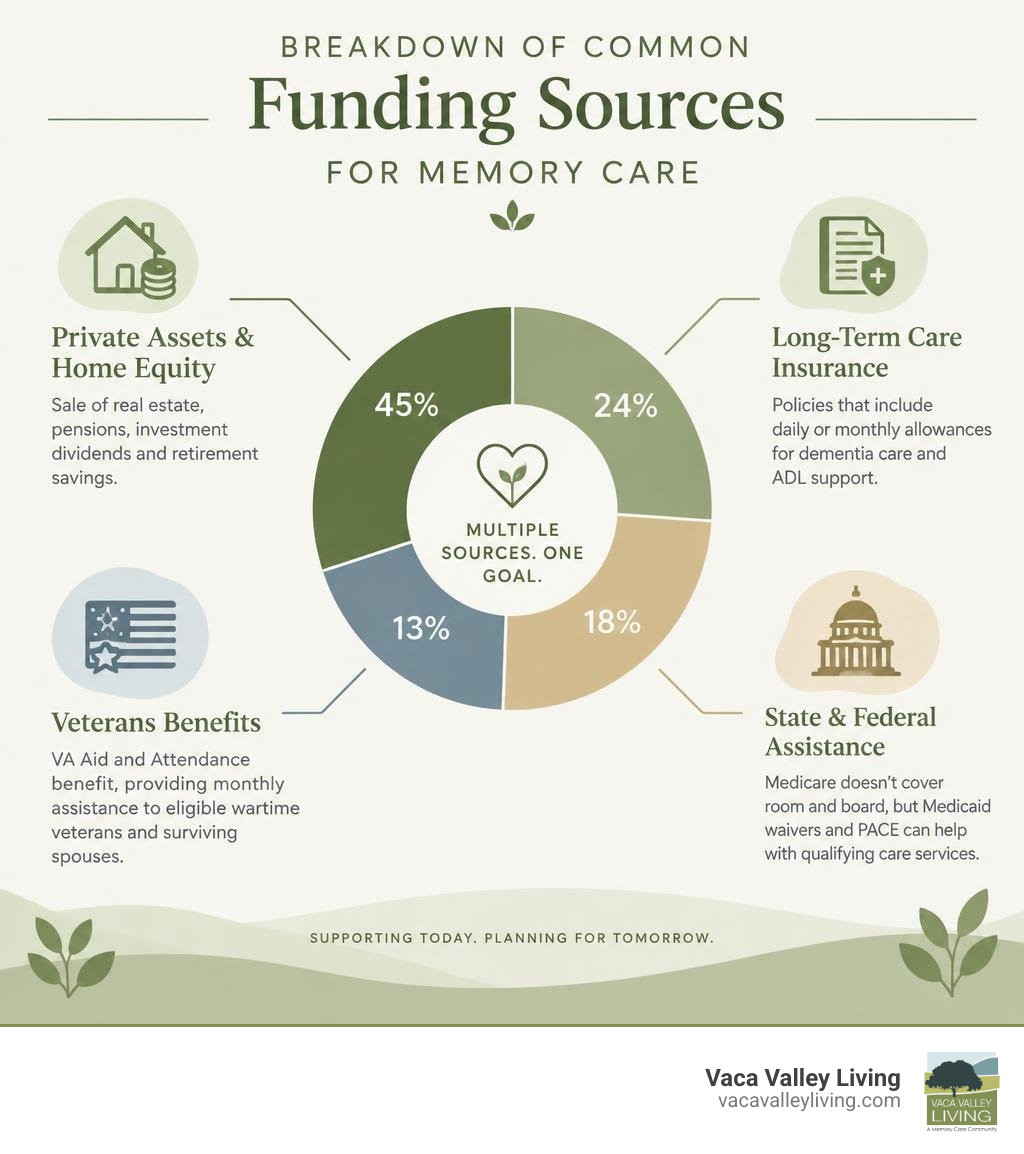
Families typically fund memory care through a combination of sources:
- Private Assets and Home Equity: Sale of personal real estate, pensions, investment dividends, and retirement savings.
- Long-Term Care Insurance: Policies that include daily or monthly allowances for dementia care and ADL support.
- Veterans Benefits: Programs such as the VA Aid and Attendance benefit, which provides monthly financial assistance to eligible wartime veterans and surviving spouses.
- State and Federal Assistance: While Medicare does not cover residential custodial room and board, programs such as Medicaid waivers or PACE (Programs of All-Inclusive Care for the Elderly) can assist eligible seniors with qualifying medical and daily care services.
Frequently Asked Questions About Memory Care
What makes memory care different from other clinical care settings?
Memory care bridges the gap between assisted living and skilled nursing facilities. While nursing homes focus primarily on continuous clinical and medical nursing needs (only about 15% have dedicated dementia units), memory care focuses specifically on cognitive support, behavioral guidance, and environmental safety within a warm, residential setting. The architectural layout, social programs, and caregiver training in memory care are entirely tailored around memory impairment.
How do memory care communities prevent wandering and exit-seeking?
Communities utilize a multi-layered security approach. This includes keypad-secured entryways, delayed-egress emergency doors, unobtrusive wander-management tracking bracelets, and continuous circular indoor and outdoor walkways. More importantly, staff are trained to recognize early restlessness, engaging residents in calming activities before exit-seeking behavior occurs.
Does Medicare cover residential memory care costs?
No. Traditional Medicare does not cover the room, board, or custodial daily living assistance provided by memory care communities. However, Medicare continues to cover eligible medical expenses incurred while living in a community, including physician visits, physical and occupational therapy, diagnostic testing, hospital care, and hospice services.
Conclusion
Choosing the right living environment for a loved one with Alzheimer’s or dementia is about more than just finding assistance with daily chores—it is about restoring peace of mind, physical safety, and joyful engagement. While standard assisted living serves many older adults well, specialized memory care provides the tailored security, clinical empathy, and therapeutic routines necessary for seniors navigating progressive cognitive loss.
At Vaca Valley Living in Vacaville, CA, our family-owned community brings over 50 years of dedicated senior care experience to every resident we serve. We provide 24-hour specialized staffing, individualized care plans, full-service amenities including an on-site salon and scheduled transportation, and a warm, home-like environment where residents are truly known and cherished. When you are ready to explore how dedicated support can transform your family's journey, discover personalized memory care options today by scheduling a tour with our compassionate team.