Cost of Memory Care vs Assisted Living: What to Budget

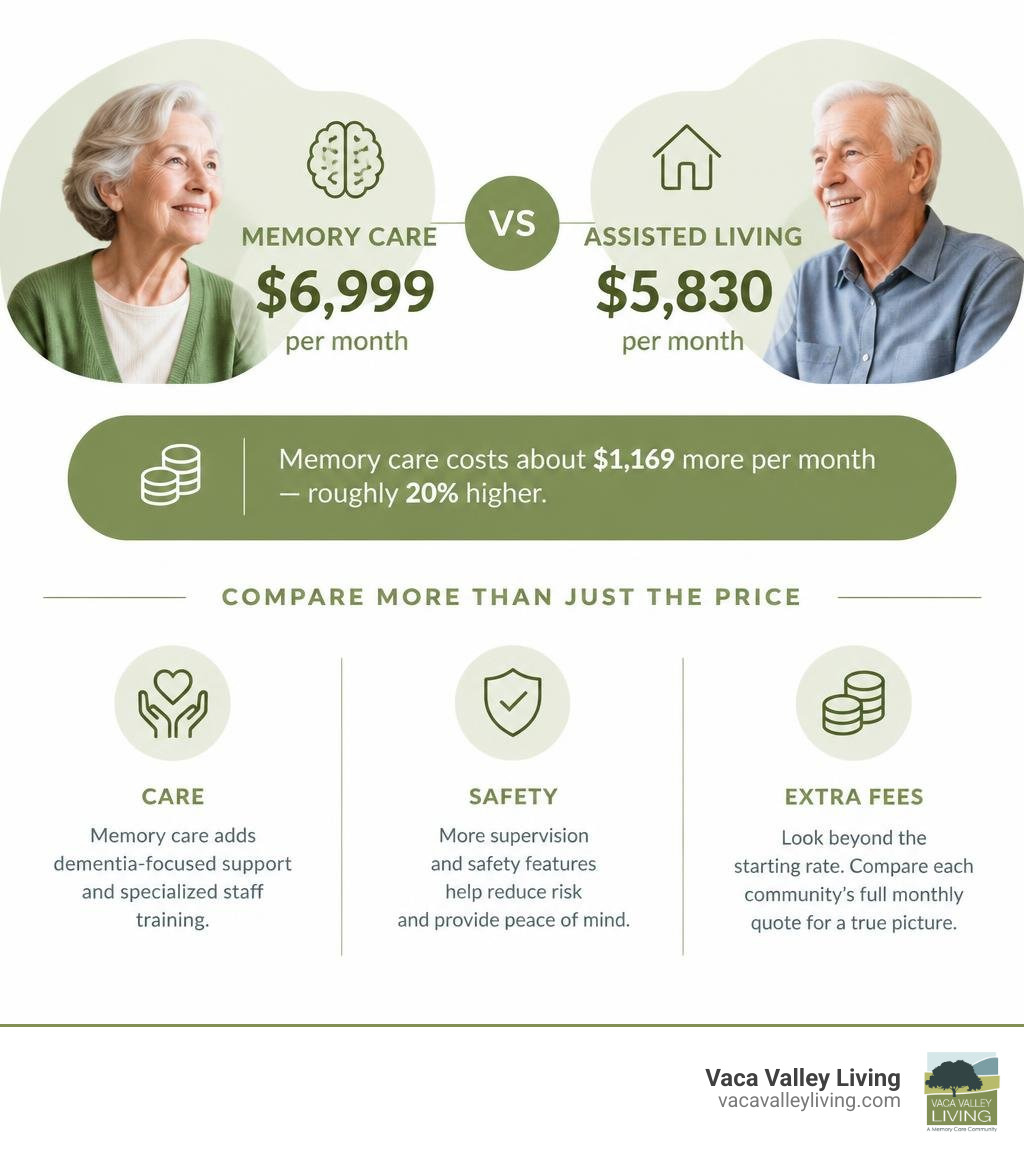
The cost of memory care vs assisted living is about $6,999 versus $5,830 per month in published national estimates. That puts memory care roughly $1,169 more per month, or 20% higher.
The difference pays for more than a room. Memory care adds dementia-focused support, closer supervision, and safety features. If your parent may need help staying safe, compare each community’s full monthly quote, not just its starting rate.
National Average Cost of Memory Care vs Assisted Living
When families begin researching senior living, sticker shock is often the very first hurdle. Standard assisted living provides housing, daily meals, social activities, and personal care support with activities of daily living (ADLs) such as dressing and bathing. By contrast, memory care is a specialized residential environment designed specifically for individuals navigating Alzheimer’s disease, vascular dementia, Lewy body dementia, and other cognitive conditions.
Because of the enhanced infrastructure, clinical oversight, and specialized staff training required, memory care carries a distinct premium. A comprehensive senior living cost study by WTOP News highlights how monthly costs escalate as clinical acuity increases across various senior housing models.
| Care Type | National Median Monthly Cost | National Median Annual Cost | Primary Focus |
|---|---|---|---|
| Independent Living | $3,520 – $4,335 | $42,240 – $52,020 | Maintenance-free lifestyle & socialization |
| Assisted Living | $5,830 – $6,200 | $69,960 – $74,400 | Daily personal assistance & routine medication support |
| Memory Care | $6,988 – $7,645 | $83,856 – $91,740 | 24/7 dementia supervision, security & cognitive therapy |
| Nursing Home (Semi-Private) | $8,929 – $9,581 | $107,148 – $114,972 | 24/7 skilled clinical nursing & complex medical care |
| Nursing Home (Private) | $10,025 – $10,798 | $120,300 – $129,576 | Intensive, continuous clinical bedside care |
Understanding the 2026 Monthly Averages and Base Inclusions
The base monthly rate at a senior community covers the essentials of daily living. In a typical assisted living community, the base fee includes a private or semi-private apartment, three nutritious meals per day, weekly housekeeping, linen laundering, scheduled transportation, emergency call systems, and basic social activities.
In purpose-built residential memory care, that base fee expands considerably. It incorporates continuous 24-hour awake staffing, specialized cueing, structured behavioral redirection, medication administration, and sensory dining programs tailored for residents who might otherwise forget to eat or drink. At our family-owned community, Vaca Valley Living in Vacaville, CA, we draw on over 50 years of experience to ensure every individual’s daily routine feels safe, familiar, and unhurried.
State-by-State Pricing Variations and Regional Trends
Geography plays a major role in your final monthly invoice. Real estate expenses, local labor regulations, and regional wage standards cause broad swings across the United States. According to an extensive pricing variations guide, memory care costs can range from roughly $4,000 per month in lower-cost Southern regions to well over $11,000 per month in high-cost Northeast corridors and select West Coast areas.
Across virtually every state, memory care runs roughly 20% to 30% higher than local assisted living rates. In high-demand parts of Northern California—including Solano, Napa, Yolo, Sacramento, and Contra Costa counties—higher operational and staffing costs push rates above rural figures, making it vital for local families to evaluate exact pricing inclusions before signing a lease.
Why Memory Care Costs More Than Standard Assisted Living
Families often ask us why the price jump between these two care settings is so significant. The explanation comes down to operational overhead and specialized human resources. Senior Housing News economics report outlines how rising caregiver wages, specialized compliance standards, and increasing resident acuity naturally drive up the cost of delivering high-quality memory care.
Understanding what makes a memory care facility unique helps clarify where every dollar goes: into hands-on supervision, safety infrastructure, and dedicated cognitive programming.
Evaluating Staff-to-Resident Ratios and Specialized Dementia Training
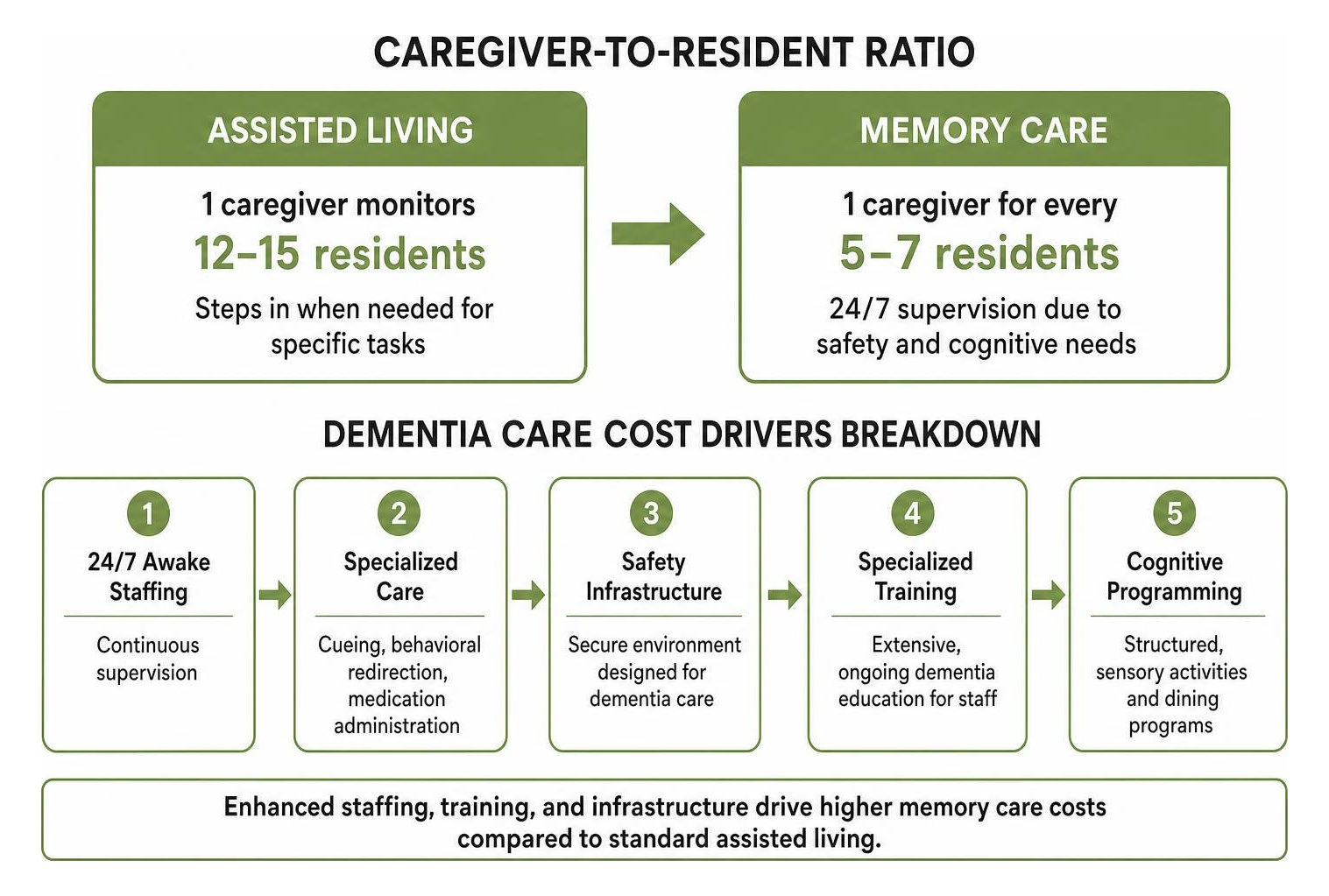
In a traditional assisted living setting, a single caregiver might monitor 12 to 15 residents during the day, stepping in only when summoned for specific tasks like dressing or escorting someone to dinner. Memory care flips this model entirely. Because residents may not recognize their own physical needs or safety risks, caregiver-to-resident ratios are much lower—often 1 caregiver for every 5 to 7 residents.
Furthermore, memory care teams undergo extensive, ongoing dementia education. Staff members are trained in:
- De-escalating anxiety, agitation, and sundowning symptoms without heavy pharmacological interventions.
- Communication techniques tailored for progressive cognitive decline (such as validation therapy and gentle redirecting).
- Creating and implementing personalized care plans that honor personal habits, life histories, and sensory triggers.
Maintaining higher staffing levels and lower staff turnover requires competitive compensation, which directly influences monthly rates.
Impact of Safety Features and Therapeutic Programming on the Cost of Memory Care vs Assisted Living
Physical building design is another major cost differentiator. Memory care environments are engineered from the ground up to prevent exit-seeking while preserving a sense of independence and dignity.

Key environmental and programming investments include:
- Secured Architecture: Purpose-built secure memory care units feature keypad-secured access, alarmed doors, and unobtrusive perimeter monitoring to keep residents safe.
- Wayfinding and Calming Design: Thoughtful memory care safety features such as color-coded wings, continuous walking loops, shadow boxes outside apartment doors, and low-stimulus lighting mitigate disorientation and fall risks.
- Cognitive and Sensory Therapies: Evidence-based memory care activities include structured music therapy, reminiscence programs, tactile sensory stimulation, and gentle group fitness designed to preserve motor function and lift moods.
Pricing Structures: All-Inclusive Fees vs Tiered Care Models
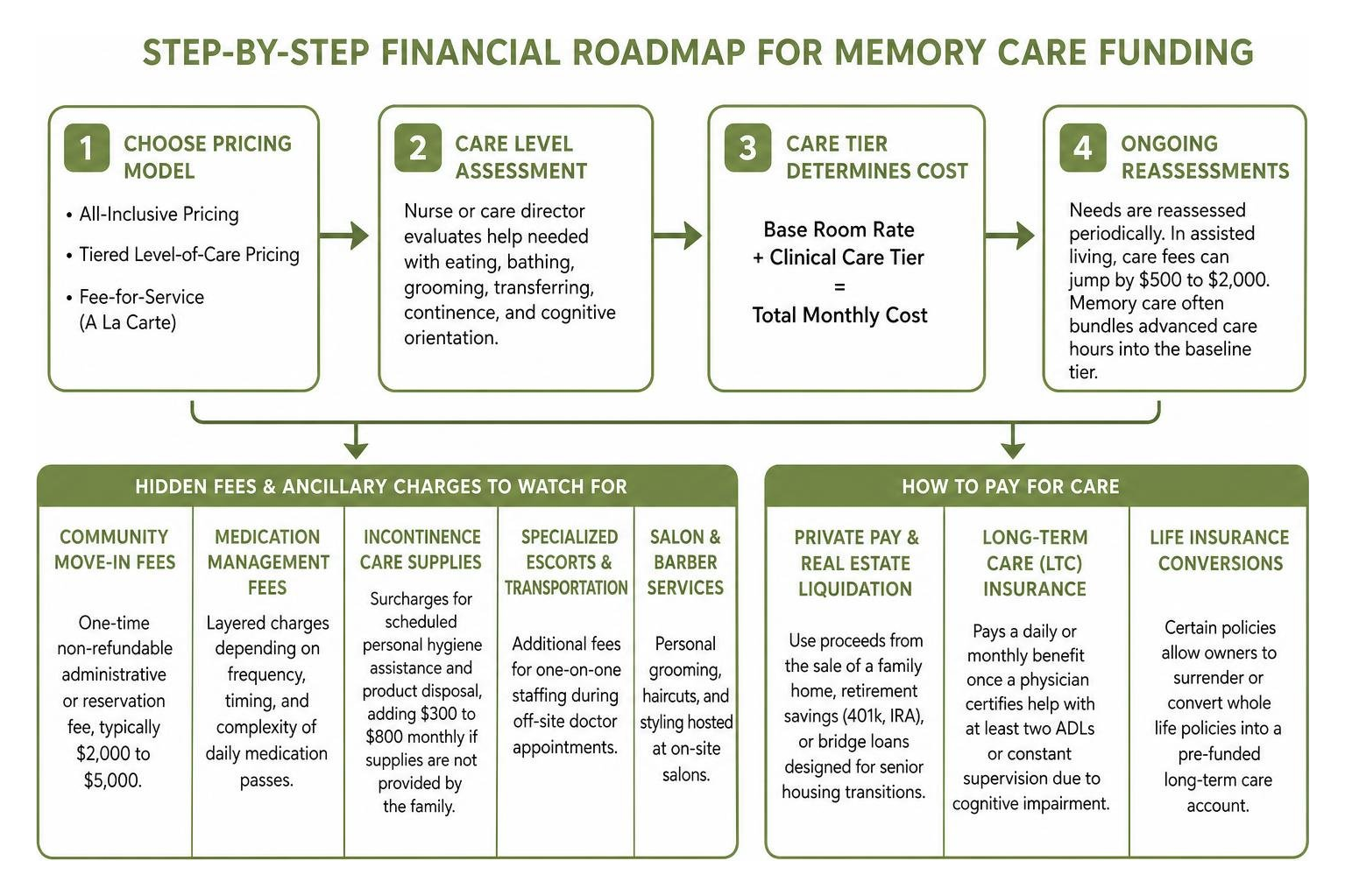
When evaluating communities, asking how you will be billed is just as important as asking what you will be billed. Senior living operators generally utilize one of three common billing models:
- All-Inclusive Pricing: One bundled monthly fee covers room, board, meals, and all levels of personal care. This offers predictable budgeting, though starting prices may seem higher initially.
- Tiered Level-of-Care Pricing: The community charges a base rent for the physical apartment, then assigns a care "tier" (e.g., Level 1 through Level 5) based on the number of care hours needed.
- Fee-for-Service (A La Carte): Residents pay a low base rent and are billed individually for specific services, such as $15 per shower assistance or $10 per medication pass.
Comparing the true dementia assisted living cost across these pricing models requires reading the fine print carefully.
How Care Level Assessments Drive the Overall Cost of Memory Care vs Assisted Living
Before move-in, a senior living community conducts a comprehensive health and functional assessment. A nurse or care director evaluates how much help the resident needs with eating, bathing, grooming, transferring, continence, and cognitive orientation.
In assisted living, a resident receiving early stage dementia care might start at Level 1. However, as memory loss progresses and more hands-on help is required, the community will periodically reassess their needs. These reassessments can cause monthly care fees to jump by $500 to $2,000 unexpectedly. In dedicated memory care settings, pricing structures often bundle advanced care hours into the baseline tier, protecting families from sudden billing spikes.
Hidden Fees and Ancillary Charges to Watch For
When you tour communities and review living space floor plans, always ask for a complete fee schedule. Common unexpected costs beyond standard monthly rent include:
- Community Move-In Fees: A one-time non-refundable administrative or reservation fee, typically ranging from $2,000 to $5,000.
- Medication Management Fees: Layered charges depending on the frequency, timing, and complexity of daily medication passes.
- Incontinence Care Supplies: Surcharges for scheduled personal hygiene assistance and product disposal, which can add $300 to $800 monthly if supplies are not provided by the family.
- Specialized Escorts & Transportation: Additional fees for one-on-one staffing during off-site doctor appointments.
- Salon & Barber Services: Personal grooming, haircuts, and styling hosted at on-site salons.
How to Pay for Care and Practical Cost Reduction Strategies
Paying for senior care is a significant financial commitment, but very few families fund it entirely through checking accounts alone. Combining multiple funding streams makes high-quality care sustainable over the long term.
Families can explore various paths for dementia care financial assistance to ease the monthly burden:
- Private Pay & Real Estate Liquidation: Using proceeds from the sale of a family home, retirement savings (401k, IRA), or bridge loans designed specifically for senior housing transitions.
- Long-Term Care (LTC) Insurance: Traditional policies typically pay out a daily or monthly benefit once a physician certifies that the policyholder requires help with at least two ADLs or needs constant supervision due to cognitive impairment.
- Life Insurance Conversions: Certain policies allow owners to surrender or convert whole life policies into a pre-funded long-term care account.
Long-Term Care Insurance, Veterans Benefits, and Medicaid Waivers
Specialized public programs offer essential relief for qualifying older adults:
- VA Aid and Attendance Benefit: Eligible wartime veterans and surviving spouses facing cognitive impairment can receive monthly, tax-free pension enhancements to help pay for assisted living or memory care.
- Medicaid Home and Community-Based Services (HCBS) Waivers: While standard Medicaid does not pay for room and board in private senior living, many states offer specific waiver programs that cover the medical and personal care portion of assisted living or memory care.
- Caregiver and Family Resources: Connecting with local dementia support resources often leads to local grants, respite vouchers, and non-profit funds that offset ancillary care costs.
- Tax Deductions: In many cases, the entire cost of memory care (both housing and medical care) qualifies as a tax-deductible medical expense if prescribed by a physician under an individualized plan of care.
Budgeting Tips: Shared Suites, Rate Locks, and Fee Negotiations
Finding high-quality, dignified memory care within your budget is entirely achievable with strategic planning. Consider these proven approaches to secure affordable retirement living options:
- Choose a Semi-Private Room or Companion Suite: Sharing a large room or two-bedroom suite with a compatible roommate can reduce base monthly rent by 20% to 35% without sacrificing access to the community's 24/7 care, dining, or amenities.
- Negotiate Move-In Concessions: Communities frequently offer move-in specials toward the end of a fiscal quarter or year. Ask whether they can waive the community fee, offer a discounted first month, or provide moving cost credits.
- Request a Rate Lock: To protect against typical annual cost-of-living increases (which historically range from 3% to 8%), ask if the community will guarantee a fixed base rate for the first 12 to 24 months.
Frequently Asked Questions About Memory Care and Assisted Living Costs
How much more does memory care cost compared to assisted living?
Nationally, memory care costs approximately 20% to 30% more than traditional assisted living. On average, this translates to an additional $1,000 to $1,800 per month, reflecting the lower staff-to-resident ratios, advanced dementia training, 24/7 awake supervision, and specialized safety systems.
Does Medicare or Medicaid pay for memory care or assisted living?
Medicare is a federal health insurance program that covers acute medical care, doctor visits, hospitalizations, and short-term rehabilitation (up to 100 days under strict clinical criteria). It does not pay for long-term residential room, board, or custodial care in assisted living or memory care. Medicaid may cover personal care services in select participating communities through state-specific HCBS waivers, but room and board remain private-pay.
When is it clinically necessary to transition from assisted living to memory care?
A transition is typically warranted when safety and cognitive needs exceed standard assisted living capabilities. Signs include frequent exit-seeking or wandering, nighttime disorientation, forgetting how to respond to fire alarms, escalating agitation or confusion that causes distress, or requiring constant one-on-one verbal cueing to eat and take medication.
Conclusion
Choosing between assisted living and memory care is both an emotional and financial milestone for any family. While standard assisted living offers vital help with daily routines, memory care provides an environment intentionally constructed to keep residents with progressive cognitive conditions safe, engaged, and supported.
At Vaca Valley Living in Vacaville, CA, our family-owned, 50+ year legacy is built on treating residents like our own family. We provide personalized care plans, 24-hour staffing, comfortable living accommodations, and welcoming on-site amenities—including a hair salon and scheduled transportation—in a cozy, home-like setting.
We invite you to discover personalized residential memory care options and schedule a visit to explore how we can support your loved one with exceptional, compassionate care.