Memory Care 101: How to Compare Residential Options
What Residential Memory Care Provides for a Loved One With Dementia
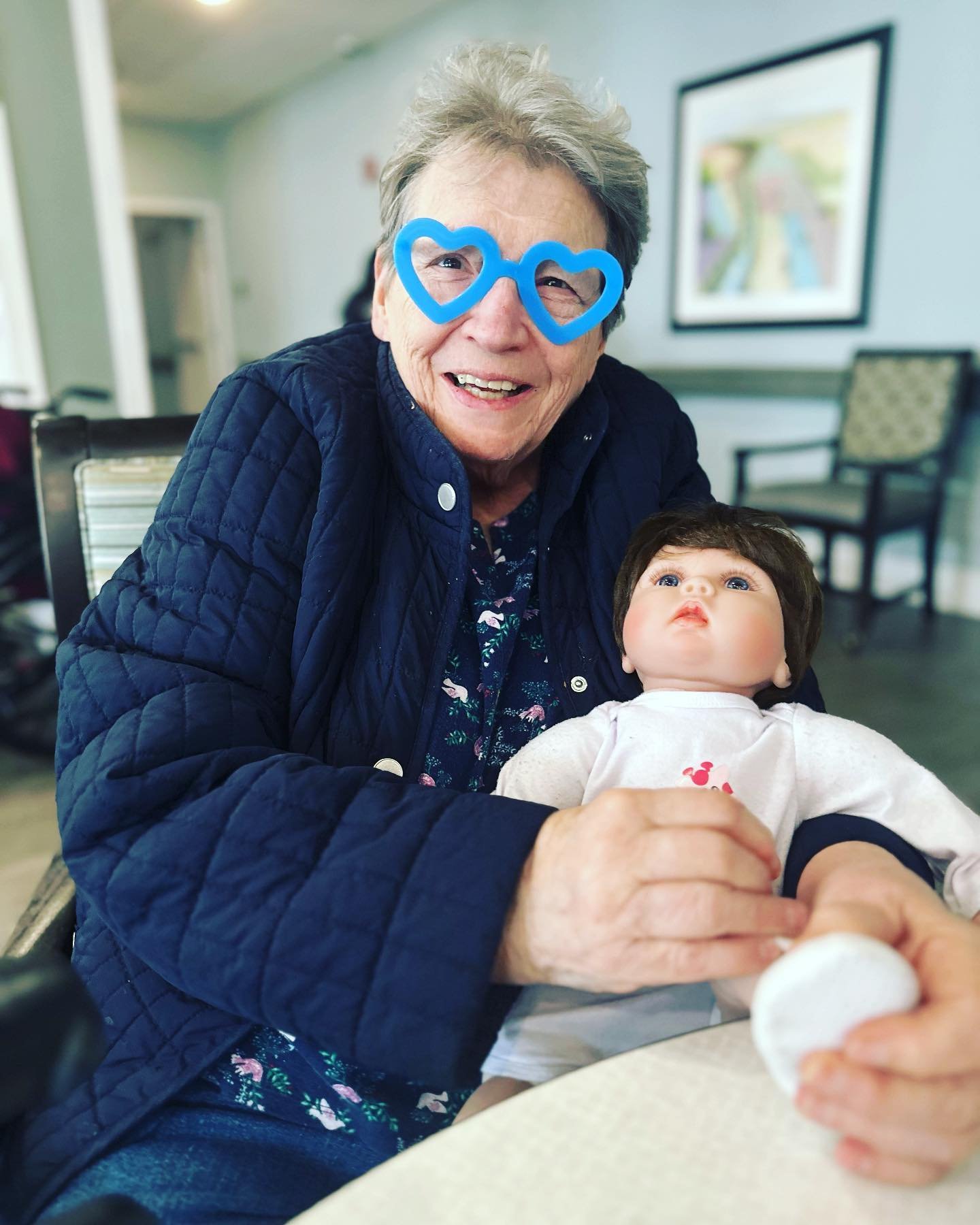
Residential memory care is a secure, staffed living setting for people with Alzheimer's disease or other forms of dementia who need daily support and ongoing supervision. It typically includes help with meals, medications, bathing, dressing, activities, and safety risks such as wandering.
For families comparing options, start with these three questions:
- Can the community safely support your loved one's current needs, including nighttime confusion or mobility changes?
- Do staff receive dementia-specific training and provide 24-hour coverage?
- Are the daily routine, rooms, meals, activities, and pricing clear before you sign?
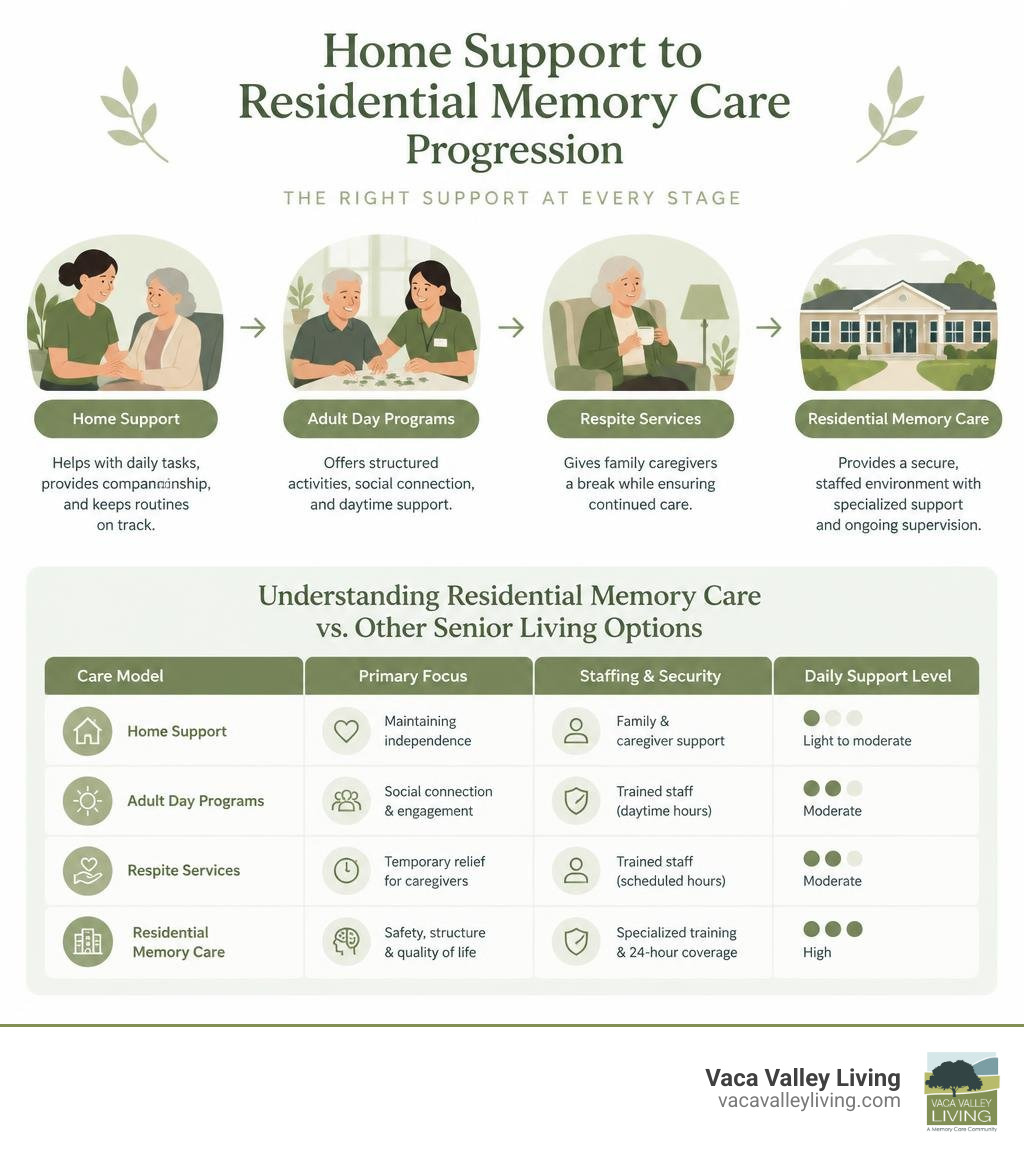
Memory loss usually changes over time. Home care, adult day programs, and respite services can help in earlier stages. But when safety concerns grow or caregiving is no longer sustainable, a dedicated memory care community can provide structure, social connection, and professional support in a home-like setting.
This guide explains how memory care differs from assisted living and nursing homes, what to look for on a tour, and how to compare costs and payment options with confidence. For broader context on the condition itself, the Alzheimer's disease overview from Wikipedia explains how symptoms progress and why specialized support becomes necessary.
Understanding Residential Memory Care vs. Other Senior Living Options
Choosing the right level of support begins with understanding how various senior living environments handle cognitive health monitoring, physical support, and complex behaviors. While many Alzheimer's care facilities offer specialized environments, the term "senior living" encompasses several distinct care models.
| Care Model | Primary Focus | Staffing & Security | Daily Support Level |
|---|---|---|---|
| Assisted Living | Personal independence with support for daily living tasks | Awake 24-hour staff, open access perimeters | Assistance with ADLs (bathing, medication prompts) |
| Residential Memory Care | Cognitive support, safety, behavioral management | Specially trained dementia staff, secured perimeters | Full ADL assistance, structured routines, 24/7 supervision |
| Skilled Nursing Facility | Intensive medical oversight, post-acute rehabilitation | 24-hour licensed nurses (RN/LPN), physician oversight | High-acuity clinical care, wound management, therapy |
Levels of Care: Assisted Living, Memory Care, and Skilled Nursing
Traditional senior retirement communities and independent living settings cater to older adults who manage their daily routines with minimal aid. When personal care tasks become difficult, standard assisted living provides an assisted living caregiver to help with activities of daily living (ADLs) such as dressing, medication reminders, and grooming. However, assisted living facilities generally feature open exits and may lack the specialized behavioral training required to handle progressive cognitive decline.
Dedicated memory care builds upon assisted living by adding secured perimeters to prevent wandering, specialized cognitive therapies, and sensory-friendly spaces. Skilled nursing facilities, on the other hand, focus primarily on complex clinical needs, sub-acute rehabilitation, and high-acuity medical management. While families often search for nursing homes that accept Medicare near me, it is important to note that Medicare covers short-term rehabilitative stays in skilled nursing rather than long-term custodial memory support.
Core Services and Amenities in Residential Memory Care Communities
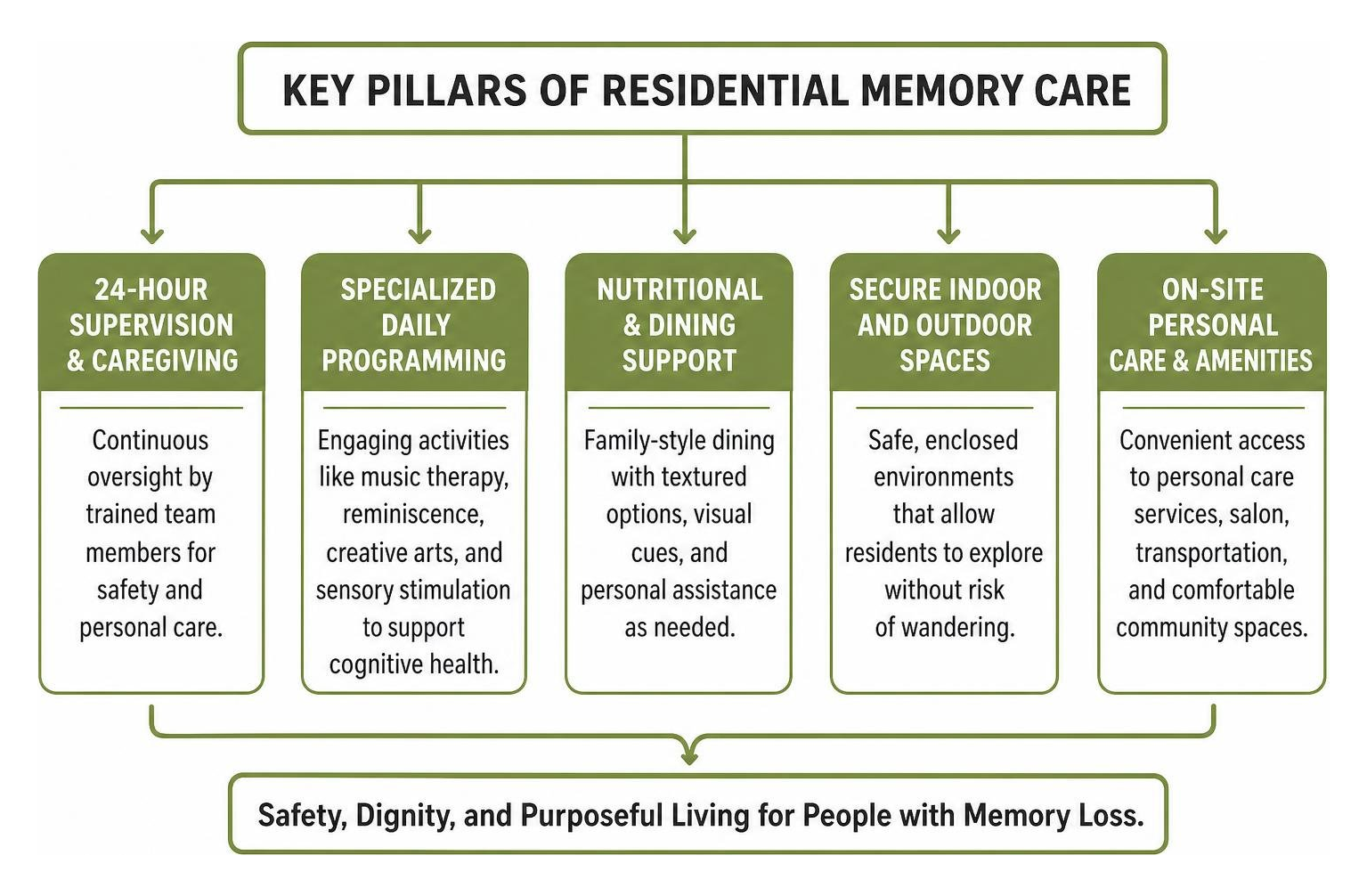
A quality memory care neighborhood blends safety protocols with rich, engaging daily experiences. Core offerings typically feature:
- 24-Hour Supervision & Caregiving: Continuous watchful oversight by compassionate team members trained in de-escalation, redirection, and gentle cueing.
- Specialized Daily Programming: Music therapy, reminiscence activities, creative arts, and sensory stimulation designed to preserve cognitive pathways.
- Nutritional & Dining Support: Family-style dining with textured finger foods, visual menu cues, and personal assistance for individuals who experience dining fatigue.
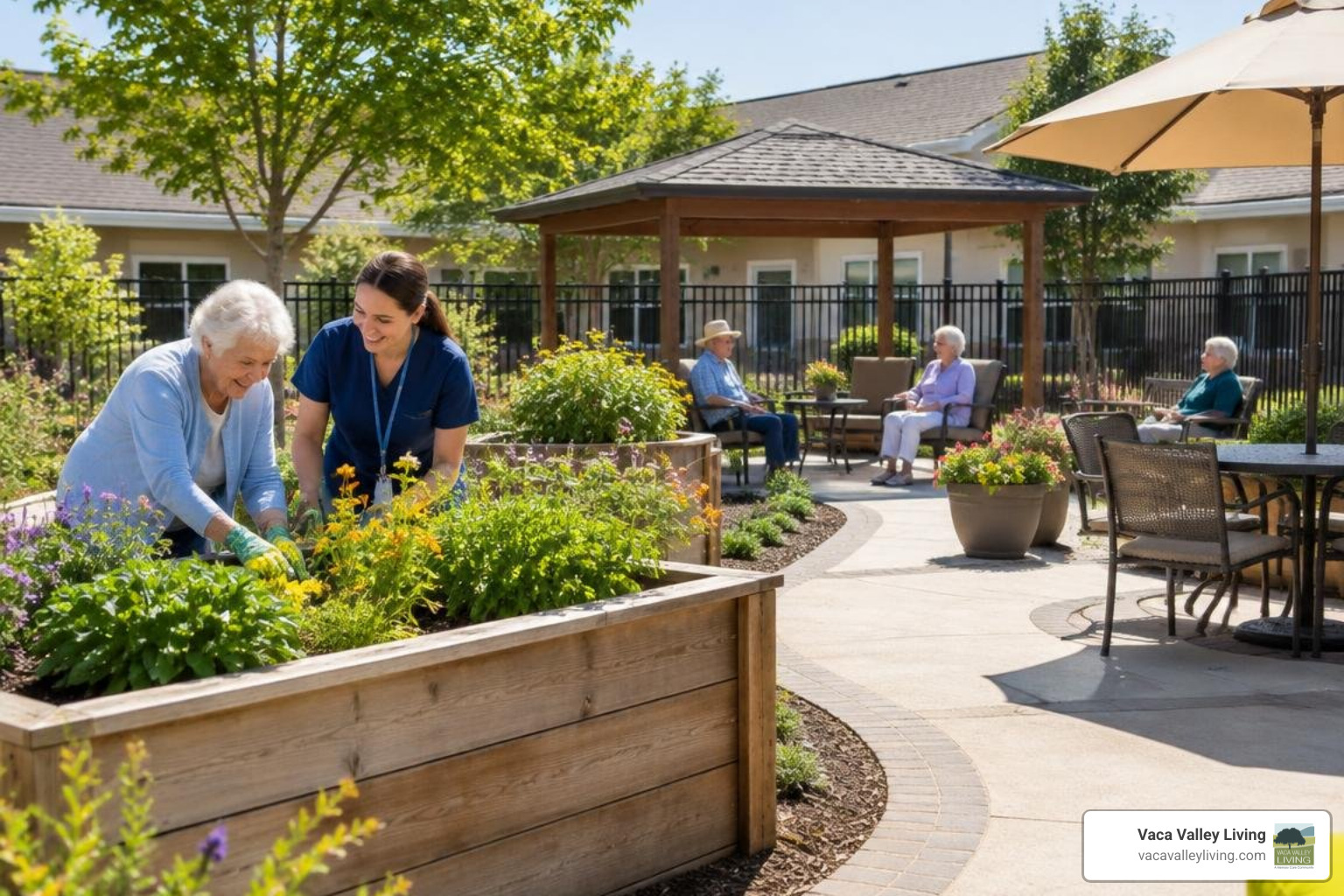
- Secure Indoor and Outdoor Spaces: An intentionally designed secure memory care unit that lets residents safely explore enclosed courtyards and open community lounges without risk of elopement.
- On-Site Personal Care: Access to convenient community amenities like a dedicated beauty salon and barbershop, scheduled transportation for medical visits, and secure communal living areas.
Recognizing the Signs: When Is It Time for Memory Support?
Dementia is progressive, and recognizing the inflection point where home-based assistance is no longer safe can be challenging for families.

Safety Risks, Caregiver Burnout, and Cognitive Changes
Caregivers often experience extreme physical and emotional exhaustion. Sleep deprivation becomes common when a loved one develops sundowning symptoms—late-afternoon confusion, restlessness, or nighttime disorientation. Wandering outside the home, leaving stove burners unattended, missing essential medication doses, or unintentional weight loss all signal an immediate need for professional oversight.
When behavioral changes escalate, families often struggle with what stage is aggression in dementia. While agitation and distress frequently emerge during the middle-to-late stages due to frustration or unmet sensory needs, dedicated environments are staffed by professionals who know how to address these expressions calmly and empathetically.
Transitions from Early-Stage Care to Dedicated Memory Units
In the initial phases of cognitive loss, structured early stage dementia care and community-based dementia support services or local Alzheimer's day programs provide valuable respite and cognitive stimulation.
However, as short-term memory deteriorates and disorientation intensifies, transitioning to a dedicated residential community restores predictable routine, minimizes anxiety, and protects personal dignity. Moving to specialized care is not giving up on your loved one—it ensures they receive professional, 24/7 care while allowing you to return to being a supportive daughter, son, or spouse.
Key Factors to Evaluate When Touring Memory Care Facilities
When evaluating residential communities, it helps to look beyond the surface decor and assess the operational culture, staff interactions, and physical safety features.
Staff Qualifications, Ratios, and Dementia-Specific Training
The heart of any memory care community is its caregiving team. Inquire about the direct caregiver-to-resident ratio during day, evening, and night shifts. Higher staff ratios ensure that care plans are carried out patiently without rushing residents through dressing or meals.
Ask communities about their ongoing educational requirements. High-quality programs require comprehensive annual training covering dementia progression, non-verbal communication, emergency protocols, and gentle behavioral interventions. State regulations often require round-the-clock nursing coverage or an on-call registered nurse depending on community size.
Safety Architecture, Wayfinding, and Facility Floor Plans
Purpose-built memory care facilities incorporate intuitive environmental design to reduce confusion and promote autonomous movement:
- Circular Hallways: Continuous indoor walking paths eliminate dead ends, which can trigger frustration and anxiety in residents who like to walk.
- Wayfinding & Sensory Cues: Color-coded corridors, shadow boxes with personal memorabilia outside suite doors, and high-contrast bathroom fixtures help residents navigate independently.
- Safety Technology: Keypad-secured entries, discreet exit door coverings, and smart monitoring systems track movement without using intrusive cameras or microphones.
- Thoughtful Living Spaces: Exploring specialized floor plans shows how private or semi-private suites balance personal comfort with quick staff access.
Analyzing Memory Care Costs and Financial Assistance Options
Cost is a major consideration for most families planning long-term care. Pricing reflects the intensive staffing, specialized programming, and round-the-clock safety features required for dementia support.
Memory care costs vary widely by state and region. For example, in New Jersey, the statewide median monthly cost of memory care reached $10,549 in 2025 (compared to $8,710 for standard assisted living), with regional costs ranging from $8,981 in Vineland to $12,851 in Trenton. Across the country, rates are influenced by local real estate, licensing mandates, and care acuity.
Understanding Monthly Fees, Level-of-Care Charges, and Community Fees
When reviewing financial agreements, request a complete breakdown of all recurring and one-time fees:
- Base Room & Board: Covers the apartment suite, utilities, basic housekeeping, maintenance, and three daily meals.
- Care Levels / Point Systems: Many communities use tiered pricing or point systems tied to the resident's specific ADL needs, medication administration, and behavioral management.
- Community Move-In Fees: One-time upfront administrative fees, often ranging between $1,500 and $3,500, cover initial health assessments and room preparation.
- All-Inclusive Models: Some providers bundle personal care, enrichment, and room and board into a single predictable monthly fee to avoid surprise charges as needs change.
Reviewing an affordable retirement communities guide for 2026 can help families understand current cost structures and budget strategies.
Programs to Help Pay for Residential Memory Care
While most families rely on private funds and long-term care insurance policies, several public assistance and benefit programs can help offset costs:
- Medicaid Managed Long-Term Services and Supports (MLTSS): While Medicaid does not cover room and board in assisted living or residential memory care settings, home- and community-based waiver programs frequently pay for hands-on personal care services, nursing support, and therapy. In 2026, MLTSS programs generally maintain strict income limits (around $2,982/month in many states) and an individual asset limit of $2,000.
- Veterans Aid & Attendance Pension: Eligible wartime veterans and surviving spouses with non-service-connected disabilities may qualify for monthly pension supplements to help pay for memory care.
- Supplemental Security Income (SSI): In 2026, the maximum federal SSI benefit is $994/month for an individual and $1,491/month for a married couple, which can supplement living expenses.
- Program of All-Inclusive Care for the Elderly (PACE): A comprehensive Medicare/Medicaid model that coordinates and finances medical and social care for nursing-home-eligible individuals living in the community.
- State Transition Initiatives: Programs such as New Jersey's I Choose Home initiative have successfully transitioned tens of thousands of individuals from nursing homes into community settings, reducing public spending while improving quality of life.
Frequently Asked Questions About Memory Care Options
What is the primary difference between assisted living and memory care?
Assisted living is geared toward seniors who need help with daily physical tasks like showering or medication reminders but remain cognitively aware and oriented. Residential memory care is specifically designed for individuals living with Alzheimer's disease, Lewy body dementia, or vascular dementia. Memory care includes secured perimeters to prevent wandering, higher staff-to-resident ratios, and staff trained in cognitive support and behavioral de-escalation.
Does Medicare pay for long-term residential memory support?
No. Medicare does not cover long-term room, board, or custodial care in residential memory care or assisted living communities. Medicare only covers medically necessary, short-term skilled nursing care, physical therapy, physician visits, and qualifying hospice care services.
How can families assess if a community is the right fit?
Visit in person at different times of the day, including mealtime. Observe whether staff members engage with residents warmly and patiently, and take note of cleanliness, natural light, and noise levels. Check recent state licensing survey records and health inspection reports, and confirm the community's written eviction criteria regarding advanced medical needs.
Before making a final choice, families can benefit by scheduling a community tour to meet the care team and ask detailed questions about daily operations.
Conclusion: Choosing the Right Care Community for Your Loved One
Deciding on residential memory support is a deeply personal journey. The right community provides a safe, structured setting where your loved one is treated with respect and kindness, while giving your family clarity and peace of mind.
At Vaca Valley Living, we understand the nuances of dementia care. As a family-owned community with over 50 years of experience serving Vacaville, California, we provide a warm, home-like environment featuring 24-hour staffing, individualized care plans, and life-enriching amenities. We invite you to learn more about our team and history, contact our caring specialists, or explore personalized residential memory care designed to help your loved one thrive each day.