What Makes a Memory Care Environment Work?
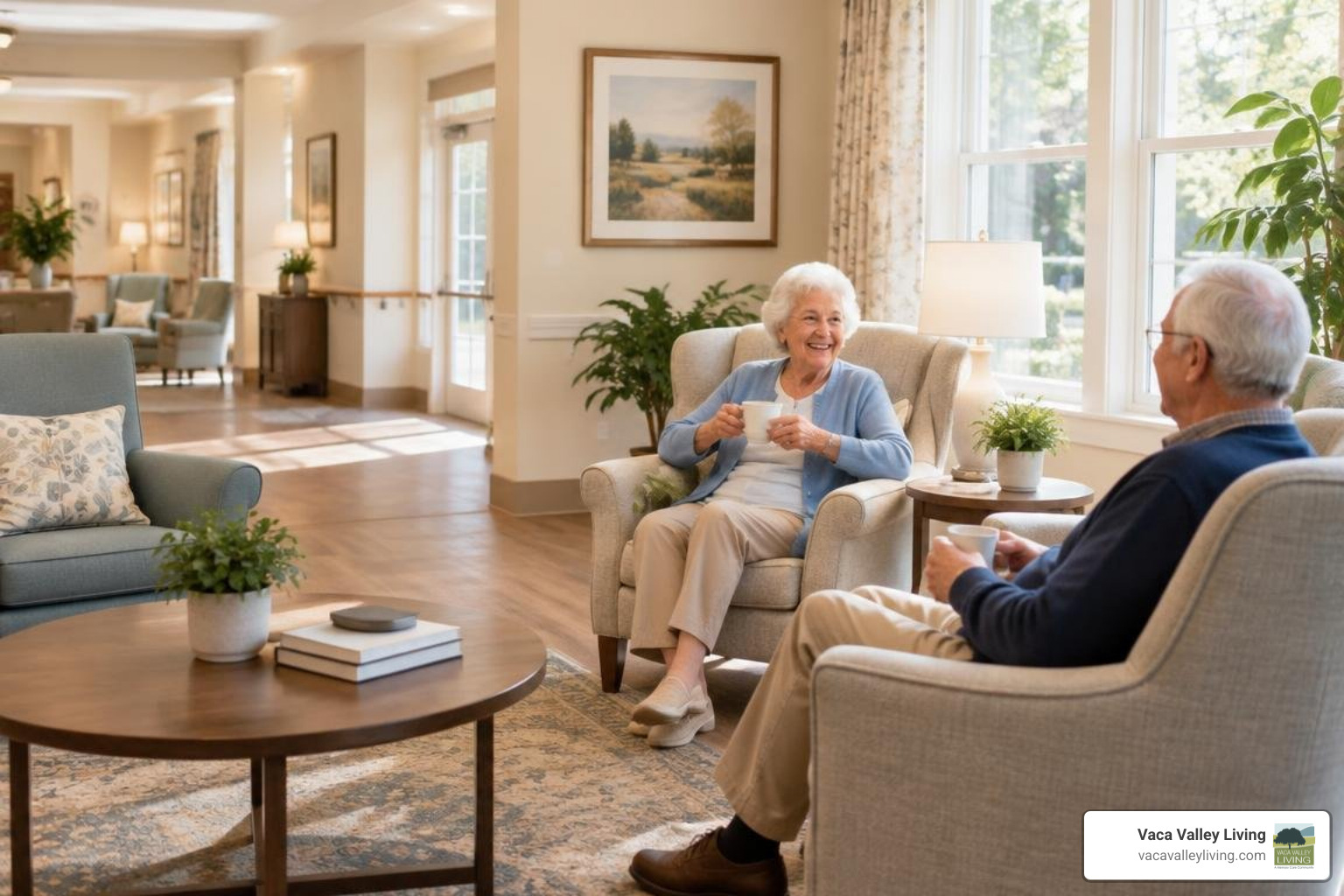
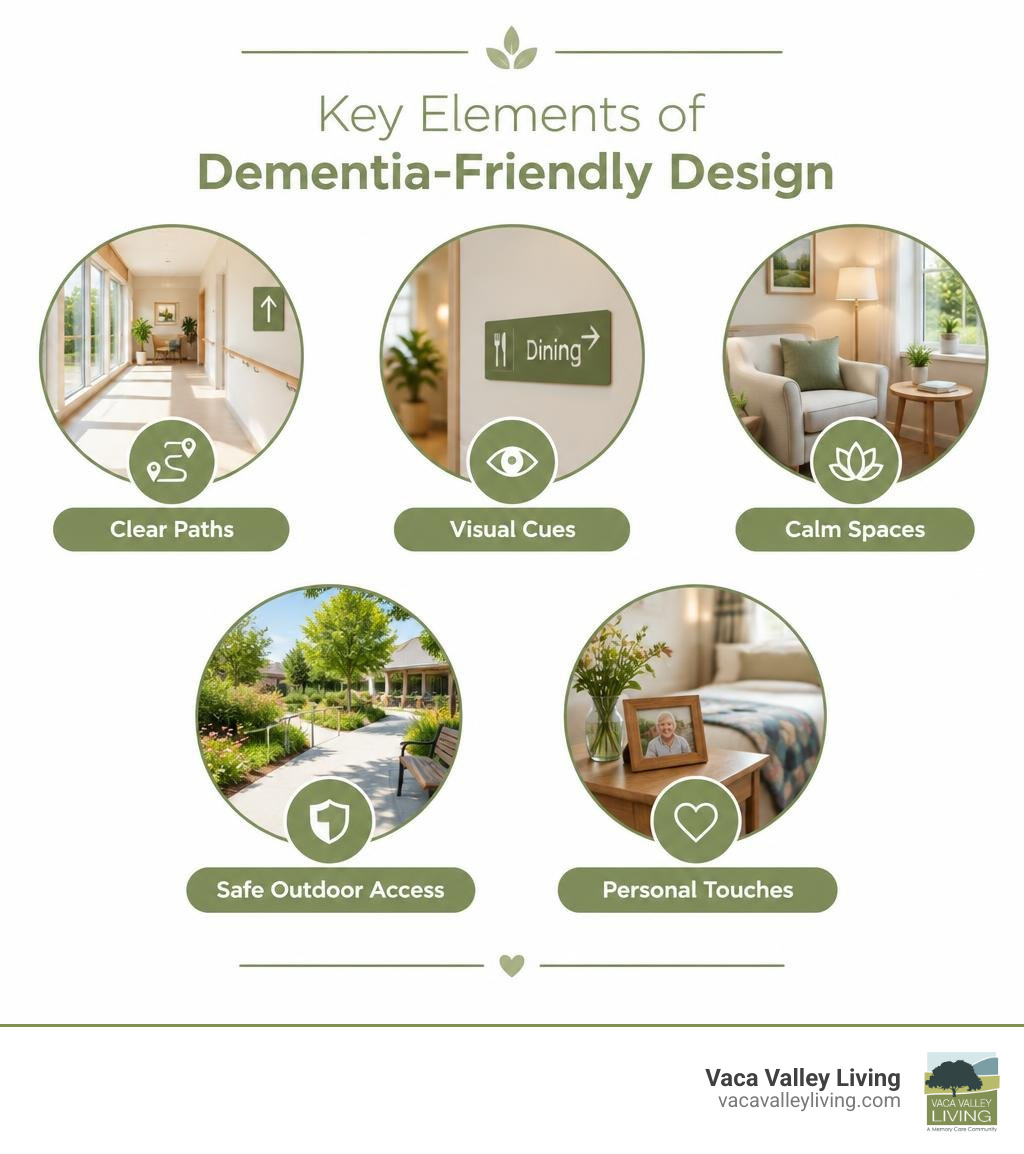
A good memory care environment helps a person with dementia feel at home while making daily life safer and easier to navigate. Look for clear paths, easy-to-see signs, calm lighting, quiet places to rest, and safe access to the outdoors. Just as important, ask how staff learn each resident’s routines and respond when someone is confused or upset.
As dementia progresses, a space that once felt familiar can become hard to manage. For families weighing a move, the goal is not safety alone. It is a place where a loved one can keep making choices and enjoy daily life, with support close by.
According to the Alzheimer's Association, 1 in 9 Americans age 65 and older lives with Alzheimer's disease or other dementias. With more than 5 million Americans currently diagnosed and projections estimating 13.8 million by 2050, families across Northern California frequently face the challenging reality of cognitive decline. When caregiver burnout sets in, transitioning to a specialized community becomes an essential step in protecting both physical safety and emotional well-being.
Architectural and Spatial Design of a Memory Care Environment
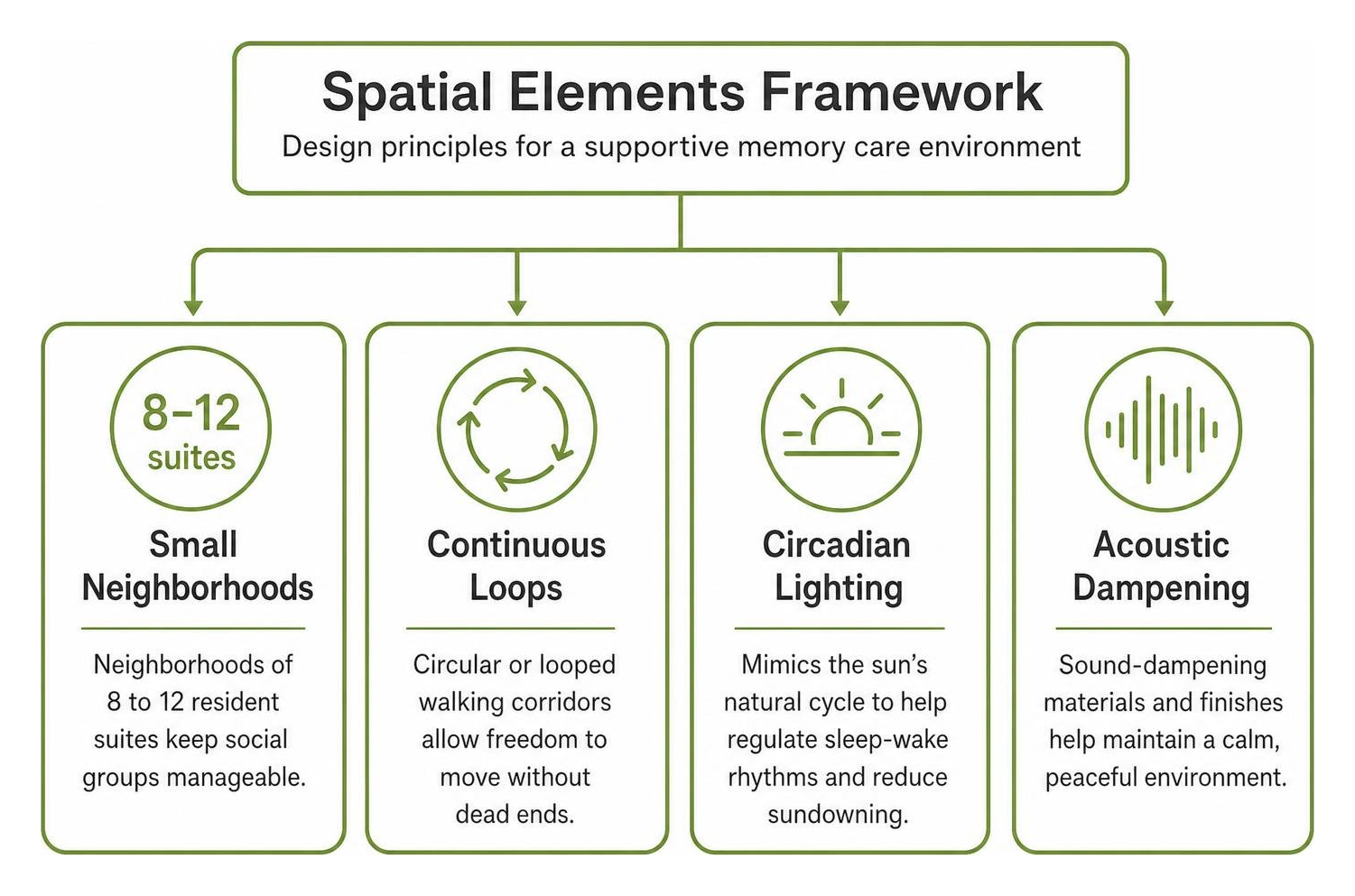
When designing spaces for cognitive support, architectural layout directly influences emotional stability. Large, cavernous institutional buildings often trigger disorientation, overstimulation, and anxiety. Effective communities counter this by utilizing small-scale clusters—often neighborhoods of 8 to 12 resident suites—to keep social groups manageable and create an intuitive sense of place.
A well-planned physical space relies on creating calming spaces through purposeful acoustic treatments, balanced lighting, and unobstructed walking routes. Unwanted ambient noise, such as echoing tile floors or clattering carts, can heighten confusion. By installing acoustic wall panels, sound-dampening flooring, and soft furnishings, communities maintain a peaceful background atmosphere.
Circadian lighting systems play an equally vital role. By mimicking the sun's natural cycle—bright, blue-enriched light in the morning shifting to warm, amber tones in the evening—lighting helps regulate internal sleep-wake clocks. This consistency significantly curbs sundowning agitation. Circular or looped walking corridors ensure that residents who feel an urge to walk can move freely without encountering frustrating dead ends or locked internal doors. This seamless flow is central to modern residential memory care.
Designing a Home-Like Memory Care Environment to Reduce Agitation
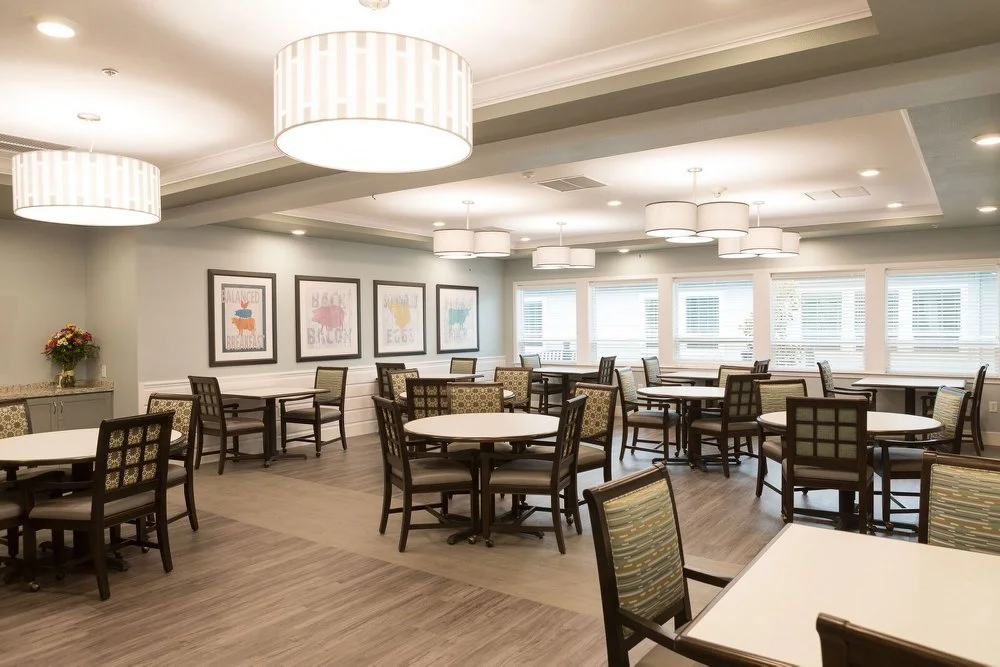
The move away from cold, clinical corridors toward a de-institutionalized household model restores dignity and warmth. Open sightlines allow individuals to see the kitchen, living room, and outdoor areas from their suite doorways, eliminating the guesswork of where to go next.
This approach is supported by ecological affordance theory. As detailed in research on environmental affordances, spaces and objects offer "affordances"—visual and physical invitations to interact. A comfortable armchair by a sunny window invites relaxation, while an open residential kitchen invites conversation. At the same time, subtle environmental constraints prevent misperceptions; for example, masking service doors with wall murals stops residents from attempting to enter non-resident utility areas. Balancing private suites with cozy communal areas ensures individuals can retreat to quiet personal spaces whenever shared rooms feel overwhelming.
Wayfinding and Visual Cues in a Memory Care Environment
Navigating a living space should never feel like solving a puzzle. Dementia impairs spatial memory, making intuitive visual markers essential. Standard text signs are often insufficient; instead, communities use redundant cues that pair clear text with universal imagery, high-contrast colors, and personalized landmarks.
Key visual strategies include:
- Color-Coded Corridors: Distinct wall colors help residents instantly recognize their home hallway.
- High-Contrast Bathroom Fixtures: Using colored toilet seats and contrasting grab bars against neutral tile prevents visual misinterpretation and reduces falls.
- Landmark Orientation: Prominent features such as grandfather clocks, indoor water features, or art installations act as natural navigation anchors.
- Personalized Doorways: Installing memory care memory boxes outside private rooms—filled with family photographs, cherished keepsakes, and familiar mementos—helps residents identify their personal space with pride.
- Glare-Free Illumination: Eliminating harsh floor glare and dark shadows prevents misinterpretations, as deep shadows can be perceived as physical holes in the floor.
Safe Outdoor Access and Sensory Courtyards
Freedom of movement should not end at the exterior door. Access to secure outdoor spaces directly improves mood, encourages healthy physical activity, and aids natural vitamin D absorption.
Secure gardens feature continuous, level walking loops with no steps or abrupt edges. Plant selections focus on non-toxic horticulture, offering tactile, aromatic herbs like lavender, rosemary, and mint that evoke pleasant memories. Shaded seating areas, raised garden beds for accessible planting, and secure perimeter fencing blend into the landscape, preserving autonomy without risking safety. As highlighted in a study on ethical dementia design, providing accessible outdoor courtyards eases the ethical tension between resident safety and personal freedom.
Essential Safety Protocols and Clinical Features
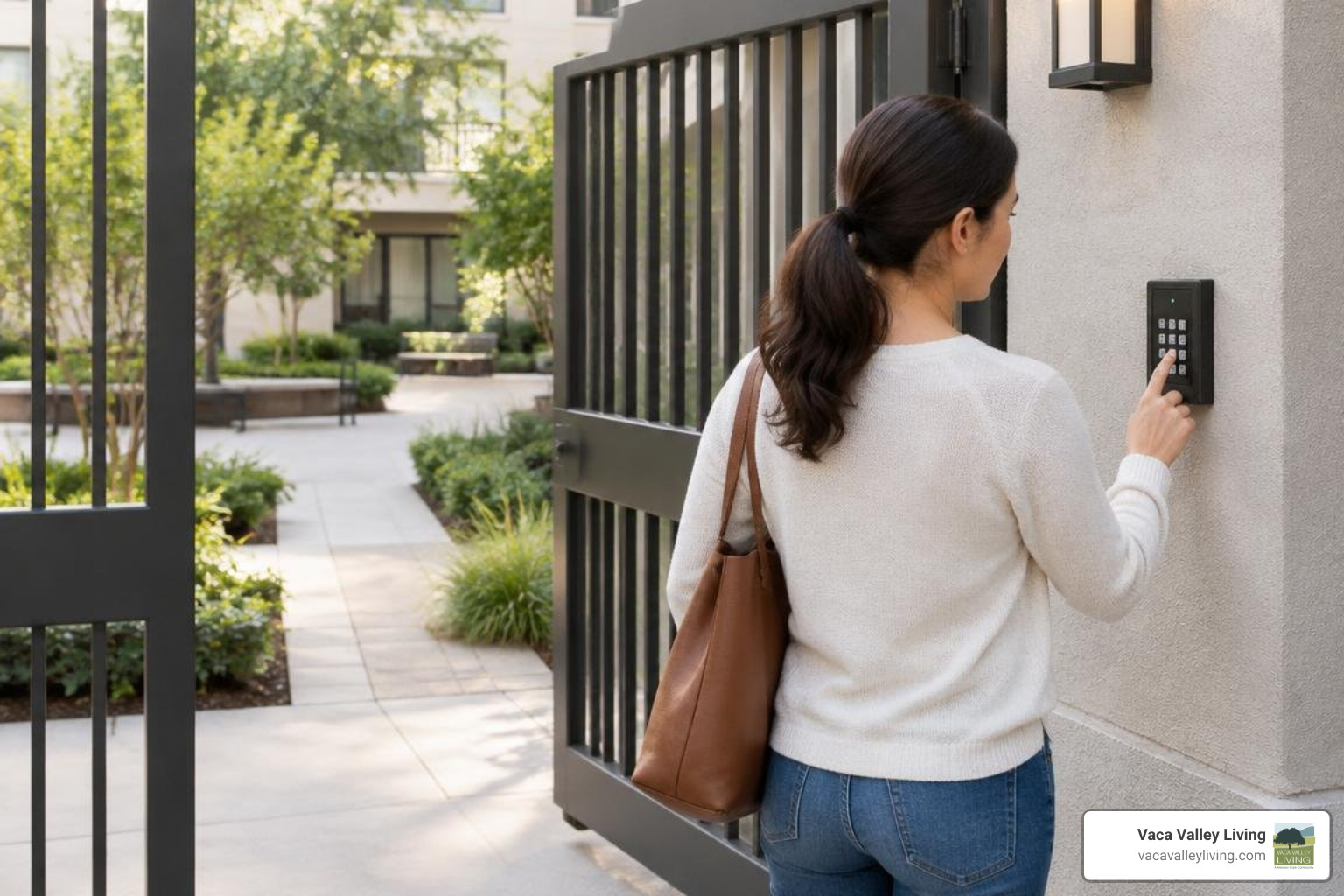
A comprehensive safety framework operates discreetly in the background, protecting residents without making them feel restricted. A properly configured secure memory care unit integrates 24-hour professional oversight with advanced safety technology.
Modern safety integrations include:
- Delayed Egress and Monitored Doors: Magnetic door locks with keypad access ensure exits remain secure while complying with local life-safety codes.
- Discreet Anti-Wandering Technology: Wearable sensor bracelets alert staff if a resident approaches an exterior threshold, allowing caregivers to offer gentle redirection before distress occurs.
- Fall-Reduction Flooring: Specialized subflooring absorbs impact shock without creating uneven surfaces that could cause trips.
- Proactive Clinical Features: Emergency call systems, zero-threshold roll-in showers, and securely concealed medical storage provide comprehensive protection, embodying modern memory care safety features.
Clinical Staffing and Person-Centered Daily Engagement
Technology and physical layouts are only as effective as the caregivers working within them. Quality dementia care requires higher staff-to-resident ratios and continuous training in person-centered communication, validation techniques, and behavioral de-escalation.
Certified caregivers learn to interpret behaviors—such as pacing or vocal restlessness—as expressions of unmet physical or emotional needs rather than deliberate disruptions. This philosophy aligns with national quality improvements; across long-stay senior care settings, antipsychotic medication use has decreased from 23.9% in 2011 to approximately 14% today through behavioral, person-first interventions.
Daily structure is maintained through specialized senior memory care programs. Rather than passive entertainment, residents take part in meaningful memory care activities for seniors, including music therapy, guided art sessions, gentle exercise, and reminiscence discussions that reinforce self-worth and identity.
Supporting Single and Childless Older Adults
An increasing number of seniors with dementia are solo agers without a spouse or adult children to advocate on their behalf. In fact, research indicates that by 2030, nearly 30% of older adults in developed nations will be childless, and women face disproportionate odds (one in five women develop Alzheimer's compared to one in eleven men).
As highlighted in design strategies for vulnerable populations, solo older adults benefit from consistent "universal care teams" where the same staff members assist with daily activities, meals, and social programs. This consistency builds deep personal familiarity, ensuring subtle shifts in physical health or cognitive baseline are caught quickly. Communities also support solo agers by coordinating with healthcare proxies, professional fiduciaries, and elder law advocates to honor advance directives and personal values.
Clinical Outcomes and Cost Considerations in Memory Care
Choosing specialized memory care over standard residential living leads to measurable clinical benefits. Peer-reviewed research demonstrates that specialized memory care communities reduce preventable hospital transfers and long-term institutional decline (Cornell et al., 2022).
| Care Dimension | Standard Assisted Living | Specialized Memory Care Environment |
|---|---|---|
| Staff Training | General caregiving & personal support | Certified dementia-specific behavioral & cognitive education |
| Staffing Ratios | Standard coverage (e.g., 1:12–1:15) | Low ratios for close supervision (e.g., 1:5–1:8) |
| Environmental Layout | Traditional apartment hallways & open exits | Secure looped corridors, high-contrast wayfinding, keypad entries |
| Activities & Therapies | General social recreation | Cognitive fitness, reminiscence therapy, sensory stimulation |
| Clinical Outcomes | Baseline hospitalization & nursing home transfer rates | 16% lower risk of nursing home admission; 28% lower risk of stays >90 days |
| Average Annual Cost | National average basic services: ~$74,400 | Approx. 40% higher than general assisted living due to specialized staffing |
Understanding what is a memory care facility helps families evaluate why specialized units carry higher monthly service fees: the investment funds round-the-clock trained staffing, secure architecture, and individualized behavioral support.
Financial Considerations and Insurance Coverage
Financial planning for memory care requires evaluating private resources and public benefit rules:
- Private Pay: Monthly fees typically cover accommodation, utilities, meals, 24-hour supervision, and specialized engagement. In nursing home settings, average annual costs range from $104,025 for a semi-private room to $116,800 for a private suite, whereas residential memory-care assisted living options provide an alternative tailored to daily living support.
- Medicare Limitations: Medicare does not pay for residential room and board in assisted living or memory care. It only covers skilled medical needs, including physician visits, diagnostic tests, physical therapy, and hospice care.
- Medicaid & State Waivers: In California, certain Medicaid (Medi-Cal) waiver programs or skilled nursing provisions may help cover care costs for financially qualified seniors.
- Long-Term Care Insurance: Policies with dedicated dementia riders often offset a substantial portion of monthly residential costs once assistance with activities of daily living (ADLs) is certified.
- Veterans Aid & Attendance: Eligible wartime veterans and surviving spouses can apply for monthly pension benefits to help cover memory care expenses.
How to Evaluate and Tour a Facility: Step-by-Step Checklist
When touring communities across Vacaville, Fairfield, Dixon, Winters, or nearby Solano and Yolo counties, look beyond surface aesthetics to observe daily staff interactions and operational culture.
Use this checklist during your evaluation:
- [ ] Observe Staff-Resident Interactions: Are caregivers making warm eye contact, addressing residents by name, and speaking at an unhurried pace?
- [ ] Evaluate the Atmosphere and Odor: Cleanliness should be maintained without overpowering chemical or air-freshener scents used to mask underlying hygiene issues.
- [ ] Inspect Wayfinding and Layout: Are doors clearly marked with memory boxes? Are hallways wide, well-lit, and arranged without dead ends?
- [ ] Check Outdoor Accessibility: Can residents step into the secure courtyard independently, or are exterior doors kept locked from resident access?
- [ ] Review Staff Turnover and Training: Ask how many hours of dementia-specific training staff receive annually and verify the tenure of the care leadership team.
- [ ] Inquire About Dining Support: Are meals served in calm, small dining spaces with high-contrast dinnerware to encourage independent eating?
- [ ] Review Regulatory History: Request recent state licensing inspection surveys and ask how care plans are adjusted as cognitive needs evolve.
- [ ] Conduct an Unannounced Visit: Return during the late afternoon or early evening to see how the team manages dinner transitions and sundowning.
Selecting the right memory care community provides lasting peace of mind, knowing your loved one is supported in an environment tailored to their needs.
Frequently Asked Questions about Memory Care Living Environments
How does a memory care environment support people with dementia?
A memory care environment supports cognitive challenges through secure boundaries, intuitive architectural design (such as looped hallways and high-contrast signage), low caregiver-to-resident ratios, and staff trained in gentle de-escalation techniques. These elements reduce confusion and provide daily opportunities for meaningful engagement.
When is the right time to transition a loved one with dementia to specialized memory care?
It is time to consider memory care when home safety is compromised—such as wandering risks, missed medications, or household hazards—or when primary family caregivers experience physical and emotional burnout. Escalating late-day agitation or changes in mobility are also strong indicators that structured care is needed.
Does Medicare or Medicaid cover the cost of a memory care facility?
Medicare does not pay for room and board in residential memory care or assisted living communities, though it covers related clinical services like doctor visits and therapy. Medicaid covers memory care in skilled nursing facilities for financially qualified seniors, and some state-specific waiver programs offer partial financial assistance for assisted living settings.
Conclusion
Creating an effective memory care environment requires blending evidence-based architecture, safety features, and compassionate, person-centered support. When these elements work together, individuals living with dementia experience greater autonomy, fewer behavioral frustrations, and a better quality of life.
At Vaca Valley Living in Vacaville, CA, our family-owned community draws on over 50 years of senior living experience. We provide 24-hour staffing, personalized care plans, and engaging amenities within a warm, neighborhood-style setting serving families throughout Northern California.
If you are exploring care options for a loved one, we invite you to tour our Vaca Valley Living memory care community to see our supportive environment in person.
References
Cornell PY, Zhang W, Smith L, Rahman M, Grabowski DC, Carder P, Thomas KS. "Memory care reduces nursing home admissions among assisted-living residents with dementia.." Alzheimer's & dementia : the journal of the Alzheimer's Association, 2022. PMCID PMC9250544.