Touring Memory Care Units with Confidence
What Is a Memory Care Facility and Who Does It Serve?
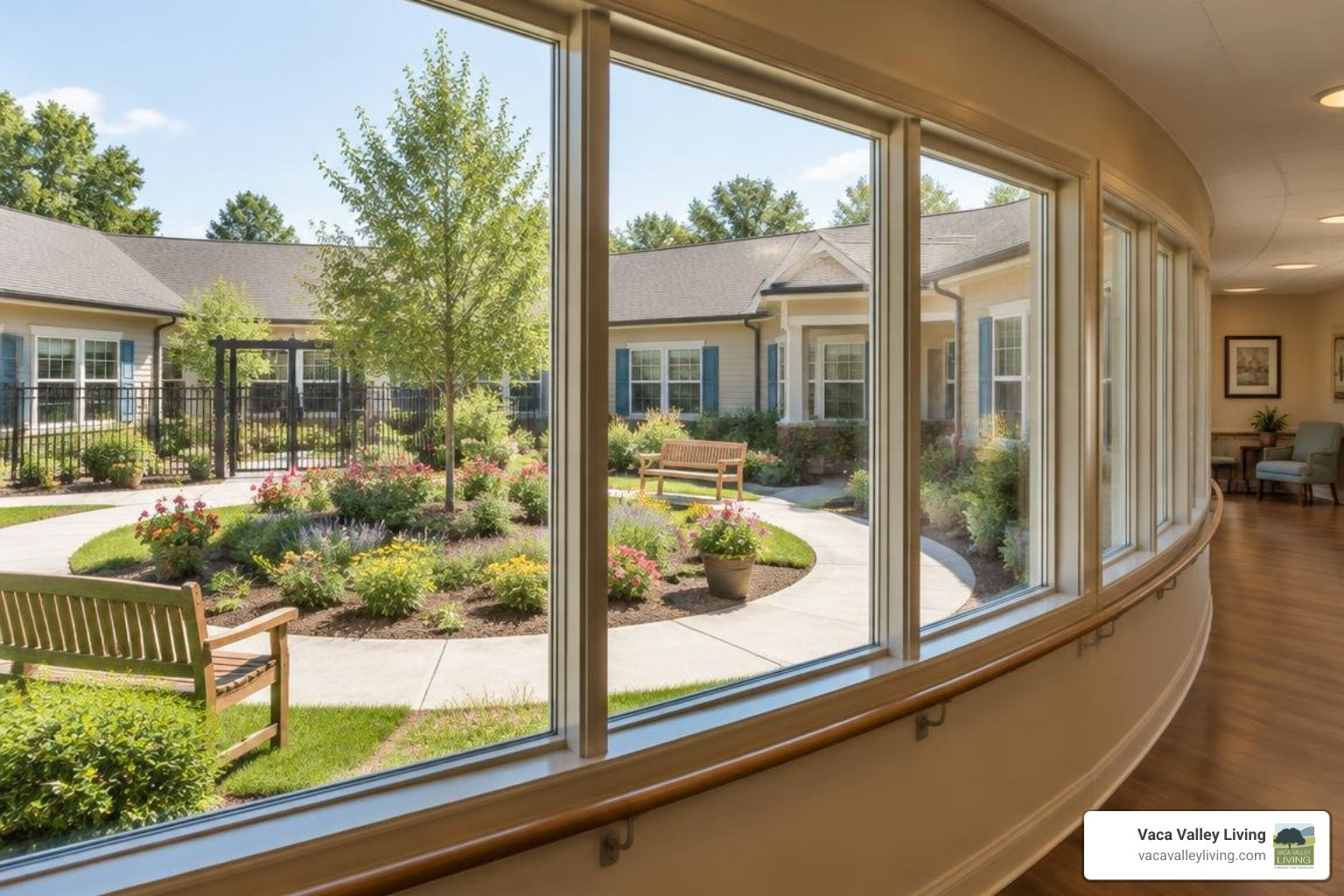
A memory care facility is a specialized residential community that provides clinical supervision, personal assistance with activities of daily living (ADLs), and intentional environmental design for individuals facing Alzheimer’s disease, vascular dementia, Lewy body dementia, and frontotemporal disorders. As detailed in the Harvard Health analysis of dementia living options, these residences are uniquely structured to provide safety, therapeutic routine, and dignified engagement when living at home is no longer feasible.
Caring for an aging parent or spouse experiencing cognitive decline is one of life’s most profound emotional and physical journeys. When everyday tasks become hazardous and independent living is no longer safe, families often find themselves asking: what exactly goes on inside these communities, and how do they differ from other senior housing options?
At its core, specialized memory care provides clinical supervision, personal assistance with activities of daily living (ADLs), and intentional environmental design tailored to individuals facing Alzheimer’s disease, vascular dementia, Lewy body dementia, and frontotemporal disorders.
Core Purpose and Target Resident Profile
The primary purpose of a memory care community is to balance autonomy with safety. The resident profile includes individuals experiencing progressive memory loss, severe disorientation, communication challenges, and difficulty completing basic self-care tasks like dressing, bathing, or eating.
While some individuals transition from early stage dementia care programs at home, many move into residential settings when advanced symptoms emerge. These include:
- Wandering Risk: About 60% of people with dementia will wander at least once, often repeatedly, creating life-threatening risks.
- Behavioral Changes: Severe anxiety, agitation, aggression, or sundowning (heightened confusion and restlessness in late afternoon and evening).
- Physical Safety Concerns: Older adults with dementia are twice as likely to fall and three times more likely to experience serious fall-related injuries compared to their peers without cognitive impairment.
- Severe Caregiver Burnout: Family caregivers facing sleep deprivation, chronic stress, and exhaustion trying to maintain 24/7 vigil.
What Is a Memory Care Facility Environment Like?
Unlike standard apartment-style senior living, a secure memory care unit is intentionally engineered from the floor up to reduce confusion, eliminate anxiety triggers, and promote safe movement.
Key architectural and environmental features include:
- Circular Hallways and Continuous Pathways: Hallways that loop naturally back to common living spaces eliminate dead ends, which often cause agitation and disorientation for residents.
- Delayed-Egress and Alarmed Doors: Secure entry and exit points prevent unmonitored exits while maintaining a discreet, non-institutional aesthetic.
- Visual Cues and Color-Coding: Distinct colors, memory boxes with personal family photos outside apartment doorways, and picture-based signage help residents navigate independently.
- Circadian and Soft Lighting: Motion-activated lights and balanced daylighting reduce shadows and glare, mitigating visual hallucinations and easing sundowning symptoms.
- Enclosed Outdoor Courtyards: Secure garden paths allow residents to enjoy fresh air, gardening, and sunshine without risk of wandering into unsafe areas.
Comparing Memory Care With Other Care Settings
Choosing the right level of care requires understanding how specialized memory settings differ from standard assisted living and skilled nursing facilities.
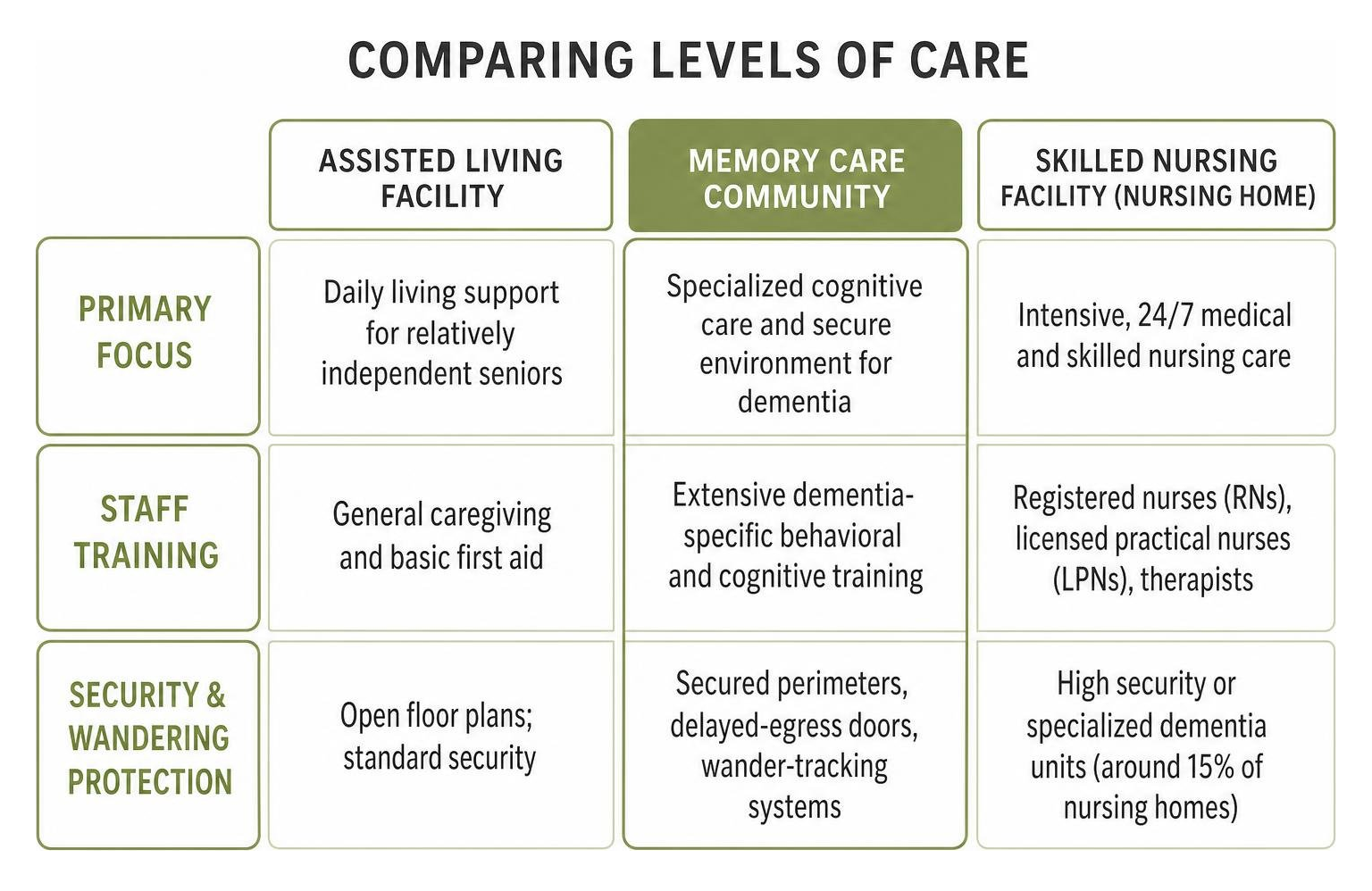
| Care Feature | Assisted Living Facility | Memory Care Community | Skilled Nursing Facility (Nursing Home) |
|---|---|---|---|
| Primary Focus | Daily living support for relatively independent seniors | Specialized cognitive care and secure environment for dementia | Intensive, 24/7 medical and skilled nursing care |
| Staff Training | General caregiving and basic first aid | Extensive dementia-specific behavioral and cognitive training | Registered nurses (RNs), licensed practical nurses (LPNs), therapists |
| Security & Wandering Protection | Open floor plans; standard security | Secured perimeters, delayed-egress doors, wander-tracking systems | High security or specialized dementia units (around 15% of nursing homes) |
| Staff-to-Resident Ratio | Typically 1:8 to 1:15 | Lower ratios, typically 1:4 to 1:6 | Varies based on clinical acuity (1:6 to 1:8) |
| Therapeutic Programming | General social events, outings, fitness | Cognitive stimulation, music/art therapy, sensory stimulation | Physical, occupational, and speech rehabilitation |
Key Differences in Staffing, Medical Care, and Security
While assisted living supports seniors who need a hand with medications or dressing, it rarely offers the locked security or low staff-to-resident ratios required for advanced memory loss. In memory care, team members receive continuous training in dementia-specific communication, de-escalation techniques, and validation therapy.
Around 14% of assisted living communities and 15% of nursing homes offer dedicated dementia units. However, dedicated memory care residences focus their entire operational structure on cognitive health, fall prevention, and structured daily rhythm rather than hospital-style medical treatments.
Recognizing the Signs It Is Time to Transition
It is common for families to wonder whether it is too early or too late to make a move. Key indicators that your loved one requires specialized residential support include:
- Hygiene and Nutritional Decline: Noticeable weight loss, spoiled food in the refrigerator, or wearing the same soiled clothing for days.
- Medication Mismanagement: Missing critical doses or taking double prescriptions due to short-term memory deficits.
- Escalating Sundowning and Disrupted Sleep: Wandering the house at night, attempting to "go to work" at 3:00 AM, or experiencing severe evening paranoia.
- Frequent Unexplained Bruises or Falls: Mobility issues compounded by cognitive spatial misjudgments.
- Caregiver Exhaustion: When caregiving impairs your own physical health, employment, or family relationships. Utilizing Alzheimer's family support resources can help process the emotional weight of this transition.
How to Tour and Choose the Right Memory Care Setting
Stepping into a senior living community for an initial visit can feel overwhelming. Knowing what to observe helps you evaluate whether a community provides authentic, high-quality care or simply impressive decor.

What Is a Memory Care Facility Touring Checklist for Families?
When touring a dementia care community, look for these essential indicators:
- [ ] Staff-to-Resident Ratios: Ask about both daytime and nighttime ratios. Ensure care staff are dedicated exclusively to memory care rather than floating between general assisted living wings.
- [ ] Staff Demeanor and Engagement: Are caregivers making warm eye contact, calling residents by name, and speaking at eye level, or are they rushing past?
- [ ] Cleanliness and Atmosphere: Does the building smell fresh and clean? Are common spaces lively, calm, and filled with natural light?
- [ ] Safety Infrastructure: Verify delayed-egress doors, secure outdoor garden gates, grab bars, and emergency call systems.
- [ ] Staff Turnover and Training: Inquire about average staff tenure and the specific dementia certifications required for ongoing employment.
- [ ] Dining Experience: Observe a meal service. Are adaptive utensils available? Does the dining room offer a calm, restaurant-style atmosphere with dining assistance?
Evaluating Specialized Programming and Daily Routines
A high quality of life relies on purposeful engagement. Look for enriching senior memory care programs that provide cognitive stimulation without creating sensory overload.
Effective communities develop customized dementia care plans incorporating evidence-based therapies:
- Reminiscence Therapy: Using tactile memory boxes, vintage music, and historical artifacts to trigger long-term memories and encourage storytelling.
- Music and Sensory Stimulation: Personalized playlists that calm agitation and elevate mood, alongside aromatherapy and tactile art.
- Structured Daily Cadence: Predictable meal times, morning gentle movement, afternoon creative therapies, and quiet evening wind-down periods to ease sundowning.
Financial Planning: Costs, Insurance, and Alternatives
Memory care represents a significant financial investment, reflecting the 24/7 staffing, specialized programming, and high caregiver-to-resident ratios.
According to industry data, national memory care costs average approximately $6,935 to $8,399 per month, with 2026 national estimates hovering around $7,645 monthly. For comparison, private nursing home rooms average over $9,034 monthly, while basic assisted living averages around $4,500 to $6,694. As outlined in AARP's cost breakdown for dementia care, pricing varies depending on room style (private vs. companion suite), location, and required acuity tiers.
Average Monthly Expenses and Payment Options
Families typically assemble a combination of funding sources:
- Private Pay: Personal savings, retirement accounts, pensions, and proceeds from selling a home.
- Long-Term Care Insurance (LTCI): Policies designed to cover residential memory support and daily living assistance.
- Veterans Benefits: The VA Aid and Attendance benefit provides monthly pensions to eligible wartime veterans and surviving spouses needing daily personal care.
- Medicaid / State Waivers: While standard Medicare does not pay for room and board in residential memory care, certain state Medicaid waiver programs may help cover specific care services for qualifying low-income individuals.
If full residential placement is not immediately feasible, alternatives include adult day health centers, respite care stays, or hiring private in-home caregivers, though in-home 24/7 care often meets or exceeds the cost of a dedicated community.
Frequently Asked Questions about Memory Care Facilities
How does memory care prevent resident wandering?
Communities utilize secure architectural layouts, coded keypads, delayed-egress doors, and enclosed courtyards. Many communities also employ wearable wander-management bracelets that notify staff if a resident approaches an exit, allowing individuals freedom of movement within a protected footprint.
Is memory care covered by Medicare or Medicaid?
Traditional Medicare does not pay for long-term residential memory care room and board; it only covers medically necessary treatments, doctor visits, physical therapy, and hospice care. Medicaid coverage varies by state through Home and Community-Based Services (HCBS) waivers, but most residential memory care is funded via private resources, long-term care insurance, or VA benefits.
How do I know when current care is no longer enough?
When a loved one wanders, experiences frequent falls, makes critical medication mistakes, or exhibits aggression that threatens home safety, professional residential care becomes necessary. Furthermore, when caregiving begins compromising your own physical health and emotional stability, transitioning to a community protects both you and your loved one.
Conclusion
Choosing memory care is an act of deep love and protection. Transitioning your loved one into a dedicated environment ensures they receive the safety, specialized cognitive enrichment, and dignified daily assistance they deserve, while giving your family back precious moments as supportive daughters, sons, and spouses.
As a family-owned organization with over 50 years of experience, we at Vaca Valley Living provide a warm, home-like environment with individualized care plans in Vacaville, CA. When you are ready to explore the best path forward, we invite you to visit Vaca Valley Living to meet our compassionate team and experience our community firsthand.