Understanding Care Levels: When to Search for Alzheimer’s Care Near Me
When searching for Alzheimer’s care near me, families are looking for a secure residential setting that provides 24-hour supervision, structured daily routines, and staff trained specifically in dementia care. The right community should offer secured perimeters to prevent wandering, personalized care plans, and therapeutic activities that support cognitive function and emotional well-being. Key criteria to evaluate include staff-to-resident ratios, specialized dementia training, safety features such as keypad-controlled exits, and a calm, predictable environment designed to reduce confusion.
Caring for an aging family member who experiences memory loss is deeply meaningful, yet it often presents unexpected challenges. As Alzheimer’s disease or related dementias progress, care requirements naturally expand beyond basic companionship. Recognizing the transition points between independent living, standard assisted living, and dedicated memory support ensures your loved one stays safe while receiving appropriate daily assistance.
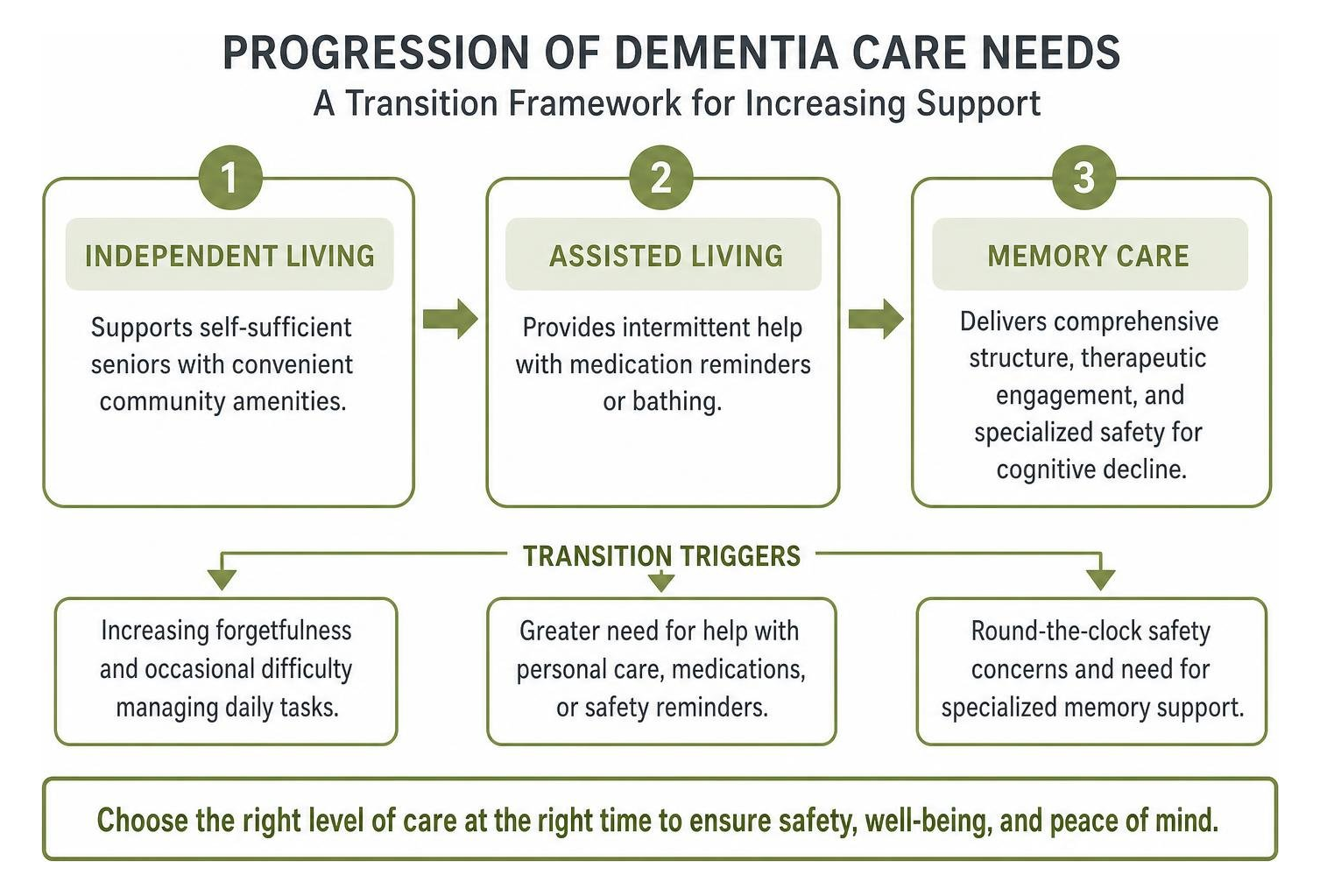
Many family caregivers experience chronic stress or exhaustion when managing round-the-clock safety concerns. While independent living supports self-sufficient seniors with convenient community amenities, and assisted living provides intermittent help with medication reminders or bathing, memory care delivers comprehensive structure, therapeutic engagement, and specialized safety measures designed specifically for cognitive decline.
Key Signs It Is Time for Memory Care
Determining when home care or standard assisted living is no longer sufficient can be difficult. Changes often occur gradually before escalating into urgent safety concerns.
Key indicators that signal the need for advanced care include:
- Wandering and Spatial Disorientation: Walking away from home, getting lost in familiar surroundings, or attempting to leave during late hours.
- Medication Mismanagement: Missing vital doses, taking duplicate medications, or struggling to follow prescription schedules independently.
- Decline in Activities of Daily Living (ADLs): Noticeable difficulties with personal hygiene, bathing, dressing, and maintaining balanced nutrition.
- Changes in Behavior and Mood: Increased confusion during late afternoons (sundowning), heightened anxiety, paranoia, or withdrawal from social interaction.
- Caregiver Physical and Emotional Burnout: Family members feeling overwhelmed, sleep-deprived, or unable to safely monitor their loved one 24/7.
When these challenges emerge, connecting with dedicated Alzheimers family support can provide vital guidance. If cognitive changes are identified during earlier phases, exploring tailored early stage dementia care allows families to establish proactive routines before emergency interventions become necessary.
Choosing the Right Memory Care Support
Memory care offers distinct advantages over traditional residential care settings. These environments feature trained caregivers who understand cognitive impairment, structured daily routines that reduce confusion, and physical layouts designed to prevent elopement.
| Care Setting | Primary Purpose | Staffing & Supervision | Security & Environment | Ideal Resident Profile |
|---|---|---|---|---|
| Independent Living | Social community with maintenance-free living | Hospitality staff; no medical monitoring | Open access campus | Active seniors managing all daily tasks |
| Assisted Living | Help with daily personal tasks (ADLs) | Caregivers available for scheduled assistance | Standard monitored exits | Seniors needing help with bathing, dressing, or meals |
| Memory Care | Specialized, 24/7 dementia support | Specially trained dementia care staff on duty | Secured perimeters, keypad entry, enclosed courtyards | Individuals with Alzheimer's or progressive dementias |
Transitioning to a purpose-built dementia care community ensures your loved one is surrounded by professionals who know how to de-escalate anxiety, encourage healthy dining, and foster genuine moments of joy.
Essential Services and Safety Features in Specialized Communities
Specialized memory care environments go far beyond simply locking exterior doors. Thoughtful architectural features, soothing color schemes, and purpose-driven spaces work together to promote resident independence while ensuring absolute safety.
How to Evaluate Alzheimer’s Care Near Me for Security and Staffing
When evaluating local options for Alzheimer’s care near me, pay close attention to safety protocols and the everyday presence of the care team. Outstanding communities invest heavily in secure physical designs and comprehensive staff training.
Key physical and operational features to verify include:
- Secured Building Perimeters: Keypad-controlled entries, silent alert systems, and secure perimeter fencing that allow movement without risk of elopement.
- Thoughtful Architectural Design: Circular floor plans that prevent dead ends, color-coded hallways to assist visual wayfinding, and non-reflective flooring to reduce fall risks.
- Continuous 24-Hour Supervision: Dedicated night-shift care teams and active safety monitoring.
- Emergency Call Systems: Wearable emergency pendants and room-based pull cords for immediate response.
To gain a clear picture of safety infrastructure, review what a dedicated secure memory care unit includes. If you are comparing regional housing options across Northern California, regional directories like Winters, CA Assisted Living and Senior Housing Services offer useful local context.
Therapeutic Activities and Daily Life Support
A meaningful daily routine helps reduce agitation, stimulates cognitive pathways, and promotes physical health. Specialized memory care neighborhoods incorporate evidence-based therapies into everyday life:
- Reminiscence Therapy: Using music, classic photos, familiar objects, and vintage textures to prompt positive memories and meaningful conversation.
- Sensory Stimulation: Aromatherapy, tactile sensory blankets, soothing water features, and indoor garden spaces that calm the senses.
- Individualized Life Skills Stations: Familiar workbenches, kitchen displays, or gardening corners where residents can engage in purposeful, familiar tasks.
- Specialized Dining Support: Brain-healthy meal plans, adaptive dishware, and finger-food selections tailored for individuals who experience coordination challenges.
Our goal is always to keep days predictable yet engaging. Through senior memory care programs, residents participate in light physical exercise, music therapy, and social gatherings designed to protect cognitive function and nurture personal dignity.
Understanding Costs and Financial Assistance for Memory Care
Understanding the financial commitment of long-term care helps families plan effectively and avoid unexpected expenses. Because memory care involves higher staff-to-resident ratios, specialized dementia certifications, and 24-hour supervision, monthly fees are higher than independent or traditional assisted living.

Breakdown of Regional Memory Care Costs and Pricing Trends
Memory care costs vary widely depending on geography, apartment size, care level tiers, and community amenities. Across Northern California and nationwide senior living markets, monthly rates reflect the depth of services provided.
| Living Option | Typical Monthly Cost Range | What Is Included | Factors Impacting Final Price |
|---|---|---|---|
| Independent Living | $2,500 – $4,000 | Apartment, utilities, maintenance, activities | Unit square footage, community amenities |
| Assisted Living | $4,000 – $6,500 | Housing, meals, scheduled ADL assistance | Level-of-care point system, medication tiers |
| Specialized Memory Care | $5,500 – $9,800+ | 24/7 supervision, specialized memory programming, all meals, safety monitoring | Private vs. shared suite, advanced physical care needs |
When assessing pricing, ask whether a community uses an all-inclusive rate or a base rent model with tiered add-on care fees. Transparent pricing structures make long-term financial forecasting straightforward.
Paying for Alzheimer’s Care Near Me: Medicare, Medicaid, and VA Benefits
Navigating senior care financing involves evaluating both private resources and public benefit programs:
- Medicare Limitations: Traditional Medicare does not cover the room, board, or personal assistance associated with residential memory care. It only covers medically necessary treatments, doctor visits, prescription medications (Part D), and limited short-term rehabilitative stays in a skilled nursing facility following a qualifying hospital stay.
- Medicaid and State Waiver Programs: For individuals with limited income and assets, state-specific Medicaid programs (such as Medi-Cal in California or MaineCare in Maine) may cover certain medical services or assist with personal care costs through assisted living waiver programs.
- Veterans Benefits (VA Aid and Attendance): Wartime veterans and their surviving spouses may qualify for the VA Aid and Attendance pension benefit. This tax-free monthly payment helps offset the cost of residential care when assistance with daily living is required.
- Long-Term Care Insurance: Policies with memory care coverage can reimburse daily or monthly care expenses once benefit triggers (such as needing help with two or more ADLs or cognitive impairment) are verified.
- Private Pay and Asset Utilization: Bridge loans, life insurance conversions, and home equity solutions are common methods families use to fund memory care while estates are settled.
For families seeking diagnostic clarity and medical evaluations prior to placement, regional clinics such as the Kaiser Memory & Aging Center offer specialized cognitive assessments.
Step-by-Step Guide to Finding and Touring Local Facilities
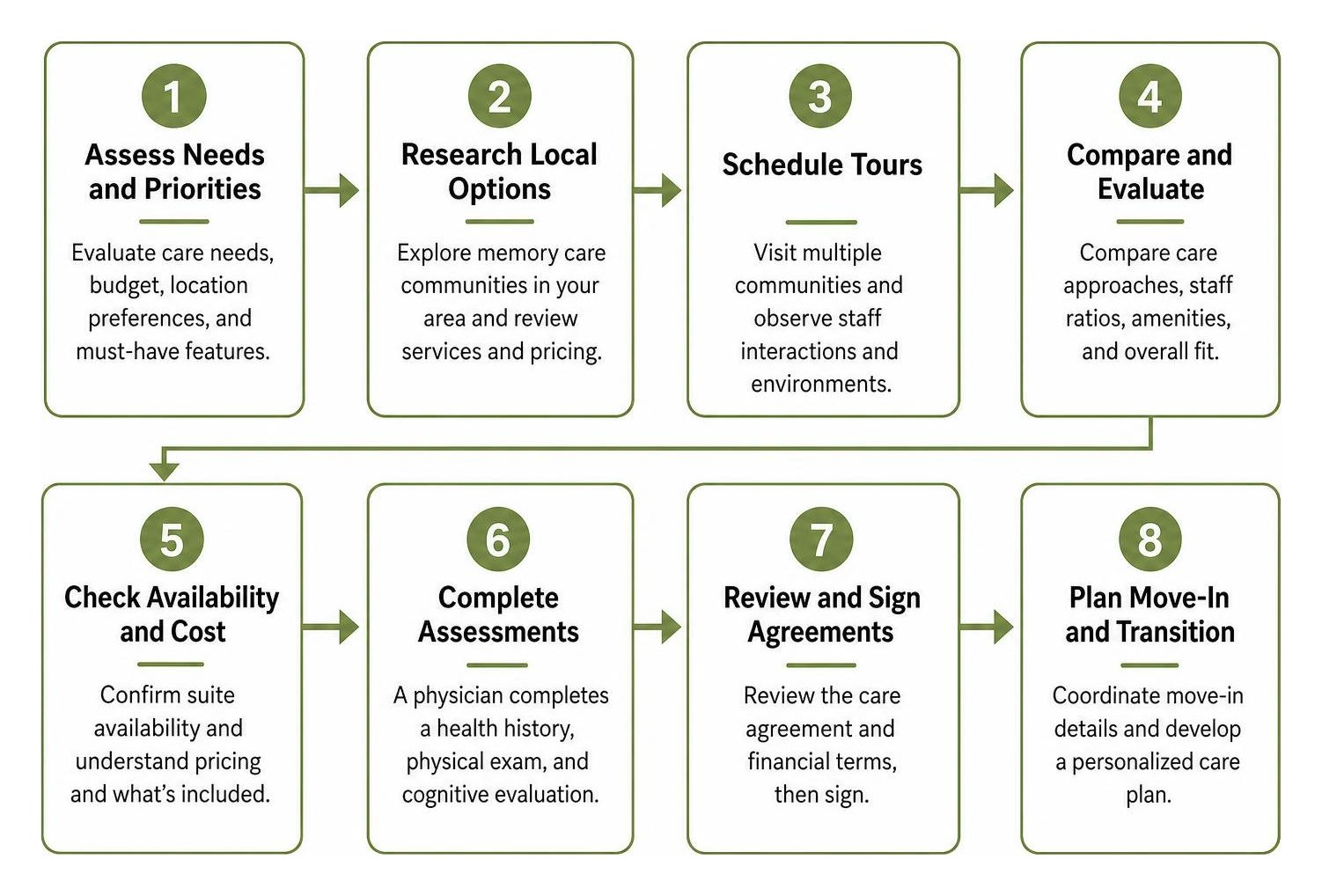
Selecting a memory care home is a personal decision that requires thoughtful research and on-site visits. Touring multiple communities lets you observe how staff interact with residents in real-time.
Admission Requirements, Licensing, and State Regulations
Before moving into a memory care community, several regulatory and medical steps must be completed to ensure the community can safely meet the individual's needs:
- Comprehensive Physician Assessment: A licensed doctor must complete a health history, physical examination, and cognitive evaluation.
- Functional Capability Review: The community's wellness director conducts an intake assessment to evaluate mobility, dietary needs, continence, and behavior patterns.
- Legal and Financial Documentation: Families must provide signed copies of the Durable Power of Attorney (DPOA) for healthcare and finances, Advance Healthcare Directives, and consent paperwork.
- State Licensing Compliance: Ensure the community holds an active residential care license with clear regulatory inspection reports from state oversight departments.
Exploring established Alzheimers care facilities gives you a clear baseline for what state compliance and personalized care should look like.
Key Questions to Ask During Your Facility Tour
During your in-person walkthrough, observe the atmosphere carefully. Take note of whether residents look engaged and well-groomed, and whether team members greet them with warmth and patience.
When meeting with admissions staff, use this checklist to guide your conversation:
- What specific dementia care training and certifications do your caregivers complete?
- What are your actual staff-to-resident ratios during day shifts versus overnight hours?
- How does your team handle agitation, wandering, or sundowning behaviors without relying on sedatives?
- What is your protocol for medical emergencies or sudden health declines?
- How often are personalized care plans reviewed and updated with the family?
- What daily enrichment programs do you offer for residents in different stages of dementia?
- How do you support family communication and visits?
Reviewing memory care standards beforehand will help you evaluate these answers with confidence.
Frequently Asked Questions about Alzheimer's Care
What makes memory care different from other residential care?
Memory care provides a secure, structured physical environment specifically designed to reduce confusion and prevent wandering. Caregivers receive specialized dementia training, and daily activities are tailored to stimulate cognitive abilities while maintaining a calming routine.
Does Medicare pay for long-term residential memory care?
No. Medicare does not cover the room, board, or long-term custodial care provided in memory care communities. It only covers skilled medical care, doctor appointments, physical therapy, and hospitalizations. Long-term memory care is primarily paid for via private funds, long-term care insurance, VA benefits, or qualifying state Medicaid waiver programs.
What legal documents are required for memory care admission?
Communities typically require a Durable Power of Attorney for Healthcare (Healthcare Proxy), a Durable Power of Attorney for Finances, an Advance Healthcare Directive, a Physician's Report for Residential Care, and up-to-date medication administration orders.
Conclusion
Choosing the right memory care community is one of the most loving and significant decisions you will make for your loved one. Finding a place where they are treated with dignity, kindness, and professional attention brings genuine peace of mind to the entire family.
At Vaca Valley Living, we bring more than 50 years of family-owned care experience to families throughout Northern California—including Vacaville, Fairfield, Dixon, Davis, Winters, Napa, and surrounding communities. Our home-like, highly individualized environment, 24-hour dedicated staffing, salon amenities, and therapeutic dining ensure that your loved one thrives every day. Discover how our team provides personalized Alzheimer's and dementia care in Northern California by scheduling a private tour with us today.