When Memory Care Is Usually the Right Next Step

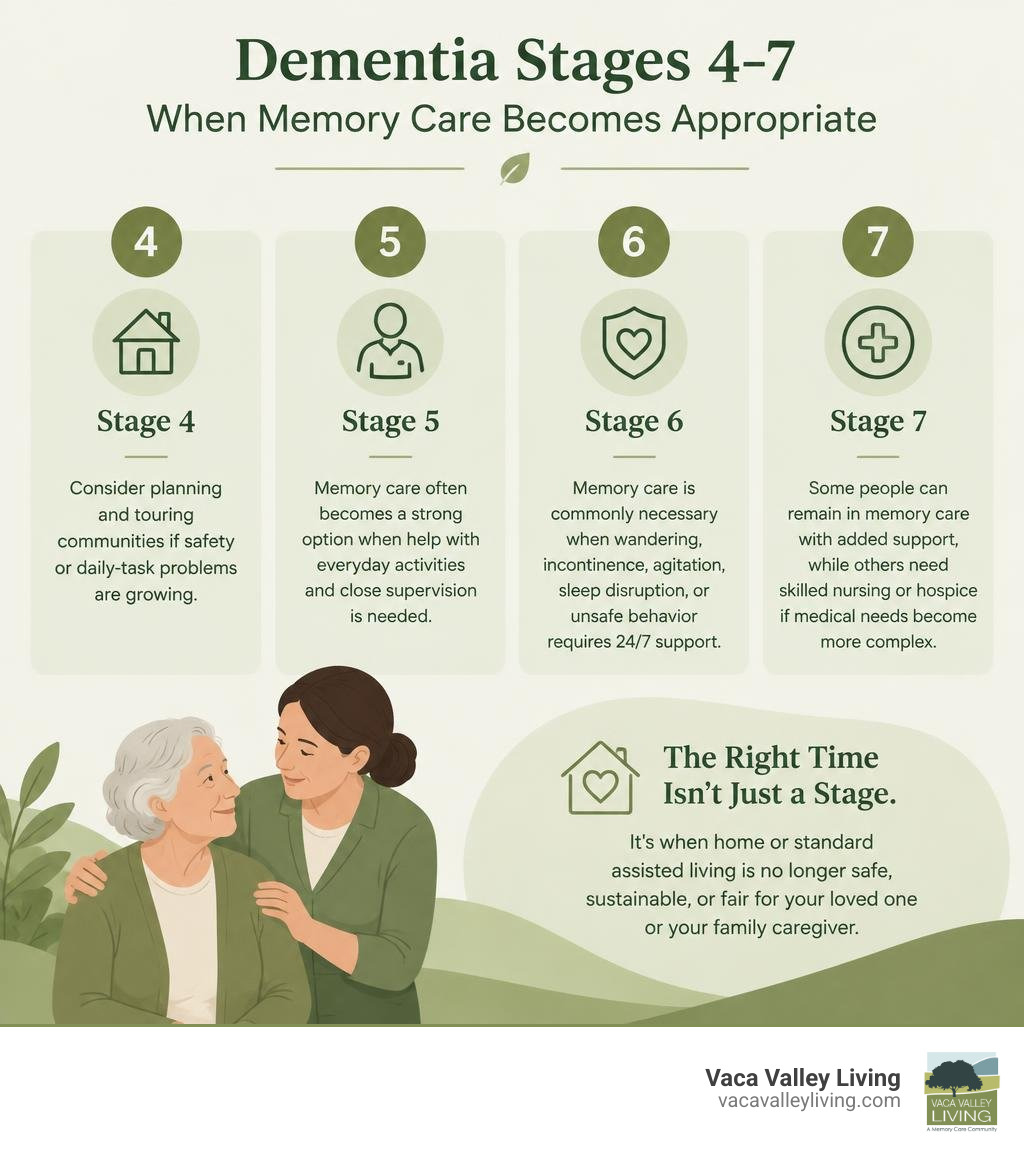
Memory care is most often appropriate during middle-stage dementia, roughly Stage 5 or Stage 6 on the 7-stage scale. This is when a person may need daily help with dressing, bathing, medications, meals, or toileting, and can no longer stay safe without regular supervision.
For families asking what stage of dementia is memory care needed, these are the clearest signals:
- Stage 4: Consider planning and touring communities if safety or daily-task problems are growing.
- Stage 5: Memory care often becomes a strong option when help with everyday activities and close supervision are needed.
- Stage 6: Memory care is commonly necessary when wandering, incontinence, agitation, sleep disruption, or unsafe behavior requires 24/7 support.
- Stage 7: Many residents remain in memory care with specialized support and hospice coordination as needs evolve.
A diagnosis or stage number alone does not decide the move. The right time is when living at home is no longer safe, sustainable, or fair to the person or family caregiver. Planning before a wandering incident, fall, or caregiver crisis gives families more choices and a calmer transition.
Understanding What Stage of Dementia Is Memory Care Most Appropriate
Navigating cognitive decline can feel like wandering through an unfamiliar landscape without a map. Understanding clinical models helps demystify the changes you see in your loved one, transforming sudden behaviors into predictable milestones that you can plan around with confidence.
Evaluating What Stage of Dementia Is Memory Care Needed in the 7-Stage Scale
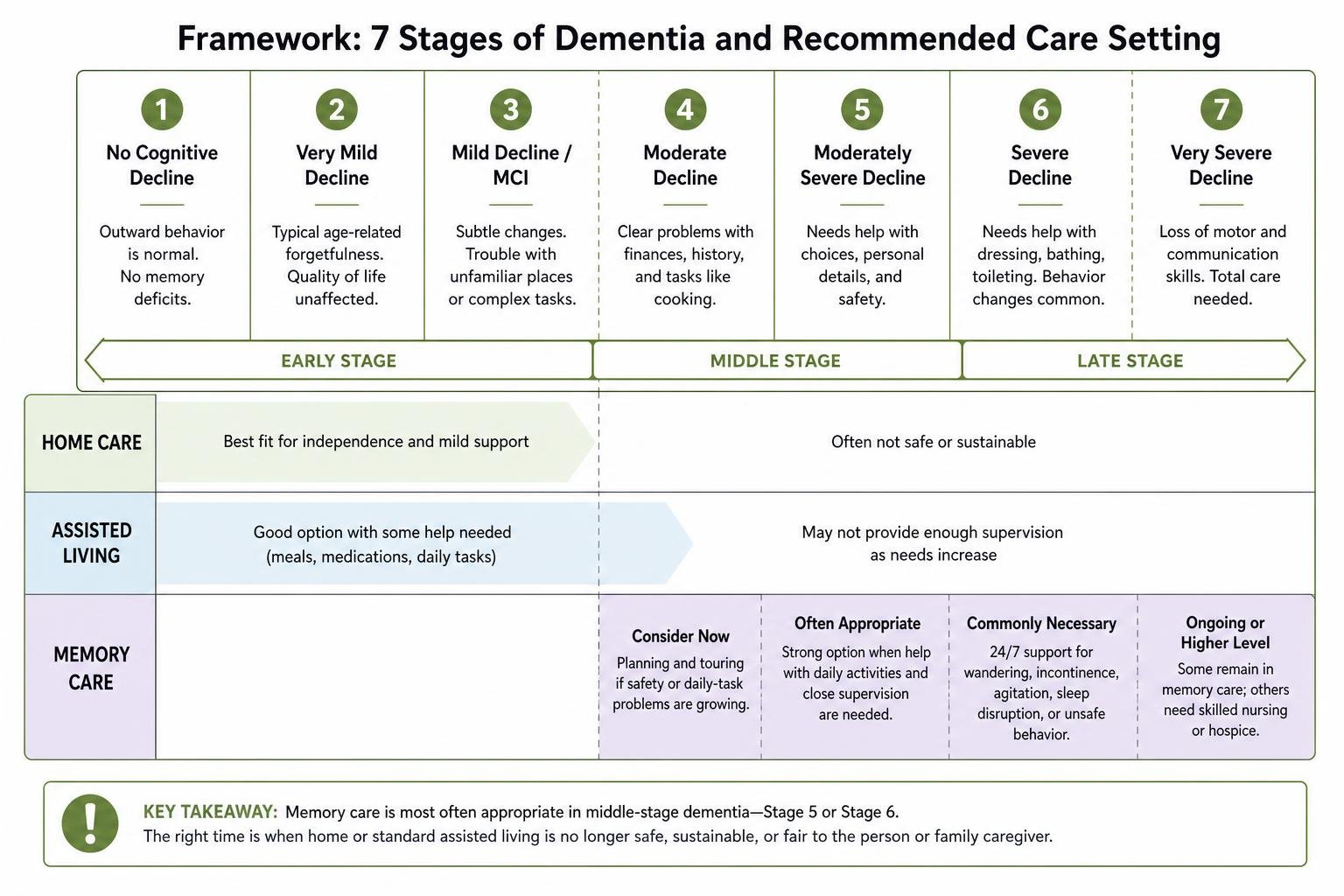
Clinicians frequently utilize the Global Deterioration Scale (GDS) to measure cognitive decline across seven distinct phases:
- Stage 1 (No Cognitive Decline): Outward behavior is entirely normal. There are no memory deficits or functional impairments.
- Stage 2 (Very Mild Cognitive Decline): Typical age-related forgetfulness, such as misplacing keys or forgetting names. Quality of life remains unaffected.
- Stage 3 (Mild Cognitive Decline / Mild Cognitive Impairment): Subtleties emerge, including getting lost traveling to unfamiliar locations or struggling with complex work tasks. At this point, proactive families often explore early stage dementia care strategies to support independence while putting legal and financial frameworks in place.
- Stage 4 (Moderate Cognitive Decline / Mild Dementia): Clear deficits appear in managing finances, remembering personal histories, and handling sequential tasks like cooking. While independent living is still possible with family support, instrumental daily activities become difficult.
- Stage 5 (Moderately Severe Decline / Moderate Dementia): This is the primary entry threshold for memory care. Individuals can no longer live safely on their own. They struggle to choose season-appropriate clothing, recall personal details like their phone number, or navigate familiar environments.
- Stage 6 (Severe Cognitive Decline / Moderately Severe Dementia): Memory loss deepens significantly. Assistance is needed for dressing, bathing, and toileting. Sleep-wake cycles often fracture, and personality changes or behavioral challenges emerge. Twenty-four-hour professional supervision becomes essential.
- Stage 7 (Very Severe Decline / Late-Stage Dementia): Motor skills, verbal communication, and swallowing abilities decline progressively. Care shifts toward total physical assistance, skin integrity maintenance, and comfort-focused palliative measures.
Early-Stage vs. Middle-Stage vs. Late-Stage Care Frameworks
Many doctors simplify the progression into a three-stage clinical model:
- Early-Stage (Mild): The individual retains physical autonomy but experiences lapses in short-term recall and organization. The primary goal is maintaining routine, engagement, and advance-care planning.
- Middle-Stage (Moderate): As the longest phase—often spanning multiple years—this stage brings significant loss of functional independence. As outlined by Harvard Health, specialized residential memory communities provide the structured, secure environments necessary when living at home becomes unsafe.
- Late-Stage (Severe): The focus transitions toward comfort, dignity, sensory connections, and comprehensive hands-on care.
Critical Behavioral and Safety Triggers for Transitioning to Memory Care
While clinical scales offer a valuable roadmap, real-world transitions are almost always prompted by safety risks and daily challenges at home.
What Stage of Dementia Is Memory Care Recommended for Behavioral Symptoms and Wandering?
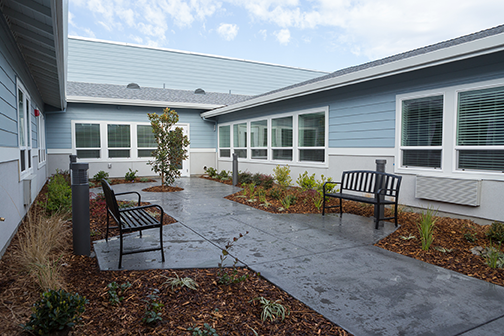
Wandering is among the most alarming challenges families experience. In Stages 5 and 6, individuals may experience intense disorientation, packing bags to "go home" or walking out the front door into busy traffic. Moving to a dedicated secure memory care unit provides secure perimeter protection, keypad-entry courtyards, and continuous monitoring that lets residents walk freely without risk of elopement.
Behavioral changes also intensify during these middle phases. Late-afternoon confusion—known as sundowning—can spark acute anxiety, paranoia, or restlessness. Families often ask what stage is aggression in dementia most prominent; these responsive behaviors typically peak during Stage 6 as communication barriers increase. Specialized communities train their teams to identify unmet physical or sensory needs before distress escalates, de-escalating tension with patience and empathy.
Managing Incontinence, ADL Decline, and Caregiver Exhaustion
Caring for someone experiencing severe cognitive decline is physically and emotionally demanding. As people enter Stages 5 and 6, they often require help with:
- Safe bathroom transfers and incontinence care
- Bathing, hair washing, and oral hygiene
- Proper clothing selection and dressing
- Medication management to avoid missed or duplicate doses
- Balanced nutrition and adequate hydration
When family caregivers spend all their energy managing personal hygiene, interrupted sleep, and safety risks, caregiver burnout follows quickly. Transitioning to professional care allows personalized dementia care plans to shoulder the daily physical workload, giving families back their primary role: being loving sons, daughters, and spouses again.
Comparing Care Needs Across Dementia Stages
Understanding how care settings align with cognitive stages ensures your loved one receives the right level of support without unnecessary moves.
| Dementia Stage | Primary Care Setting | Core Care Needs | Staffing & Security Model |
|---|---|---|---|
| Stage 1–3 (Early) | Independent Living / Home | Organization, reminders, transportation | Independent with occasional family assistance |
| Stage 4 (Mild) | Assisted Living / Residential Care | Meal preparation, medication reminders, finance management | Standard assisted living staffing; open residential setting |
| Stage 5 (Moderate) | Memory Care | Dressing assistance, structured routines, wandering prevention | Dementia-trained caregivers; secured access; structured activities |
| Stage 6 (Severe) | Memory Care | Full ADL assistance, incontinence care, behavioral support | 24/7 dedicated supervision; higher staff-to-resident ratios |
| Stage 7 (Late) | Memory Care | Total physical transfers, feeding assistance, palliative comfort | Dedicated memory care team, hospice coordination, comfort care |
Specialized Programming, Sensory Support, and Environmental Design
Unlike standard assisted living, a purpose-built dementia care community is designed specifically to reduce cognitive fatigue and disorientation.
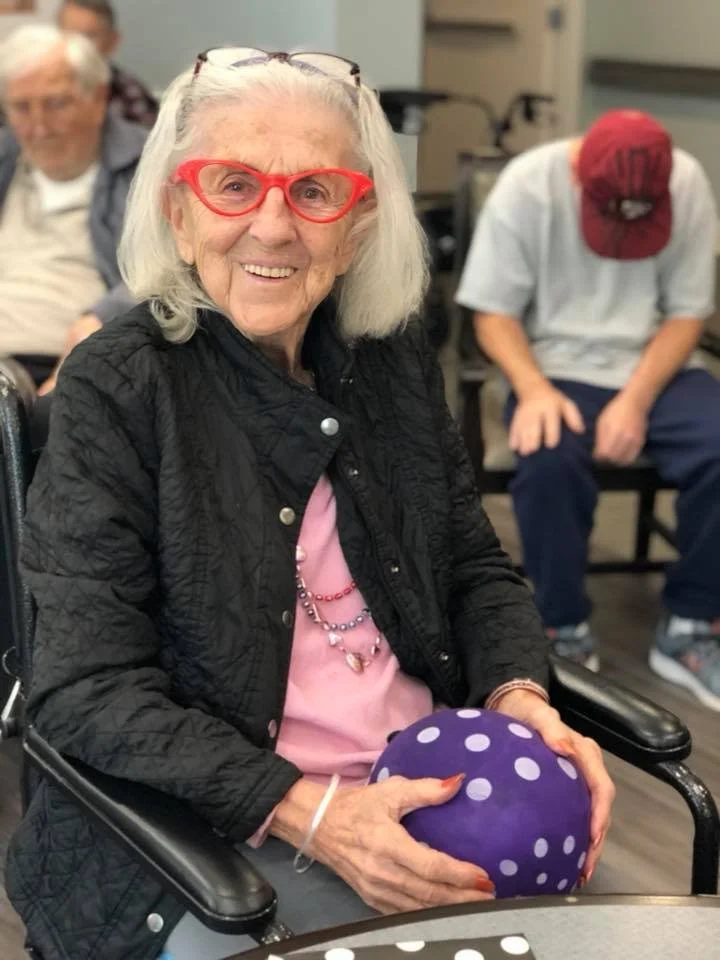
Communities utilize specific architectural and therapeutic features to support daily life:
- Wayfinding Navigation: Contrast-edged flooring, visual cues, and color-coded corridors help residents navigate common rooms independently.
- Sensory Engagement: Through dedicated senior memory care programs, residents participate in music therapy, tactile art, gardening, and reminiscence exercises that stimulate neural pathways without causing sensory overload.
- Structured Daily Rhythms: Consistent daily schedules for dining, group exercise, and relaxation reduce anxiety by establishing clear expectations throughout the day.
Timeline Expectations, Length of Stay, and Financial Planning
Making a long-term care decision involves practical considerations regarding disease progression, length of stay, and financial planning.
Average Stay Duration and Dementia Progression Timelines
On average, a person diagnosed with Alzheimer's lives 4 to 8 years post-diagnosis, though some live up to 20 years depending on overall health. Within specialized memory communities, the average length of stay ranges from two to three years.
- Early/Mid-Stage Move-Ins (Stage 4–5): Residents who move during these stages often stay three or more years. Early transitions allow them to bond with caregivers, navigate their surroundings comfortably, and establish comforting routines before cognitive decline deepens.
- Late-Stage Move-Ins (Stage 6–7): Stays are typically shorter, focusing on palliative comfort, skin health, and individualized physical support. End-stage dementia itself generally spans anywhere from several weeks up to two years.
Understanding Memory Care Costs and Payment Options in 2026
Memory care costs reflect the higher staffing ratios, specialized training, and secure design required for cognitive care. In 2026, national averages for residential memory care hover around $6,999 to $7,900 per month, depending on location, room style, and level-of-care tiers.
When funding specialized residential memory care, families combine several resources:
- Private Pay & Personal Assets: Proceeds from home sales, retirement savings, pensions, and bridge loans.
- Long-Term Care Insurance: Policies covering non-medical assistance with daily living activities (ADLs).
- Veterans Benefits: The VA Aid and Attendance pension provides monthly stipends to qualifying wartime veterans and surviving spouses.
- Medicaid HCBS Waivers: While traditional Medicare does not cover room-and-board fees in residential care, Home and Community-Based Services (HCBS) waivers in many states help eligible seniors offset the care-service portion of monthly expenses.
Frequently Asked Questions About Dementia Progression and Memory Care
Can someone in early-stage dementia benefit from moving into memory care?
Yes, particularly if an individual lives alone and experiences isolation, poor nutrition, or anxiety regarding their memory lapses. While many seniors in Stage 3 or 4 thrive in standard assisted living or with family support, early placement in a memory setting provides structured social connections, cognitive enrichment, and a gradual, low-stress acclimation to their new home.
How long does late-stage dementia typically last in a memory care facility?
Late-stage dementia (Stage 7) typically lasts between several months and two years. During this time, our care philosophy emphasizes comfort, dignified physical care, skin integrity preservation, and close coordination with specialized hospice partners.
What Support Is Available at Different Stages of Memory Care?
Support scales alongside your loved one's needs. In earlier stages, the focus centers on social engagement, purposeful activities, and gentle reminders. As dementia progresses into moderate and severe stages, care expands to 24/7 continuous oversight, full physical assistance with bathing and dressing, specialized dining support, and behavioral de-escalation in a secure environment.
Finding Compassionate, Specialized Care for Every Dementia Stage
Deciding when to transition to memory care is an act of deep love and protection. Choosing specialized residential support before an emergency occurs ensures your loved one settles into a secure, nurturing environment where their dignity and individuality are honored every day.
At Vaca Valley Living, we bring over 50 years of family-owned experience to caring for seniors across Solano County and nearby Northern California communities. If you are exploring vacaville ca memory care options for your parent or spouse, our experienced team is here to help you navigate every stage of this journey.
We invite you to reach out, ask questions, and schedule a tour and personalized consultation to see how our home-like community and individualized care plans bring genuine peace of mind to the families we serve.