
How to Search for a Dementia Specialist Near Me

Finding the right physician begins with knowing where to look and what credentials matter most. While a primary care physician can identify baseline cognitive changes, diagnosing specific neurodegenerative conditions requires specialized medical training.
When you look for a specialist, explore accredited health systems and specialized memory clinics throughout Northern California. Major academic and regional medical centers across Solano, Yolo, Sacramento, Napa, and Contra Costa counties frequently house dedicated memory and cognitive disorder clinics. If you are researching providers, look for board certification in neurology, psychiatry, or geriatric medicine through the American Board of Psychiatry and Neurology (ABPN) or the American Board of Internal Medicine (ABIM).
To evaluate prospective doctors:
- Examine hospital affiliations: Specialists connected to comprehensive medical systems often provide seamless access to advanced neuroimaging (such as 3T MRI and amyloid PET scans) and multidisciplinary team support.
- Review patient feedback: Look at verified patient satisfaction ratings to see how effectively the physician communicates, listens to caregiver concerns, and explains complex diagnoses.
- Check local accessibility: For families in Solano County, finding providers like Dr. Sadek Debwan in Vacaville or Dr. Amar Anand in Vallejo provides close, experienced neurological support. Caregivers in Yolo County can also explore top-rated clinical networks through resources detailing memory care physicians in Winters and surrounding communities.
Scheduling a Dementia Specialist Near Me for In-Person or Telehealth Visits
Wait times to see cognitive neurologists can range from several weeks to months. To reduce access barriers, many memory clinics now operate hybrid care models that blend virtual consultations with in-person physical assessments.
Telehealth appointments work well for:
- Initial clinical intakes and medical history reviews.
- Routine follow-up visits to monitor medication tolerance.
- Caregiver counseling and behavioral check-ins.
- Reviewing blood biomarker results or genetic testing panels.
However, an initial comprehensive evaluation still requires an in-person visit. Physical neurological exams, reflex testing, balance evaluations, and formal pen-and-paper neuropsychological testing must occur in an office setting to ensure diagnostic precision.
Filtering by Insurance Networks and Provider Ratings
Before scheduling an evaluation, verify the clinic's network participation. Most cognitive neurology clinics and hospital-based memory centers accept original Medicare Part B, Medicare Advantage plans, and major commercial health insurance networks such as Blue Cross Blue Shield, Aetna, Cigna, and UnitedHealthcare.
When calling a specialist's office, confirm:
- Is the physician an in-network provider for your specific plan tier?
- Does your insurance require a formal referral from a primary care doctor before covering specialist consultations?
- Are specialized diagnostic tests (such as neuropsychological evaluations or PET imaging) billed separately, and do they require prior authorization?
Looking at provider ratings—often rated on a 5-star scale—gives helpful context regarding bedside manner and administrative efficiency. High-scoring physicians typically stand out for involving family caregivers in decision-making and clearly explaining the rationale behind every diagnostic test.
Types of Doctors Who Specialize in Memory Care and Dementia
Dementia care is rarely managed by a single discipline. Different medical specialists focus on specific aspects of neurodegenerative disease, from structural brain imaging to behavioral management and overall physical health.
| Specialist Type | Primary Clinical Focus | Diagnostic & Treatment Tools Used | Best Suited For |
|---|---|---|---|
| Cognitive Neurologist | Brain biology, structural disease, differential diagnosis | 3T MRI, PET scans, cerebrospinal fluid (CSF) testing, blood biomarkers, targeted medications | Accurate identification of dementia subtypes (Alzheimer's, FTD, Lewy Body, Vascular) |
| Geriatrician | Complex medical care for older adults, polypharmacy | Comprehensive geriatric assessments, functional evaluations, medication reduction | Older adults managing multiple chronic physical conditions alongside cognitive decline |
| Geriatric Psychiatrist | Mood, behavioral changes, neuropsychiatric symptoms | Psychiatric assessments, behavioral interventions, psychotropic medication management | Managing severe agitation, sleep disruption, paranoia, depression, or hallucinations |
| Neuropsychologist | Brain-behavior relationships, cognitive mapping | Multi-hour standardized cognitive and psychometric testing batteries | Pinpointing specific cognitive strengths and deficits; detecting early stages |
Neurologists and Cognitive Specialists
Neurologists specialize in the physical anatomy, pathways, and pathology of the central nervous system. When diagnosing memory disorders, subspecialized cognitive or behavioral neurologists look closely at structural brain changes, protein accumulation, and vascular health.
Leading academic researchers and clinicians, such as Dr. Julio C. Rojas-Martinez and Dr. Zachary A. Miller at the UCSF Memory and Aging Center, utilize advanced biomarker research and clinical evaluations to differentiate between conditions like Alzheimer's disease, frontotemporal dementia (FTD), corticobasal degeneration, and Lewy body dementia. Similarly, cognitive specialists like Dr. Kaitlin Seibert focus on integrating emerging biomarker diagnostic tools with caregiver-inclusive treatment plans.
A neurologist will typically order high-resolution brain MRIs to measure hippocampal volume, look for microvascular strokes, or rule out structural issues like normal pressure hydrocephalus or brain tumors.
Geriatricians and Geriatric Psychiatrists
While neurologists focus heavily on the underlying neurological pathology, geriatricians and geriatric psychiatrists focus on whole-person well-being, everyday functioning, and emotional health.
- Geriatricians: These primary care doctors have advanced training in the physiology of aging. They evaluate how chronic conditions (like hypertension, diabetes, and osteoarthritis) interact with cognitive decline. A primary benefit of seeing a geriatrician is a thorough medication review to identify and discontinue drugs that cause brain fog or increase fall risks.
- Geriatric Psychiatrists: Dementia frequently causes distressing neuropsychiatric symptoms, including anxiety, apathy, sleep disturbances, paranoia, and delusions. Geriatric psychiatrists specialize in non-pharmacological behavioral interventions and the careful prescribing of psychiatric medications when necessary. For ongoing emotional and behavioral support, connecting with specialized therapists—such as dementia therapists in Vacaville or geriatric therapists in Davis—helps families navigate communication hurdles and mood shifts.
Warning Signs That Warrant an Immediate Cognitive Evaluation
Occasional forgetfulness—like misplacing car keys or forgetting an acquaintance's name—is a normal part of aging. However, consistent cognitive decline that interferes with safety, work, or daily life requires an evaluation by a specialist.
If you observe the following warning signs, schedule a cognitive evaluation:
- Disruptive memory loss: Asking the exact same question repeatedly, relying entirely on reminder notes for basic routines, or forgetting recently learned information.
- Executive function breakdown: Inability to balance a checkbook, follow a familiar cooking recipe, manage monthly utility bills, or track medication schedules.
- Disorientation to time and place: Losing track of dates, seasons, or getting lost while driving along familiar neighborhood routes.
- Visual-spatial difficulties: Trouble judging distances, identifying colors, or reading road signs safely.
- Language and conversational problems: Stopping in the middle of a sentence with no idea how to continue, struggling for basic vocabulary, or calling everyday items by incorrect names.
- Poor judgment and decision-making: Falling victim to financial scams, neglecting personal hygiene, or wearing winter clothes on a warm summer day.
Catching these symptoms early makes a measurable difference. Establishing proactive early stage dementia care allows your loved one to participate in their own medical choices, explore lifestyle adjustments, and access treatments when they are most effective. If changes begin before age 65, reviewing our early onset dementia care guide can help you address the unique occupational and financial needs that arise for younger adults.
Behavioral Changes, Agitation, and Safety Risks
Cognitive decline often alters emotional responses and personality traits before obvious memory loss becomes apparent. A parent who was once warm and outgoing may become uncharacteristically withdrawn, irritable, fearful, or suspicious.
As neurological changes advance, families may encounter heightened frustration, sleep reversal, wandering, or sudden emotional outbursts. When changes progress, understanding what stage aggression occurs in dementia helps caregivers identify environmental triggers—such as sensory overload, unmet physical needs, or pain—and respond with supportive de-escalation strategies rather than confrontation.
What Services to Expect During a Comprehensive Dementia Assessment
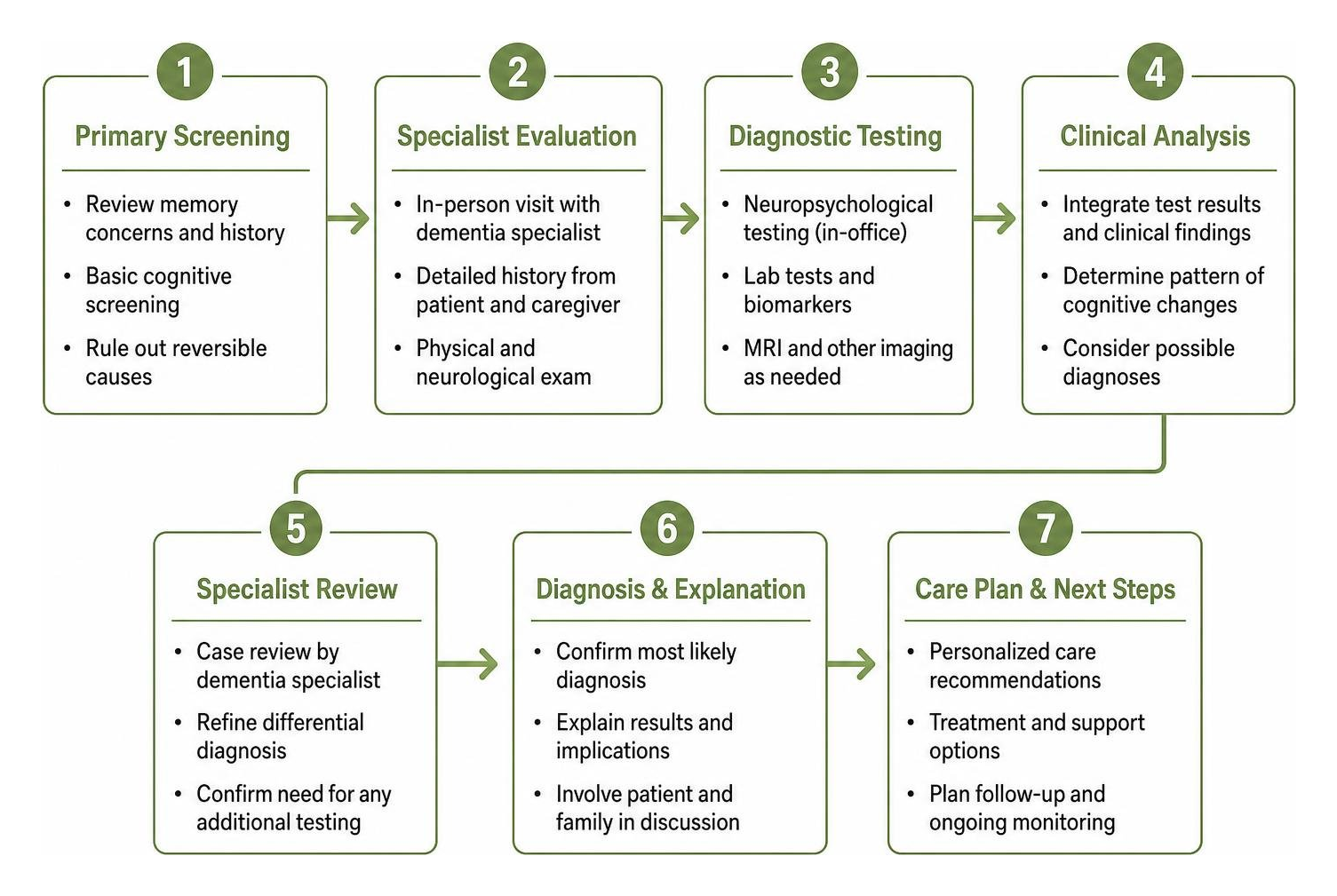
A comprehensive memory evaluation is a thorough process that typically spans several appointments. Dementia specialists use a systematic diagnostic battery to evaluate cognitive domains, rule out reversible causes of memory loss, and pinpoint specific neurological disorders.
Key components of an evaluation include:
- Medical history and physical exam: A review of past medical conditions, cardiovascular health, sleep patterns, family neurological history, and a physical neurological exam assessing reflexes, gait, muscle tone, and coordination.
- Standardized cognitive screening: Tools such as the Montreal Cognitive Assessment (MoCA) or Mini-Mental State Examination (MMSE) to evaluate orientation, attention, working memory, and spatial reasoning.
- Neuropsychological testing: Multi-hour psychometric testing administered by a neuropsychologist to map cognitive strengths and deficits in detail.
- Structural and metabolic imaging: High-resolution MRI to measure localized brain atrophy and white matter disease, or fluorodeoxyglucose (FDG) PET scans to evaluate glucose metabolism in specific brain regions.
- Biomarker and laboratory diagnostics: Blood panels checking thyroid hormone, vitamin B12 levels, and metabolic function to rule out reversible issues. Clinicians also use blood-based biomarkers (such as p-tau217) and cerebrospinal fluid (CSF) assays to detect amyloid and tau proteins.
- Infusion therapy evaluations: For eligible patients diagnosed with early-stage Alzheimer’s disease, specialists evaluate candidacy for FDA-approved disease-modifying monoclonal antibody therapies (like lecanemab and donanemab), which aim to slow cognitive decline by clearing amyloid plaques.
- Clinical trial access: Many regional memory clinics provide access to observational studies and clinical trials testing novel compounds, dietary approaches, and non-pharmacological interventions.
Clinicians such as Dr. Verna R. Porter emphasize combining advanced biological diagnostics with lifestyle adjustments—including Mediterranean-style nutrition, restorative sleep hygiene, and targeted physical exercise—to preserve cognitive vitality.
Personalized Brain Health Plans and Ongoing Care Management
Receiving a diagnosis marks the start of an ongoing care partnership. A specialist will help you build a personalized brain health plan tailored to your loved one's specific stage of cognitive decline.
These care plans typically incorporate:
- Medication management: Initiating cholinesterase inhibitors (such as donepezil or rivastigmine) or NMDA receptor antagonists (memantine) to support neurotransmitter function, alongside careful monitoring for side effects.
- Cardiovascular optimization: Managing blood pressure, cholesterol, and blood sugar levels, which directly influence cerebral blood flow and vascular brain health.
- Structured lifestyle protocols: Implementing daily cognitive stimulation, safe physical activity routines, and social engagement opportunities.
- Care coordination: Connecting families with comprehensive dementia care plans and community-based dementia support services to ensure families receive practical, social, and emotional assistance.
How to Prepare for Your First Appointment With a Dementia Doctor
A well-prepared visit helps the specialist get a clear, accurate clinical picture. Because doctor appointments can sometimes feel overwhelming, organizing your medical records and observations in advance ensures you cover your most important concerns.
Bring these items to the initial consultation:
- A detailed symptom log: Keep a two-to-three-week journal recording specific examples of memory lapses, confusion, mood swings, changes in sleep, or difficulties with daily tasks. Note the time of day these incidents happen.
- Complete medication inventory: Bring every prescription drug, over-the-counter medication, sleep aid, vitamin, and dietary supplement your loved one takes, including exact dosages.
- Past medical records: Bring copies of recent blood test results, cardiology reports, and prior brain imaging (CDs or flash drives containing actual MRI or CT scan files, not just the written radiologist report).
- Family health history: Document any history of dementia, Parkinson’s disease, stroke, depression, or other neurological conditions among parents, siblings, or grandparents.
- A trusted companion: Having a family member or close friend present is vital. A companion offers emotional support, provides objective observations about home routines, and takes detailed notes during the doctor's explanation.
Key Questions to Ask a Dementia Specialist Near Me
When meeting with the physician, asking focused questions will clarify the diagnosis, prognosis, and next practical steps:
- What specific type of dementia or cognitive condition do these test results indicate?
- What stage of cognitive change is my loved one experiencing right now?
- Are there reversible factors—such as medication side effects, sleep apnea, or vitamin deficiencies—contributing to these symptoms?
- What additional diagnostic testing (like PET scans, biomarker tests, or neuropsychological evaluations) do you recommend?
- What are the realistic benefits and side effects of starting disease-modifying or symptom-managing medications?
- What safety measures should we put in place today regarding driving, medication management, and living independently?
- How often should we schedule follow-up appointments to track changes in memory and thinking?
- What community support resources, education programs, and clinical trial opportunities do you recommend for our family?
Long-Term Planning and Transitioning Care
A progressive diagnosis means care needs will naturally evolve over time. Addressing legal, financial, and residential considerations early prevents stressful emergencies later on.
Early in the process, work together to complete durable power of attorney documents for both healthcare and finances, establish advance healthcare directives, and update estate plans while your loved one retains the legal capacity to express their wishes.
As dementia progresses into the moderate and advanced stages, around-the-clock safety, structured routines, and specialized engagement become essential. At Vaca Valley Living, our dedicated secure memory care unit provides a protected, home-like environment that eliminates wandering hazards while preserving personal dignity. Learning more about the benefits of specialized memory care can help your family determine when a supportive, 24-hour residential community offers the safest, most enriching path forward.
Frequently Asked Questions About Dementia Specialists
What is the difference between a neurologist and a geriatric psychiatrist for dementia care?
A neurologist focuses primarily on the structural, biological, and physical disorders of the brain. They evaluate brain imaging (MRI, PET), conduct reflex and motor exams, run biomarker assays, and diagnose specific underlying diseases such as Alzheimer’s, Vascular dementia, or Lewy Body dementia.
A geriatric psychiatrist specializes in the mental health, behavioral, and emotional symptoms that accompany cognitive decline. They manage challenges like severe anxiety, mood swings, visual hallucinations, delusions, sleep disturbances, and behavioral agitation using targeted psychiatric care and non-pharmacological behavioral techniques. Both specialists often collaborate to provide well-rounded care.
Does Medicare cover comprehensive dementia diagnostic testing and visits?
Yes. Original Medicare Part B covers medically necessary specialist office visits, clinical cognitive evaluations, diagnostic blood tests, and standard brain imaging (such as structural MRIs and CT scans) ordered by a physician to evaluate cognitive impairment.
Medicare also covers formal neuropsychological testing administered by a licensed clinical neuropsychologist and includes specific coverage pathways for amyloid PET scans and FDA-approved disease-modifying infusion treatments when clinical criteria are met. Patients are generally responsible for standard Part B deductibles and 20% coinsurance unless they have supplemental (Medigap) coverage.
How long does a full memory and cognitive evaluation usually take?
A complete evaluation is rarely finished in a single visit. The diagnostic process typically spans two to four appointments across several weeks:
- Initial Clinical Intake (60–90 minutes): Review of medical history, physical and neurological examination, and basic cognitive screening.
- Diagnostic Testing (1–4 hours): Outpatient imaging appointments (MRI or PET) and dedicated neuropsychological testing sessions.
- Results and Care Planning Consultation (45–60 minutes): Review of diagnostic findings, confirmation of diagnosis, discussion of treatment options, and establishment of a long-term care management plan.
Conclusion
Noticing memory lapses or behavioral changes in a loved one can bring up uncertainty, but seeking a professional medical evaluation brings clarity, practical solutions, and peace of mind. An accurate, early diagnosis helps you access modern treatments, establish supportive lifestyle changes, and make informed choices for the future.
At Vaca Valley Living, we understand the emotional journey families navigate after a memory loss diagnosis. With over 50 years of family-owned experience serving seniors throughout Solano County and neighboring Northern California communities, we provide compassionate 24-hour staffing, individualized care plans, and an enriching, home-like environment. Discover how our residential memory care and personalized support can help your loved one thrive with dignity and joy. Connect with our dedicated team today to schedule a personal tour and consultation.