Assisted Living vs. Memory Care vs. a Nursing Home: Which Fits?

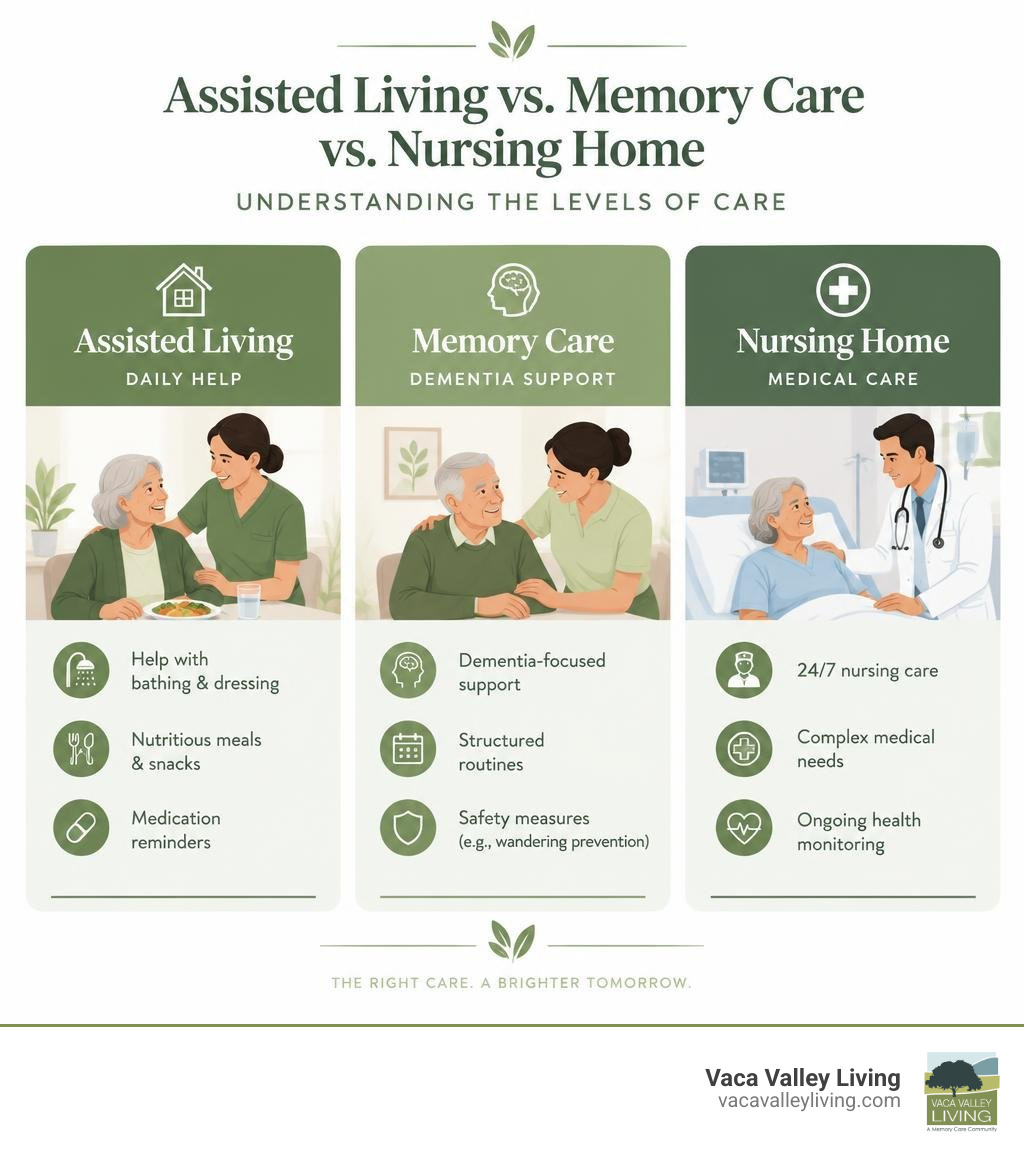
Assisted living helps with daily tasks such as bathing, meals, and medications. Memory care adds dementia-focused support, structured routines, and safety measures for risks such as wandering. A nursing home provides around-the-clock nursing care for people with complex medical needs.
For a parent with Alzheimer’s, the key question is whether they need more help with daily life, more support to stay safe, or ongoing medical care. The answer can change over time, so choose based on what they need now and ask what would prompt a move later.
Navigating long-term care decisions can feel overwhelming for any family. With roughly 7 million Americans age 65 and older living with Alzheimer's, and one in five Americans projected to be 65 or older by 2030, understanding the senior living continuum is more essential than ever. Whether your loved one is showing early signs of cognitive decline or experiencing increasing physical frailty, choosing the right environment ensures dignity, safety, and comfort.
Assisted Living vs Memory Care vs Nursing Home: Understanding the Levels of Care
When families evaluate care settings, they are primarily balancing two factors: cognitive support and clinical medical oversight. While each setting provides housing, meals, and custodial care (assistance with activities of daily living, or ADLs), they serve distinct resident profiles.
Understanding the debate of assisted living vs memory care vs nursing home begins with identifying your loved one's specific baseline needs.
| Feature | Assisted Living | Memory Care | Nursing Home (SNF) |
|---|---|---|---|
| Primary Focus | Daily independence & personal assistance | Cognitive engagement & dementia security | High-acuity clinical & 24/7 medical care |
| Medical Staffing | Nurses on call / limited daily hours | Nurses on site / specialized dementia staff | 24/7 licensed RNs and LPNs on floor |
| Physical Security | Standard access; open doors | Keypad secured; wander management | Secured wings or standard clinical units |
| Staff Training | Standard personal care assistance | Certified dementia care & behavioral techniques | Advanced clinical nursing & rehabilitation |
| Average Monthly Cost (2026) | ~$5,830 | ~$6,999 – $8,000 | ~$8,500 – $10,000+ |
| Primary Payor | Private pay, VA benefits, LTC insurance | Private pay, VA benefits, LTC insurance | Medicaid (long-term), Medicare (short-term rehab) |
Assisted Living: Supportive Daily Independence
Assisted living is designed for older adults who value their independence but require extra hands for daily routines. Residents typically live in private or semi-private apartments and enjoy a vibrant social calendar.
Services in assisted living include:
- Assistance with ADLs (dressing, bathing, grooming, and mobility)
- Medication reminders and management
- Nutritious restaurant-style meals, housekeeping, and laundry
- Scheduled transportation for shopping and medical visits
- Social events, fitness classes, and educational workshops
Assisted living is ideal for individuals who are cognitively intact or experiencing very mild forgetfulness, but who can still find their way around the building and follow emergency instructions.
Memory Care: Specialized Cognitive Support and Security
For seniors experiencing progressive dementia or Alzheimer's, standard communities can become confusing or even unsafe. Exploring what is a memory care facility reveals a purpose-built environment designed entirely around cognitive safety.
Up to 70% of assisted living residents have some cognitive impairment, but memory care caters specifically to those requiring comprehensive daily structure and supervision. While people often ask what is the difference between memory care and dementia care, dementia care refers to the overall clinical approach, whereas memory care is the dedicated residential setting delivering it.
Memory care provides:
- Secure perimeters and keypad exits to prevent wandering
- Low caregiver-to-resident ratios for responsive attention
- Life-enrichment activities that stimulate memory (music, art, and reminiscence therapy)
- Calming architectural layouts designed to reduce anxiety and disorientation
Nursing Homes: 24/7 Skilled Clinical Care
A nursing home—also known as a skilled nursing facility (SNF)—is a licensed medical environment. Many families wonder, is memory care considered skilled nursing? The answer is no. While memory care specializes in cognitive and behavioral support, skilled nursing provides complex clinical interventions.
Nursing homes serve individuals with significant medical conditions requiring around-the-clock monitoring by Registered Nurses (RNs) and Licensed Practical Nurses (LPNs). This includes:
- Post-surgical rehabilitation (physical, speech, and occupational therapy)
- Intravenous (IV) therapy, catheter care, and advanced wound management
- Full-dependency care for bedbound residents or those requiring feeding tubes
- Respiratory treatments and intensive chronic illness management
Safety, Staff Ratios, and Environmental Design Differences
The physical environment plays a massive role in a resident's quality of life. An open, expansive assisted living community can be wonderful for an active senior, but it can cause severe anxiety or navigation hazards for someone with moderate dementia.
Safety and Wandering: Assisted Living vs Memory Care vs Nursing Home
Safety concerns, particularly wandering and exit-seeking, are among the most common reasons families seek residential memory care.
In traditional assisted living, doors remain unlocked to allow residents to come and go freely. In memory care, safety is built into the architecture:
- Secured Entrances and Exits: Roughly 88% of memory care communities feature secure perimeters with keypad entry systems.
- Wander Management Systems: Approximately 41% of communities utilize discreet electronic monitoring or wearable sensors that alert staff if a resident nears an exit.
- Continuous Hallways and Visual Landmarks: Hallways often loop back to central common areas without dead ends, preventing feelings of frustration. Color-coded walls and personalized shadow boxes outside rooms help residents easily find their living spaces.
- Enclosed Outdoor Courtyards: Secure gardens allow residents to enjoy fresh air and sunshine safely without the risk of wandering off property.
Nursing homes provide clinical safety measures, such as hospital beds, call lights, and lift equipment, but may lack the specialized, home-like memory cues found in dedicated dementia environments.
Staff Training and Dementia Competency
Staffing ratios and training philosophies differ considerably across these care models:
- Assisted Living: Caregivers assist with daily tasks, and a nurse may be on site for limited hours or available on call. Ratios often range from 1 caregiver for every 10 to 15 residents during the day.
- Memory Care: Staff receive specialized training covering dementia stages, verbal and non-verbal communication techniques, sundowning management, and de-escalation of agitation. Ratios are much tighter, often 1 caregiver for every 5 to 7 residents, ensuring attentive oversight.
- Nursing Homes: Staffing is heavily clinical, governed by federal and state minimum nursing hours per resident day. The emphasis is on medical precision, medication administration, and clinical charting.
Reviewing clinical guidance on dementia placement emphasizes that specialized dementia training for staff is one of the most reliable indicators of a resident's daily comfort and reduced behavioral distress.
Costs, Insurance Coverage, and Payment Options
Understanding how care is funded is crucial for long-term financial stability. Costs reflect the level of staffing, medical oversight, and specialized programming required.

Assisted Living vs Memory Care vs Nursing Home Costs in 2026
The national median cost of assisted living stands at approximately $5,830 per month ($74,400 annually). Memory care generally costs 20% to 30% more due to higher staffing ratios and security infrastructure, averaging between $6,999 and $8,000 monthly.
Understanding dementia assisted living cost structures helps families evaluate whether pricing is all-inclusive or tiered based on progressive levels of care. Meanwhile, as detailed in recent elder care cost trends, nursing homes represent the highest cost category, with semi-private rooms averaging $8,500 per month and private rooms exceeding $10,000 monthly ($100,000 to $115,000+ per year).
Insurance, Medicare, and Veterans Benefits Coverage
A common point of confusion is what health insurance will pay for:
- Medicare: Medicare does not cover long-term custodial room and board in assisted living or memory care. However, Medicare Part A may cover short-term rehabilitation stays in a skilled nursing facility (up to 100 days following a qualifying three-day inpatient hospital stay). Families searching for nursing homes that accept Medicare are typically looking for post-acute clinical rehab.
- Medicaid: Medicaid is the primary payer for long-term nursing home care once a resident has spent down their personal assets. In select areas, Medicaid Home and Community-Based Services (HCBS) waivers may contribute toward personal care costs in assisted living or memory care, though availability is limited.
- Veterans Benefits: The VA Aid and Attendance benefit provides eligible veterans and surviving spouses with monthly, tax-free pension enhancements to help pay for assisted living or memory care.
- Long-Term Care Insurance: Most policies cover assisted living and memory care once a policyholder requires help with two or more ADLs or has a documented cognitive impairment.
When to Transition and What to Look for During a Tour
The median length of stay in assisted living is approximately 22 months, after which nearly 60% of residents transition to higher levels of care as physical or cognitive needs advance. Knowing when to make a move protects both the senior's well-being and the caregiver's health.
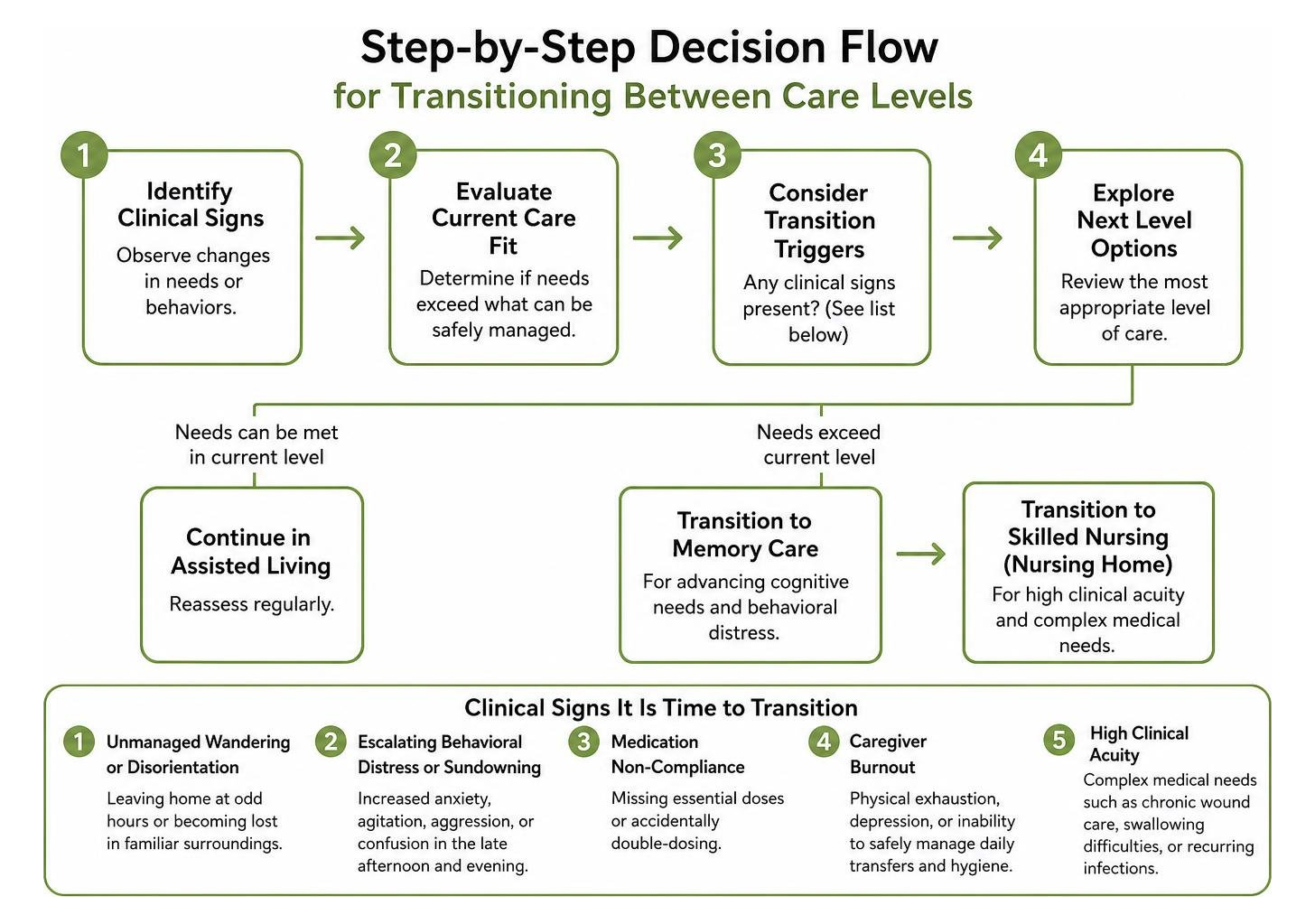
Clinical Signs It Is Time to Transition
It may be time to evaluate a move to memory care or skilled nursing when you observe:
- Unmanaged Wandering or Disorientation: Leaving home at odd hours or becoming lost in familiar surroundings.
- Escalating Behavioral Distress or Sundowning: Increased anxiety, agitation, aggression, or confusion in the late afternoon and evening.
- Medication Non-Compliance: Missing essential doses or accidentally double-dosing.
- Caregiver Burnout: Family caregivers experiencing physical exhaustion, depression, or an inability to safely manage daily transfers and hygiene.
- High Clinical Acuity: Developing complex medical needs, such as chronic wound care, swallowing difficulties requiring specialized intervention, or recurring infections.
Essential Questions to Ask on a Community Tour
When visiting communities in Vacaville, Fairfield, or nearby Northern California areas, ask these targeted questions:
- What are your daytime and overnight caregiver-to-resident ratios?
- What specific dementia training certifications does your care staff complete?
- What triggers an increase in monthly care fees, and how often are care plans re-evaluated?
- What specific care needs or behavioral changes would require my loved one to move to a higher level of care?
- What daily non-pharmacological therapies (music, reminiscence, sensory engagement) are structured into the calendar?
Frequently Asked Questions About Senior Care Options
Can a couple stay together if they require different levels of care?
Yes, in many settings. Around 80% of assisted living communities also provide dedicated memory care wings on the same campus. Spouses can often share an apartment in assisted living if one partner requires only minor memory cueing, or reside in adjacent wings while visiting each other daily for meals and activities.
Does Medicare pay for assisted living or memory care?
No. Medicare does not cover room, board, or standard daily custodial assistance in residential care settings. However, it continues to cover your loved one’s doctors' appointments, physical therapy, prescription medications, and hospice services delivered within the community.
When should a resident move from memory care to a skilled nursing facility?
A resident should transition when their primary needs shift from cognitive supervision to intensive medical care. As explored in our memory care skilled nursing guide, triggers include requiring two-person mechanical transfers, specialized tube feeding, intravenous medications, or comprehensive stage 3/4 wound management.
Choosing the Right Care for Your Loved One
Deciding on senior living is never purely a financial or logistical choice; it is a deeply personal step toward ensuring safety and preserving your loved one’s dignity.
At Vaca Valley Living, we understand how much love and thought goes into this journey. As a family-owned community with over 50 years of experience serving seniors throughout Vacaville, Solano County, and surrounding communities, we specialize in providing a warm, individualized memory care environment. Our dedicated 24-hour staffing, personalized life-enrichment programs, and secure, home-like setting give families lasting peace of mind.
If you are navigating the next steps for your family, explore specialized residential memory care services with our compassionate team today.