
How to Set Up Memory Care at Home
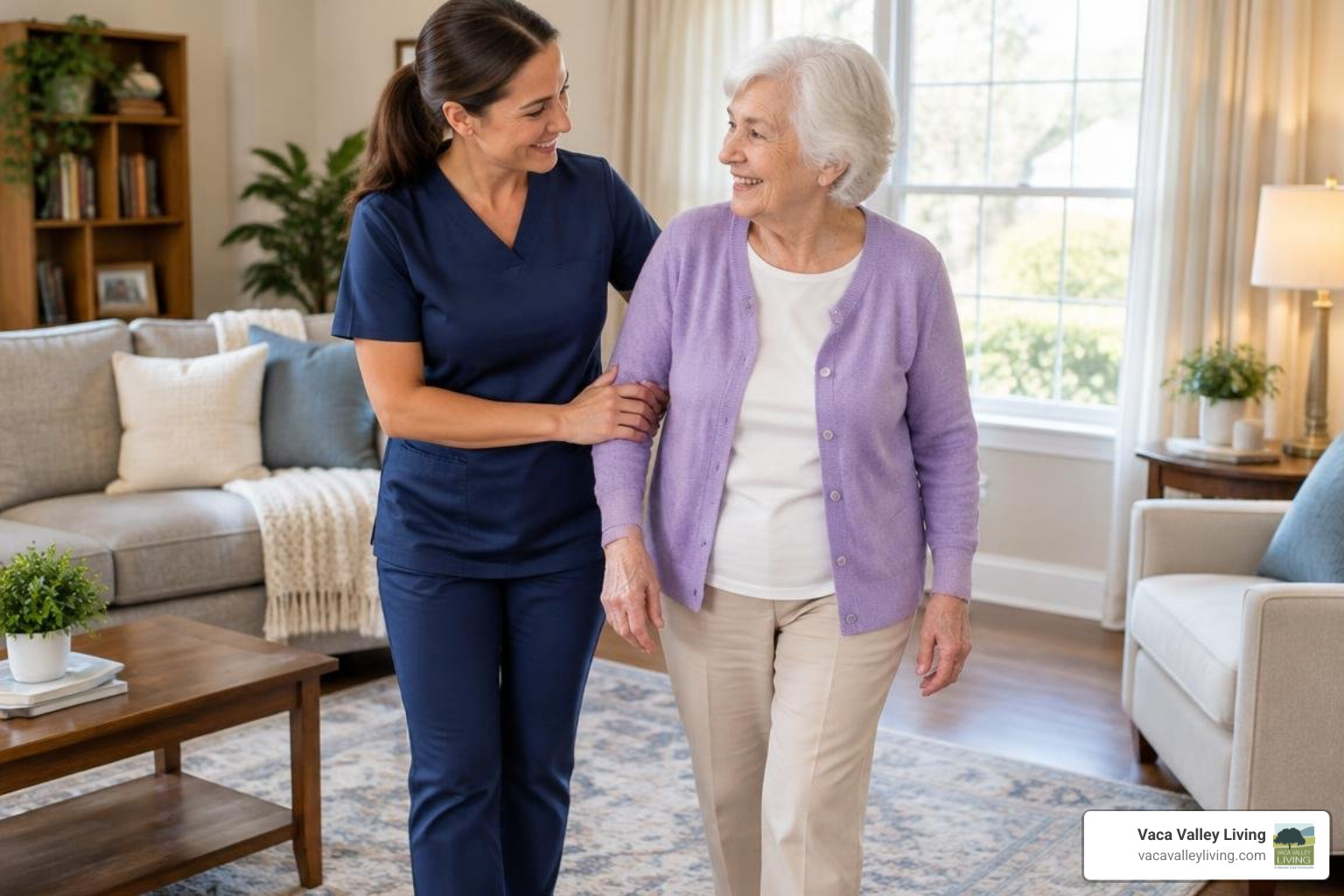
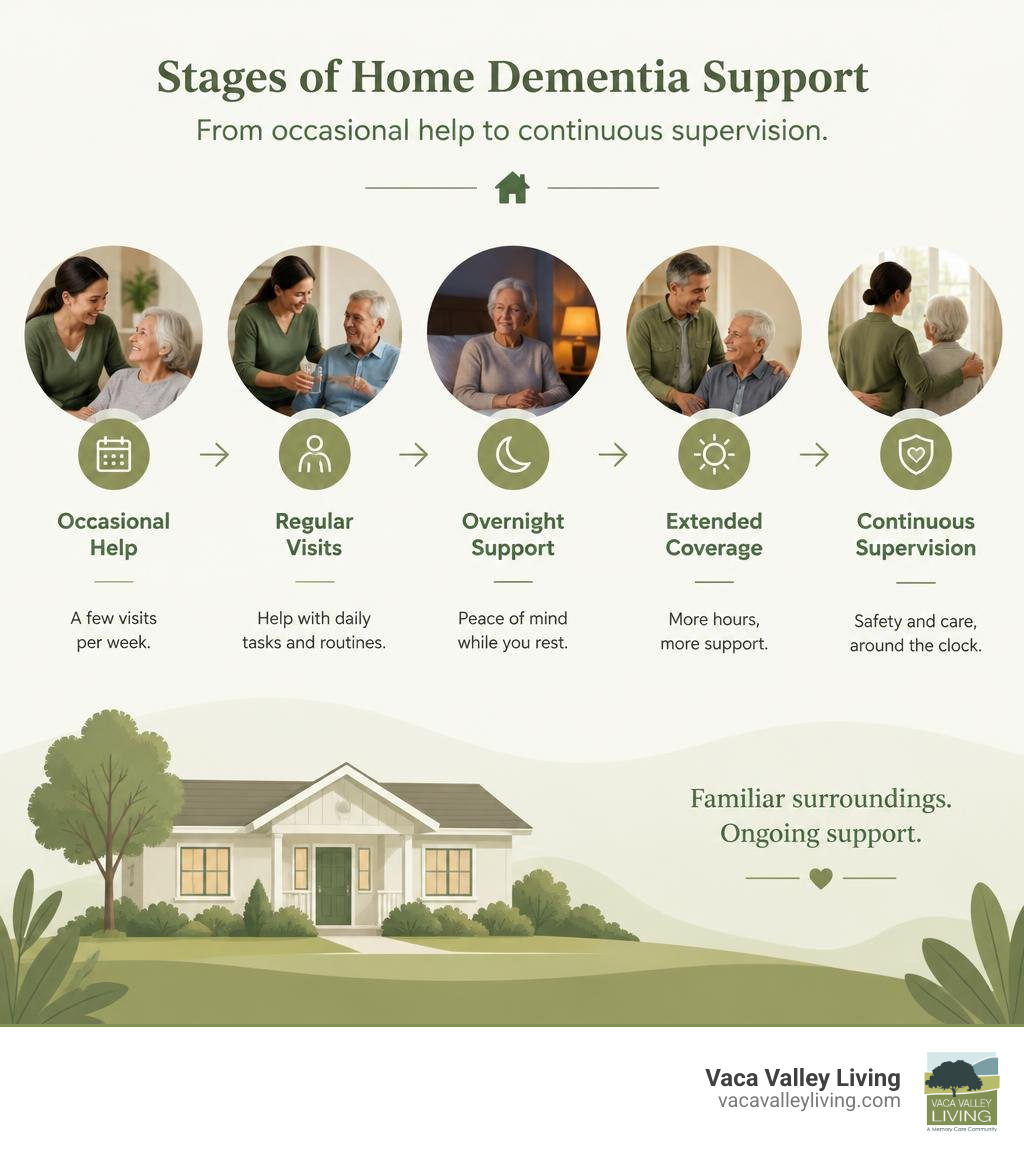
Start with safety, then build a routine. Check for risks such as wandering, falls, missed medication, or an unsafe stove. Arrange a caregiver trained in dementia care to help with daily tasks and provide supervision during the hours your parent needs it most. As needs change, care can grow from a few visits a week to overnight or around-the-clock support.
Memory care at home can help your parent stay in familiar surroundings. But the goal is not to keep them home at any cost. This guide will help you weigh comfort, safety, and when a different setting may be the better choice. According to the Alzheimer's Association, most people with dementia live at home, and many families use a combination of family care and paid in-home support.
Understanding In-Home Dementia Support vs. Facility Options
When navigating cognitive decline, families often face a major choice: bringing specialized caregivers into the home or transitioning to a dedicated residential community. Both approaches offer non-medical custodial care, supervision, and assistance with activities of daily living (ADLs), but they deliver those services in distinct ways.
In-home memory care focuses on keeping your loved one in their established living space. A professional caregiver provides one-on-one attention, adhering to personal preferences and maintaining daily routines. In contrast, residential memory care facilities provide a purpose-built, secure environment staffed 24 hours a day with structured community programming, group dining, and built-in safety features like keypad-locked exits and emergency pull cords.
| Feature | In-Home Memory Care | Residential Memory Care Facilities |
|---|---|---|
| Living Environment | Familiar home setting | Dedicated, secure residential community |
| Caregiver Ratio | 1-on-1 dedicated attention | Shared staff (typically 1:4 to 1:8 ratio) |
| Daily Structure | Fully personalized to household habits | Structured community activities and set meal times |
| Safety Adjustments | Requires retrofitting the private home | Built-in safety features (secured perimeters, wide hallways) |
| Cost Scalability | Paid hourly; cost scales directly with hours | Predictable monthly all-inclusive or base-plus fee |
| Social Opportunities | Dependent on family, visits, and caregiver | Daily interaction with peers and group programming |
Core Differences in Setting and Supervision
The home environment provides sensory continuity. Being surrounded by familiar sights, personal photographs, and cherished furnishings can reduce anxiety and orientation challenges, especially during early stage dementia care. At home, your loved one receives undivided attention from a dedicated caregiver who can tailor every minute of the day to their mood and energy levels.
However, residential settings offer environmental security that is difficult to replicate in a standard home. Purpose-designed memory care communities eliminate hazards like stairs, complex door locks, and isolated rooms, offering a secure perimeter where seniors can walk freely without the risk of elopement.
Evaluating Costs and Payment Options
Understanding how care is funded is crucial for long-term planning:
- Hourly Rates for Home Care: In-home care is billed by the hour. If your loved one needs four to six hours of support daily, home care is generally more cost-effective than a residential facility. However, when care needs expand to continuous 24/7 or live-in coverage, the cumulative hourly costs often exceed the flat monthly fee of a residential community.
- Private Pay & Long-Term Care Insurance: Most non-medical home care is funded out-of-pocket through private savings or long-term care insurance policies that include home care riders.
- Medicaid & State Programs: While standard Medicare does not pay for non-medical custodial care at home, certain state-specific Medicaid waivers may provide limited financial support for qualifying low-income individuals.
- Veterans Benefits: The VA Aid and Attendance benefit can offset the expense of an in-home assisted living caregiver for eligible wartime veterans and their surviving spouses.
Key Services Included in Memory Care at Home
In-home memory care encompasses practical assistance, safety monitoring, and emotional support tailored to individual cognitive abilities.

Comprehensive dementia support services delivered at home typically include:
- Personal Care Assistance: Respectful help with bathing, dressing, grooming, and toileting.
- Medication Reminders: Prompting and logging daily doses to prevent missed or duplicated medications.
- Nutritional Support: Planning and preparing balanced meals suited to dietary needs and swallowing abilities.
- Mobility and Transfer Support: Helping seniors move safely between beds, chairs, and bathrooms to prevent falls.
- Light Housekeeping: Managing laundry, tidying living areas, and keeping walkways clear of clutter.
Daily Assistance and Cognitive Engagement
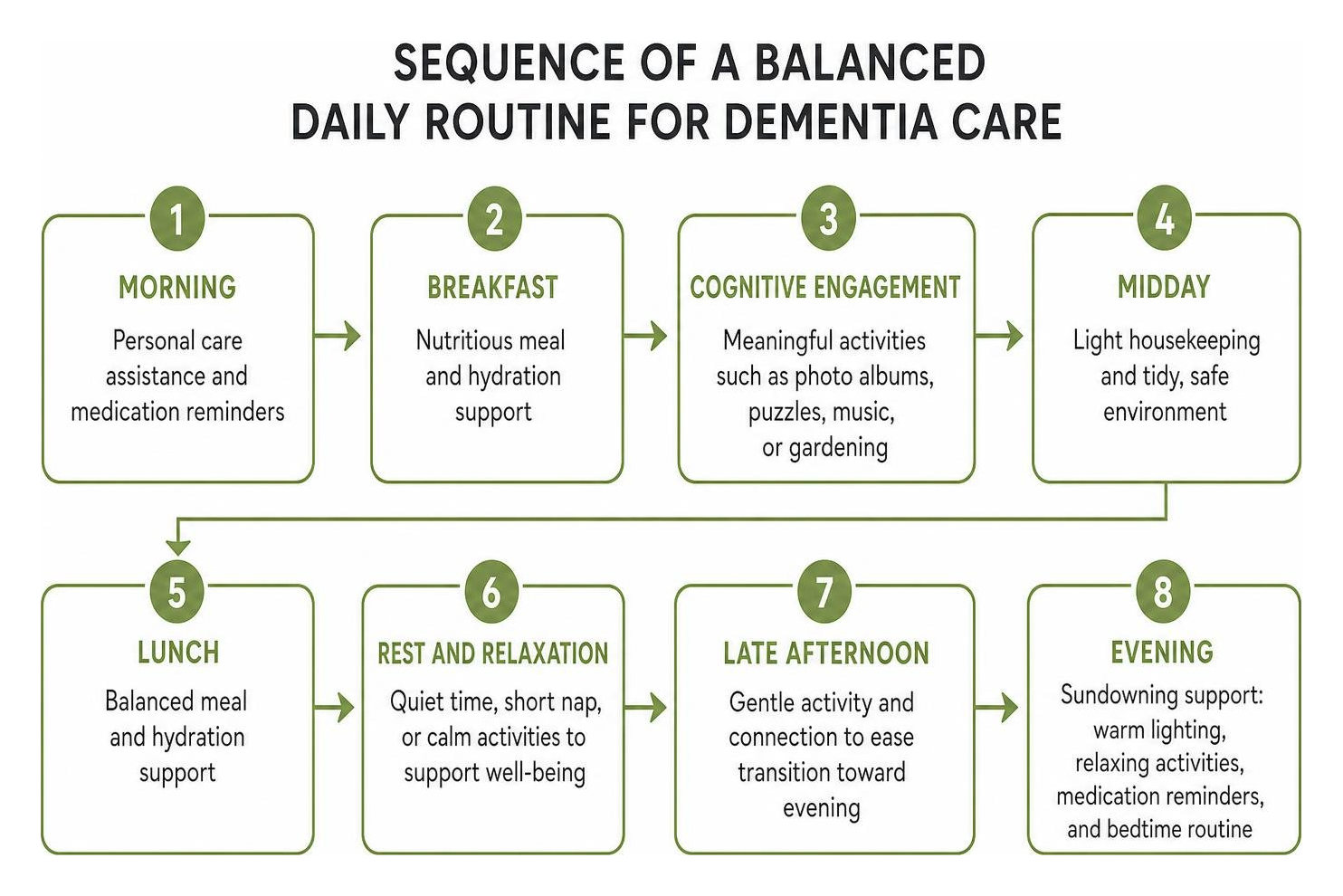
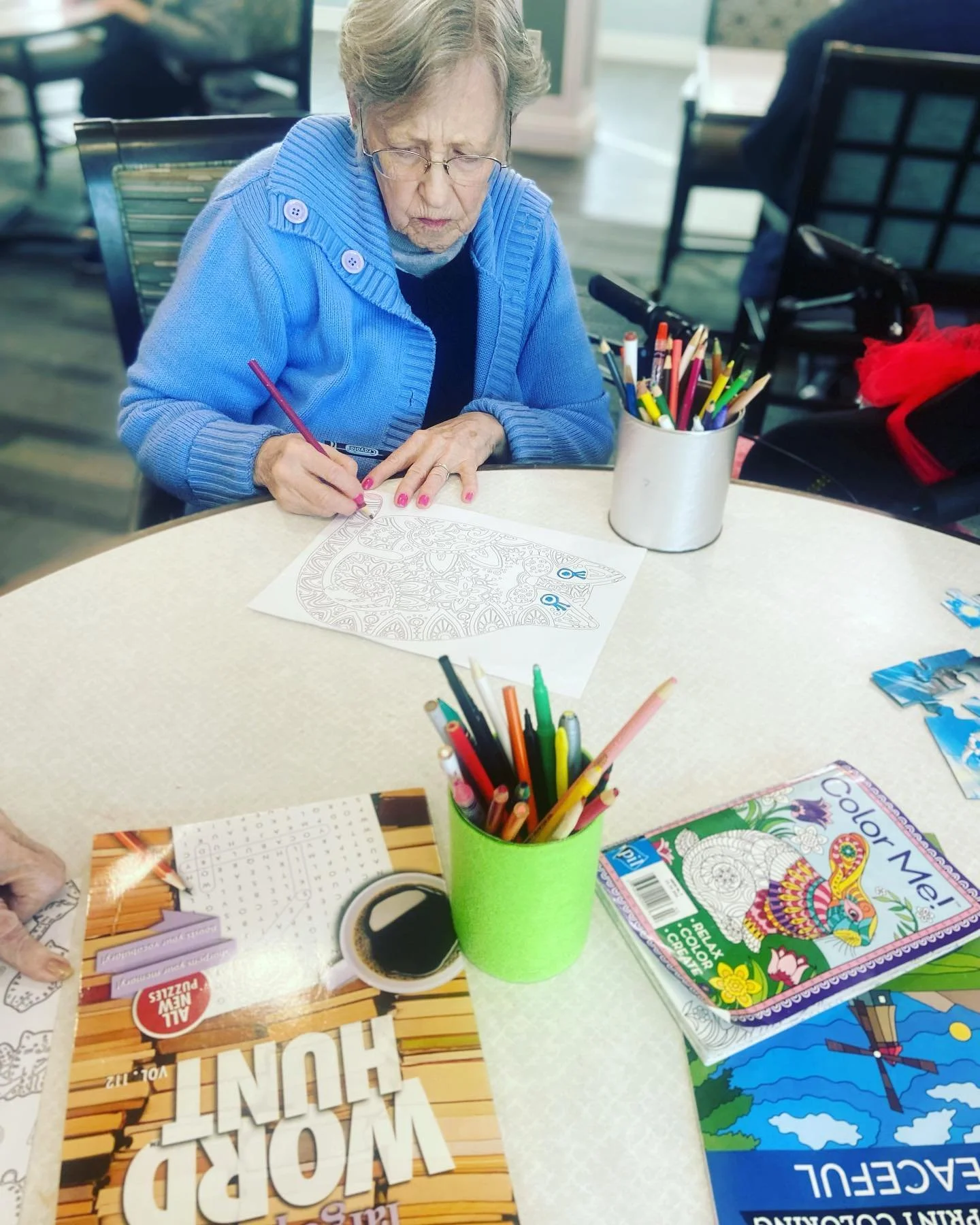
Caregivers provide mental stimulation that supports cognitive health. Meaningful daily engagement helps slow functional decline and gives seniors a sense of accomplishment. Caregivers use tailored memory care activities for seniors, such as reminiscing over old photo albums, working on simple jigsaw puzzles, listening to favorite music, or watering garden plants.
Managing Sundowning, Wandering, and Behavioral Changes
Dementia often brings behavioral symptoms that require specialized responses. Professional caregivers are trained to address:
- Sundowning: Increased confusion, restlessness, and anxiety in the late afternoon and early evening. Caregivers mitigate this by closing curtains before dusk, turning on warm indoor lighting, and shifting to relaxing activities.
- Wandering and Exit-Seeking: Pacing or attempting to leave the home due to restlessness or a desire to "go to work." Caregivers gently redirect attention and ensure all perimeter doors have discreet alarms.
- Agitation and Anxiety: De-escalating tense moments by validating feelings rather than correcting memory lapses, while following customized dementia care plans.
Recognizing When It Is No Longer Safe to Stay Home Alone
Dementia is a progressive condition. An arrangement that works smoothly today may become unsafe tomorrow. Recognizing the threshold where staying home alone poses a hazard is critical for preventing accidents and addressing caregiver exhaustion with proper dementia support for caregivers.
Warning Signs for Family Caregivers
Watch for these indicators that your family member needs dedicated daily supervision:
- Unsafe Appliance Use: Leaving burners on, placing metal in the microwave, or forgetting running water.
- Medication Mishaps: Finding full pill organizers, dropped pills on the floor, or bottles emptied ahead of schedule.
- Unexplained Physical Injuries: Bruises, scrapes, or balance issues that suggest unreported falls.
- Changes in Hygiene and Nutrition: Weight loss, spoiled food in the refrigerator, or wearing the same unwashed clothes for days.
- Social and Emotional Shifts: Increasing confusion, paranoia, fearfulness, or withdrawal from everyday interactions. Seeking reliable Alzheimer's family support can help families process these transitions.
Customizing Memory Care at Home as Needs Evolve
Home care can adapt as cognitive needs change over time.
Families can scale support by implementing personalized care plans for seniors:
- Part-Time Visits: 3 to 4 hours a day for companionship, meal prep, and personal care.
- Extended Day & Evening Care: 8 to 12 hours of coverage covering high-risk periods like mornings and sundowning hours.
- Overnight Care: Ensuring a watchful caregiver is awake to assist with nighttime wandering or bathroom trips.
- 24/7 or Live-In Care: Continuous around-the-clock monitoring for advanced stages.
How to Get Started with In-Home Support
Establishing in-home memory care involves careful preparation to ensure safety and compatibility.
Conducting Initial In-Home Safety Assessments
Before care begins, perform a thorough safety audit of the home:
- Install secure locks, chime alerts, or smart sensors on exterior doors.
- Remove loose throw rugs, clear walking paths, and improve lighting in hallways and stairwells.
- Secure medications, cleaning supplies, and sharp kitchen tools in locked cabinets.
- Add grab bars near toilets and inside showers, along with non-slip mats.
Choosing Qualified and Screened Caregivers
When hiring an agency or independent caregiver, verify their credentials and background:
- Comprehensive Screening: Ensure every caregiver has completed clean background checks, drug screenings, and identity verifications.
- Dementia-Specific Training: Confirm they understand non-verbal communication, redirection, and de-escalation techniques.
- Clinical Oversight: Inquire whether care plans are reviewed by a Registered Nurse (RN) or qualified care manager.
- Personality Matching: Choose a caregiver whose temperament, patience, and interests align with your loved one's personality.
Long-Term Planning and Transitioning Care
While in-home support is effective for many stages of dementia, families should periodically evaluate whether the home remains the best setting. Reviewing dedicated senior memory care programs provides a safety net if needs exceed what can be managed at home.
Identifying the Limits of Memory Care at Home
In-home care may become impractical when:
- 24/7 Care Costs Become Unsustainable: Continuous home care costs frequently surpass the monthly fee of a residential memory community.
- High Fall Risk & Physical Transfers: When a senior requires two-person transfers or specialized mechanical lifts.
- Severe Wandering: If the home layout cannot safely prevent elopement risks.
- Caregiver Fatigue: When family members experience physical, emotional, and mental exhaustion despite in-home help.
Frequently Asked Questions about In-Home Memory Care
Does Medicare or Medicaid cover in-home memory care?
Medicare does not pay for non-medical custodial care, whether delivered at home or in a specialized facility. It only covers short-term, medically necessary skilled home health prescribed by a physician. Some state Medicaid waiver programs provide financial assistance for custodial care, but availability depends on strict income and functional eligibility criteria.
What qualifications should an in-home dementia caregiver have?
An effective dementia caregiver should hold relevant state certifications (such as Certified Nursing Assistant or Home Health Aide credentials), undergo comprehensive criminal background checks, and have specific training in dementia management, redirection strategies, fall prevention, and emergency response.
When is it unsafe to leave a person with dementia alone at home?
A person with dementia should no longer be left unattended if they wander, demonstrate poor judgment regarding stove or appliance safety, miss life-sustaining medications, experience frequent falls, or show signs of acute panic when left by themselves.
Conclusion
Balancing safety and personal comfort is an ongoing journey. In-home memory care offers a personalized way to help seniors remain in familiar surroundings while receiving essential daily support. As care needs progress, understanding your options ensures your loved one stays safe, engaged, and well-cared for.
If you are exploring residential memory care options in Northern California, reach out to our team at Vaca Valley Living to learn how our dedicated community, 24-hour staffing, and personalized care plans support seniors and their families.