
How to Arrange a Short-Term Respite Memory Care Stay

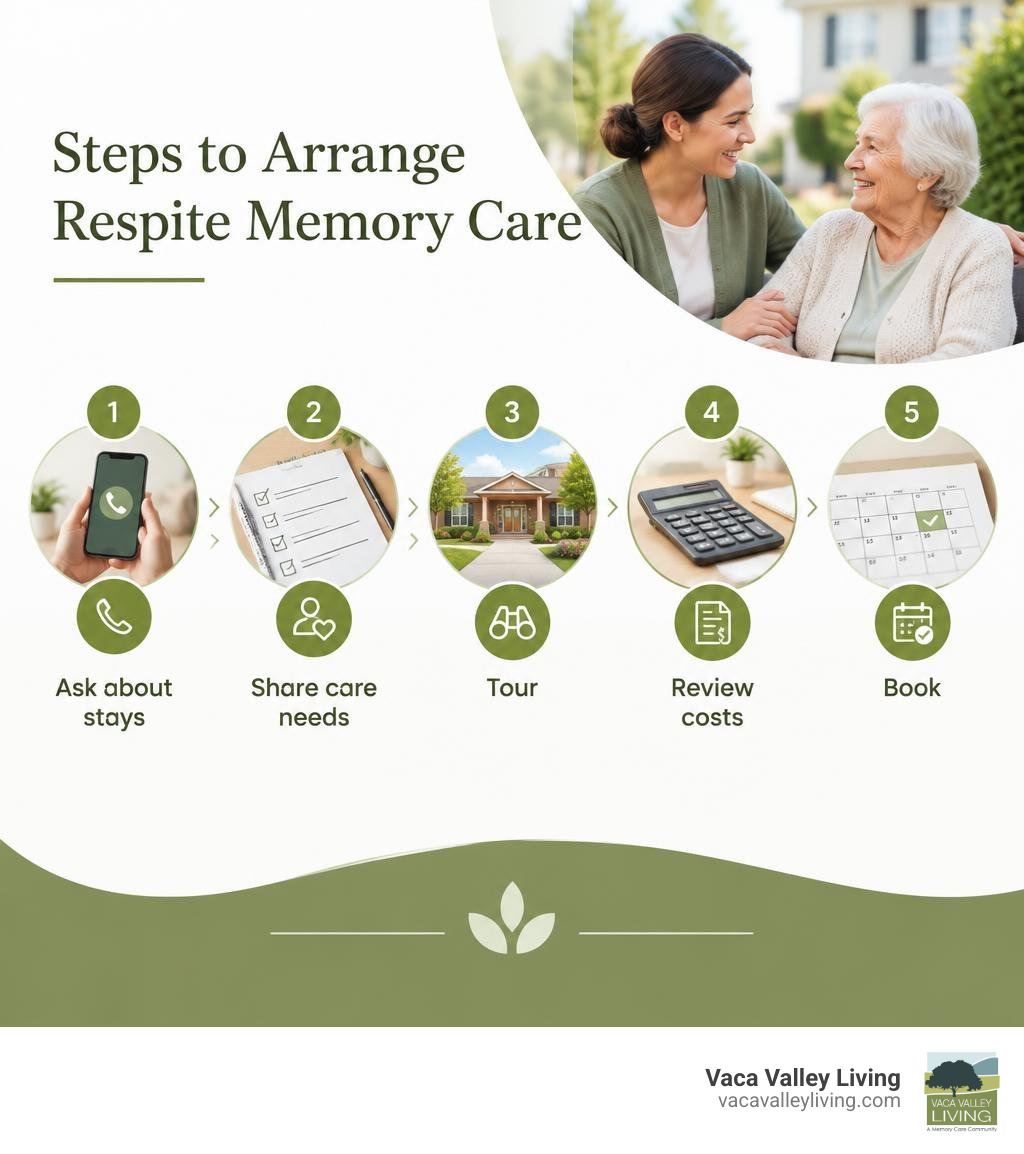
Start by calling a local memory care community to ask whether it offers short-term stays. Share your parent's care needs, ask how staff support people with dementia, and check the cost and available dates. If possible, tour the community before you book.
A respite stay gives you time to rest or handle other needs while your parent receives temporary care. It might cover a weekend, a trip, or a longer break. Taking that time is not a failure. It is one way to make caregiving more sustainable.
What Is Respite Memory Care and How Does It Work?
Caring for someone with Alzheimer’s disease or another progressive dementia is deeply meaningful, but it is also physically and emotionally demanding. As cognitive impairment advances, individuals require continuous supervision, specialized assistance with activities of daily living (ADLs), and intentional environmental cues to manage confusion and prevent wandering.
Families often explore what is the difference between memory care and dementia care when determining the right level of support. While dementia care encompasses broad philosophies of cognitive support across various settings, professional memory care provides a secured physical environment with staff specifically educated in behavior de-escalation, redirection, sensory engagement, and structured daily routines.
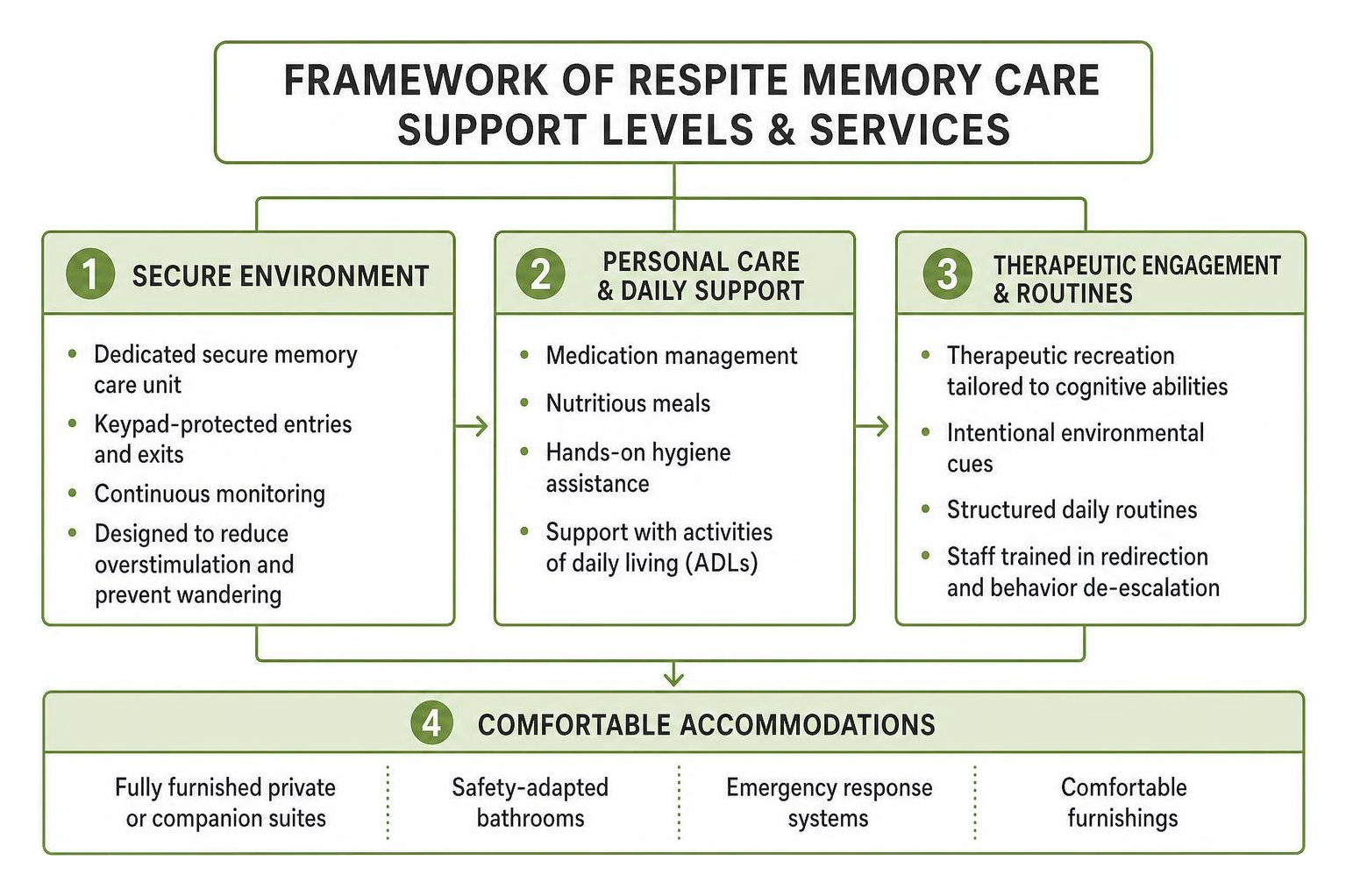
During a respite stay, your loved one temporarily moves into a supportive community where professional caregivers manage medication, prepare nutritious meals, provide hands-on hygiene assistance, and guide them through therapeutic recreation tailored to their cognitive abilities.
Residential Respite Memory Care Options
Short-term stays typically take place within a dedicated secure memory care unit. These specialized settings feature keypad-protected entries and exits, continuous monitoring, and architectural layouts designed to reduce overstimulation while allowing safe freedom of movement.
Respite guests stay in fully furnished private or companion suites equipped with safety-adapted bathrooms, emergency response systems, and comfortable furnishings. The table below outlines how residential respite accommodations are structured:
| Respite Care Feature | Residential Respite Memory Care Details |
|---|---|
| Duration | Flexible options: overnight, weekend, or multi-week stays |
| Supervision | 24/7 specialized awake care team trained in dementia support |
| Living Space | Fully furnished private or companion suite with safety adaptations |
| Safety Features | Secured perimeter, continuous monitoring, and emergency call systems |
| Meals & Dining | 3 chef-prepared nutritious meals daily plus snacks |
The Dual Benefits for Caregivers and Loved Ones
Taking advantage of short-term support produces measurable benefits on both sides of the caregiving relationship. For family caregivers, having a predictable break prevents chronic physical exhaustion and emotional burnout. Caregivers can attend to their own medical appointments, travel for work or family events, or simply rest uninterrupted, returning to their caregiving role with renewed patience and energy.
For the person living with memory loss, a well-managed residential stay provides rich therapeutic value. Rather than sitting isolated at home, guests participate in memory care activities for seniors such as music therapy, guided art sessions, gentle exercise, and sensory garden walks. These structured environments offer meaningful social stimulation among peers while maintaining the predictable daily rhythms essential for reducing anxiety and sundowning behaviors.
Financial Assistance Options and Coverage
Planning for temporary care involves understanding the overall financial investment. The daily or weekly rates for short-term stays mirror the broader structure of dementia assisted living cost equations, encompassing furnished housing, continuous staffing, dining, and personalized care.

Most short-term stays are funded directly out-of-pocket by families. However, several alternative funding sources may help offset these expenses:
- Long-Term Care Insurance: Some comprehensive policies include respite care allowances that reimburse families for short-term residential stays up to a predetermined daily maximum or annual cap.
- Veterans Benefits: Eligible veterans and surviving spouses receiving the VA Aid and Attendance pension may apply those monthly funds toward temporary memory support. The VA also operates specific caregiver respite programs that provide funding for short-term stays at approved facilities.
- Medicaid Waivers: In select instances, state Home and Community-Based Services (HCBS) waivers provide qualifying low-income seniors with respite vouchers or contracted days in licensed residential communities.
Medicare Coverage Rules
A frequent point of confusion for families is whether traditional Medicare pays for temporary residential stays. Under standard circumstances, Medicare Part A and Part B do not cover room, board, or personal care services for routine short-term memory stays.
The primary exception occurs under the Medicare Hospice Benefit. If an individual is formally enrolled in hospice care, Medicare will cover up to five consecutive days of inpatient respite care in a Medicare-certified hospital or skilled nursing facility to give the primary caregiver a rest.
Additionally, newer initiatives like the Guiding an Improved Dementia Experience are expanding support across select pilot networks. Eligible Medicare beneficiaries participating in programs like GUIDE for Dementia Care at Home | Johns Hopkins Medicine may receive approximately 80 hours of Medicare-funded respite services per year to reduce caregiver strain.
Community Grants and Subsidies
Nonprofit organizations and local Area Agencies on Aging (AAA) frequently administer emergency respite funds and caregiver relief stipends. Programs funded by the National Family Caregiver Support Program (NFCSP) distribute grants to help family caregivers purchase short-term residential respite stays. Families can also research regional support networks and available local care options through community resource directories.
Preparing for and Coordinating Respite Care Services
A smooth transition into a temporary stay relies on careful coordination and open communication. Preparing ahead of time prevents last-minute stress and ensures that the community team has every detail required to provide seamless, compassionate support. Connecting with dedicated Alzheimer's family support networks can provide practical advice and emotional reassurance from other families who have navigated the same process.

Step-by-Step Guide to Arranging Respite Memory Care Stays
To arrange a successful stay, follow this structured process:
- Complete a Pre-Admission Assessment: The community's clinical team will evaluate your loved one's physical mobility, cognitive stage, dietary requirements, and personal care needs to build personalized care plans for seniors.
- Organize Medical Paperwork: Provide an up-to-date physician's report, tuberculosis (TB) screening results, emergency contacts, and formal medication administration records (MAR) signed by their doctor.
- Pack Thoughtfully: Bring comfortable, labeled clothing without complex buttons or zippers, slip-resistant footwear, familiar toiletries, and cherished personal keepsakes.
- Incorporate Personal Comfort Cues: Utilize visual orientation tools like memory care memory boxes outside their suite door filled with family photographs, favorite keepsakes, or personal memorabilia to help them recognize their temporary living space with ease.
Emergency Respite Planning for Unforeseen Situations
Caregiving crises rarely happen on a convenient schedule. If a primary caregiver experiences a sudden medical emergency, accident, or acute illness, having an emergency plan prevents unsafe situations for your loved one.
We recommend maintaining a dedicated "Care Binder" in an easily accessible location. This binder should contain your loved one’s full medical history, daily routine schedule, favorite foods, calming techniques, and a list of authorized emergency contacts. Establishing pre-assessed status with a local memory community allows you to book an emergency stay immediately without waiting days for intake evaluations. Accessing ongoing dementia support for caregivers ensures you stay connected to professional respite resources before an urgent crisis emerges.
Overcoming Caregiver Hesitation and Evaluating Quality Providers
One of the greatest barriers to utilizing short-term care is emotional resistance. Caregivers frequently battle feelings of guilt, worrying that stepping away signifies abandonment or personal inadequacy. In reality, working with professional dementia support services is an essential self-care practice that protects your long-term health and ensures your loved one receives patient, attentive care.
What to Look for When Choosing a Respite Community
When touring and evaluating prospective senior living communities, look for specific environmental and operational standards:
- Dementia-Specific Training: Ask how often direct-care staff receive education on memory loss, behavioral redirection, and compassionate communication.
- Staff-to-Resident Ratios: Ensure there is adequate awake staffing around the clock to support personal hygiene, meals, and nighttime wandering.
- Intentional Safety Measures: Look for built-in memory care safety features, including keypad-secured exits, soft lighting that reduces shadows, and clearly marked pathways.
- Secure Outdoor Spaces: Verify that the community features an enclosed courtyard or walking garden where residents can safely enjoy fresh air and sunshine.
- Adaptive Programming: Check the daily activity calendar for sensory, musical, and cognitive engagement tailored to varying stages of memory loss.
Coordinating Support with Family, Friends, and Volunteers
While professional residential stays provide extended relief, building an everyday circle of support makes daily care sustainable. Divide routine responsibilities among family members and close friends using shared digital care calendars.
Assign specific, manageable tasks—such as picking up prescriptions on Tuesdays, dropping off groceries, or sitting with your loved one for two hours on Saturday mornings. Clear delegation prevents primary caregiver isolation and allows others to contribute meaningfully.
Frequently Asked Questions About Respite Memory Care
How long can a short-term respite memory care stay last?
Stay lengths are adaptable based on family needs and community availability. Stays can range from a few days over a weekend to several weeks or even a full month while a primary caregiver recovers from surgery or travels.
Will traditional Medicare cover the cost of respite memory care?
No, traditional Medicare does not cover routine residential memory stays. Medicare only funds short-term respite (up to five consecutive days) for individuals actively enrolled in the Medicare Hospice Benefit.
How can I help my loved one with dementia adjust to a short-term stay?
Keep your arrival calm, positive, and unhurried. Furnish the room with familiar items—such as their favorite bedspread, family photos, and preferred music playlist—and share their detailed daily habits with the community care team.
Conclusion: Finding Rest and Sustainable Dementia Support
Sustaining long-term dementia care requires proactive balance. Taking a planned break through dedicated residential memory care protects your health while surrounding your loved one with 24-hour safety, engaging activities, and compassionate care.
At Vaca Valley Living, our family-owned team brings over 50 years of senior living experience to deliver individualized memory support in a warm, home-like environment. Located in Vacaville, CA, our community provides comfortable accommodations, 24-hour staffing, a full-service salon, chef-prepared dining, and scheduled transportation. Contact our team today to explore short-term stay options, tour our secured community, and discover compassionate relief designed around your family’s needs.